
Car AC Recharge: What It Is and When It's Needed
Quick answer
An AC recharge (regas) refills the refrigerant. Systems are sealed, so being low usually means a leak. A proper service recovers the old refrigerant, checks for leaks and refills the exact amount your car needs.
- Topic
- AC & Heating
- Sections
- 6
- Reading time
- 1 min
- Applies to
- All regions
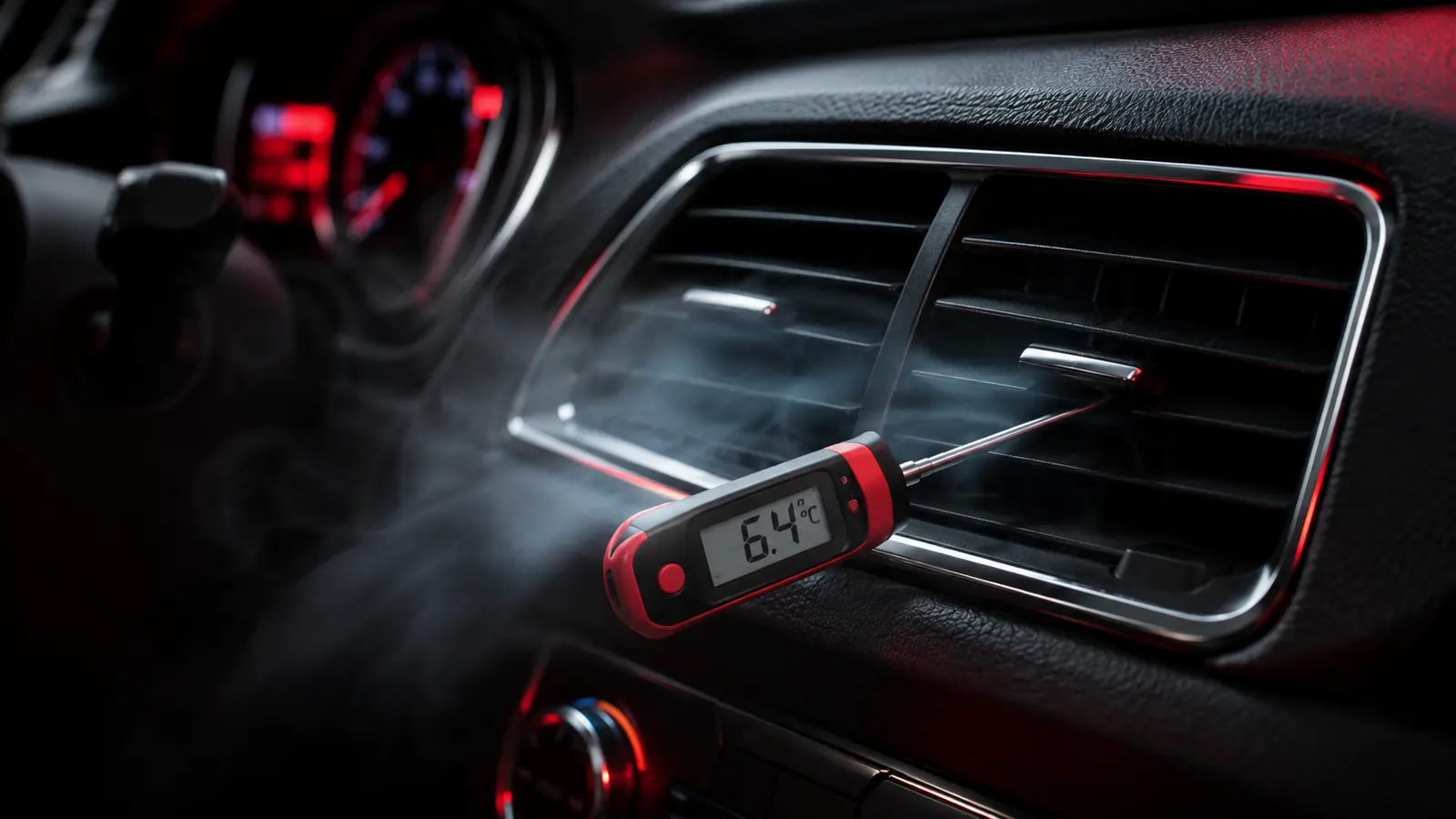
A car AC recharge (often called a regas) refills the air conditioning system with refrigerant. Car AC is a sealed system, so if it's noticeably low, there's usually a leak. A proper service recovers what's left, checks for leaks, then refills the exact charge specified for your car, usually with the right oil too.
Do you need one?
| Symptom | Possible cause |
|---|---|
| Blowing warm, compressor cycling quickly | Low refrigerant |
| Blowing warm, compressor never engages | Electrical fault or very low charge |
| Cold only when driving | Fan or charge issue |
| Hissing, oily residue at fittings | Leak |
| Noisy compressor | Compressor or clutch fault |
Start with car AC blowing warm air and car AC only cold when driving.
Refrigerant types
Older cars typically use R134a; most newer cars use R1234yf. The two aren't interchangeable, and the type is usually on a label under the bonnet (hood). Using the wrong one or the wrong amount affects cooling and can damage the system.
DIY kits: the risks
Supermarket recharge cans are tempting, but they can overfill (which reduces cooling and strains the compressor), may contain sealants that can clog components, and they don't fix the leak. Refrigerant handling is also regulated in many countries.
What a professional service includes
- Recover the remaining refrigerant and measure it.
- Vacuum the system to remove moisture.
- Leak test (dye, sniffer or pressure hold).
- Recharge the exact specified amount.
- Check vent temperature and pressures.
How often?
There's no fixed interval for most cars. Many owners regas every few years when cooling fades. A big loss in one season points to a leak.
Related guides
Frequently asked questions
Why is my AC low if the system is sealed?
Small amounts can escape over years through seals, but a noticeable loss usually means a leak that should be found.
Are DIY recharge cans a good idea?
They can overfill, use the wrong refrigerant or hide a leak. A professional service measures the exact charge and checks for leaks.
Tools that can help
Need a mechanic?
Find rated garages near you by city, ZIP code or postcode, with directions.
About this guide
Written by Editorial Team using manufacturer documentation, government road-safety guidance and motoring-organisation advice. It explains likely causes and safe checks. It is not a diagnosis. How we write and check guides.
More ac & heating guides
AC & HeatingCar Air Conditioning and Heating: The Complete Guide
Car AC pumps refrigerant through a sealed loop to pull heat and moisture out of the cabin; the heater reuses engine heat through the heater core. This guide covers how both work, why they fail, how to demist fast, and how to keep them healthy.
Updated November 22, 2026Read AC & Heating
Car Smells Musty or Mouldy After Rain: Why
A musty, mildew smell after rain means water is getting into the car and staying there: blocked scuttle or sunroof drains, a failed door seal, or a damp carpet and cabin filter. Find and fix the leak first, then dry everything.
Updated November 22, 2026Read AC & Heating
Car Heater Takes Too Long to Warm Up: Causes
If the heater takes much longer than it used to, the thermostat may be stuck open, coolant may be low, or the heater core may be partly blocked. Very cold weather and short trips also slow warm-up.
Updated November 22, 2026Read