
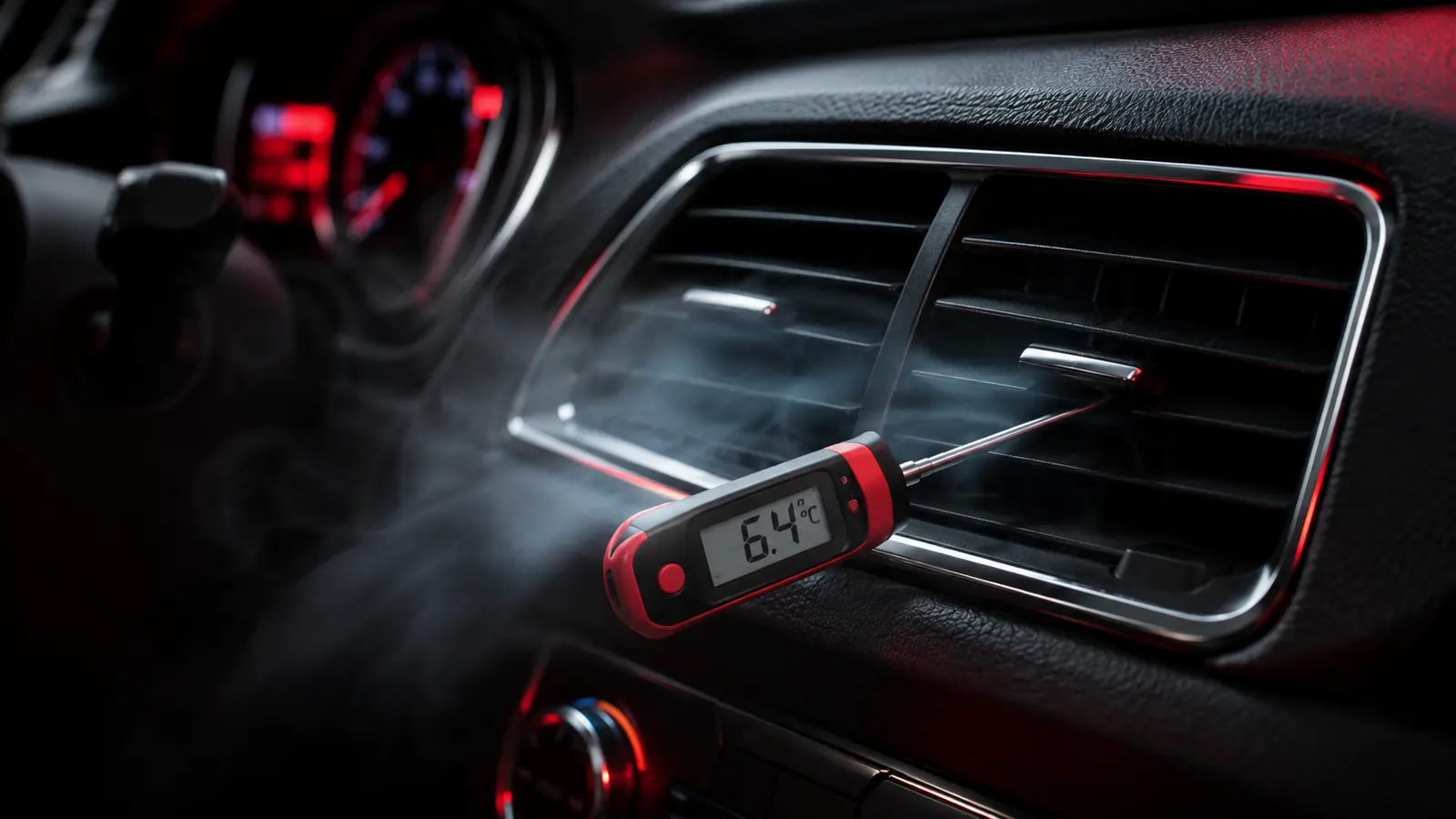
Car Air Conditioning and Heating: The Complete Guide
Quick answer
Car AC pumps refrigerant through a sealed loop to pull heat and moisture out of the cabin; the heater reuses engine heat through the heater core. This guide covers how both work, why they fail, how to demist fast, and how to keep them healthy.
- Topic
- AC & Heating
- Sections
- 11
- Reading time
- 4 min
- Applies to
- All regions
Your car's air conditioning and heater share the same vents and fan but work in completely different ways. The AC moves heat out of the cabin by pumping refrigerant around a sealed loop; the heater reuses engine heat through a small radiator called the heater core. This AllInformations Automotive guide explains both, the problems you're most likely to meet, and how to keep them working.
Quick fixes: car AC blowing warm air, car heater blowing cold air, car windows fogging up.
How car air conditioning works
The refrigerant loop
A compressor, usually driven by the engine and mounted in the engine bay, compresses refrigerant vapour, raising its pressure and temperature. The hot refrigerant releases heat in the condenser at the front of the car, turns to liquid, passes through an expansion device, then evaporates in the evaporator behind the dashboard, absorbing heat from cabin air blown across it.
It also dries the air
As cabin air cools on the evaporator, moisture condenses out and drains under the car. That's why a small puddle of clear water under the car after using AC is normal, and why AC clears misted windows quickly.
Electric and hybrid cars
EVs and many hybrids use an electrically driven compressor, so AC works even when the engine is off. See how car air conditioning works.
Refrigerants
R-12, R-134a and R-1234yf
Older cars used R-12 until the mid-1990s, when it was replaced by R-134a. The newest widely used automotive refrigerant is R-1234yf, which contains no chlorine that could deplete the ozone layer.
Why the type matters
Systems are designed for one refrigerant and its matching oil. The type is usually on a label under the bonnet (hood). See car AC recharge: what to know.
How the heater works
Engine heat, reused
Hot coolant flows through the heater core, a small radiator behind the dashboard. The blower pushes air across it, and blend doors mix hot and cold air to the temperature you set.
Why the heater takes time
The heater can only be as warm as the engine coolant, so heat arrives as the engine warms up. See car heater takes too long to warm up.
EVs and heat pumps
Electric cars use electric heaters or heat pumps powered by the main battery, which affects winter range. See EV range in cold weather.
Common AC problems
Problems and likely causes
| Problem | Likely cause |
|---|---|
| Blows warm | Low refrigerant (leak), compressor or clutch, electrical fault |
| Cold only when driving | Condenser fan, low charge |
| Weak airflow | Blocked cabin filter, blower fault |
| Musty smell | Mould on the evaporator |
| Noisy when on | Compressor, clutch, fan |
| Water on passenger floor | Blocked condensate drain |
See AC only cold when driving, car AC making noise and car AC smells like vinegar.
Overheating with AC on
The condenser sits in front of the radiator and adds heat load. See car overheating when the AC is on.
Common heater problems
Problems and likely causes
| Problem | Likely cause |
|---|---|
| Blows cold, gauge low | Thermostat stuck open |
| Blows cold, coolant low | Leak or air lock |
| Hot one side only | Blend door actuator |
| Sweet smell, foggy glass | Heater core leak |
| Burning smell on first use | Dust burning off (should stop quickly) |
See car heater smells burning and how to check for a heater core leak.
Demisting and defrosting
The fast way to clear fog
Use the windscreen setting with the AC on, fresh air (not recirculate), and the temperature warm. Dry air clears condensation fastest.
Ice on the outside
Clear all glass fully before driving; NHTSA recommends testing defrosters and wipers before winter. See how to defrost a windscreen fast.
Cabin air filter
What it does
It filters dust, pollen and debris from the air entering the cabin. A blocked filter reduces airflow and can smell.
When to change it
Follow your service schedule, and sooner on dusty roads. See cabin air filter replacement and how to change a cabin air filter.
Smells and damp
Musty smells after rain
Water getting into the car feeds mould. See car smells musty after rain and car leaking water inside.
Keeping AC and heating healthy
Simple habits
- Run the AC regularly, even in winter, to keep seals lubricated and demist quickly.
- Replace the cabin filter on schedule.
- Keep the area under the windscreen clear of leaves.
- Have cooling performance checked if it fades.
Portable heaters aren't a substitute
12-volt plug-in heaters can't match the car's heater. See portable car heaters: do they work?.
Safety
Refrigerant handling
Refrigerant is under pressure and its handling is regulated in many countries. Leave system opening and recharging to equipped specialists.
Exhaust and heaters
Never run a fuel-burning heater inside a car. Carbon monoxide is odourless.
Related guides
Frequently asked questions
Should I run the AC in winter?
Yes, for demisting. The AC dries the air, which clears misted windows much faster.
Why does my AC smell musty?
Moisture on the evaporator can grow mould and bacteria. A new cabin filter and an evaporator clean usually help.
Can I recharge the AC myself?
DIY cans risk overfilling, the wrong refrigerant and hiding a leak. A professional service measures the exact charge and checks for leaks.
Tools that can help
Need a mechanic?
Find rated garages near you by city, ZIP code or postcode, with directions.
About this guide
Written by Editorial Team using manufacturer documentation, government road-safety guidance and motoring-organisation advice. It explains likely causes and safe checks. It is not a diagnosis. How we write and check guides.
More ac & heating guides
AC & HeatingCar AC Recharge: What It Is and When It's Needed
An AC recharge (regas) refills the refrigerant. Systems are sealed, so being low usually means a leak. A proper service recovers the old refrigerant, checks for leaks and refills the exact amount your car needs.
Updated November 22, 2026Read AC & Heating
Car Smells Musty or Mouldy After Rain: Why
A musty, mildew smell after rain means water is getting into the car and staying there: blocked scuttle or sunroof drains, a failed door seal, or a damp carpet and cabin filter. Find and fix the leak first, then dry everything.
Updated November 22, 2026Read AC & Heating
Car Heater Takes Too Long to Warm Up: Causes
If the heater takes much longer than it used to, the thermostat may be stuck open, coolant may be low, or the heater core may be partly blocked. Very cold weather and short trips also slow warm-up.
Updated November 22, 2026Read