
Engine Cooling System: The Complete Guide to Coolant, Overheating and Repairs
Quick answer
The cooling system carries heat away from the engine using coolant, a water pump, a thermostat, a radiator and fans, all under pressure so coolant can run above 100 °C. This guide explains each part, why engines overheat, how to spot leaks and how to check coolant safely.
- Topic
- Engine Problems
- Sections
- 10
- Reading time
- 5 min
- Applies to
- All regions
The engine cooling system keeps your engine at its working temperature: hot enough to run efficiently, but never so hot that it damages itself. It does this with coolant, a water pump, a thermostat, a radiator, fans and a pressure cap. This AllInformations Automotive guide explains each part, why engines overheat, how to spot leaks and how to check coolant safely.
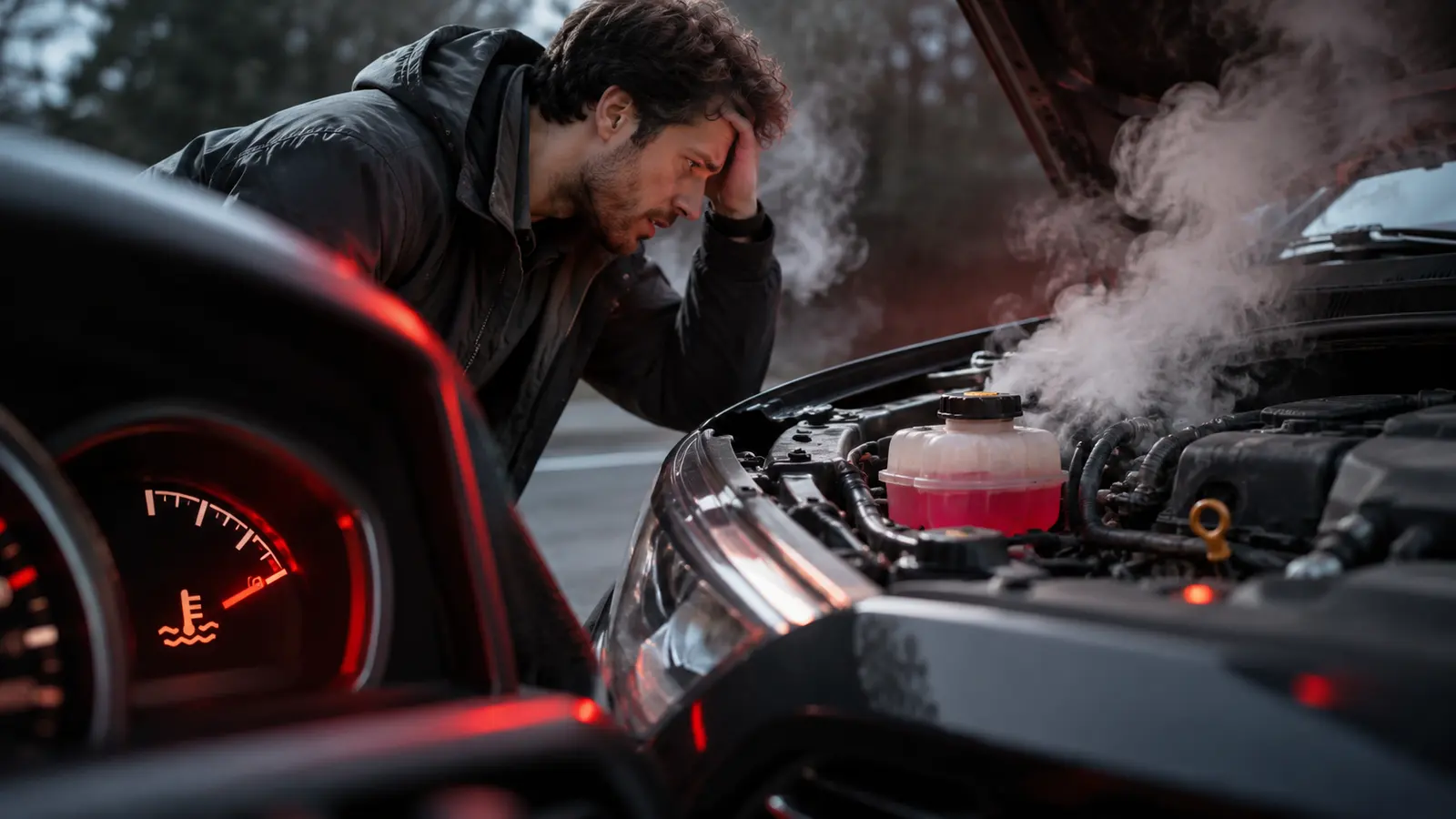
If your engine is overheating right now, stop safely and read car overheating: causes and smoke from under the bonnet.
How the cooling system works
The basic loop
Coolant flows through passages in the engine block and cylinder head, picks up heat, then flows to the radiator, where air passing through the fins carries the heat away. The cooled coolant returns to the engine.
Why it runs under pressure
The system is pressurised and uses a water/antifreeze mixture, so the coolant can run well above water's normal 100 °C boiling point without boiling. That's why you must never open a hot cooling system.
Warm-up control
When the engine is cold, the thermostat blocks flow to the radiator so the engine warms up quickly. Once at temperature, it opens.
The main components
Radiator
A heat exchanger at the front of the car. See how a radiator works.
Water pump
Usually driven by a belt or chain (or electrically on some newer engines), it circulates coolant. See water pump and symptoms of a bad water pump.
Thermostat
A temperature-controlled valve. Stuck closed, it causes overheating; stuck open, a slow warm-up and weak heater. See thermostat and symptoms of a bad thermostat.
Cooling fans
Electric fans (or engine-driven fans with a clutch on some vehicles) pull air through the radiator when the car is slow or stationary. A failed fan often shows up as overheating in traffic but not on the open road.
Pressure cap and expansion tank
The cap holds the system at pressure; the expansion tank takes up coolant as it expands. Many radiator caps include a mechanism to relieve pressure before the cap can be fully opened, but the safe rule is to wait until it's cold.
Heater core
A small radiator behind the dashboard that warms the cabin with engine heat. See heater core.
Coolant (antifreeze)
What it does
Coolant is a mixture of water and antifreeze. It lowers the freezing point, raises the boiling point, and contains anti-corrosion additives that protect the engine's metal passages.
The right mix and type
Use the coolant type your handbook specifies, mixed to the stated ratio. Colour isn't a reliable guide to type. See green vs orange coolant and what engine coolant does.
Checking it
Check the level in the expansion tank with the engine cold. See how to check coolant level and how to check coolant strength.
Changing it
Additives wear out over time. Follow your handbook's interval. See how often to change coolant.
Why engines overheat
Common causes
| Cause | Typical clue |
|---|---|
| Low coolant from a leak | Puddles, sweet smell, level dropping |
| Thermostat stuck closed | Rapid rise to hot |
| Failed fan | Overheats in traffic, fine when moving |
| Water pump failure | Leak at the pump, noise, overheating |
| Blocked radiator | Overheats under load |
| Head gasket failure | White smoke, bubbles, milky oil |
Overheating with the AC on
The AC condenser sits in front of the radiator and adds heat load. See car overheating when the AC is on.
What to do if it overheats
Pull over safely, switch off, and let it cool fully before opening anything. Driving on can warp the cylinder head or blow the head gasket.
Leaks and other warning signs
Coolant leaks
Look for green, orange, pink or blue puddles and white crusty residue on hoses. See car leaking coolant and how to find a car fluid leak.
Internal leaks
Coolant loss without a puddle, white sweet-smelling exhaust, or bubbles in the tank point to a head gasket failure or coolant reservoir boiling.
Gauge behaviour
A needle that climbs and falls can point to the thermostat, low coolant or an air lock. See temperature gauge going up and down.
Smells inside the car
A sweet smell inside, with misted windows, suggests a heater core leak. See car smells like coolant and how to check for a heater core leak.
Warning lights
Temperature and level lights
A red temperature light means stop as soon as it's safe. See the coolant temperature light and coolant level light.
Cooling and the cabin heater
Heater blowing cold
Because the heater uses engine coolant, low coolant or a stuck-open thermostat often shows up as a cold heater first. See car heater blowing cold air and car heater takes too long to warm up.
Seasonal care
Before winter
NHTSA recommends making sure you have enough coolant meeting the maker's specification, checking the system for leaks, testing the coolant, and draining or replacing old coolant. See our winter car maintenance checklist.
Before summer
Check hoses, the fan and the radiator for blockages before hot weather and long trips. See the summer car maintenance checklist.
Safety
Hot coolant
Never open a hot system. Coolant can be well above 100 °C and under pressure.
Toxicity
Coolant is poisonous and tastes sweet to pets and children. Clean spills immediately and dispose of old coolant properly.
Related guides
Frequently asked questions
Why can't I open the coolant cap when hot?
The system is pressurised and the coolant can be above 100 °C. Opening it can spray scalding coolant. Wait until the engine is cold.
Can I top up with water?
In an emergency, yes, but it dilutes the antifreeze and its corrosion protection. Restore the correct mix as soon as possible.
Does coolant colour tell me the type?
Not reliably. Use the type your handbook specifies rather than going by colour.
Tools that can help
Need a mechanic?
Find rated garages near you by city, ZIP code or postcode, with directions.
About this guide
Written by Editorial Team using manufacturer documentation, government road-safety guidance and motoring-organisation advice. It explains likely causes and safe checks. It is not a diagnosis. How we write and check guides.
More engine problems guides
 Engine Problems
Car Exhaust and Emissions: The Complete Guide to Catalytic Converters, Sensors and Smoke
The exhaust system carries burnt gases away, cleans them with a catalytic converter (and on diesels a DPF and SCR), and quietens the engine. This guide explains each part, what different smoke colours and noises mean, catalytic converter theft, and emissions tests.
Updated November 22, 2026Read Engine Problems
Diesel Engines: The Complete Guide to How They Work, DPF, AdBlue and Care
Diesel engines ignite fuel by compression rather than a spark. Modern diesels add glow plugs, a particulate filter, AdBlue and EGR to start reliably and cut emissions. This guide explains each system, the warning lights and how to keep a diesel healthy.
Updated November 22, 2026Read Engine Problems
Car Fuel System: The Complete Guide to Pumps, Injectors, Filters and Fuel Problems
The fuel system stores fuel and delivers it to the engine at the right pressure, where injectors meter it precisely. This guide covers each part, the difference between port and direct injection, common faults, leaks and smells, and practical ways to use less fuel.
Updated November 22, 2026Read