
Car Fuel System: The Complete Guide to Pumps, Injectors, Filters and Fuel Problems
Part of: Car Smells: What Each One Means
Quick answer
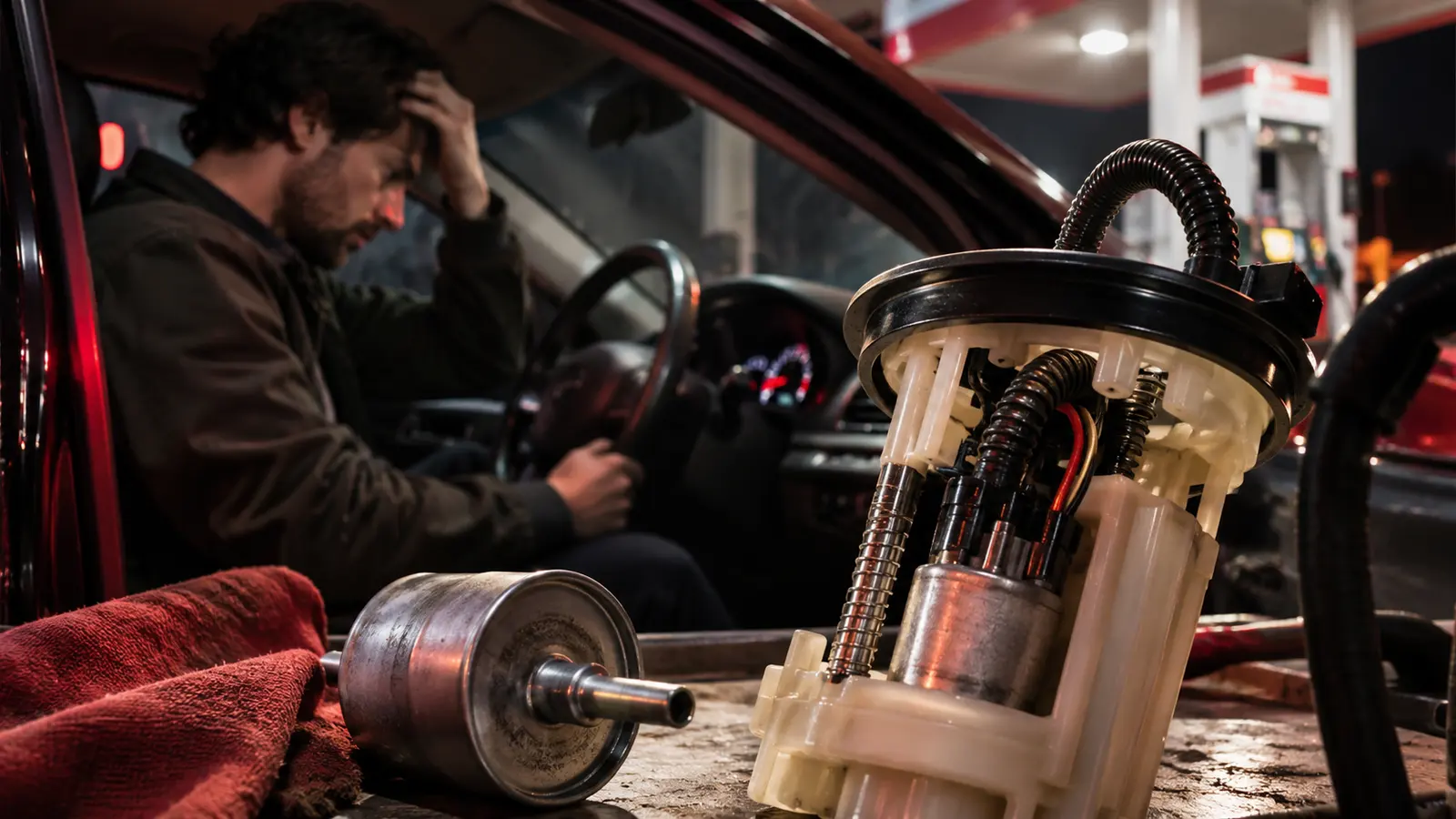
The fuel system stores fuel and delivers it to the engine at the right pressure, where injectors meter it precisely. This guide covers each part, the difference between port and direct injection, common faults, leaks and smells, and practical ways to use less fuel.
- Topic
- Engine Problems
- Sections
- 9
- Reading time
- 4 min
- Applies to
- All regions
The fuel system stores fuel and delivers it to the engine at the right pressure, where injectors spray precisely metered amounts into the engine. A problem anywhere along the way, from the tank to the injectors, shows up as hard starting, hesitation, stalling, poor economy or a fuel smell. This AllInformations Automotive guide covers each part, common faults and how to save fuel.
From tank to engine
The fuel tank
The tank stores fuel and contains the fuel pump on most modern cars. The filler neck and cap seal it to control vapour. See driving without a fuel cap.
The fuel pump
Usually an electric pump inside the tank pushes fuel to the engine at pressure. See fuel pump and symptoms of a bad fuel pump.
The fuel filter
The fuel filter traps debris before it reaches the injectors. Some are serviceable; others are built into the pump module.
Lines and rail
Fuel lines carry fuel forward to a fuel rail that feeds each injector.
Injectors
Fuel injectors are electrically controlled valves that spray fuel in a fine mist, timed and measured by the engine computer.
How fuel injection works
Port injection
Fuel is sprayed into the intake port, just before the intake valve, where it mixes with air.
Direct injection
Direct injection means fuel is injected straight into each cylinder's combustion chamber. The most common modern form is common-rail injection, which keeps fuel at high pressure in a shared rail.
Port vs direct at a glance
| Port injection | Direct injection | |
|---|---|---|
| Where fuel goes | Intake port | Combustion chamber |
| Pressure | Lower | Much higher |
| Typical issue | Injector deposits | Intake valve carbon build-up (petrol) |
From carburettors to injection
Carburettors were largely replaced by fuel injection on new cars by the early 1990s, because injection meters fuel more precisely.
Air metering
Matching fuel to air
The engine computer measures incoming air with a mass airflow sensor or MAP sensor, then sets injector timing. See MAP vs MAF sensor.
The throttle
The throttle body controls how much air enters; dirty throttle bodies cause rough idle. See engine surging at idle.
Common fuel system problems
Symptoms and likely causes
| Symptom | Possible cause |
|---|---|
| Cranks but won't start | Pump, relay, fuse, empty tank |
| Hesitation or stalling under load | Weak pump, clogged filter, air metering |
| Rough idle | Dirty throttle body, vacuum leak, injector |
| Fuel smell | Loose cap, leak, injector seal |
| Poor economy | Tyres, driving style, sensors, injectors |
See car stalls when accelerating, car losing power when accelerating and car won't start after getting gas.
Fuel gauge problems
A faulty sender in the tank can make the gauge read wrong. See fuel gauge not working.
Check engine light after refuelling
Often a loose cap. See check engine light after getting gas.
Leaks and smells
Treat fuel leaks as urgent
Dripping or pooling fuel is a fire risk. Don't start the engine. See car leaking fuel and car smells like gas.
Petrol vs diesel fuel systems
Different fuels, different hardware
Diesels inject fuel at very high pressure and rely on compression to ignite it. Putting the wrong fuel in either can cause serious damage: don't start the engine and get the tank drained. See diesel engines: the complete guide and petrol vs diesel maintenance.
Using less fuel
Driving habits
FuelEconomy.gov notes that aggressive driving (speeding, rapid acceleration and braking) wastes fuel. Smooth driving, steady speeds, correct tyre pressures and removing unused roof racks all help. See how to improve fuel economy and our fuel economy calculator.
When economy suddenly drops
A sudden drop points to a fault rather than driving style. See car using more fuel than usual.
Maintenance
What to do
- Replace the fuel filter if your schedule lists one.
- Avoid running on empty regularly.
- Use the fuel grade your handbook specifies.
- Get starting and running problems diagnosed early.
Safety
Fuel system work involves pressurised, flammable fuel. Leave it to a professional unless you're properly equipped.
Related guides
Frequently asked questions
Is running the tank low bad for the fuel pump?
Many in-tank pumps use the surrounding fuel for cooling, and very low levels risk running dry and picking up sediment. Avoid running on empty regularly.
Do I need fuel system cleaner?
Not routinely. Use good-quality fuel and follow your service schedule; diagnose specific symptoms rather than adding cleaners as a fix-all.
Why does my car smell of fuel?
Check the fuel cap first, then look for leaks. A strong smell with drips is a fire risk; don't start the engine.
Tools that can help
Need a mechanic?
Find rated garages near you by city, ZIP code or postcode, with directions.
About this guide
Written by Editorial Team using manufacturer documentation, government road-safety guidance and motoring-organisation advice. It explains likely causes and safe checks. It is not a diagnosis. How we write and check guides.
More engine problems guides
 Engine Problems
Car Exhaust and Emissions: The Complete Guide to Catalytic Converters, Sensors and Smoke
The exhaust system carries burnt gases away, cleans them with a catalytic converter (and on diesels a DPF and SCR), and quietens the engine. This guide explains each part, what different smoke colours and noises mean, catalytic converter theft, and emissions tests.
Updated November 22, 2026Read Engine Problems
Engine Cooling System: The Complete Guide to Coolant, Overheating and Repairs
The cooling system carries heat away from the engine using coolant, a water pump, a thermostat, a radiator and fans, all under pressure so coolant can run above 100 °C. This guide explains each part, why engines overheat, how to spot leaks and how to check coolant safely.
Updated November 22, 2026Read Engine Problems
Diesel Engines: The Complete Guide to How They Work, DPF, AdBlue and Care
Diesel engines ignite fuel by compression rather than a spark. Modern diesels add glow plugs, a particulate filter, AdBlue and EGR to start reliably and cut emissions. This guide explains each system, the warning lights and how to keep a diesel healthy.
Updated November 22, 2026Read