
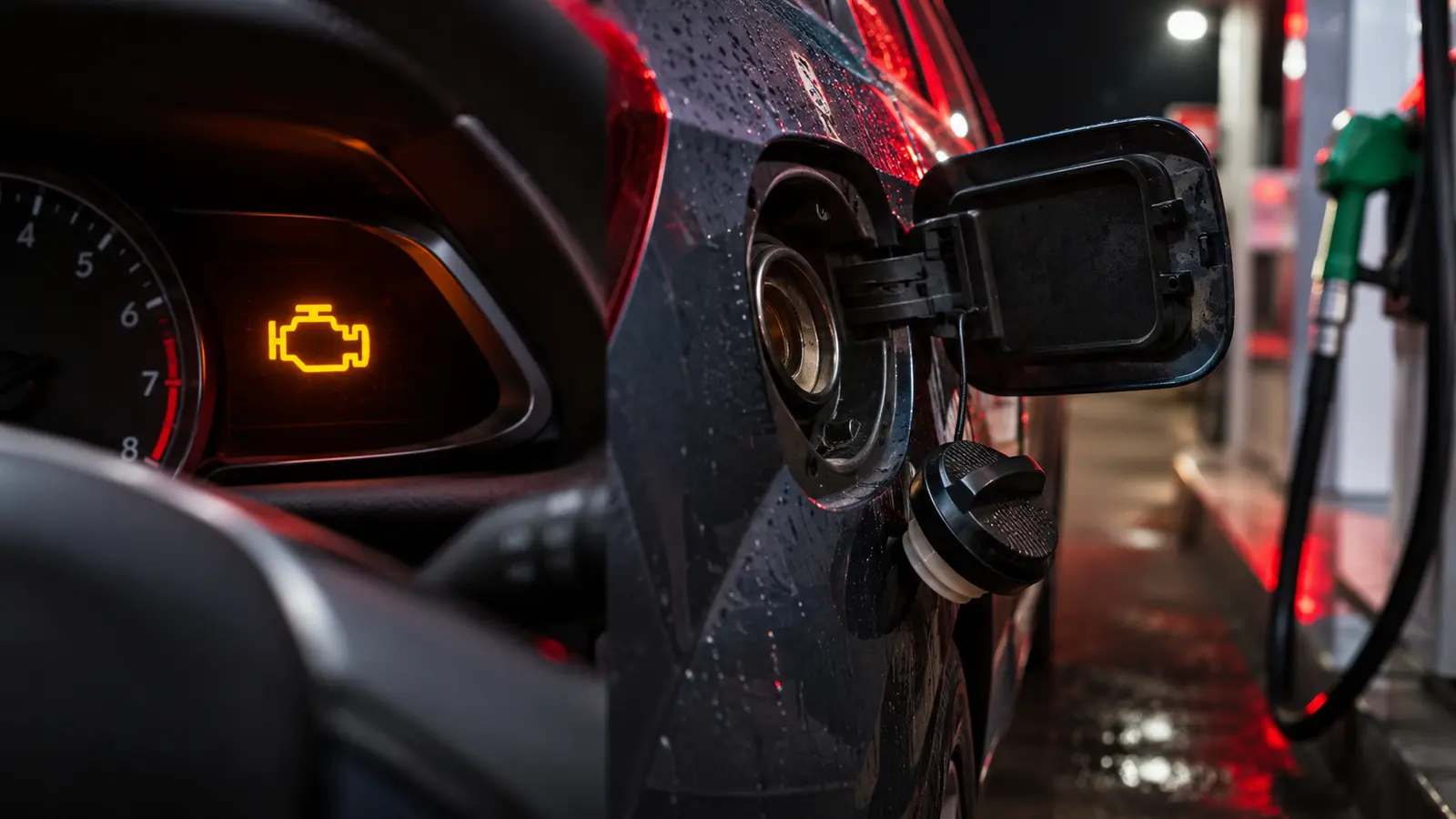
Check Engine Light After Getting Gas: Common Causes
Quick answer
A check engine light that appears soon after refuelling is very often a loose or worn fuel cap, which the EVAP system reports as a vapour leak. Tighten the cap and read the code.
- Topic
- Warning Lights
- Sections
- 6
- Reading time
- 1 min
- Applies to
- All regions
If your check engine light comes on after getting gas, the most common cause is a loose, damaged or wrong fuel cap. The evaporative emissions (EVAP) system tests for vapour leaks, and an open cap looks like a leak. Other causes include overfilling the tank and a sticking purge valve.
Is it safe to drive?
Yes, if the light is steady and the car runs normally. If it flashes or the car runs badly, slow down and have it checked.
Causes at a glance
| Cause | Typical code |
|---|---|
| Loose or worn cap | P0455 / P0457 (EVAP leak) |
| Small EVAP leak | P0442 / P0456 |
| Topping off past the click | EVAP purge or canister codes |
| Stuck purge valve | P0496, rough start after refuelling |
| Bad fuel | Misfire codes |
Check these in order
- Tighten the cap until it clicks.
- Inspect the seal for cracks; replace if damaged.
- Read the code with an OBD2 scanner and look it up in our code lookup.
- Drive normally for a few days and recheck.
Preventing it
- Stop at the first click of the pump.
- Always close the cap fully.
- Replace a cap with a cracked seal.
Regional notes
In US states with OBD-based emissions testing, a lit check engine light or incomplete monitors can fail the test.
Related guides
Frequently asked questions
How long until the light goes off after tightening the cap?
Often after several drives, once the EVAP test passes. A scan tool can clear it sooner.
Can bad fuel cause it?
Contaminated fuel can cause misfires and set codes, but the cap is far more common.
Tools that can help
Need a mechanic?
Find rated garages near you by city, ZIP code or postcode, with directions.
About this guide
Written by Editorial Team using manufacturer documentation, government road-safety guidance and motoring-organisation advice. It explains likely causes and safe checks. It is not a diagnosis. How we write and check guides.
More warning lights guides
 Warning Lights
Car Dashboard Warning Lights: The Complete Guide to Colours, Meanings and What to Do
Dashboard lights follow a simple colour logic: red means stop or act now, amber means check soon, green or blue means a system is on. This guide explains the most important warnings, what a flashing check engine light means, and how to read fault codes.
Updated November 22, 2026Read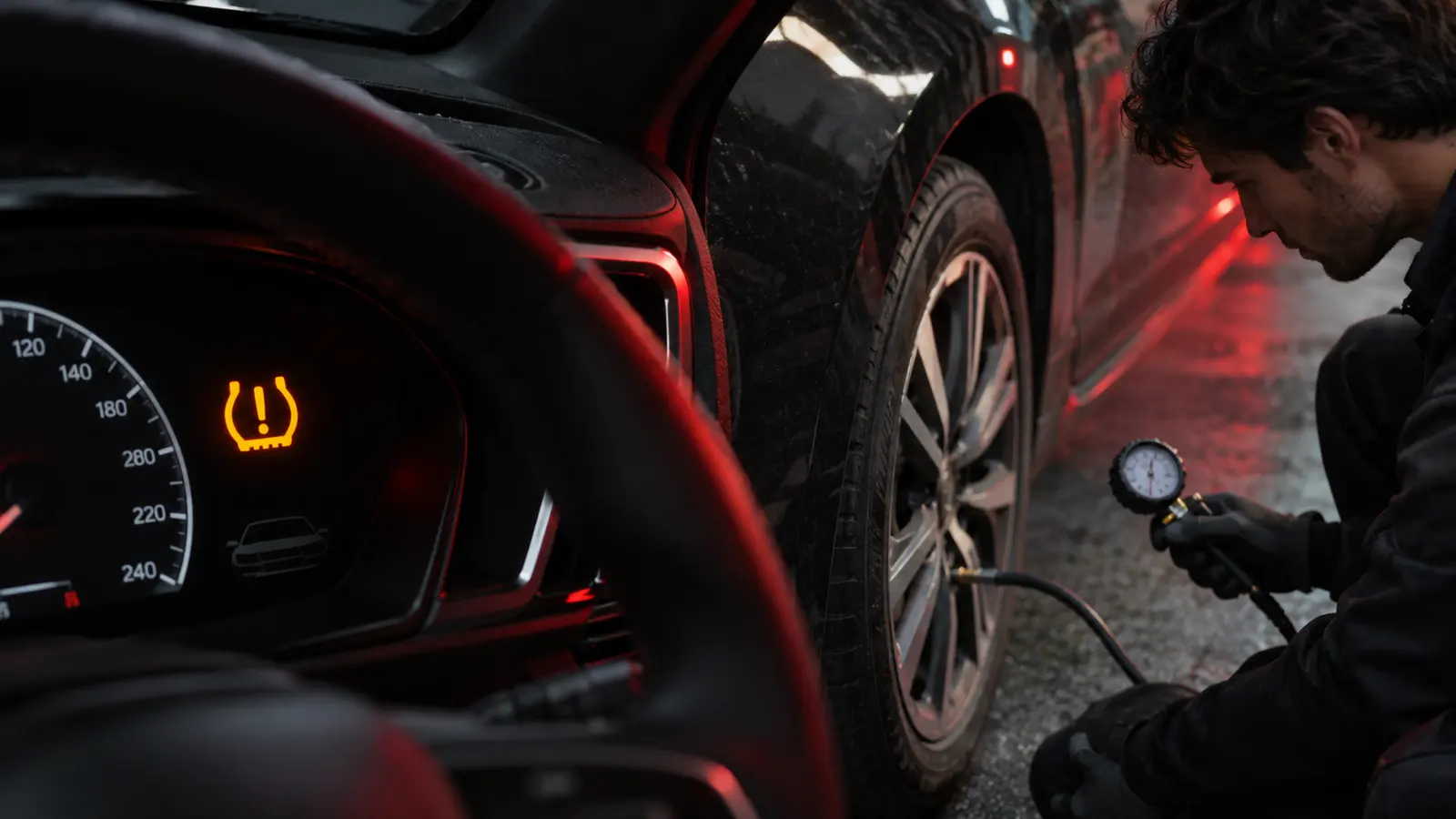 Warning Lights
Exclamation Mark Warning Light: What It Means
An exclamation mark on the dashboard means different things depending on its shape and colour: inside a horseshoe tyre shape it's low tyre pressure; inside a circle (often red) it's the brake system; inside a triangle it's a general warning with a message.
Updated November 22, 2026ReadWarning LightsABS and Traction Control Lights On Together: Why
ABS and traction control share the same wheel-speed sensors and hydraulic unit, so a single fault, often a wheel-speed sensor or its wiring, turns both lights on.
Updated November 22, 2026Read