
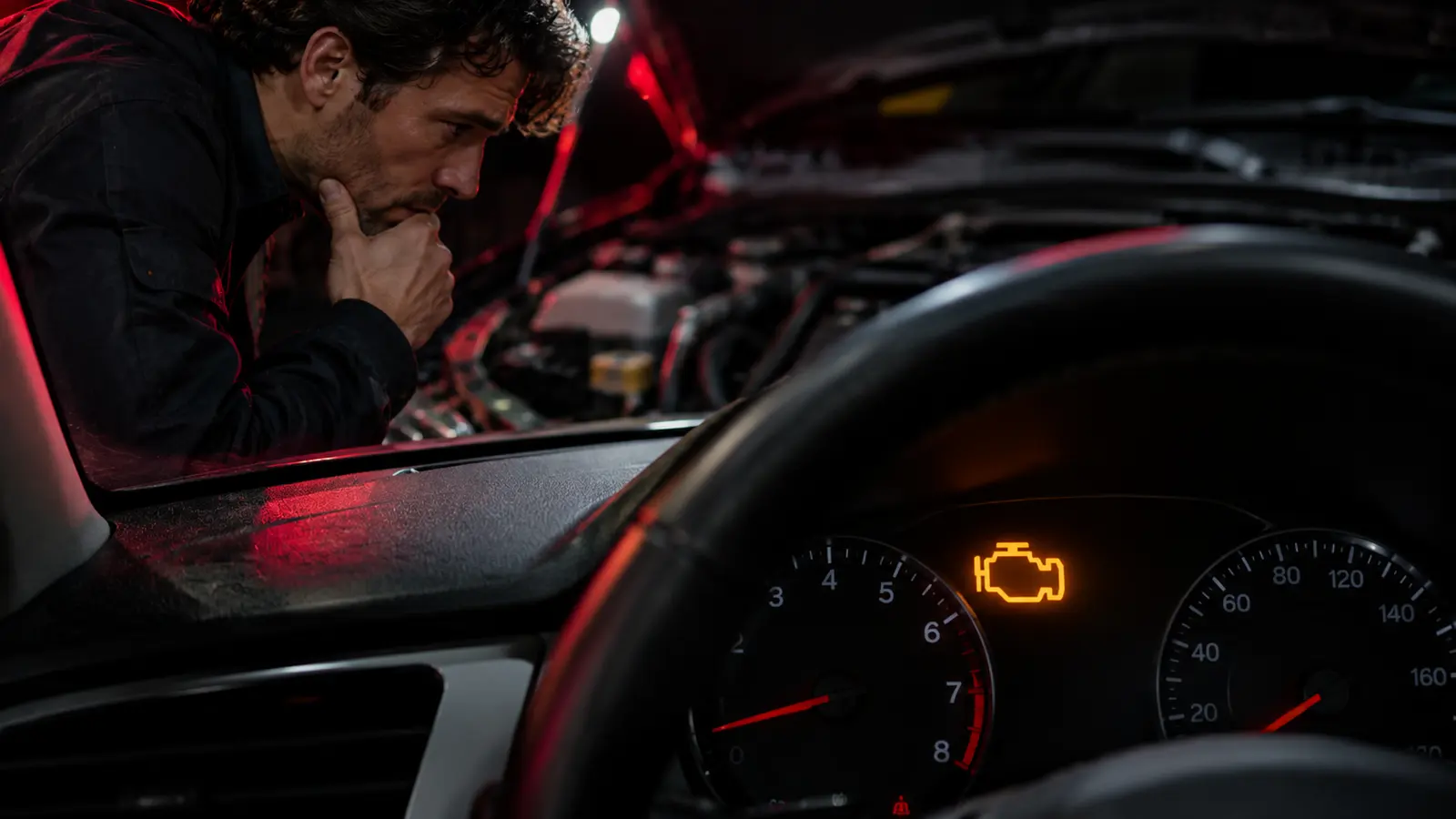
Check Engine Light Comes On and Off: What It Means
Quick answer
A light that comes and goes means the engine computer sees a fault, re-tests it, and turns the light off when it passes. Loose gas caps, marginal sensors and intermittent misfires are common.
- Topic
- Warning Lights
- Sections
- 9
- Reading time
- 2 min
- Applies to
- All regions
When the check engine light comes on and off, the engine computer has spotted a fault, re-tested it on later drives, and turned the light off when the test passed. That means an intermittent fault. Common causes are a loose gas cap, a sensor that's starting to fail, a misfire only under load, or a loose connector.
Is it safe to drive?
If the light is steady when on and the car runs normally, yes, but get the code read. If the light flashes, or you notice shaking or power loss, stop as soon as it's safe.
Causes at a glance
| Pattern | Likely cause |
|---|---|
| Comes on a day or two after refuelling | Loose or worn gas cap (EVAP) |
| On in cold or damp weather | Marginal sensor or connector |
| On under hard acceleration or towing | Misfire under load |
| On at highway speed | Catalyst or oxygen sensor monitor |
| Random, with flickering gauges | Charging or wiring fault |
Check these in order
- Tighten the gas cap until it clicks.
- Read stored and pending codes, even when the light is off. Many scanners show history codes.
- Note the conditions when it comes on: temperature, speed, fuel level, load.
- Look up the code in our OBD2 lookup.
Causes explained
EVAP system
The EVAP leak test runs only in certain conditions, so a leaky cap can set the light, then pass the next test.
Sensors on the edge
Oxygen sensors, MAF sensors and temperature sensors can drift. They fail tests some days and pass others.
Intermittent misfire
A weak coil may misfire only under high load. The light comes on, then goes off when driving gently.
Connectors and wiring
Corroded or loose connectors make intermittent contact, especially with vibration or moisture.
What a mechanic will do
They'll read freeze-frame data, which records the conditions when the code set, then test the suspect component under those conditions.
What affects the cost
A gas cap is inexpensive. Sensors and coils are moderate. Intermittent wiring faults can take time to trace.
How to prevent it
- Keep the gas cap tight and replace it if the seal is cracked.
- Don't ignore a pending code. It's an early warning.
Regional notes
In US states with emissions testing, a car may be rejected if its readiness monitors aren't complete after codes are cleared. Drive normally for a few days before testing.
Related problems
Frequently asked questions
If the light goes off, is the problem fixed?
Not necessarily. The fault code is usually stored as a history code. Have it read so you know what happened.
Can weather make the check engine light come and go?
Yes. Humidity, cold and heat can affect marginal sensors, connectors and EVAP tests.
How many drives does it take for the light to go off?
Often around three consecutive drives without the fault, but it varies by fault type and manufacturer.
Tools that can help
How the parts involved work
Need a mechanic?
Find rated garages near you by city, ZIP code or postcode, with directions.
About this guide
Written by Editorial Team using manufacturer documentation, government road-safety guidance and motoring-organisation advice. It explains likely causes and safe checks. It is not a diagnosis. How we write and check guides.
More warning lights guides
 Warning Lights
Car Dashboard Warning Lights: The Complete Guide to Colours, Meanings and What to Do
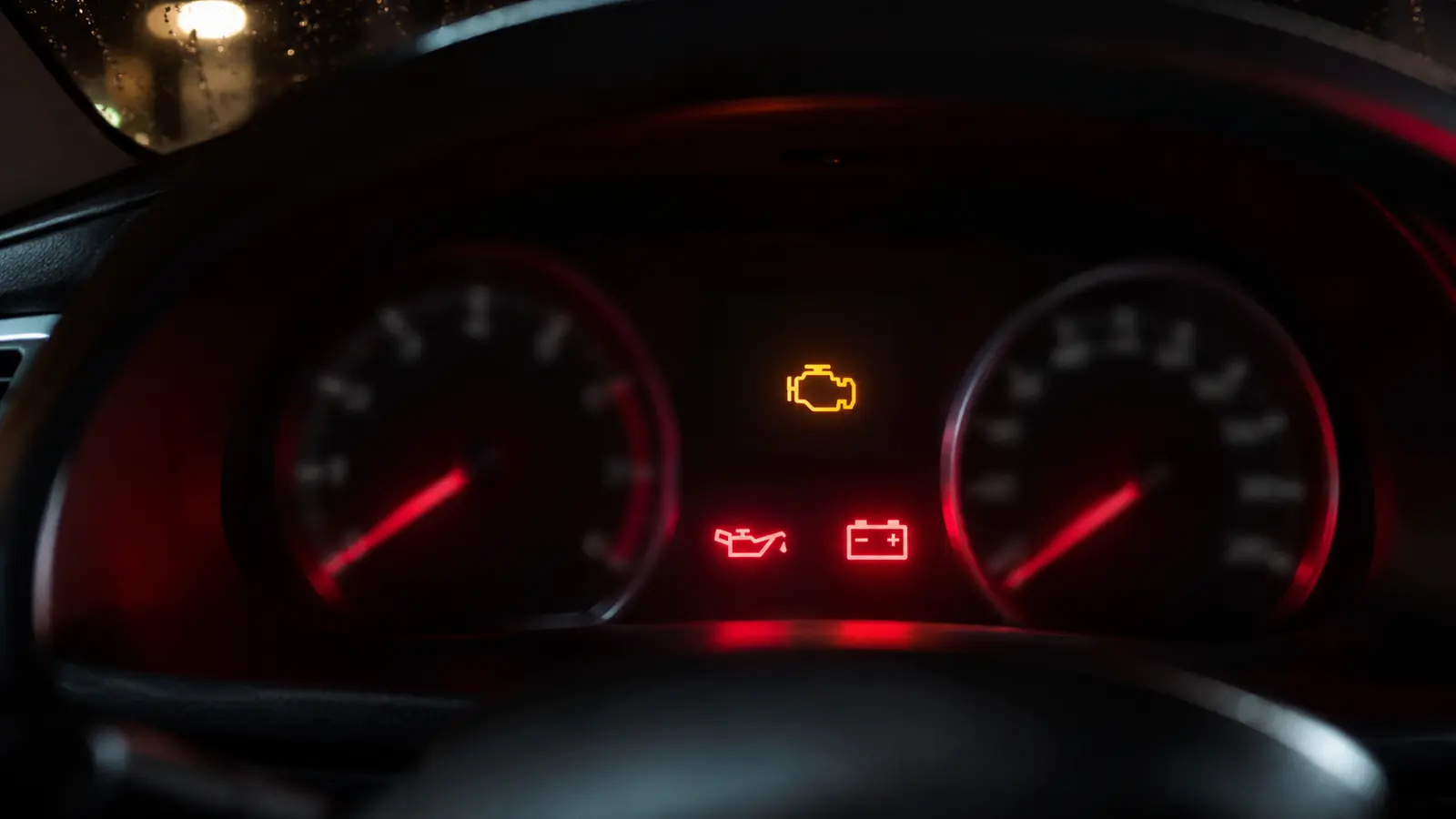
Dashboard lights follow a simple colour logic: red means stop or act now, amber means check soon, green or blue means a system is on. This guide explains the most important warnings, what a flashing check engine light means, and how to read fault codes.
Updated November 22, 2026Read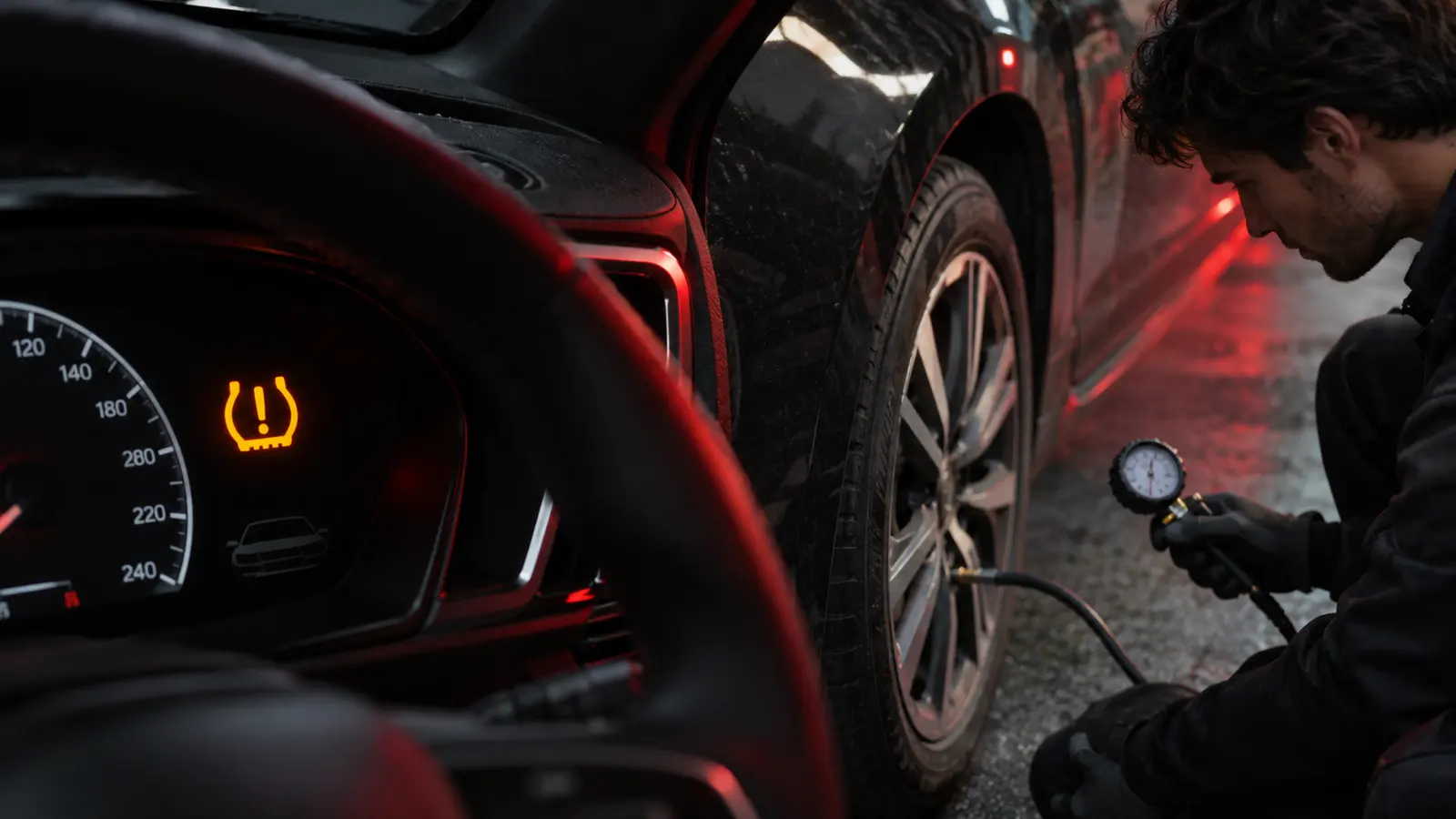 Warning Lights
Exclamation Mark Warning Light: What It Means
An exclamation mark on the dashboard means different things depending on its shape and colour: inside a horseshoe tyre shape it's low tyre pressure; inside a circle (often red) it's the brake system; inside a triangle it's a general warning with a message.
Updated November 22, 2026ReadWarning LightsABS and Traction Control Lights On Together: Why
ABS and traction control share the same wheel-speed sensors and hydraulic unit, so a single fault, often a wheel-speed sensor or its wiring, turns both lights on.
Updated November 22, 2026Read