
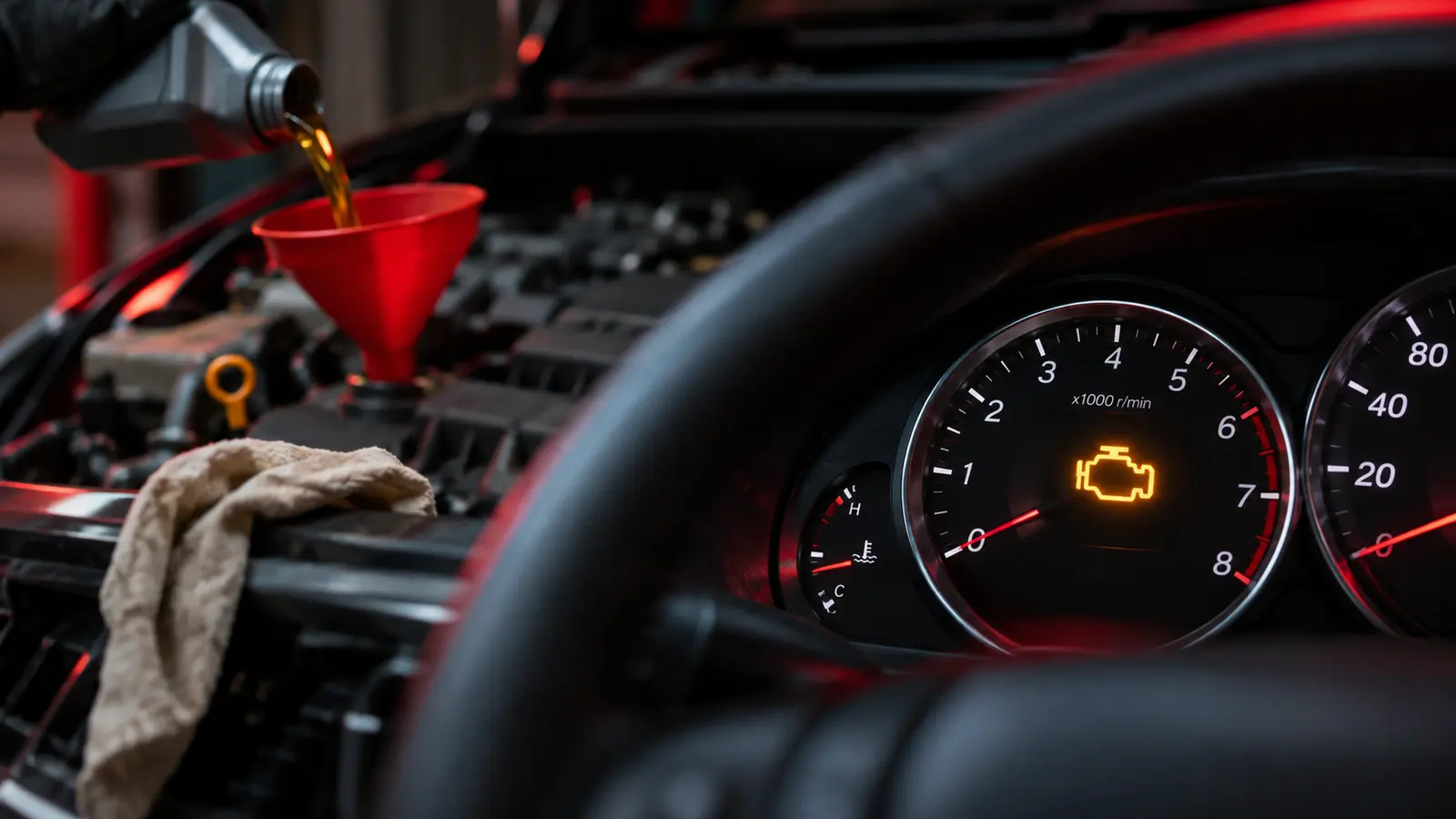
Check Engine Light On After an Oil Change: Why
Quick answer
The usual reasons are simple: the oil filler cap isn't on properly, the dipstick isn't seated, or a sensor connector was knocked. Sometimes it's a coincidence with an existing fault.
- Topic
- Warning Lights
- Sections
- 9
- Reading time
- 2 min
- Applies to
- All regions
If your check engine light comes on right after an oil change, the cause is often simple: the oil filler cap isn't sealed, the dipstick isn't fully seated, or a sensor connector was knocked during the service. These let unmetered air in or upset a sensor. Sometimes the timing is just a coincidence with another fault.
Is it safe to drive?
If the light is steady and the car drives normally, yes. Check the simple things below. If it's flashing, or the red oil pressure light is on, stop.
Causes at a glance
| Cause | Typical code or clue |
|---|---|
| Oil filler cap loose or missing | Lean codes P0171/P0174, rough idle |
| Dipstick not seated | Lean codes, whistling sound |
| Knocked sensor connector | Sensor-specific code |
| Wrong oil grade (some engines) | Variable valve timing codes such as P0011 |
| Overfilled oil | Smoke, rough running |
| Coincidence | Code unrelated to anything touched |
Check these in order
- Oil filler cap: remove and refit it, turning until it locks.
- Dipstick: push it fully home.
- Oil level: check it's between the marks, not over.
- Read the code and look it up in our OBD2 code lookup.
- Ask the garage which oil grade they used.
Causes explained
Vacuum leaks from the cap or dipstick
The crankcase is connected to the intake through the PCV system. A gap at the cap or dipstick tube lets in air the engine computer didn't measure.
Disturbed connectors
Under-bonnet connectors can be knocked or not clicked home after a filter change.
Oil grade and level
Some engines rely on oil of a specific viscosity for valve timing. Overfilling can cause foaming and smoke.
Coincidence
If the code relates to something like the catalytic converter or EVAP system, it probably isn't linked to the oil change.
What a mechanic will do
They'll read the code, check the cap and PCV system, confirm oil level and grade, and inspect connectors near the work area.
What affects the cost
Refitting a cap is free. If the garage that did the oil change caused it, they should fix it at no charge.
How to prevent it
- Check the cap and dipstick before driving away from any service.
- Use the oil grade in the handbook.
Regional notes
UK drivers will see this called the engine management light. An illuminated EML is an MOT failure, so get it cleared before a test.
Related problems
Frequently asked questions
Is the check engine light the same as the oil change reminder?
No. A service or oil-change reminder is usually a spanner icon or message and is reset after the service. The check engine light means a fault code is stored.
Can the wrong oil turn on the check engine light?
On some engines with variable valve timing, the wrong viscosity can affect timing control and set a code. Use the grade in the handbook.
Will the light go off by itself?
If the cause is fixed (like refitting the cap), it may go off after several drives. Reading and clearing the code is quicker.
Tools that can help
Need a mechanic?
Find rated garages near you by city, ZIP code or postcode, with directions.
About this guide
Written by Editorial Team using manufacturer documentation, government road-safety guidance and motoring-organisation advice. It explains likely causes and safe checks. It is not a diagnosis. How we write and check guides.
More warning lights guides
 Warning Lights
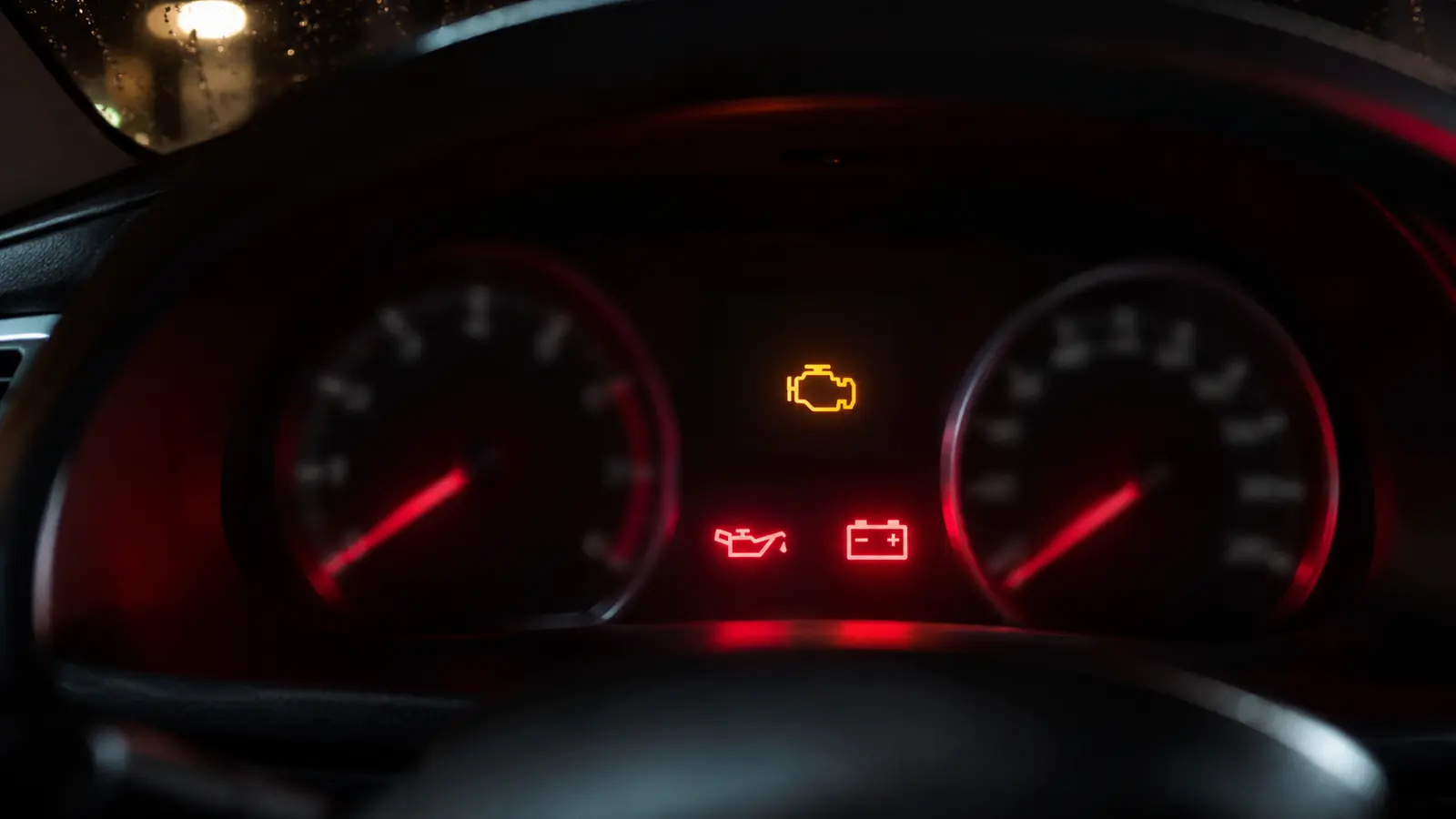
Car Dashboard Warning Lights: The Complete Guide to Colours, Meanings and What to Do
Dashboard lights follow a simple colour logic: red means stop or act now, amber means check soon, green or blue means a system is on. This guide explains the most important warnings, what a flashing check engine light means, and how to read fault codes.
Updated November 22, 2026Read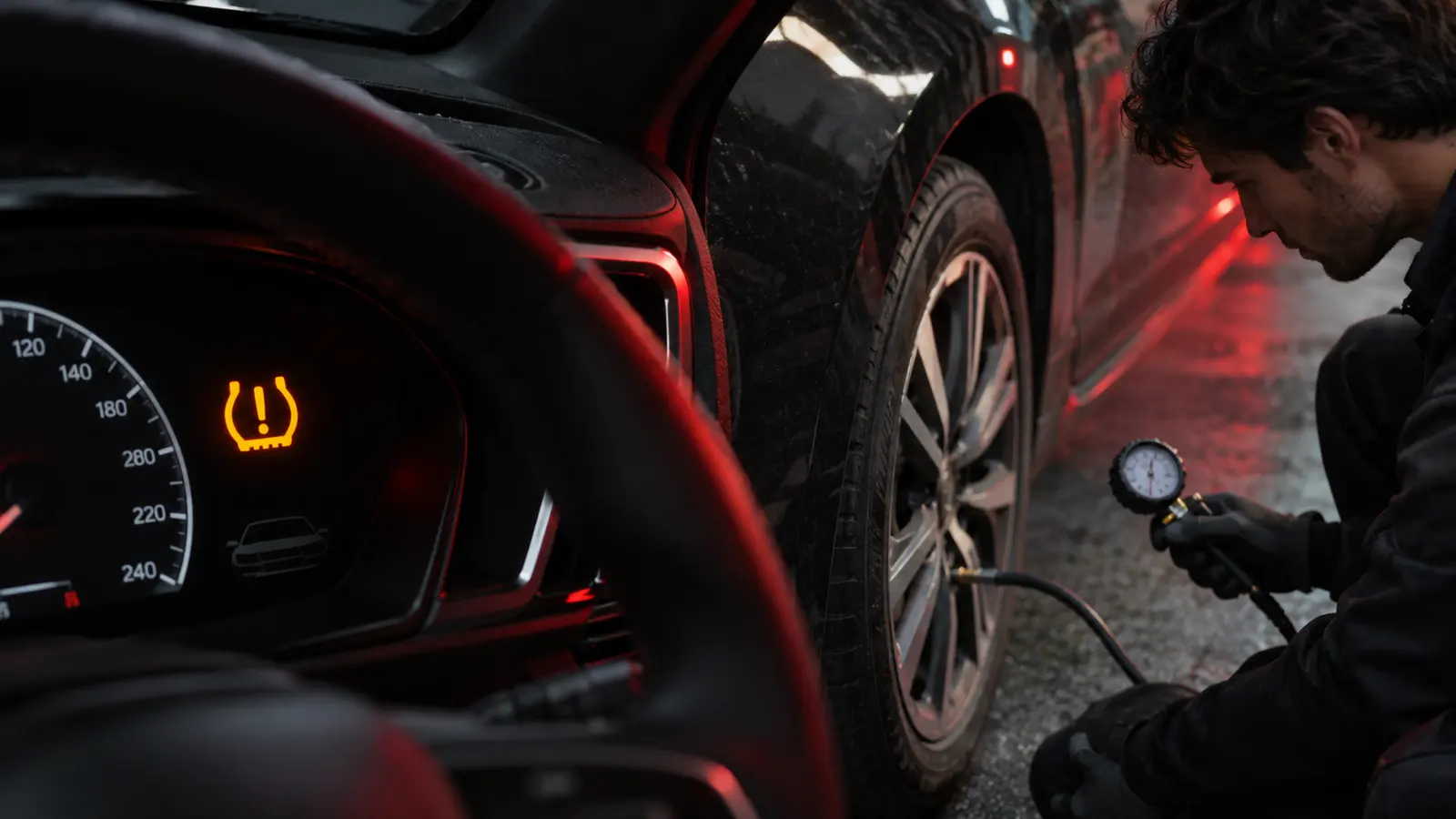 Warning Lights
Exclamation Mark Warning Light: What It Means
An exclamation mark on the dashboard means different things depending on its shape and colour: inside a horseshoe tyre shape it's low tyre pressure; inside a circle (often red) it's the brake system; inside a triangle it's a general warning with a message.
Updated November 22, 2026ReadWarning LightsABS and Traction Control Lights On Together: Why
ABS and traction control share the same wheel-speed sensors and hydraulic unit, so a single fault, often a wheel-speed sensor or its wiring, turns both lights on.
Updated November 22, 2026Read