
Car Dashboard Warning Lights: The Complete Guide to Colours, Meanings and What to Do
Quick answer
Dashboard lights follow a simple colour logic: red means stop or act now, amber means check soon, green or blue means a system is on. This guide explains the most important warnings, what a flashing check engine light means, and how to read fault codes.
- Topic
- Warning Lights
- Sections
- 9
- Reading time
- 4 min
- Applies to
- All regions
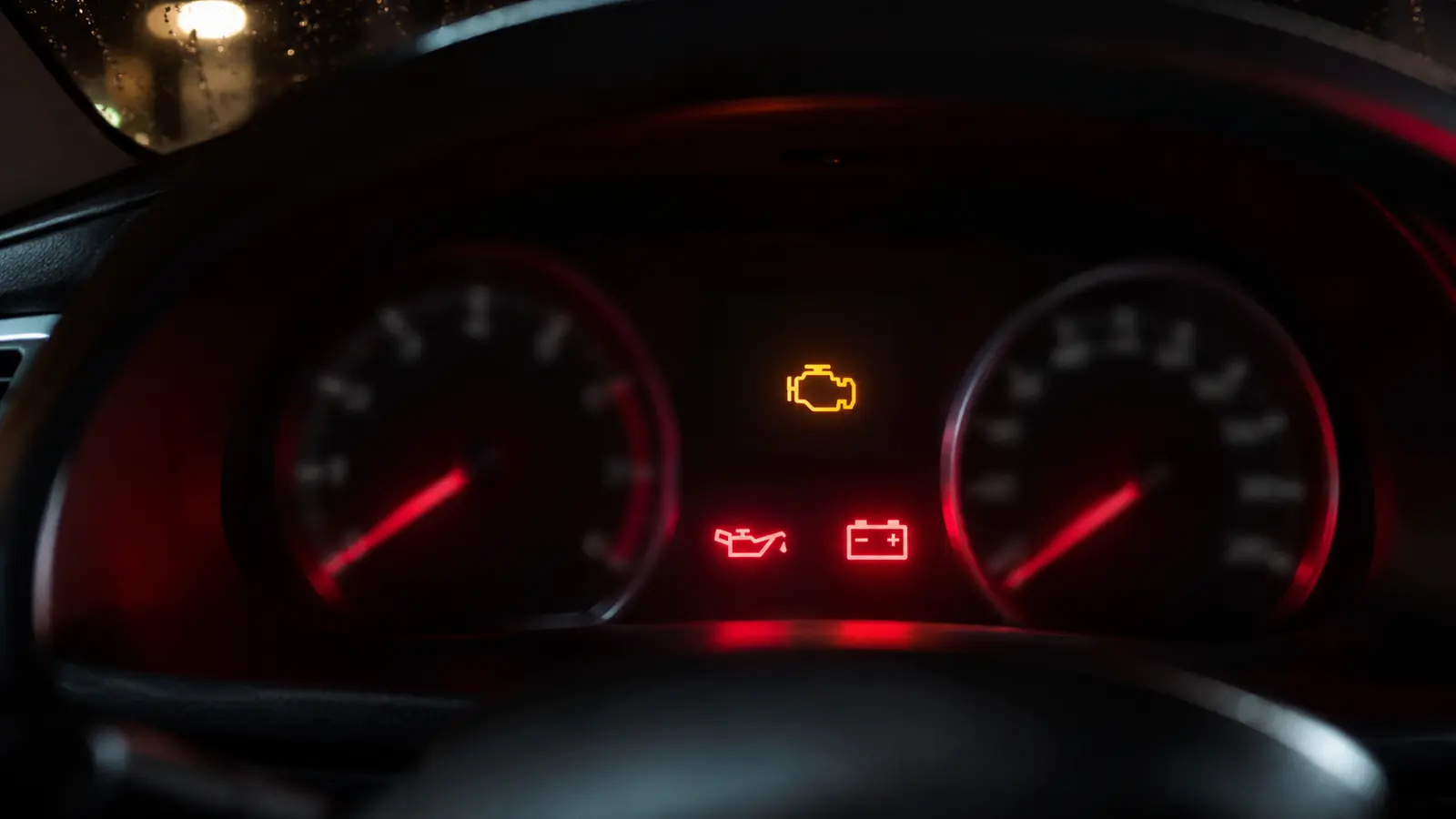
Dashboard warning lights are your car's way of telling you something needs attention. They follow a simple colour logic, so even an unfamiliar symbol gives you a clue: red means stop or act now, amber/yellow means check soon, and green or blue usually means a system is switched on. This AllInformations Automotive guide explains the most important warnings and what to do about each. For every symbol, see our warning lights library.
How to read the colours
Colour meanings
| Colour | Meaning | What to do |
|---|---|---|
| Red | Serious or safety-critical | Stop safely as soon as possible and check |
| Amber / yellow | A fault or something needs attention | Get it checked soon |
| Green / blue | A system is on (lights, cruise control) | Information only |
The start-up bulb check
When you switch on the ignition, most lights glow briefly as a self-test. They should go out within seconds of starting. One that stays on is a real warning.
Red lights: stop and check
Oil pressure
Low oil pressure can wreck an engine within minutes. Stop, switch off and check the level. See the oil pressure light and oil light flickering at idle.
Coolant temperature
The engine is overheating. Stop and let it cool before opening anything. See the coolant temperature light and engine cooling system: the complete guide.
Brake system
A red (!) can mean the parking brake is on, low fluid or a fault. See the brake warning light and exclamation mark warning light.
Charging system
The battery isn't being charged; the car will run until the battery is flat. See the battery / charging light and symptoms of a bad alternator.
Airbag
The airbag system may not deploy in a crash. Get it checked promptly. See the airbag light.
The check engine light
Steady vs flashing
The check engine light has two stages. Steady means a fault has been logged and the car should be checked soon. Flashing usually means a severe misfire that can overheat and damage the catalytic converter: reduce speed, avoid hard acceleration and get it checked promptly. See check engine light flashing.
Common causes
Loose fuel caps, oxygen sensors, misfires, catalytic converter efficiency and evaporative leaks are frequent triggers. See check engine light comes on and off, after getting gas and after an oil change.
On-board diagnostics
Since OBD-II, the engine computer stores standard fault codes you can read with a scanner. See how to use an OBD2 scanner, our OBD2 code lookup and free check engine light scans.
Amber lights: check soon
ABS and traction control
ABS and stability control share sensors, so they often light together. Normal braking usually still works. See ABS light and ABS and traction control lights on together.
Tyre pressure
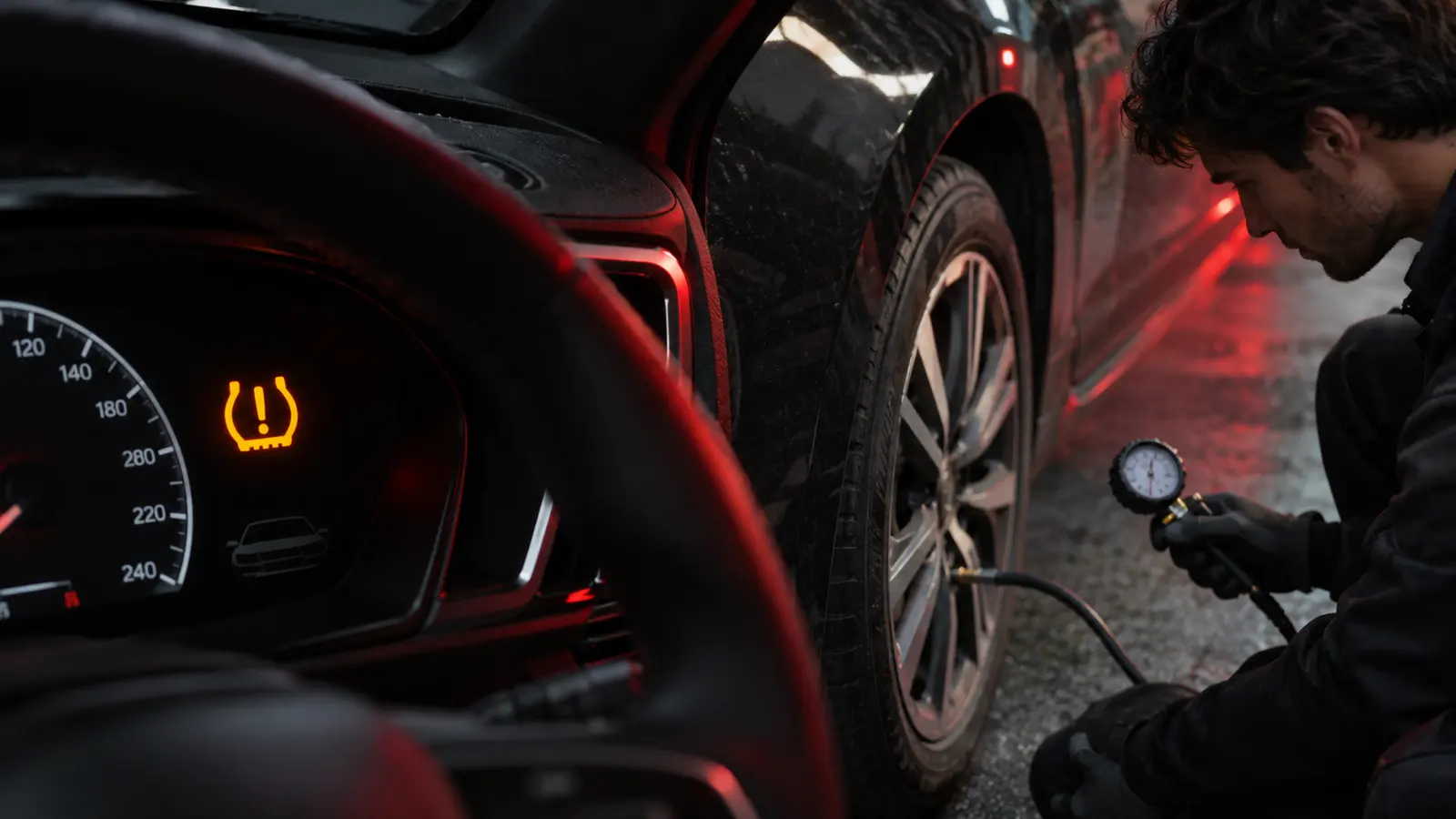
One or more tyres is low. Check when cold. See tyre pressure light and tyre pressure light on.
Diesel lights
Glow plug, DPF and AdBlue warnings are specific to diesels. See the glow plug light, DPF light and AdBlue light.
Power steering
Steering may become heavy. See the power steering light and heavy steering.
Low levels
Low fuel, washer fluid, coolant level and oil level lights. See low fuel, washer fluid, coolant level and oil level.
Green and blue indicators
Information lights
High beam (blue), cruise control, start-stop and lane-keeping indicators show that a system is active. See high beam, cruise control and start-stop.
Security and key lights
Immobiliser and key not detected
These relate to the key or security system and can stop the car starting. See immobiliser light, key not detected and car key fob not working.
When several lights come on at once
Electrical causes
A weak battery or failing alternator can make several unrelated lights flicker or appear together. See dashboard lights flickering.
After a battery change
Some lights appear after the battery has been disconnected until systems relearn. See check engine light after a battery change.
What to do when a light comes on
A simple routine
- Note the colour and symbol.
- Red? Find a safe place to stop and check.
- Amber? Book a check soon and read any message on the display.
- Flashing check engine light? Reduce speed and get it checked promptly.
- Unsure? Your owner's manual shows the exact symbols for your car.
Don't just clear codes
Clearing a code without fixing the cause erases useful information, and the light will come back. See how to reset a car ECU.
Related guides
Frequently asked questions
Which warning lights mean stop immediately?
Red oil pressure, coolant temperature, brake system and charging lights are the most urgent. Stop safely and check before continuing.
Why do all the lights come on when I start the car?
That's a bulb check. The lights should go out within a few seconds once the engine starts.
Will disconnecting the battery clear a warning light?
It may clear stored codes temporarily, but the light returns if the fault is still there, and you lose diagnostic information.
Tools that can help
Need a mechanic?
Find rated garages near you by city, ZIP code or postcode, with directions.
About this guide
Written by Editorial Team using manufacturer documentation, government road-safety guidance and motoring-organisation advice. It explains likely causes and safe checks. It is not a diagnosis. How we write and check guides.
More warning lights guides
 Warning Lights
Exclamation Mark Warning Light: What It Means
An exclamation mark on the dashboard means different things depending on its shape and colour: inside a horseshoe tyre shape it's low tyre pressure; inside a circle (often red) it's the brake system; inside a triangle it's a general warning with a message.
Updated November 22, 2026ReadWarning LightsABS and Traction Control Lights On Together: Why
ABS and traction control share the same wheel-speed sensors and hydraulic unit, so a single fault, often a wheel-speed sensor or its wiring, turns both lights on.
Updated November 22, 2026Read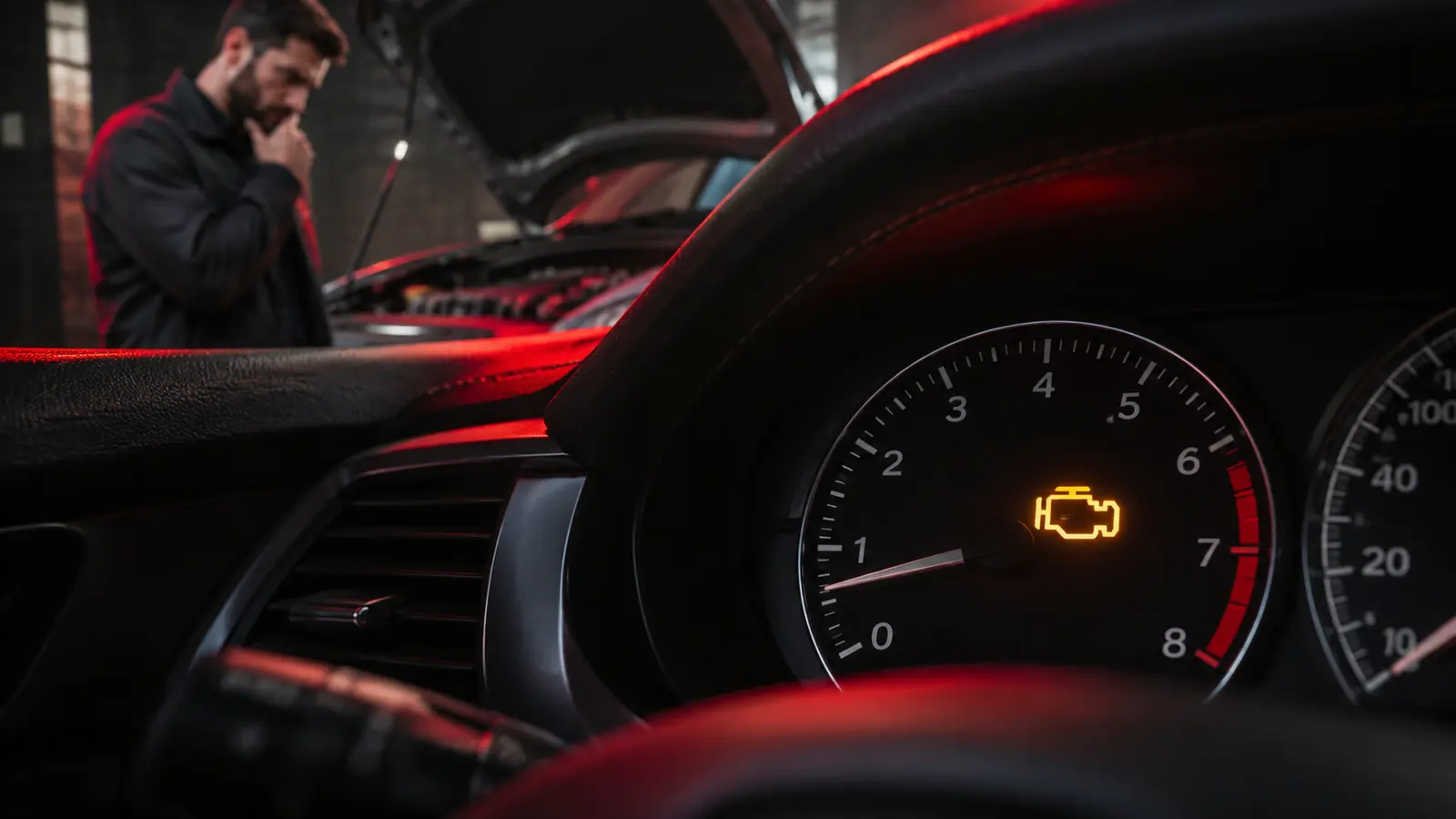 Warning Lights
Check Engine Light Flashing: What It Means and What to Do Now
A steady light means 'get it checked'. A flashing one means a misfire is happening now — slow down and stop when safe.
Updated November 22, 2026Read