
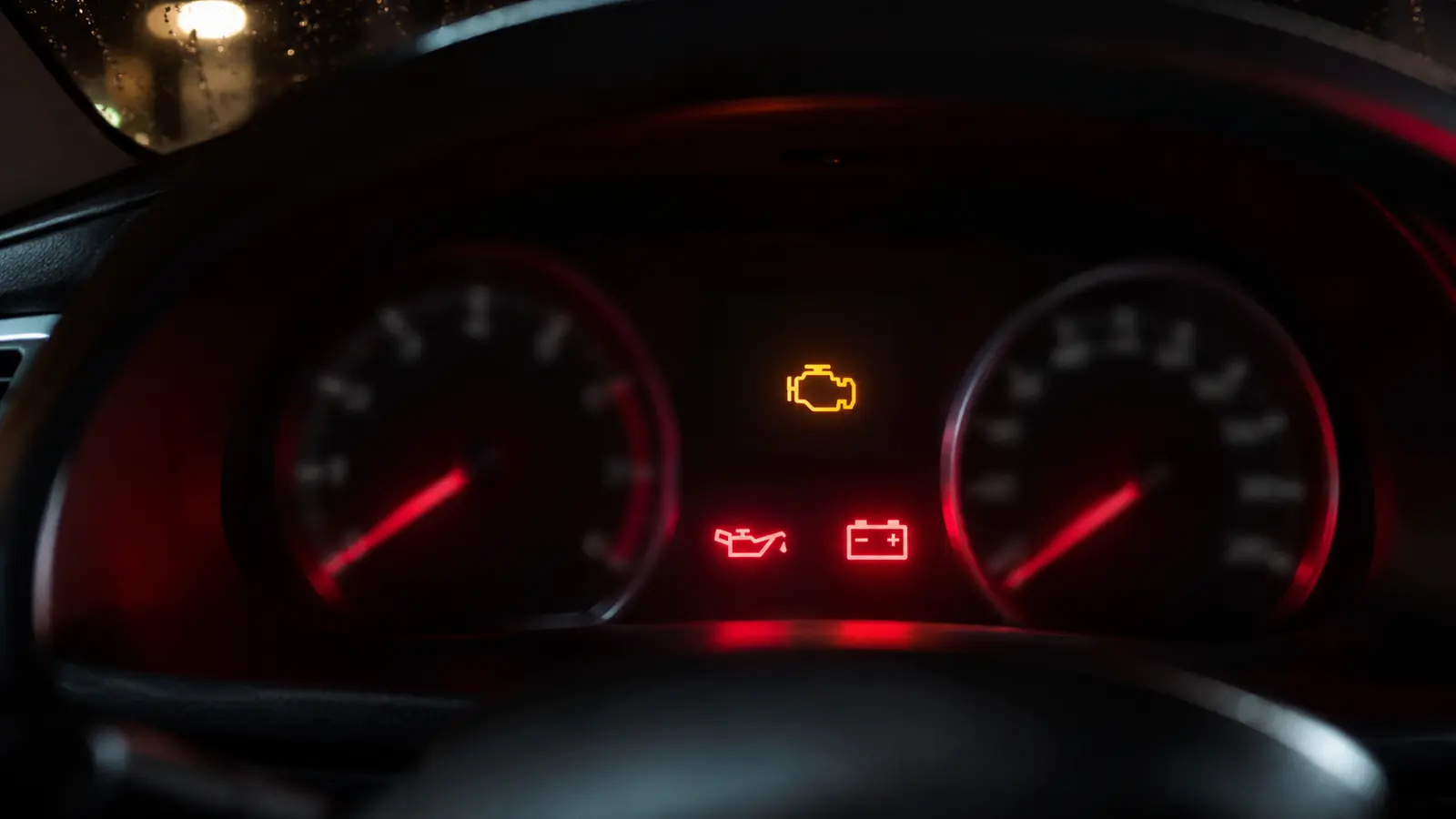
ABS and Traction Control Lights On Together: Why
Quick answer
ABS and traction control share the same wheel-speed sensors and hydraulic unit, so a single fault, often a wheel-speed sensor or its wiring, turns both lights on.
- Topic
- Warning Lights
- Sections
- 5
- Reading time
- 1 min
- Applies to
- All regions
When the ABS and traction control lights come on together, it's usually one fault affecting both, because they share the wheel-speed sensors and the ABS hydraulic unit. Common causes are a failed wheel-speed sensor, damaged sensor wiring, a dirty or damaged sensor ring, a worn wheel bearing and low battery voltage.
Is it safe to drive?
Normal brakes usually still work, but ABS and stability systems may be disabled. Leave more distance and get it checked soon. If the red brake warning is also on, stop and check before driving.
Causes at a glance
| Clue | Likely cause |
|---|---|
| After wheel or brake work | Sensor or wiring disturbed |
| With humming noise | Wheel bearing affecting the sensor ring |
| Comes and goes over bumps | Wiring fault |
| Speedometer also odd | Wheel-speed sensor |
| Several lights at start-up | Low voltage |
Check these in order
- Check the battery and charging.
- Read ABS codes: they usually name the wheel.
- Inspect the sensor wiring at that wheel.
- Check for bearing noise at that corner.
What a mechanic will do
They'll read live wheel-speed data to find the sensor that drops out, then test and repair it.
Related guides
Frequently asked questions
Do my brakes still work?
Normal braking should work, but ABS and traction control may not. Drive carefully.
Can a battery problem cause it?
Yes, low voltage can trigger several warning lights at once.
Tools that can help
Need a mechanic?
Find rated garages near you by city, ZIP code or postcode, with directions.
About this guide
Written by Editorial Team using manufacturer documentation, government road-safety guidance and motoring-organisation advice. It explains likely causes and safe checks. It is not a diagnosis. How we write and check guides.
More warning lights guides
Warning LightsCar Dashboard Warning Lights: The Complete Guide to Colours, Meanings and What to Do
Dashboard lights follow a simple colour logic: red means stop or act now, amber means check soon, green or blue means a system is on. This guide explains the most important warnings, what a flashing check engine light means, and how to read fault codes.
Updated November 22, 2026Read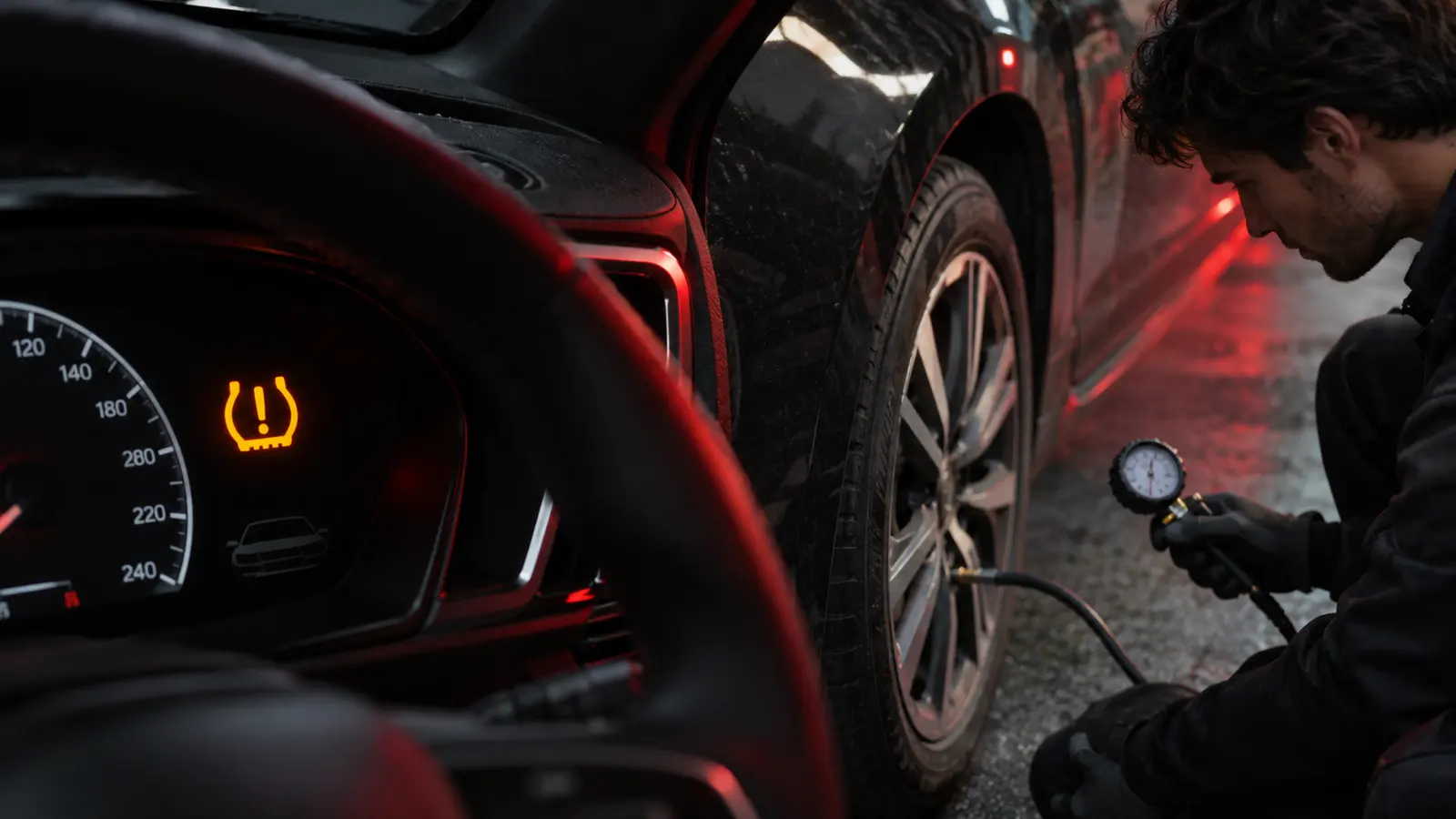 Warning Lights
Exclamation Mark Warning Light: What It Means
An exclamation mark on the dashboard means different things depending on its shape and colour: inside a horseshoe tyre shape it's low tyre pressure; inside a circle (often red) it's the brake system; inside a triangle it's a general warning with a message.
Updated November 22, 2026Read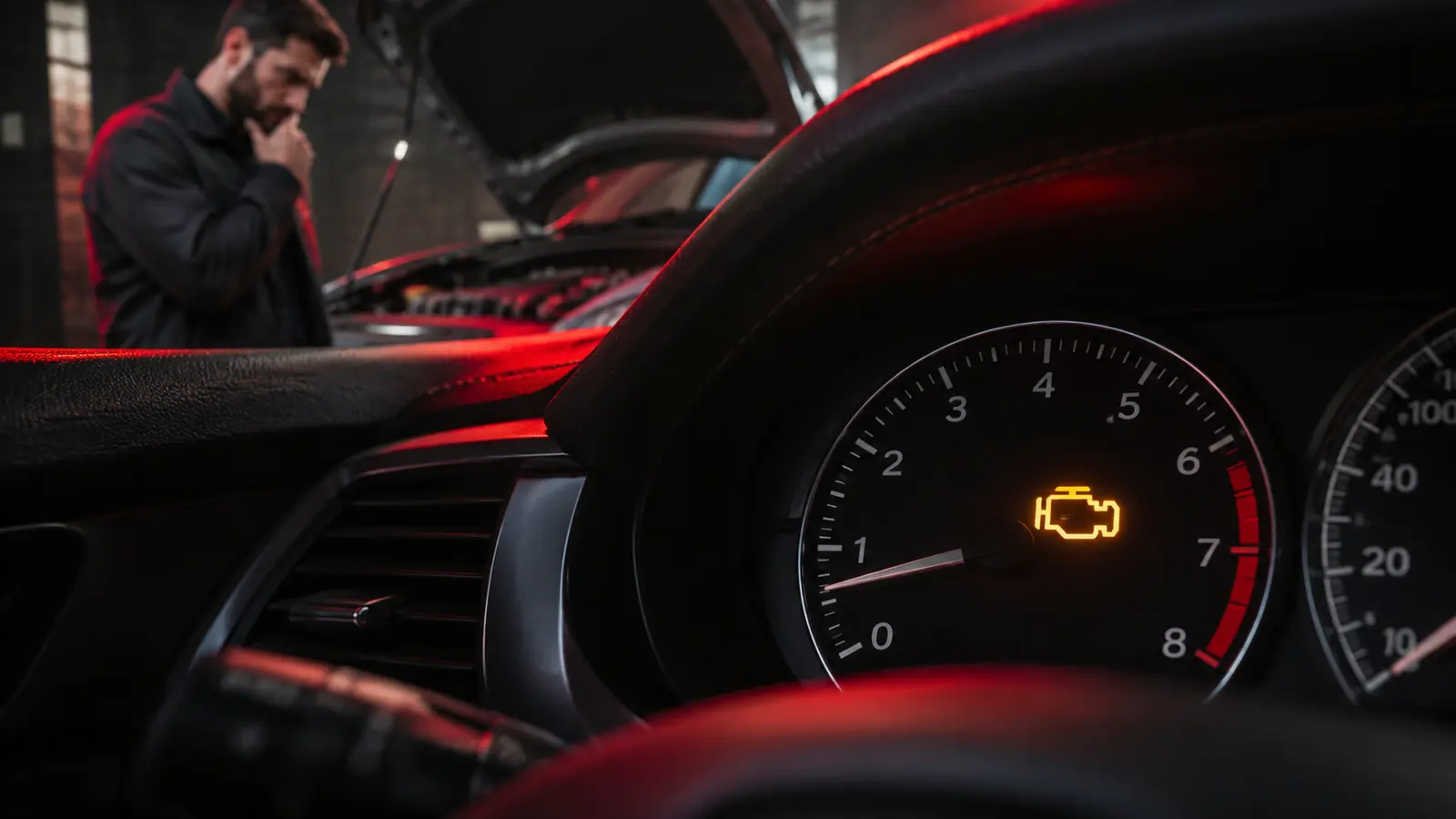 Warning Lights
Check Engine Light Flashing: What It Means and What to Do Now
A steady light means 'get it checked'. A flashing one means a misfire is happening now — slow down and stop when safe.
Updated November 22, 2026Read