
Check Engine Light Flashing: What It Means and What to Do Now
Quick answer
A steady light means 'get it checked'. A flashing one means a misfire is happening now — slow down and stop when safe.
- Topic
- Warning Lights
- Sections
- 6
- Reading time
- 2 min
- Applies to
- All regions
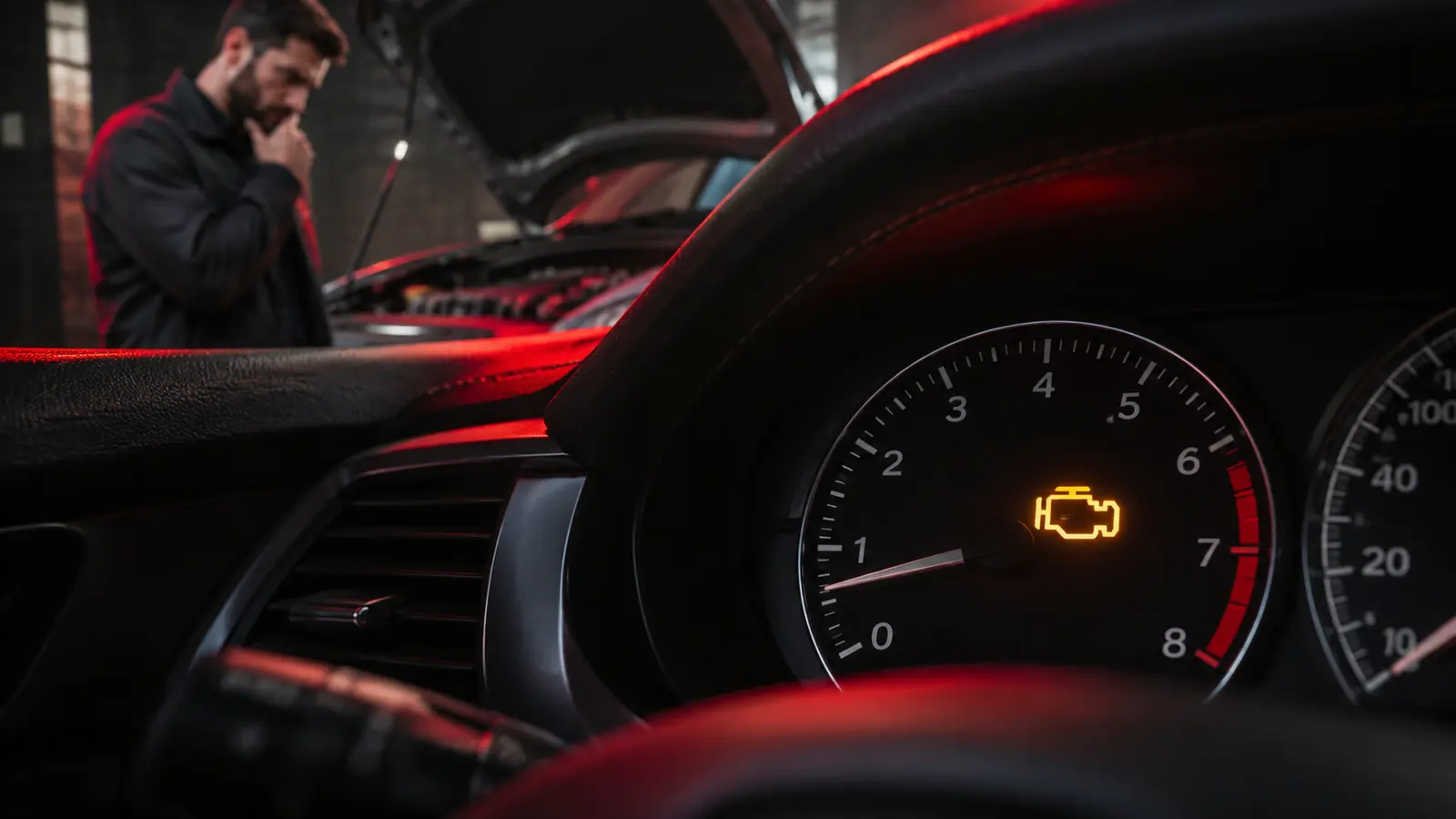
A flashing check engine light (called the engine management light in the UK) almost always means the engine is misfiring right now. Unburnt fuel is going into the exhaust, where it can overheat the catalytic converter within minutes. Reduce speed, avoid hard acceleration and stop as soon as it is safe.
Steady vs flashing
- Steady amber: a fault has been stored. If the car drives normally, you can usually continue and book a diagnostic soon.
- Flashing amber: an active, severe fault — usually a misfire. Treat it as urgent.
- Red engine or oil light: stop immediately and switch off.
What to do right now
- Ease off the accelerator and turn off unnecessary loads like the AC.
- Pull over when it is safe and switch off.
- Check for obvious signs: strong fuel smell, smoke, or the temperature gauge rising.
- If the car is shaking badly or losing power, call for breakdown help rather than driving on.
- Have the fault codes read. Misfires usually set codes from P0300 (random) to P0301–P0308 (a specific cylinder) — use our OBD2 code lookup.
Common causes of a flashing light
Spark plugs and ignition coils
Worn plugs or a failed coil are the most common causes. A misfire that moves when you swap two coils confirms a bad coil.
Fuel injectors
A clogged or leaking injector starves or floods one cylinder.
Vacuum leaks
A split hose or intake gasket lets in unmetered air and causes lean misfires, often at idle.
Low compression
Valve, piston ring or head gasket problems cause misfires that new plugs won't fix. A compression test confirms it.
Why you shouldn't keep driving
The catalytic converter is designed to clean small amounts of exhaust gas, not burn raw fuel. Repeated misfires overheat it, which can melt its internal structure and cause a blockage — turning an ignition repair into a far larger exhaust repair.
When the light stops flashing
A misfire can be intermittent. If the light goes steady or off, the fault code is still stored. Get it read and fixed before the problem returns.
Getting it diagnosed
A garage or mobile mechanic will read the codes, check live misfire counts per cylinder, and test coils, plugs, injectors and compression as needed. Bring notes on when it happened (cold start, under load, in rain) — that speeds up the diagnosis.
Frequently asked questions
Can I drive with a flashing check engine light?
Only as far as you need to stop safely. Continuing to drive with an active misfire can overheat and destroy the catalytic converter.
Is a flashing engine light an MOT failure?
In the UK, an illuminated engine management light — steady or flashing — is an MOT failure.
Will the light reset itself?
If the misfire stops, the light may stop flashing, but the fault code stays stored. Get it read so the cause is fixed.
Tools that can help
How the parts involved work
Need a mechanic?
Find rated garages near you by city, ZIP code or postcode, with directions.
About this guide
Written by Editorial Team using manufacturer documentation, government road-safety guidance and motoring-organisation advice. It explains likely causes and safe checks. It is not a diagnosis. How we write and check guides.
More warning lights guides
 Warning Lights
Car Dashboard Warning Lights: The Complete Guide to Colours, Meanings and What to Do
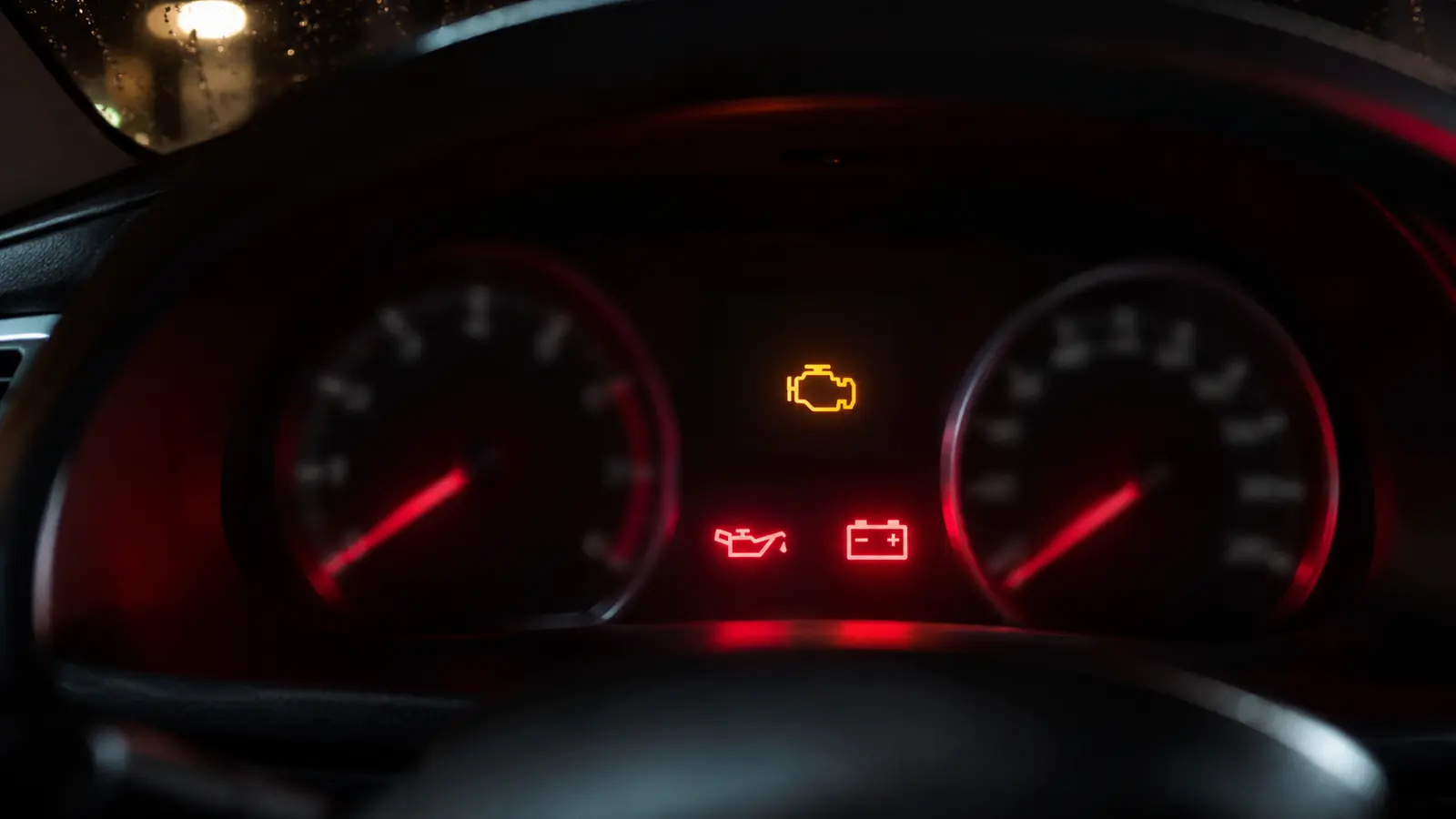
Dashboard lights follow a simple colour logic: red means stop or act now, amber means check soon, green or blue means a system is on. This guide explains the most important warnings, what a flashing check engine light means, and how to read fault codes.
Updated November 22, 2026Read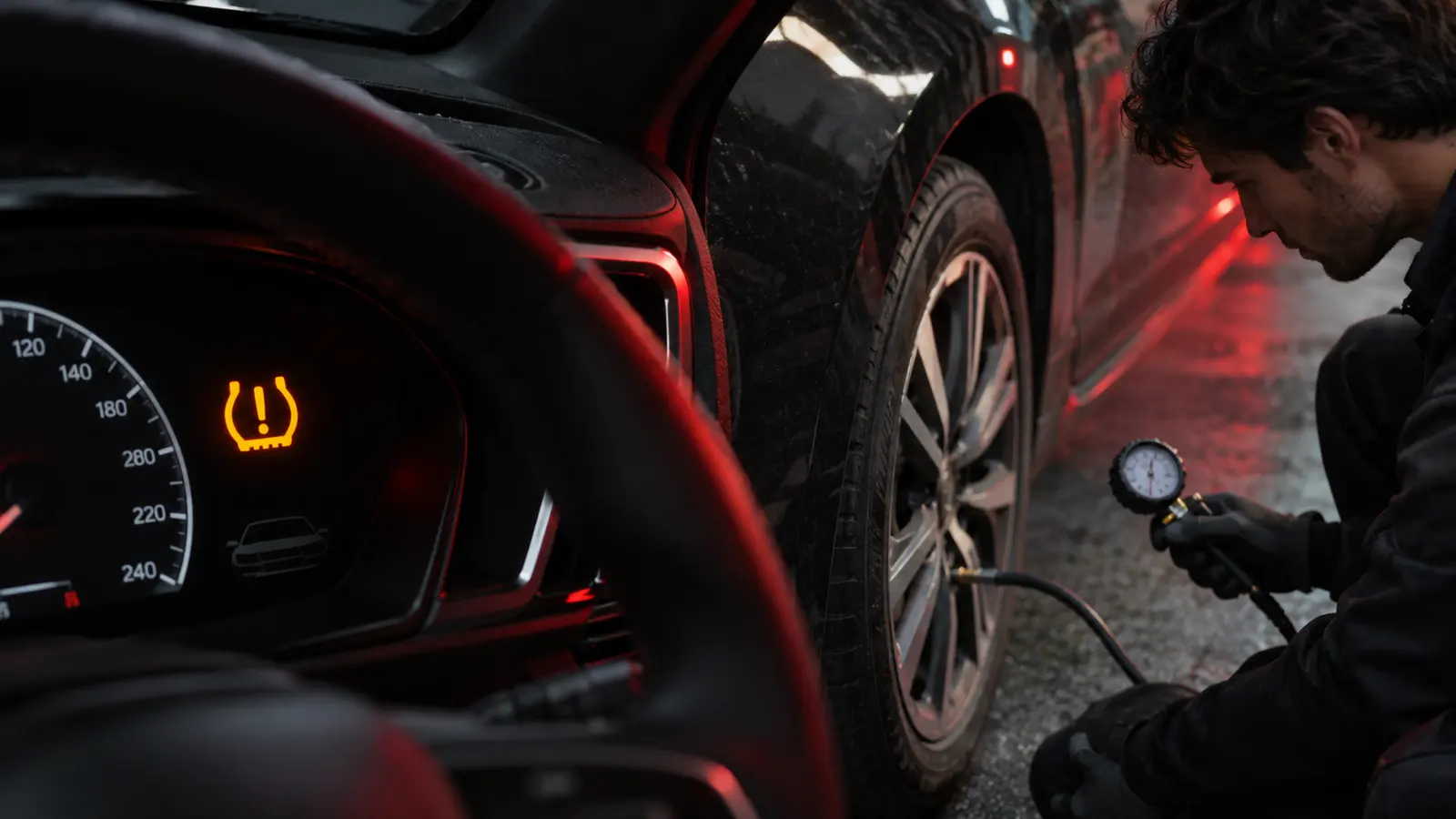 Warning Lights
Exclamation Mark Warning Light: What It Means
An exclamation mark on the dashboard means different things depending on its shape and colour: inside a horseshoe tyre shape it's low tyre pressure; inside a circle (often red) it's the brake system; inside a triangle it's a general warning with a message.
Updated November 22, 2026ReadWarning LightsABS and Traction Control Lights On Together: Why
ABS and traction control share the same wheel-speed sensors and hydraulic unit, so a single fault, often a wheel-speed sensor or its wiring, turns both lights on.
Updated November 22, 2026Read