
Car Brakes: The Complete Guide to How They Work, Warning Signs and Maintenance
Part of: Brake Problems: Noises, Vibration and Warning Signs
Quick answer
Car brakes turn the car's movement into heat. Pressing the pedal pushes brake fluid to the wheels, where pads or shoes squeeze discs or drums. This guide explains each part, what different noises and pedal feels mean, and how to keep the system safe.
- Topic
- Brakes
- Sections
- 12
- Reading time
- 6 min
- Applies to
- All regions
Your car's brakes convert movement into heat. When you press the pedal, the master cylinder pushes brake fluid through the lines to each wheel, where pads clamp a disc or shoes press against a drum. Friction slows the wheel and the heat is carried away. This guide from AllInformations Automotive explains every part of the system, what common noises and pedal feelings mean, and how to keep your brakes safe.
Got a specific symptom? Go straight to brakes grinding, spongy brake pedal or car shakes when braking.
How car brakes work
From pedal to wheel
Pressing the pedal moves a piston in the brake master cylinder. Because fluid barely compresses, that pressure travels through the brake lines to the calipers or wheel cylinders at each wheel.
Power assistance
A brake booster (servo) multiplies your foot's effort, usually using engine vacuum or an electric pump. If it fails the brakes still work, but the pedal feels much harder. See brake pedal hard while driving.
Friction and heat
Every stop turns kinetic energy into heat at the discs or drums. Managing that heat is why brake design, materials and fluid matter so much.
Disc brakes
How they work
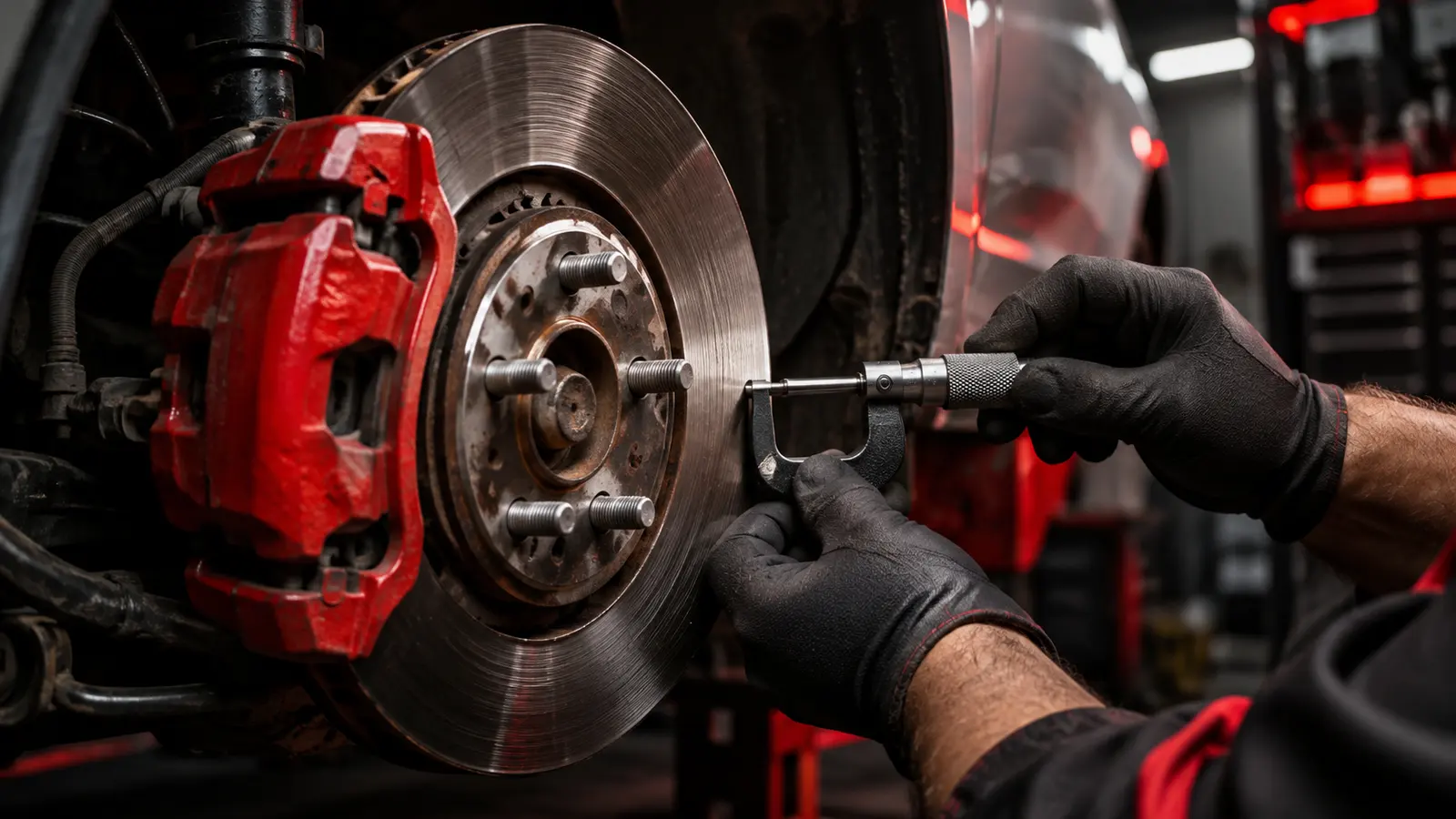
A brake caliper squeezes brake pads against a spinning disc (rotor) attached to the wheel hub.
Why discs are used at the front
Discs cool more effectively than drums, which reduces heat-related brake fade and helps them recover faster after getting wet. The front brakes do most of the stopping work, so nearly all modern cars use discs there.
Disc thickness variation
When a disc wears unevenly, its thickness varies around the face. You feel this as pedal pulsing or steering shake when braking, often described as "warped discs". Machining or replacing the discs removes the variation.
Drum brakes
How they work
Inside a drum attached to the wheel, curved shoes are pushed outward against the drum's inner surface by a wheel cylinder.
Where you still find them
Drum brakes are still often used on the rear wheels and for parking brakes. Some cars use a small "drum-in-hat" parking brake inside the centre of a rear disc.
Disc vs drum at a glance
| Disc | Drum | |
|---|---|---|
| Heat dissipation | Better | Worse |
| Fade resistance | Better | Worse |
| Typical position | Front (and often rear) | Rear, parking brake |
| Inspection | Pads visible through wheel on many cars | Drum must be removed |
Our disc vs drum brakes comparison goes deeper.
Brake fluid
Why it matters
Brake fluid transmits pedal pressure to the wheels. It must have a high boiling point: if it boils, vapour bubbles form in the lines and the pedal goes soft.
It absorbs water
Most brake fluids are hygroscopic: they absorb moisture from the air under normal humidity. Water lowers the boiling point, which is why fluid standards quote both a "dry" and a "wet" boiling point, and why fluid needs replacing at intervals. See how often to change brake fluid.
DOT grades
| Grade | Base | Notes |
|---|---|---|
| DOT 3 | Glycol | Common on older cars |
| DOT 4 | Glycol | Higher boiling point than DOT 3 |
| DOT 5.1 | Glycol | High boiling point, glycol-compatible |
| DOT 5 | Silicone | Dyed purple; never mix with glycol fluids |
Use the grade your handbook or reservoir cap specifies. Fitting a lower grade than required can risk the fluid boiling. See DOT 3 vs DOT 4 and how to check brake fluid.
Anti-lock brakes (ABS) and stability systems
What ABS does
ABS monitors wheel speed and rapidly modulates brake pressure to stop wheels locking, so you can keep steering during an emergency stop.
How to brake with ABS
NHTSA's advice: with ABS, apply firm, continuous pressure to the pedal. Without ABS, pump the brakes if the wheels start to lock. A buzzing or pulsing pedal during hard braking is ABS working normally.
Related systems
Traction control and electronic stability control use the same wheel-speed sensors. See ESC vs traction control and the ABS warning light.
Pads, discs and wear
Pad materials
Brake pads use different friction materials with trade-offs in noise, dust, bite and disc wear. See ceramic vs semi-metallic brake pads.
Wear indicators
Many pads have a metal tab that squeals when the pad is low, or an electrical sensor that triggers the brake pad wear light.
How long they last
It depends on driving style, vehicle weight and route. Stop-start city driving wears pads faster than motorway miles. See how often to replace brake pads and how to check your brake pads.
What brake noises and feelings mean
Noises
| Sound | Likely meaning |
|---|---|
| Light squeak at low speed | Dust, moisture, glazing; see brakes squeaking |
| High-pitched squeal | Wear indicator touching the disc |
| Grinding | Pads worn to metal; see brakes grinding |
| Clunk when braking | Loose caliper or suspension wear |
Pedal feel
| Feel | Likely meaning |
|---|---|
| Soft or spongy | Air or moisture in the fluid, a leak |
| Sinks to the floor | Serious fluid loss or master cylinder fault |
| Very hard | Booster or vacuum fault |
| Pulsing | Disc thickness variation, or ABS working |
Car behaviour
Pulling to one side under braking often points to a sticking caliper or uneven pad wear. See car pulling to one side.
Warning lights
Red brake warning
A red (!) brake light can mean the parking brake is on, fluid is low or there is a system fault. Check before driving on. See the brake warning light.
Amber lights
Amber ABS, traction or pad-wear lights mean a system needs attention. Normal braking usually still works, but get it checked soon. See ABS and traction control lights on together.
The parking brake
Cable vs electronic
Older cars use a cable-operated lever; many newer cars have an electronic parking brake with motors at the rear calipers. See how a parking brake works, handbrake not holding and electronic vs manual parking brakes.
Brakes in hybrids and electric cars
Regenerative braking
Hybrids and EVs use the electric motor as a generator to slow the car and recover energy, so the friction brakes do less work. See regenerative braking.
Why that can cause problems
Because the friction brakes are used less, discs can corrode and calipers can stick from lack of use. Regular inspection still matters.
Keeping brakes safe
Simple checks you can do
- Check the fluid level is between the marks.
- Listen for new noises and notice changes in pedal feel.
- Look at pad thickness through the wheel spokes where visible.
Professional inspection
A technician measures pad and disc thickness, checks for leaks, tests the fluid and inspects hoses and calipers. Brake work is safety-critical; if you're unsure, have it done professionally.
Related guides
Frequently asked questions
How often should brakes be checked?
At every service, and whenever you notice noise, vibration, pulling or a change in pedal feel. Pad and disc life varies a lot with driving style and vehicle.
Why does brake fluid need changing if it doesn't get used up?
Most brake fluids absorb moisture from the air over time, which lowers their boiling point. Follow the change interval in your handbook.
Can I mix brake fluid types?
Only as your handbook allows. Silicone-based DOT 5 must never be mixed with glycol-based fluids.
Is a squeak always a problem?
No. Light squeaks can come from dust or moisture. Grinding, a pulsing pedal, pulling or a soft pedal need checking promptly.
Tools that can help
Need a mechanic?
Find rated garages near you by city, ZIP code or postcode, with directions.
About this guide
Written by Editorial Team using manufacturer documentation, government road-safety guidance and motoring-organisation advice. It explains likely causes and safe checks. It is not a diagnosis. How we write and check guides.
More brakes guides
 Brakes
Handbrake (Parking Brake) Not Holding: Causes
A parking brake that doesn't hold on a slope usually has stretched or seized cables, worn rear pads or drum shoes, or needs adjusting. On electronic parking brakes, a motor or software fault is possible.
Updated November 22, 2026ReadBrakesBrake Pedal Hard While Driving: Causes
If the brake pedal becomes very hard to press while the engine is running, the brake booster has lost its assistance, usually from a vacuum leak, a failed booster or a faulty vacuum pump on diesels.
Updated November 22, 2026Read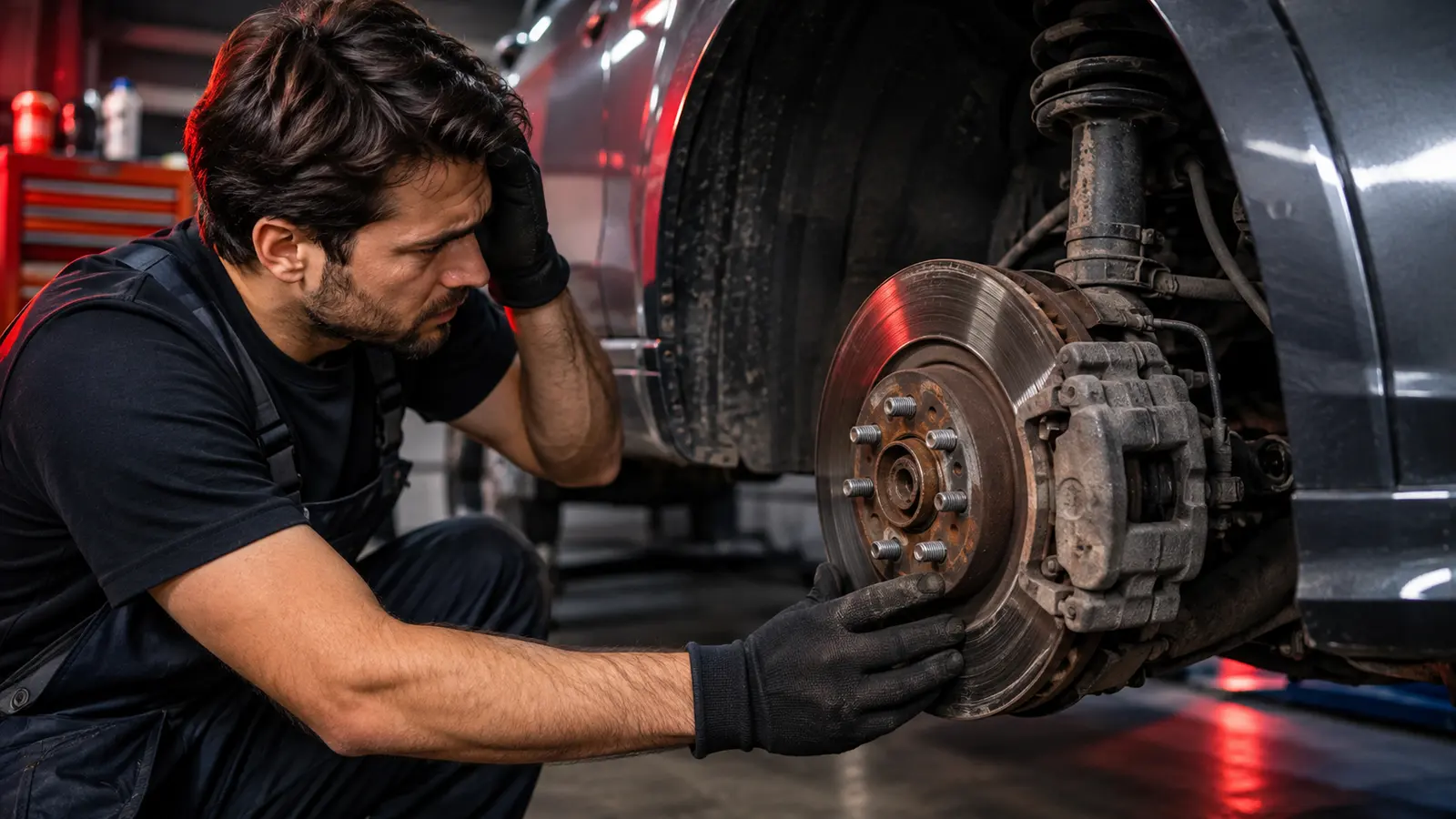 Brakes
Why Does My Car Shake When I Brake? Causes and Fixes
Shaking under braking is most often uneven brake disc thickness, but calipers, tyres and suspension can cause it too. Here's how to narrow it down.
Updated November 22, 2026Read