
Brakes Squeaking at Low Speed: Causes and Fixes
Part of: Car Noises: What That Sound Means · Brake Problems: Noises, Vibration and Warning Signs
Quick answer
Light squeaking at low speed is often harmless pad vibration or surface rust. A high-pitched squeal on every stop can be the wear indicator telling you the pads are nearly finished.
- Topic
- Brakes
- Sections
- 8
- Reading time
- 2 min
- Applies to
- All regions
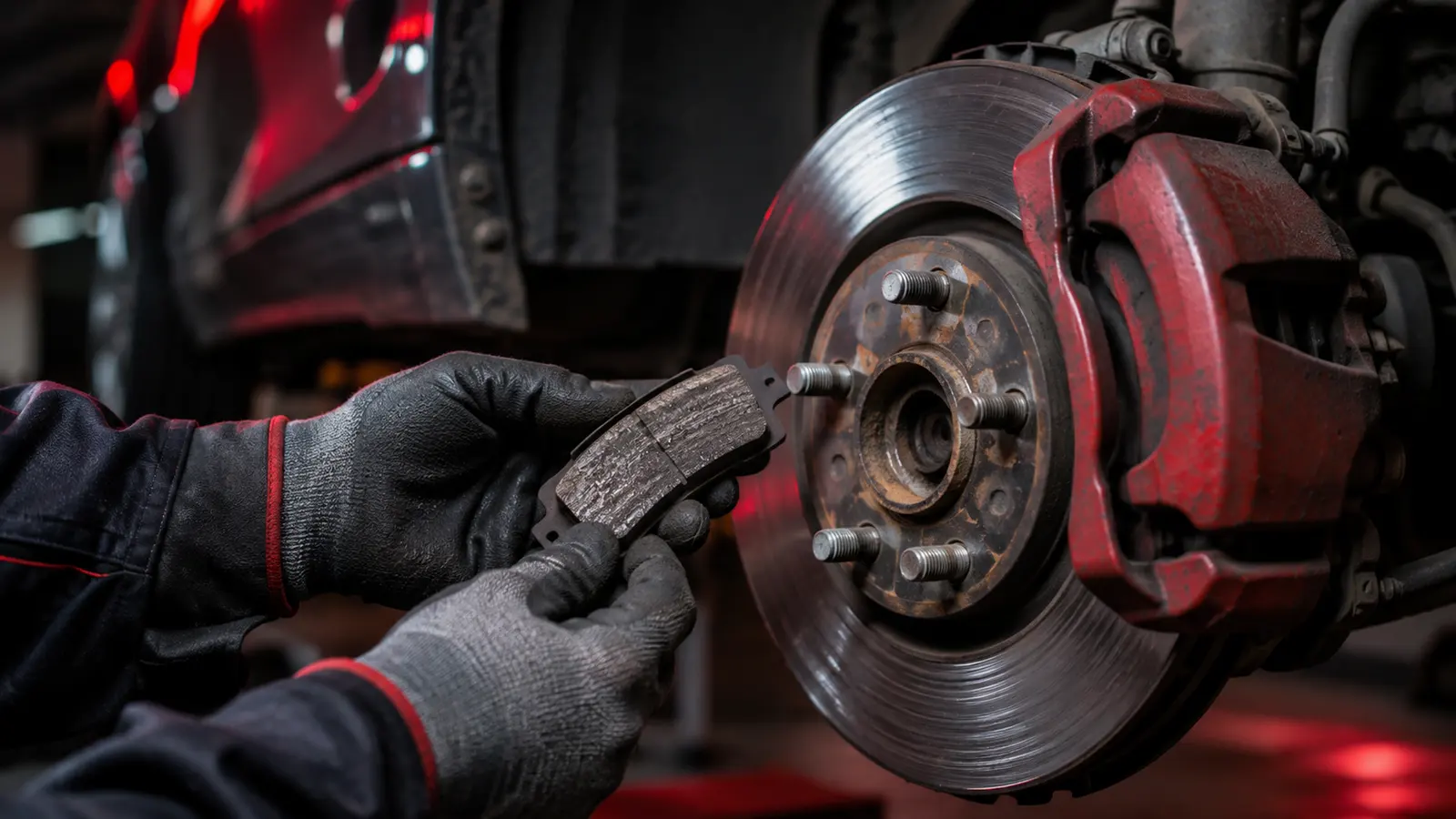
Brakes squeaking at low speed are very common. Often it's harmless high-frequency vibration between pad and disc, or surface rust first thing in the morning. But a constant high-pitched squeal on every stop can be the pad wear indicator, a small metal tab designed to make noise when the pads are nearly worn out.
Is it safe to drive?
Yes, for squeaks. Grinding, a pedal that sinks, pulling to one side or the brake warning light are different. Get the brakes checked straight away.
Causes at a glance
| When it squeaks | Likely cause |
|---|---|
| First few stops of the day, then stops | Surface rust or moisture |
| Every stop, high-pitched, getting louder | Pad wear indicator |
| After new pads were fitted | Bedding-in, missing shims or lubricant |
| Only on gentle braking | Pad vibration (glazed or hard pads) |
| With grinding | Pads worn to metal: check now |
Check these in order
- Does it go away after a few stops? Then it's probably moisture.
- Look at pad thickness through the wheel. Less than about 3 mm of friction material means replacement is due.
- Recent brake work? Ask the garage to check shims and lubrication.
- Listen for grinding, which needs immediate attention.
Causes explained
Pad vibration
At low speed and light pressure, pads can vibrate at a frequency you hear as a squeak. Shims and special grease reduce it.
Glazed pads
Heavy braking can harden the pad surface, making it squeal.
Wear indicators
These deliberately squeal against the disc to warn you. Replace the pads soon.
Pad material
Some harder pads used on performance or heavy vehicles are noisier.
What a mechanic will do
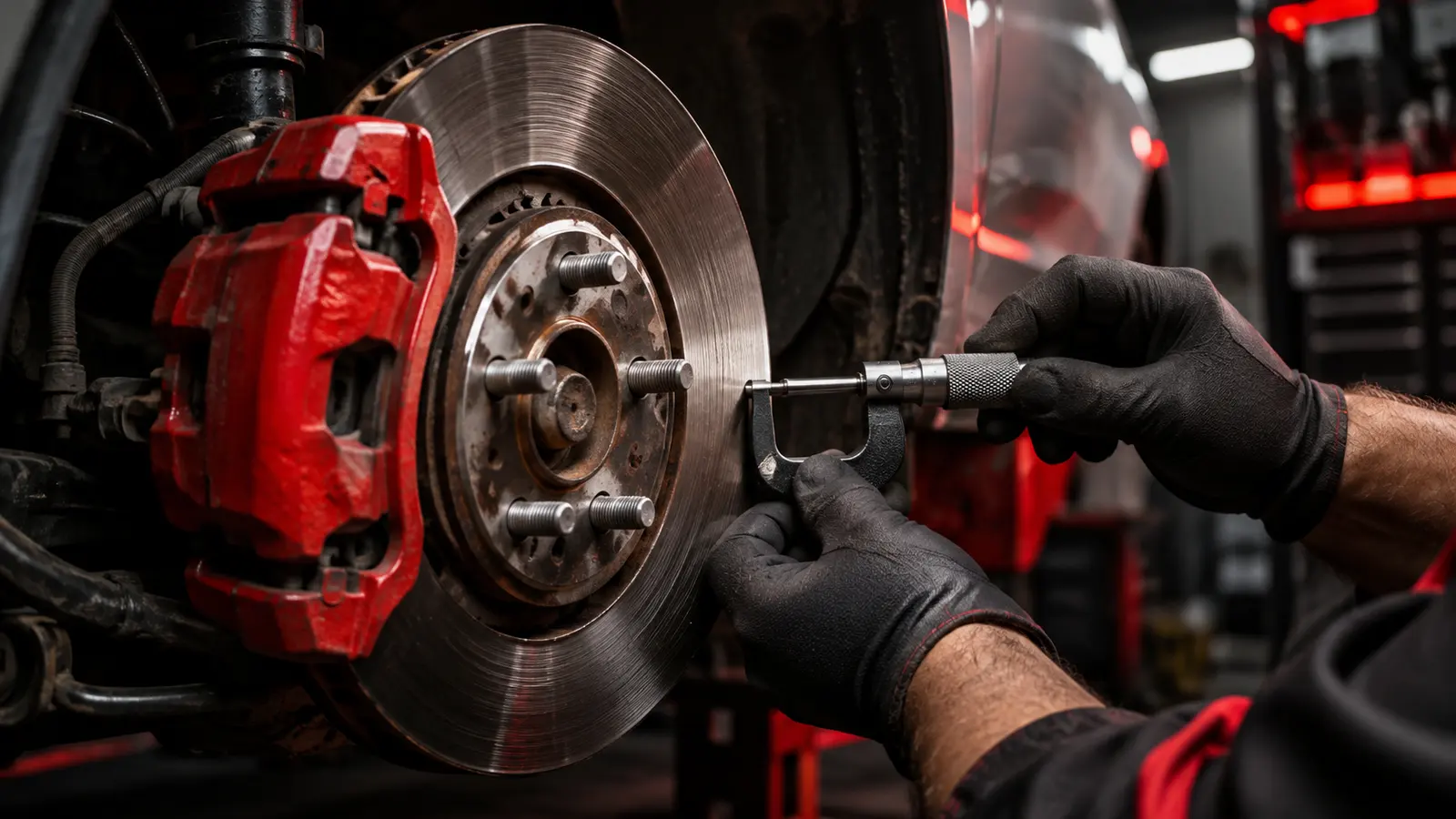
They'll measure pad and disc thickness, check shims, clean and lubricate the pad contact points and caliper slides, and replace parts that are worn.
What affects the cost
Cleaning and lubricating is a short job. Pads alone cost less than pads and discs. Some cars need an electronic tool to retract the rear calipers.
How to prevent it
- Bed in new pads with several moderate stops.
- Ask for anti-squeal shims and grease at each brake service.
- Don't hold the brake hard while stopped after heavy braking.
Related problems
Frequently asked questions
Why do new brake pads squeak?
New pads need bedding in. Missing shims or lack of lubricant on contact points can also cause squeaks after a pad change.
Is squeaking worse in the morning normal?
Yes, if it fades after a few stops. Moisture and surface rust on the discs cause it.
Are squeaky brakes an MOT or inspection failure?
Noise alone usually isn't, but the worn pads or discs behind it may be.
Tools that can help
How the parts involved work
Need a mechanic?
Find rated garages near you by city, ZIP code or postcode, with directions.
About this guide
Written by Editorial Team using manufacturer documentation, government road-safety guidance and motoring-organisation advice. It explains likely causes and safe checks. It is not a diagnosis. How we write and check guides.
More brakes guides
 Brakes
Car Brakes: The Complete Guide to How They Work, Warning Signs and Maintenance
Car brakes turn the car's movement into heat. Pressing the pedal pushes brake fluid to the wheels, where pads or shoes squeeze discs or drums. This guide explains each part, what different noises and pedal feels mean, and how to keep the system safe.
Updated November 22, 2026Read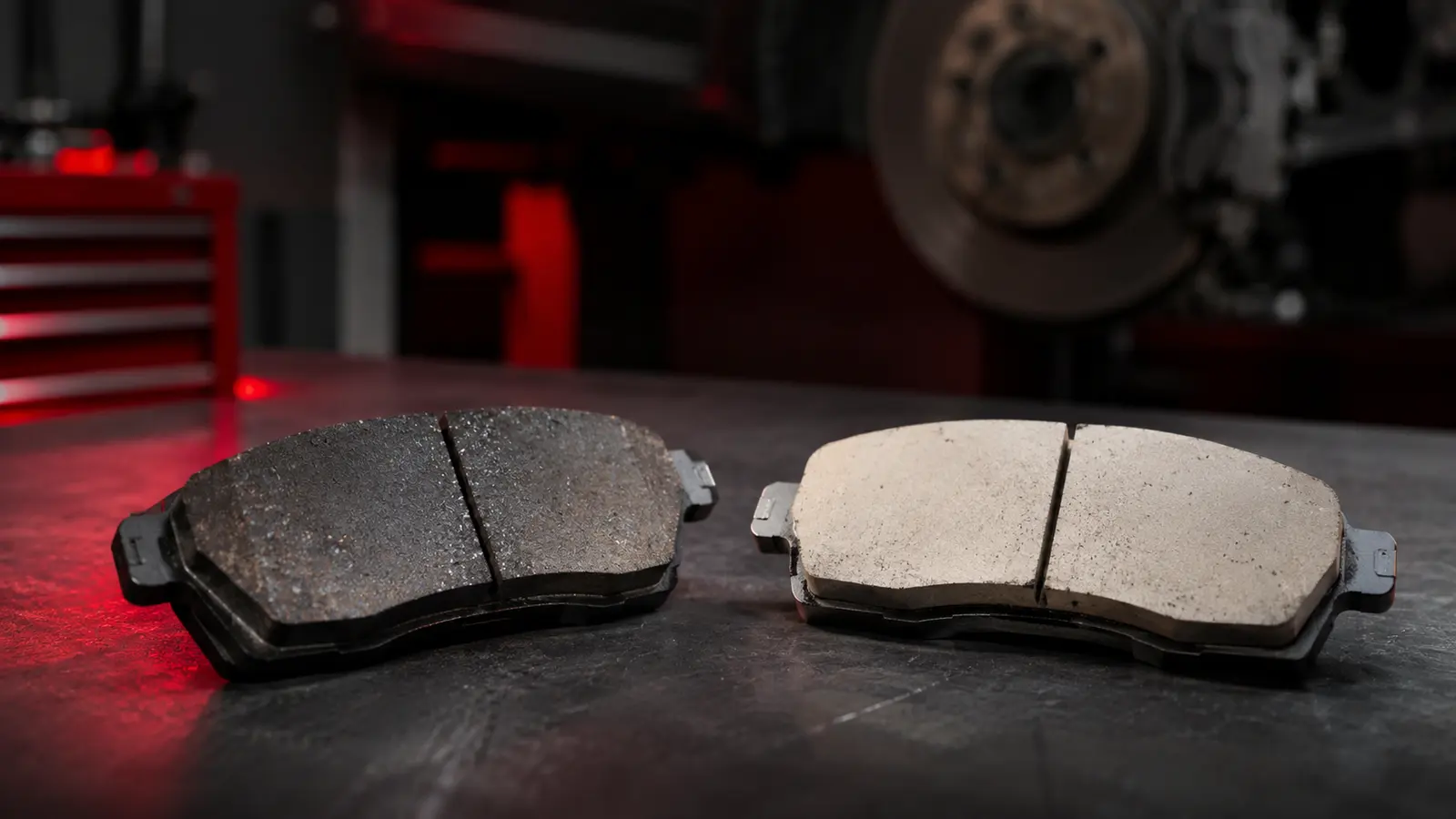 Brakes
Handbrake (Parking Brake) Not Holding: Causes
A parking brake that doesn't hold on a slope usually has stretched or seized cables, worn rear pads or drum shoes, or needs adjusting. On electronic parking brakes, a motor or software fault is possible.
Updated November 22, 2026ReadBrakesBrake Pedal Hard While Driving: Causes
If the brake pedal becomes very hard to press while the engine is running, the brake booster has lost its assistance, usually from a vacuum leak, a failed booster or a faulty vacuum pump on diesels.
Updated November 22, 2026Read