
Why Does My Car Shake When I Brake? Causes and Fixes
Part of: Car Shaking or Vibrating: Find the Cause · Brake Problems: Noises, Vibration and Warning Signs
Quick answer
Shaking under braking is most often uneven brake disc thickness, but calipers, tyres and suspension can cause it too. Here's how to narrow it down.
- Topic
- Brakes
- Sections
- 6
- Reading time
- 3 min
- Applies to
- All regions
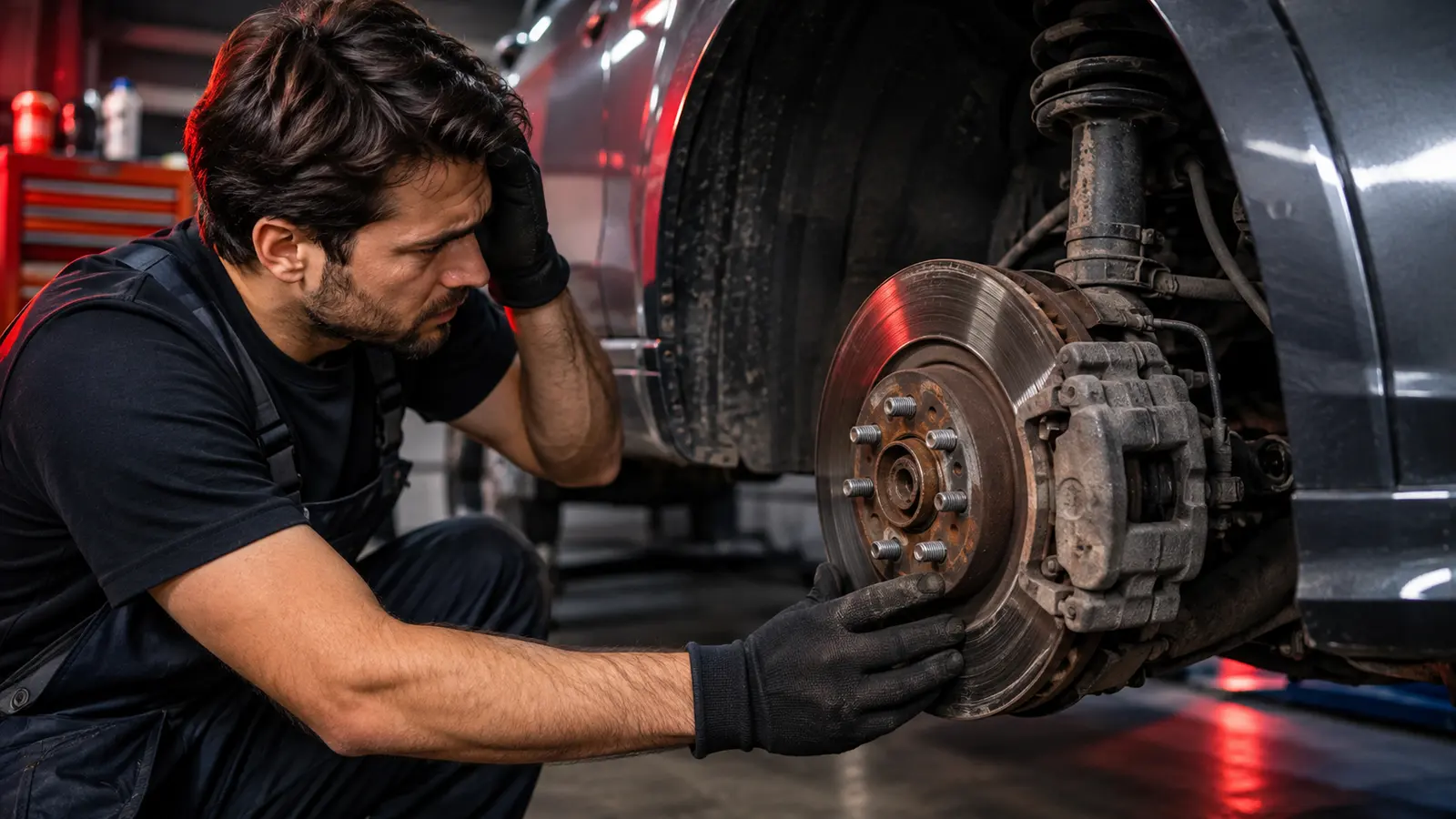
If your car shakes when you brake, the most likely cause is uneven thickness across a brake disc (rotor), which makes the pads grab and release as the disc turns. Sticking calipers, worn suspension parts and tyre problems can produce a similar feeling, and where you feel the shake is the best clue.
Where you feel the shake tells you a lot
- Steering wheel shakes: usually the front brakes or front suspension.
- Brake pedal pulses: almost always a disc problem.
- Whole car or seat vibrates, wheel is steady: often the rear discs or drums.
- Vibration continues after you release the brake: look at tyres, wheel balance or driveline instead.
The six most common causes
1. Uneven disc thickness ("warped rotors")
Brake discs rarely bend. More often, a little sideways wobble (runout) lets the pads touch one spot more than the rest. Over thousands of miles that spot wears or collects pad material, and the disc becomes thicker in places. The result is a rhythmic pulse that gets worse at higher speeds.
2. Rust or dirt on the hub
If the wheel hub face is rusty, the disc doesn't sit flat. This creates runout and, eventually, the judder above. It is a common reason new discs start shaking within a few months.
3. Uneven wheel-nut torque
Wheel nuts tightened unevenly with an impact gun can distort the disc's seating. Nuts should be tightened in a star pattern to the maker's torque figure.
4. Sticking caliper or dry slide pins
A caliper that doesn't release fully keeps a pad rubbing, overheats the disc and leaves deposits. You may notice a burning smell after driving or one wheel much hotter than the others.
5. Worn suspension or steering parts
Worn control-arm bushes, ball joints or tie-rod ends let the wheel move when braking forces load it, which you feel as a shake or shimmy.
6. Tyres and wheels
An out-of-balance wheel or a tyre with a separated belt can vibrate at speed and feel worse under braking. Wheel balancing is cheap to rule out.
Quick checks you can do safely
- Note the speed at which the shake starts and whether it happens only while braking.
- After a drive, carefully hold your hand near (not on) each wheel. One wheel far hotter than the others suggests a dragging brake.
- Look at the tyres for bulges, flat spots or uneven wear.
- Check whether the wheel nuts were recently done by a tyre shop.
When to stop driving
Stop and arrange a tow or inspection if the shake comes with grinding, a pedal that sinks, a strong pull to one side, or a brake warning light. These point to worn-out pads, a hydraulic fault or a seized caliper.
How a mechanic fixes it
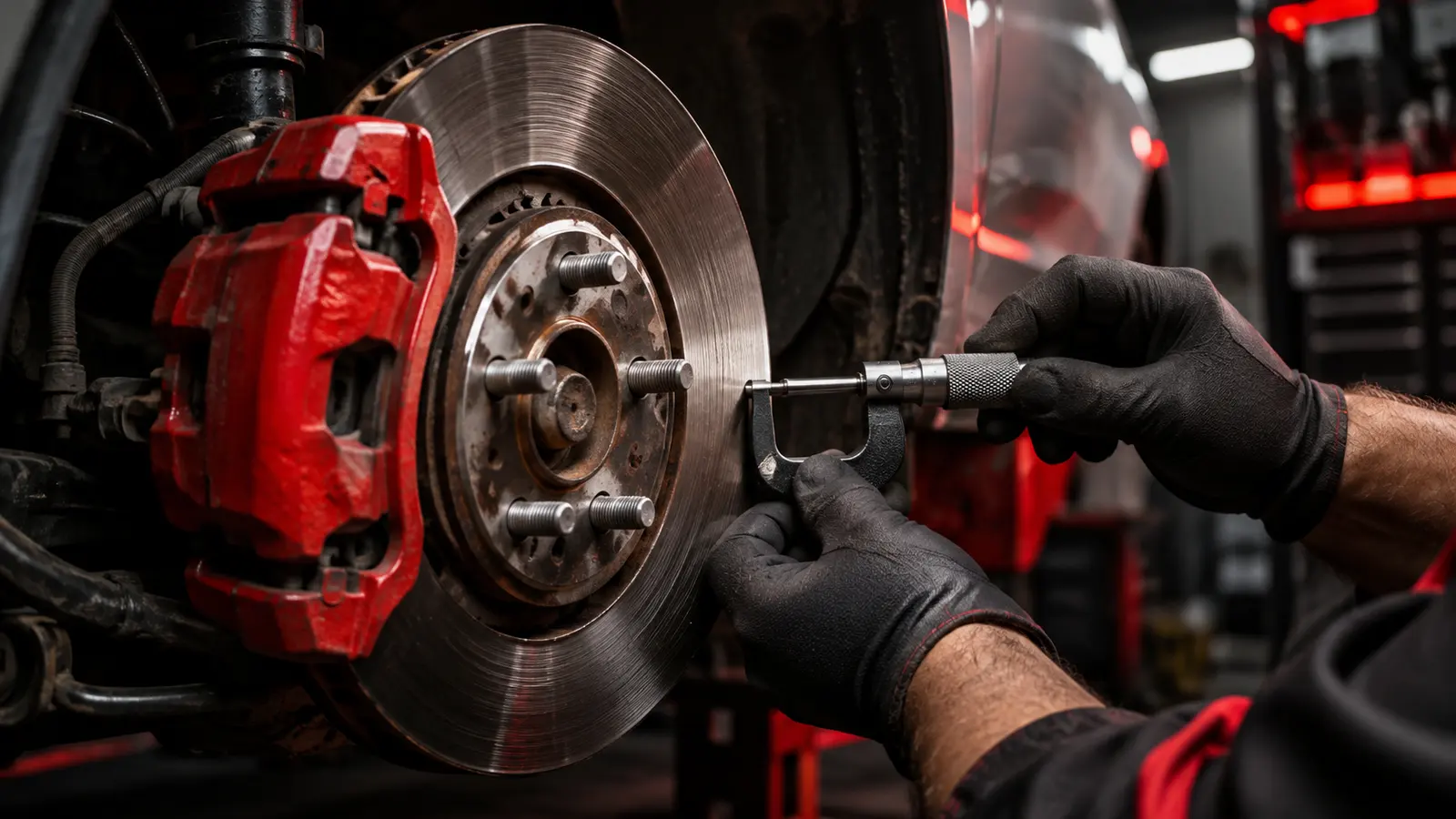
A technician will measure disc thickness variation and runout with a micrometer and dial gauge, clean the hub faces, and check caliper slides and suspension joints. The usual fix is new or machined discs with new pads, fitted to clean hubs and torqued correctly. If the brakes measure fine, wheel balancing and a suspension inspection come next.
Preventing it from coming back
- Have hubs cleaned whenever discs are replaced.
- Ask for wheel nuts to be torqued by hand to specification.
- Avoid holding the brake hard while stopped after heavy braking, which can imprint pad material onto hot discs.
- Lubricate caliper slide pins at each brake service.
Shaking under braking is rarely an emergency on its own, but it is the brakes telling you something has changed. A professional inspection is quick and will confirm whether it is the discs, calipers or suspension.
Frequently asked questions
Is it safe to drive if my car shakes when braking?
A mild vibration is not an emergency, but braking performance can be reduced. Get it inspected soon, and stop driving if you also hear grinding or the car pulls hard to one side.
Are warped rotors really warped?
Usually not. Most 'warped rotor' judder is uneven disc thickness caused by runout and uneven pad deposits, which a pulse through the pedal makes feel like warping.
Will new pads fix brake shaking?
Only if the discs are within specification. Pads on uneven discs will quickly bring the vibration back, so discs are normally measured and machined or replaced at the same time.
Tools that can help
How the parts involved work
Need a mechanic?
Find rated garages near you by city, ZIP code or postcode, with directions.
About this guide
Written by Editorial Team using manufacturer documentation, government road-safety guidance and motoring-organisation advice. It explains likely causes and safe checks. It is not a diagnosis. How we write and check guides.
More brakes guides
 Brakes
Car Brakes: The Complete Guide to How They Work, Warning Signs and Maintenance
Car brakes turn the car's movement into heat. Pressing the pedal pushes brake fluid to the wheels, where pads or shoes squeeze discs or drums. This guide explains each part, what different noises and pedal feels mean, and how to keep the system safe.
Updated November 22, 2026Read Brakes
Handbrake (Parking Brake) Not Holding: Causes
A parking brake that doesn't hold on a slope usually has stretched or seized cables, worn rear pads or drum shoes, or needs adjusting. On electronic parking brakes, a motor or software fault is possible.
Updated November 22, 2026ReadBrakesBrake Pedal Hard While Driving: Causes
If the brake pedal becomes very hard to press while the engine is running, the brake booster has lost its assistance, usually from a vacuum leak, a failed booster or a faulty vacuum pump on diesels.
Updated November 22, 2026Read