
Car Making Noise When Reversing: Causes and Fixes
Part of: Car Noises: What That Sound Means · Brake Problems: Noises, Vibration and Warning Signs
Quick answer
Most noises that happen only when reversing come from the brakes, because pads shift slightly when the wheel turns the other way. Whines and clunks point elsewhere.
- Topic
- Brakes
- Sections
- 9
- Reading time
- 2 min
- Applies to
- All regions
If your car makes a noise only when reversing, the brakes are the most common cause. Pads sit slightly differently when the wheel turns backwards, so a squeal or groan in reverse is often glazed pads, worn anti-squeal shims or a wear indicator touching the disc. A whine is often normal gear noise, and a clunk points to mounts or the driveline.
Is it safe to drive?
A squeal that goes away after a few stops is usually not urgent. Grinding means metal is touching metal. Have the brakes checked promptly. A loud clunk with poor movement in reverse needs inspection before more driving.
Noises at a glance
| Noise in reverse | Likely cause | Urgency |
|---|---|---|
| Squeal or squeak when braking | Pads, shims or wear indicator | Check soon |
| Groan at low speed, morning only | Surface rust on discs, pad material | Usually harmless |
| Grinding | Pads worn to metal, or debris in brake | Check now |
| Whine that rises with speed | Reverse gear design | Usually normal |
| Clunk when engaging reverse | Engine or gearbox mounts, driveline | Check soon |
| Scraping from one corner | Bent dust shield touching disc | Check soon |
Check these in order
- Does it happen only when braking? If yes, it's the brakes.
- Is it only first thing in the morning or after rain? Surface rust usually clears in a few stops.
- Is it a whine without braking? On a manual, likely normal reverse gear noise.
- Look at the pads through the wheel spokes if you can. Very thin pads need replacing.
Causes explained
Brake pads and shims
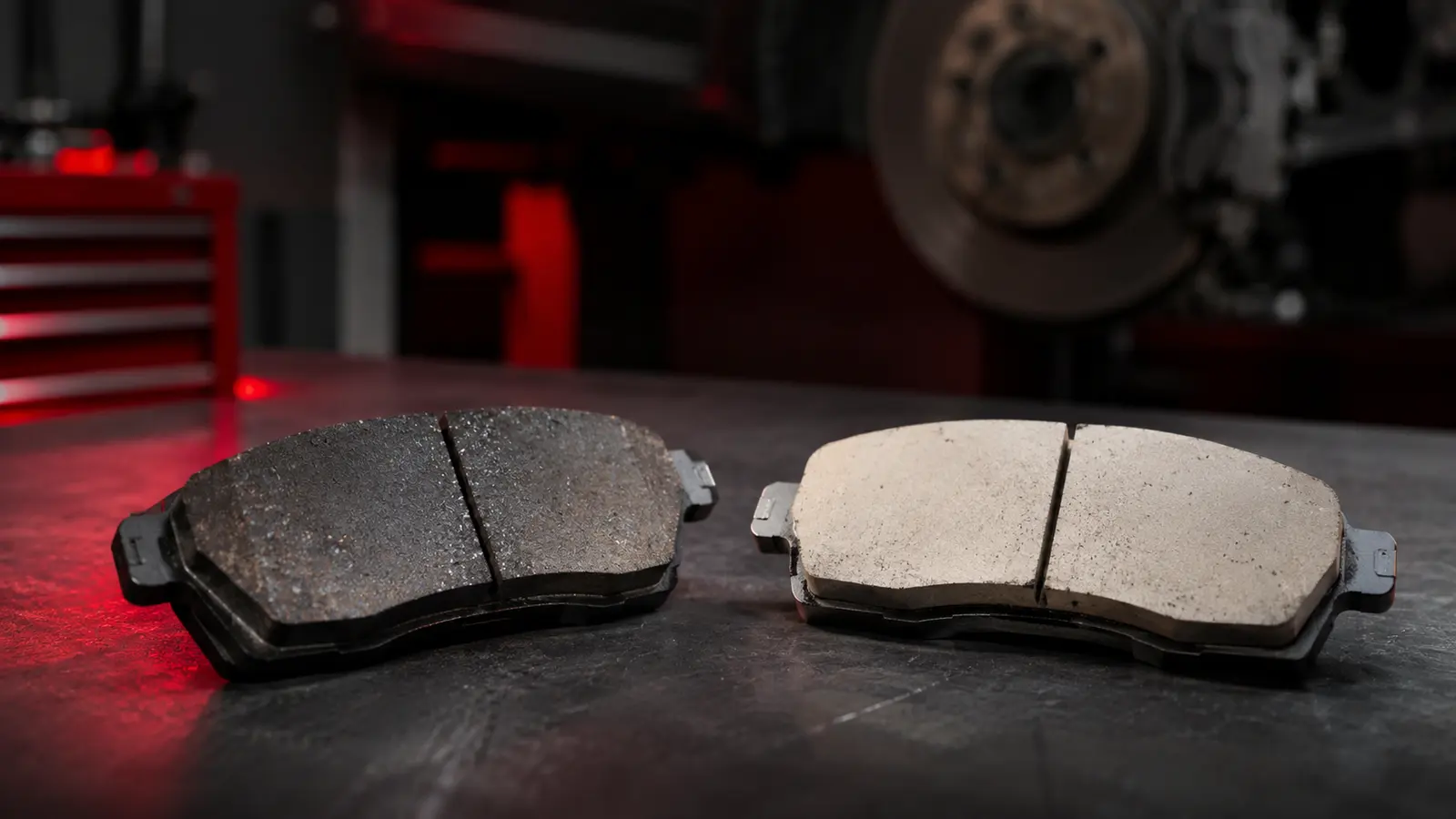
Pads that have glazed from heat, or missing anti-squeal shims, vibrate and squeal. The direction change in reverse makes it worse.
Wear indicators
Many pads have a small metal tab that squeals when the pad is nearly worn out. It's a warning, not a fault.
Dust shields
The thin metal plate behind the disc can bend and scrape, especially after a tyre change.
Gearbox and driveline
Reverse gear's straight-cut teeth whine. Clunks can come from worn mounts or a worn CV joint taking up slack.
What a mechanic will do
They'll inspect pad thickness, the disc surface, shims and dust shields, and check mounts and driveshafts if the noise isn't brake-related.
What affects the cost
Bending a dust shield back is quick. Pads, or pads and discs, are routine jobs. Driveline repairs cost more.
How to prevent it
- Replace pads before they reach the wear indicator.
- Have caliper slides cleaned and lubricated during brake services.
- Don't let the car sit for long periods. Rust forms on unused discs.
Regional notes
This search is especially common in the UK. Damp weather means overnight rust on discs, which causes groaning in the first few reverse manoeuvres of the day.
Related problems
Frequently asked questions
Is a whine in reverse normal?
On many manual gearboxes, yes. Reverse gear often uses straight-cut teeth, which whine more than forward gears.
Why do my brakes squeak only in reverse?
Pads sit slightly differently in the caliper when the wheel turns backwards. Glazed pads, worn shims or a touching wear indicator can squeal only then.
Should a clunk when shifting into reverse worry me?
A light clunk is common on automatics. A loud or new clunk can mean worn mounts or driveline wear, so have it checked.
Tools that can help
Need a mechanic?
Find rated garages near you by city, ZIP code or postcode, with directions.
About this guide
Written by Editorial Team using manufacturer documentation, government road-safety guidance and motoring-organisation advice. It explains likely causes and safe checks. It is not a diagnosis. How we write and check guides.
More brakes guides
 Brakes
Car Brakes: The Complete Guide to How They Work, Warning Signs and Maintenance
Car brakes turn the car's movement into heat. Pressing the pedal pushes brake fluid to the wheels, where pads or shoes squeeze discs or drums. This guide explains each part, what different noises and pedal feels mean, and how to keep the system safe.
Updated November 22, 2026ReadBrakesHandbrake (Parking Brake) Not Holding: Causes
A parking brake that doesn't hold on a slope usually has stretched or seized cables, worn rear pads or drum shoes, or needs adjusting. On electronic parking brakes, a motor or software fault is possible.
Updated November 22, 2026ReadBrakesBrake Pedal Hard While Driving: Causes
If the brake pedal becomes very hard to press while the engine is running, the brake booster has lost its assistance, usually from a vacuum leak, a failed booster or a faulty vacuum pump on diesels.
Updated November 22, 2026Read