
Car Making Noise After It's Turned Off: Normal or Not?
Part of: Car Noises: What That Sound Means
Quick answer
Most noises after switch-off are normal: ticking from the cooling exhaust, a radiator fan running on, or a humming EVAP self-test. Hissing, gurgling or bubbling need a closer look.
- Topic
- Engine Problems
- Sections
- 9
- Reading time
- 2 min
- Applies to
- All regions
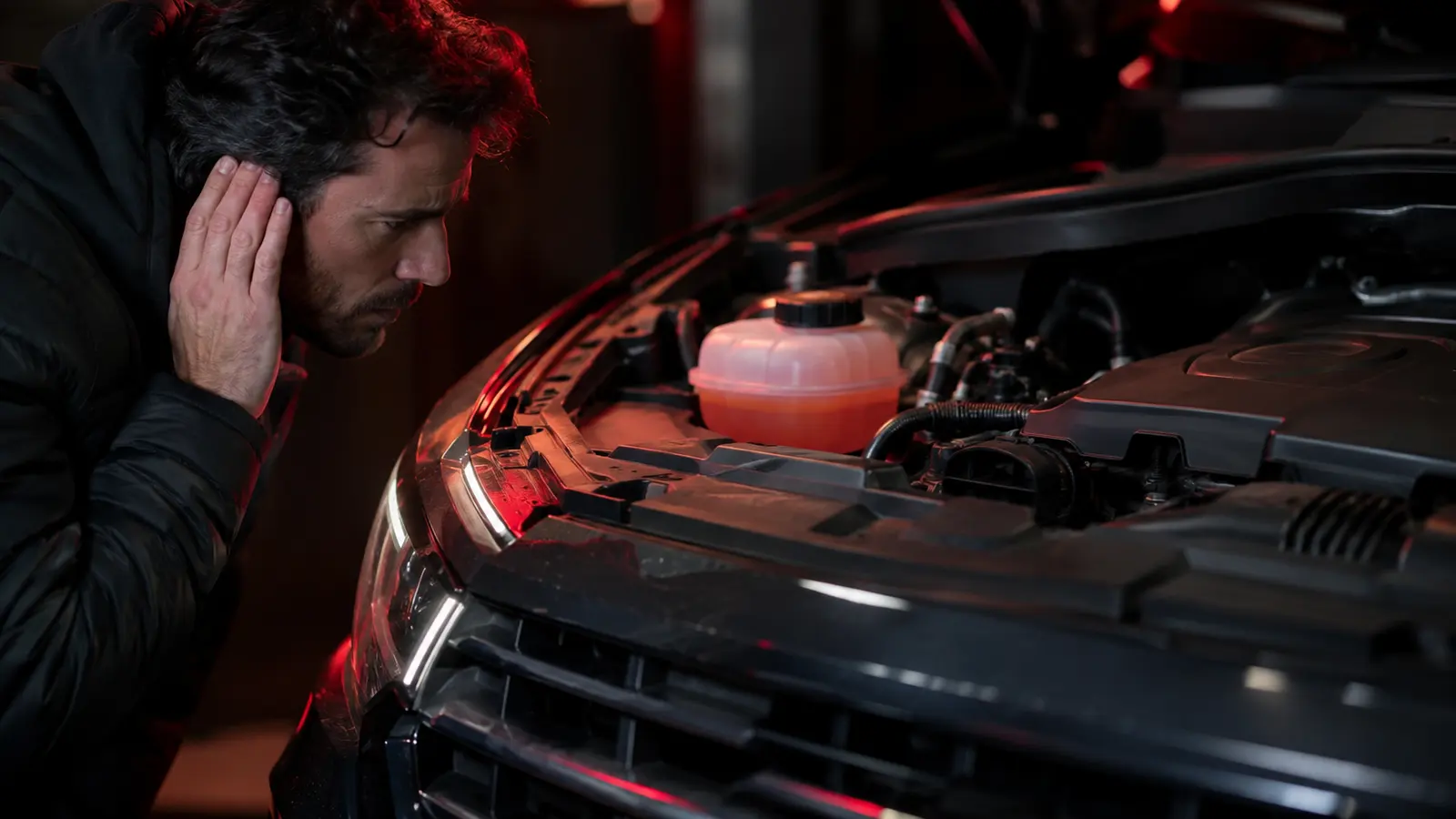
Most noises after you turn the car off are normal. The most common are ticking from the exhaust as it cools, the radiator fan running on to cool the engine, and a humming EVAP self-test that some cars run after shutdown, sometimes hours later. Hybrids and cars with air suspension also make noises after switch-off.
Is it something to worry about?
Usually not. Have it checked if you hear hissing or bubbling (possible coolant problem), gurgling with a sweet smell, continuous whirring that doesn't stop (possible stuck relay draining the battery), or a noise that is new and getting louder.
Noises at a glance
| Noise after switch-off | Usual cause | Normal? |
|---|---|---|
| Ticking or pinging | Exhaust and engine contracting as they cool | Yes |
| Fan running for a few minutes | Engine cooling after a hot drive | Yes |
| Hum from under the car, minutes to hours later | EVAP leak-check pump | Yes, on many cars |
| Whine after using the AC | AC system pressures equalising | Usually |
| Hissing or bubbling | Coolant boiling or leaking | No: check when cold |
| Whirring that never stops | Stuck relay or pump, battery drain | No |
| Clicking from the dashboard | Air-con flaps or relays resetting | Usually |
Check these in order
- Time it. Normal noises stop within minutes. A noise that keeps going needs attention.
- Smell for coolant, which is sweet and syrupy.
- Check the coolant level when the engine is completely cold. Never open a hot cap.
- Note any warning lights on the next start.
Causes explained
Cooling metal
The exhaust gets very hot. As it cools, it shrinks and ticks. Heat shields can rattle a little too.
Cooling fan run-on
The engine computer may keep the fan running to stop heat soak, protecting the turbo and engine.
EVAP self-test
To meet emissions rules, many cars check the fuel vapour system for leaks while parked. A small pump or valve can hum or click.
Coolant boiling
If the cooling system can't hold pressure, coolant can boil after switch-off. That's a problem to fix.
Stuck relay
A fan or fuel pump relay that sticks on keeps running and drains the battery.
What a mechanic will do
They'll pressure-test the cooling system if they suspect boiling, check for stuck relays and measure battery drain with the car locked.
What affects the cost
Normal noises cost nothing. Cooling system leaks and relays are usually moderate repairs.
How to prevent it
- Keep coolant at the right level and strength.
- Don't ignore a battery that keeps going flat. A stuck relay may be the cause.
Regional notes
Turbocharged petrol cars, common in Europe and the UK, often run the fan and a coolant pump after switch-off by design.
Related problems
Frequently asked questions
Why does my car tick after I turn it off?
The exhaust and engine contract as they cool, which makes a ticking sound. It's normal, especially after a long drive.
Why does the fan run after I switch off?
Many cars run the radiator fan for a few minutes to cool the engine, especially turbocharged ones or on hot days.
Why does my car hum hours after parking?
Many cars run an EVAP leak test after shutdown, using a small pump. It can make a hum from under the car for a few minutes.
Tools that can help
How the parts involved work
Need a mechanic?
Find rated garages near you by city, ZIP code or postcode, with directions.
About this guide
Written by Editorial Team using manufacturer documentation, government road-safety guidance and motoring-organisation advice. It explains likely causes and safe checks. It is not a diagnosis. How we write and check guides.
More engine problems guides
 Engine Problems
Car Exhaust and Emissions: The Complete Guide to Catalytic Converters, Sensors and Smoke
The exhaust system carries burnt gases away, cleans them with a catalytic converter (and on diesels a DPF and SCR), and quietens the engine. This guide explains each part, what different smoke colours and noises mean, catalytic converter theft, and emissions tests.
Updated November 22, 2026Read Engine Problems
Engine Cooling System: The Complete Guide to Coolant, Overheating and Repairs
The cooling system carries heat away from the engine using coolant, a water pump, a thermostat, a radiator and fans, all under pressure so coolant can run above 100 °C. This guide explains each part, why engines overheat, how to spot leaks and how to check coolant safely.
Updated November 22, 2026Read Engine Problems
Diesel Engines: The Complete Guide to How They Work, DPF, AdBlue and Care
Diesel engines ignite fuel by compression rather than a spark. Modern diesels add glow plugs, a particulate filter, AdBlue and EGR to start reliably and cut emissions. This guide explains each system, the warning lights and how to keep a diesel healthy.
Updated November 22, 2026Read