

Why Does My Car Battery Keep Dying?
Part of: Car Won't Start: Find the Cause · Car Battery Problems: Dead, Weak or Draining
Quick answer
A battery that keeps dying is either worn out, not being charged, or being drained while parked. Simple tests narrow it down.
- Topic
- Starting & Battery
- Sections
- 7
- Reading time
- 1 min
- Applies to
- All regions
A car battery that keeps going flat has one of three problems: it is worn out, it isn't being recharged (alternator or short trips), or something is draining it while parked.
1. The battery is at the end of its life
Age, heat and repeated deep discharges reduce capacity. A load test confirms it.
2. Short trips
Starting uses a lot of energy; a few minutes of driving doesn't put it back. Regular longer drives or a smart charger help.
3. Alternator not charging
With the engine running, a healthy charging system typically shows roughly 13.5–14.7 V at the battery. A battery warning light while driving is a strong clue.
4. Parasitic drain
A glovebox light, aftermarket accessory or module that stays awake can flatten a battery overnight. A mechanic measures key-off current draw to find it.
5. Corroded or loose terminals
Poor connections stop full charging and starting current.
6. Extreme temperatures
Cold reduces cranking power; heat speeds up internal wear.
When to see a mechanic
If the battery tests good but keeps dying, ask for a charging-system test and a parasitic-draw test — guessing with new batteries gets expensive.
Frequently asked questions
How long should a car battery last?
Many last three to five years; heat and lots of short trips shorten that.
Tools that can help
How the parts involved work
Need a mechanic?
Find rated garages near you by city, ZIP code or postcode, with directions.
About this guide
Written by Editorial Team using manufacturer documentation, government road-safety guidance and motoring-organisation advice. It explains likely causes and safe checks. It is not a diagnosis. How we write and check guides.
More starting & battery guides
 Starting & Battery
Car Batteries: The Complete Guide to Types, Testing, Care and Replacement
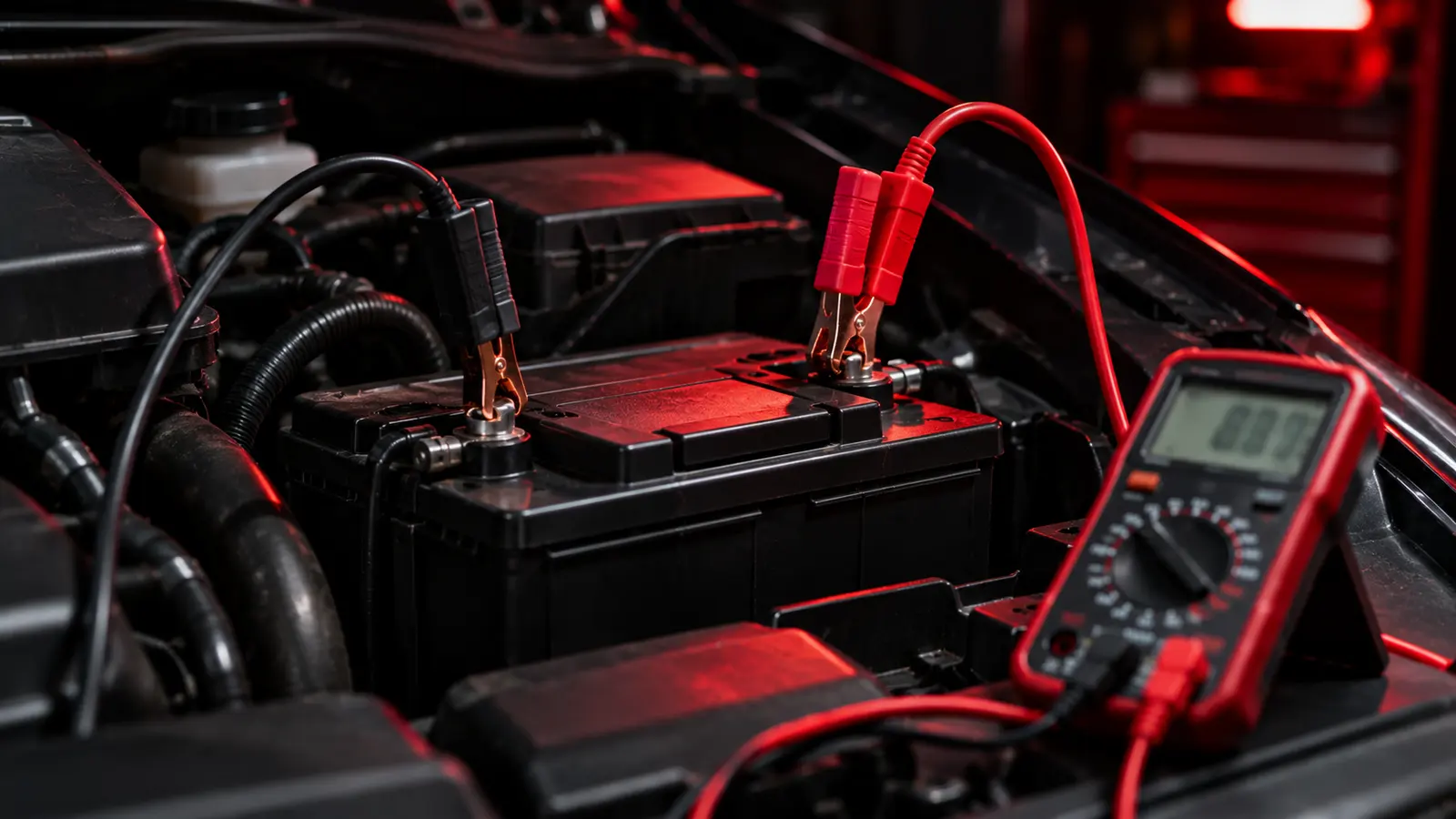
A 12-volt car battery starts the engine and steadies the electrics; the alternator then keeps it charged. This guide covers how batteries work, the main types, what the ratings mean, how to test and charge one, why they fail and how to replace one safely.
Updated November 22, 2026Read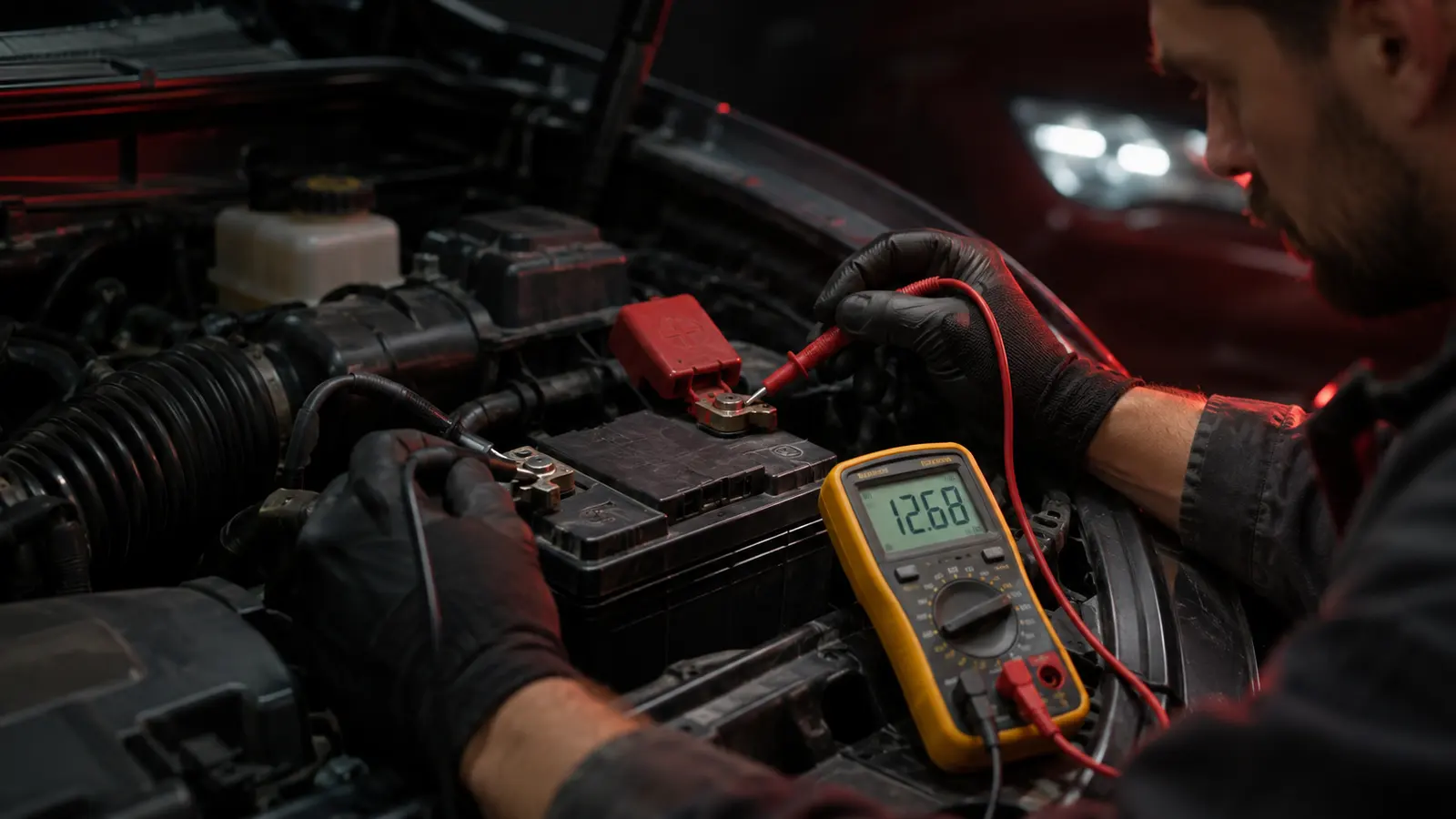 Starting & Battery
Car Battery Voltage Chart: What Your Reading Means
A fully charged 12-volt car battery rests at about 12.6 volts. With the engine running, the alternator should hold the system between about 13.5 and 14.5 volts. Readings well below those point to a flat battery or a charging fault.
Updated November 22, 2026Read Starting & Battery
Car Won't Start but the Lights Come On: What It Means
Working lights mean the battery has some charge — not that it can crank the engine. The sound the car makes points to the cause.
Updated November 22, 2026Read