
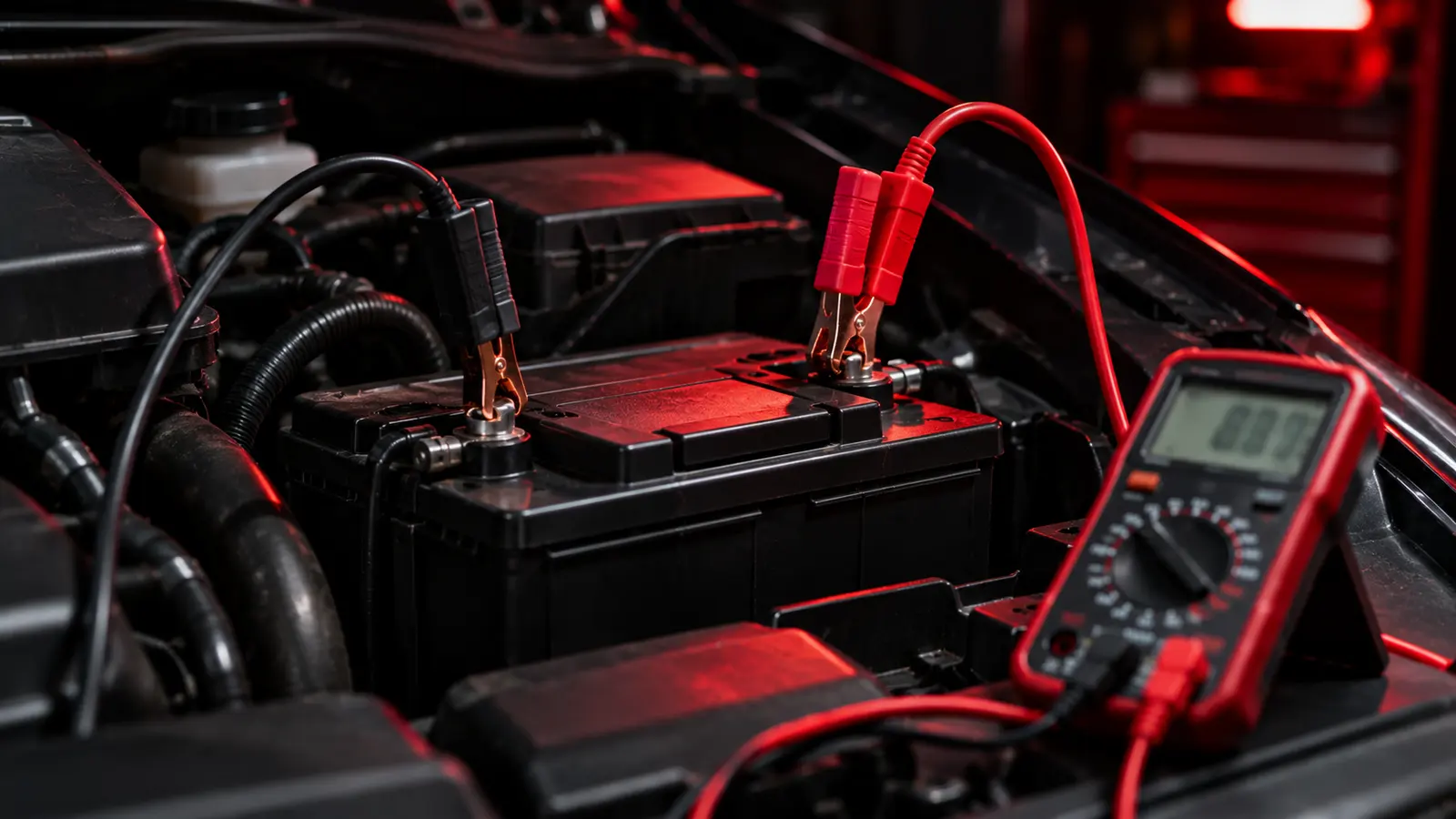
Car Batteries: The Complete Guide to Types, Testing, Care and Replacement
Quick answer
A 12-volt car battery starts the engine and steadies the electrics; the alternator then keeps it charged. This guide covers how batteries work, the main types, what the ratings mean, how to test and charge one, why they fail and how to replace one safely.
- Topic
- Starting & Battery
- Sections
- 15
- Reading time
- 8 min
- Applies to
- All regions
The car battery is a 12-volt lead-acid battery whose main job is to start the engine. Once the engine is running, the alternator takes over, powering the car and recharging the battery. This guide from the AllInformations Automotive team brings everything together: how batteries work, the types you'll find, what the labels mean, how to test, charge and look after one, why they fail, and how to replace one safely.
If you need a quick fix right now, jump to car won't start but lights come on or how to jump start a car.
What a car battery actually does
Starting the engine
The starter motor needs a short burst of very high current to turn the engine over. That burst comes from the battery, which is why most batteries are called SLI batteries: starting, lighting and ignition. They're built to deliver a lot of current briefly, not to be drained slowly for hours.
Steadying the electrical system
With the engine running, the battery acts as a buffer for the car's electrics, smoothing out voltage while the alternator supplies most of the power.
Powering the car when it's off
Clocks, alarms, keyless entry and control modules draw a small current while the car is parked. A healthy battery covers this easily; a weak one, or a fault that draws too much, can leave you with a flat battery. See car battery keeps dying.
How a lead-acid battery works
Cells and voltage
A 12-volt car battery is six cells connected in series. Together they give about 12.6 volts at full charge.
The chemistry in plain English
Each cell has lead-based plates in a sulphuric acid electrolyte. As the battery discharges, the acid reacts with the plates and their surfaces turn into lead sulphate. Charging reverses the reaction. That reversible chemistry is what lets a car battery be recharged thousands of times.
Why the alternator matters
The alternator recharges the battery as you drive. Its voltage regulator keeps the system between about 13.5 and 14.5 volts. If the alternator stops charging, the car runs on battery alone until it's flat. See symptoms of a bad alternator and how does an alternator work?.
The main types of car battery
| Type | What it is | Typical use |
|---|---|---|
| Flooded (wet) | Plates in liquid electrolyte; some have removable caps | Older and simpler cars |
| EFB (enhanced flooded) | A tougher flooded design for more charge cycles | Many entry-level start-stop cars |
| AGM (absorbed glass mat) | Electrolyte held in glass mats; sealed, spill-resistant | Advanced start-stop, high electrical demand |
| Lithium 12 V | Lithium chemistry in a 12 V package | Some newer cars and EV auxiliary batteries |
Flooded batteries
The traditional design. Some have caps so the electrolyte level can be checked. A weakness of standard flooded batteries is that they are very intolerant of deep discharge, such as being completely drained by lights left on.
AGM batteries
AGM (a type of VRLA, valve-regulated lead-acid) batteries hold the electrolyte in glass mats. They are more tolerant of deep discharge than standard flooded batteries, but cost more. Many cars with advanced start-stop and regenerative systems require them.
EFB batteries
Enhanced flooded batteries sit between flooded and AGM: sturdier than a standard flooded battery and often specified for cars with simpler start-stop systems.
Which type should you buy?
Use the type your car came with or the handbook specifies. Cars, especially with start-stop, are designed around a particular battery, and some need a new battery registered to the car's computer. Our AGM vs flooded battery comparison goes deeper.
Reading the label: ratings explained
Voltage
Nearly all passenger cars use a 12-volt system. Some trucks and heavy vehicles use 24 volts.
Cold cranking amps (CCA)
CCA is the current a battery can deliver at 0 °F (about −18 °C) for 30 seconds while staying at or above 7.2 volts. Higher CCA means more starting power in the cold. Don't confuse CCA with CA, MCA or HCA ratings, which are measured at warmer temperatures and therefore always look higher.
Capacity (Ah) and reserve capacity
Amp-hours (Ah) describe how much energy the battery stores. Reserve capacity describes how long it can run essential loads if the alternator fails. Both matter more on cars with heavy electrical demand.
Size and terminal layout
Batteries come in standard case sizes with positive and negative terminals on specific sides. A battery with reversed terminals may not reach the cables. Match the size and layout to the original.
How to test a car battery
Resting voltage
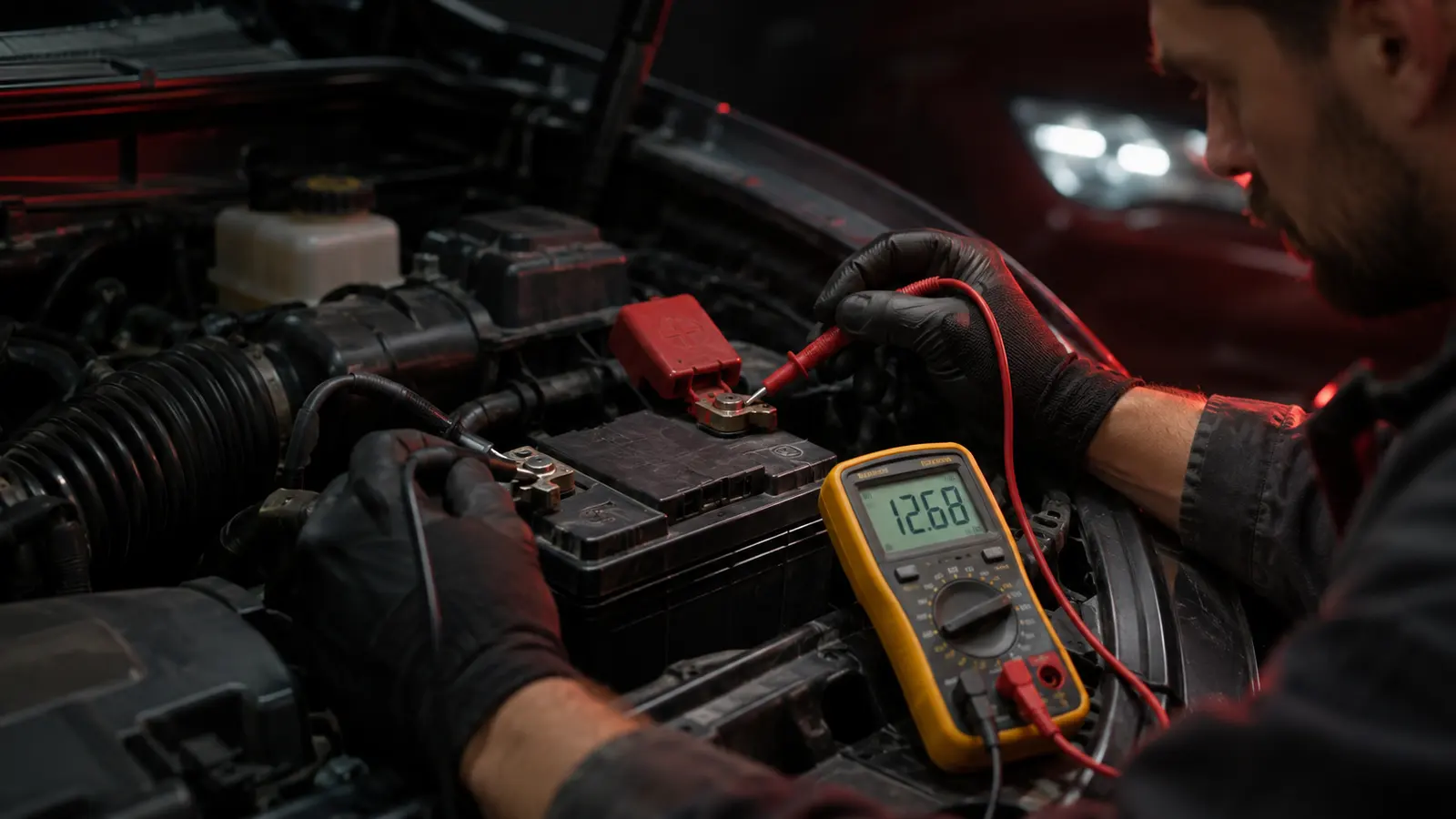
With the car off for a few hours, a multimeter reading of about 12.6 V means fully charged. Our car battery voltage chart explains every reading, and how to test a car battery with a multimeter shows the steps.
Charging voltage
With the engine running, you should see about 13.5–14.5 V. Much lower points to a charging fault rather than the battery.
Load and conductance tests
A battery can show a good voltage and still fail when asked to start the engine. A load or conductance test checks how well it delivers current. Many workshops and parts stores can do this.
Charging a car battery
When you need to charge
Short trips, long periods parked and cold weather can all leave a battery undercharged. If the car cranks slowly, charging (then testing) is a sensible first step.
Using a charger safely
Use a smart charger suited to your battery type (flooded, EFB, AGM or lithium), connect it as the instructions say, and charge in a ventilated space. Batteries can release hydrogen while charging, and gas can ignite if there is a spark nearby. See how to charge a car battery.
Jump-starting
A jump start gets you going but doesn't fix the cause. Follow the correct connection order in how to jump start a car.
Batteries in cold and hot weather
Why cold weather is hard on batteries
NHTSA notes that when the temperature drops, so does battery power, and engines need more battery power to start in the cold. FuelEconomy.gov adds that battery performance decreases in cold weather, making it harder for the alternator to keep the battery charged. See car battery in cold weather.
Why heat matters too
High under-bonnet temperatures speed up the chemical ageing inside the battery. A battery can be damaged in summer and finally fail on the first cold morning.
Block heaters and garages
In very cold climates, parking in a garage or using a block heater eases the load on the battery at start-up.
Why car batteries fail
Sulphation
If a battery sits partly discharged, lead sulphate hardens on the plates. This can reduce a battery's lifespan by a third or more.
Deep discharges
Standard starting batteries aren't designed to be run flat. Each deep discharge shortens their life.
Corroded or loose terminals
White or green crust on the terminals adds resistance and can mimic a dead battery. See why do battery terminals corrode and how to clean battery terminals.
Parasitic drain
A fault that keeps a module, light or accessory awake drains the battery overnight. A garage can measure the drain and track it down.
Physical damage
A cracked or swollen case is a sign of serious trouble. See swollen car battery.
How long do car batteries last?
It depends on use, not just age
Climate, the number of short trips, electrical load and battery type all affect life. Our how long do car batteries last? guide covers the factors in detail.
Warning signs of a battery near the end
- Slow or laboured cranking, especially when cold
- Needing jump starts
- A battery or charging warning light
- Electrical quirks such as resetting clocks or dim lights at start-up
- A swollen case or a strong sulphur smell
Looking after your battery
Simple habits that help
- Drive for longer stretches regularly so the battery fully recharges.
- Use a maintenance charger if the car sits for weeks.
- Keep terminals clean and tight, and the battery clamped down so it can't vibrate.
- Switch off lights and accessories before leaving the car.
Before winter
Have the battery and charging system tested before the cold sets in. NHTSA recommends having a mechanic check the battery, charging system and belts ahead of winter. See our winter car maintenance checklist.
Replacing a car battery
Choosing the replacement
Match the type (flooded, EFB, AGM), size, terminal layout and at least the original CCA. Check whether your car needs the new battery registered.
The safe order
Disconnect the negative first, then the positive; reconnect positive first, negative last. Full steps are in how to replace a car battery.
After fitting
Some cars need radio codes, window settings or idle speed relearned. Cars with start-stop may need a scan tool to register the new battery.
Batteries in hybrids and electric cars
The 12-volt battery is still there
Most EVs and hybrids still have a 12-volt battery to run standard accessories and wake the high-voltage system. If it's flat, the car may not "turn on" even with a fully charged traction battery.
Safety
Never touch orange high-voltage cables. Follow the handbook for jump-starting or replacing the 12-volt battery on a hybrid or EV. See EV range in cold weather.
Safety when handling batteries
Acid and gas
Battery electrolyte is corrosive, and charging can release hydrogen. Wear eye protection and gloves, keep sparks and flames away, and work in a ventilated area.
Short circuits
Never let a spanner or jewellery touch both terminals, or the positive terminal and the car body at the same time.
Recycling old batteries
Why it matters
Old lead-acid batteries contain lead and acid and must not go in household waste. Recycling recovers the lead and keeps it out of landfill. According to the US EPA, as cited by Wikipedia, the 12-volt car battery is the most recycled product in the world.
How to do it
Return the old battery to the retailer, a garage or a local recycling point. Many sellers take the old one when you buy a new one.
Related guides
Frequently asked questions
How long does a car battery last?
It varies a lot with climate, driving pattern and battery type. Heat, short trips and deep discharges all shorten life. Test an older battery before winter rather than relying on its age alone.
Can I fit a flooded battery where the car came with AGM?
Generally no. Cars, especially with start-stop, are designed around the battery type fitted at the factory. Use the type your handbook specifies.
Is a higher CCA battery better?
It won't harm the car if the size and type are right, and it helps in very cold climates, but it isn't a fix for a charging or wiring fault.
Do electric cars have a 12-volt battery?
Yes. Most EVs keep a 12-volt battery to run standard accessories and wake the car, even though the main traction battery drives the motor.
Tools that can help
Need a mechanic?
Find rated garages near you by city, ZIP code or postcode, with directions.
About this guide
Written by Editorial Team using manufacturer documentation, government road-safety guidance and motoring-organisation advice. It explains likely causes and safe checks. It is not a diagnosis. How we write and check guides.
More starting & battery guides
 Starting & Battery
Car Battery Voltage Chart: What Your Reading Means
A fully charged 12-volt car battery rests at about 12.6 volts. With the engine running, the alternator should hold the system between about 13.5 and 14.5 volts. Readings well below those point to a flat battery or a charging fault.
Updated November 22, 2026Read Starting & Battery
Car Won't Start but the Lights Come On: What It Means
Working lights mean the battery has some charge — not that it can crank the engine. The sound the car makes points to the cause.
Updated November 22, 2026Read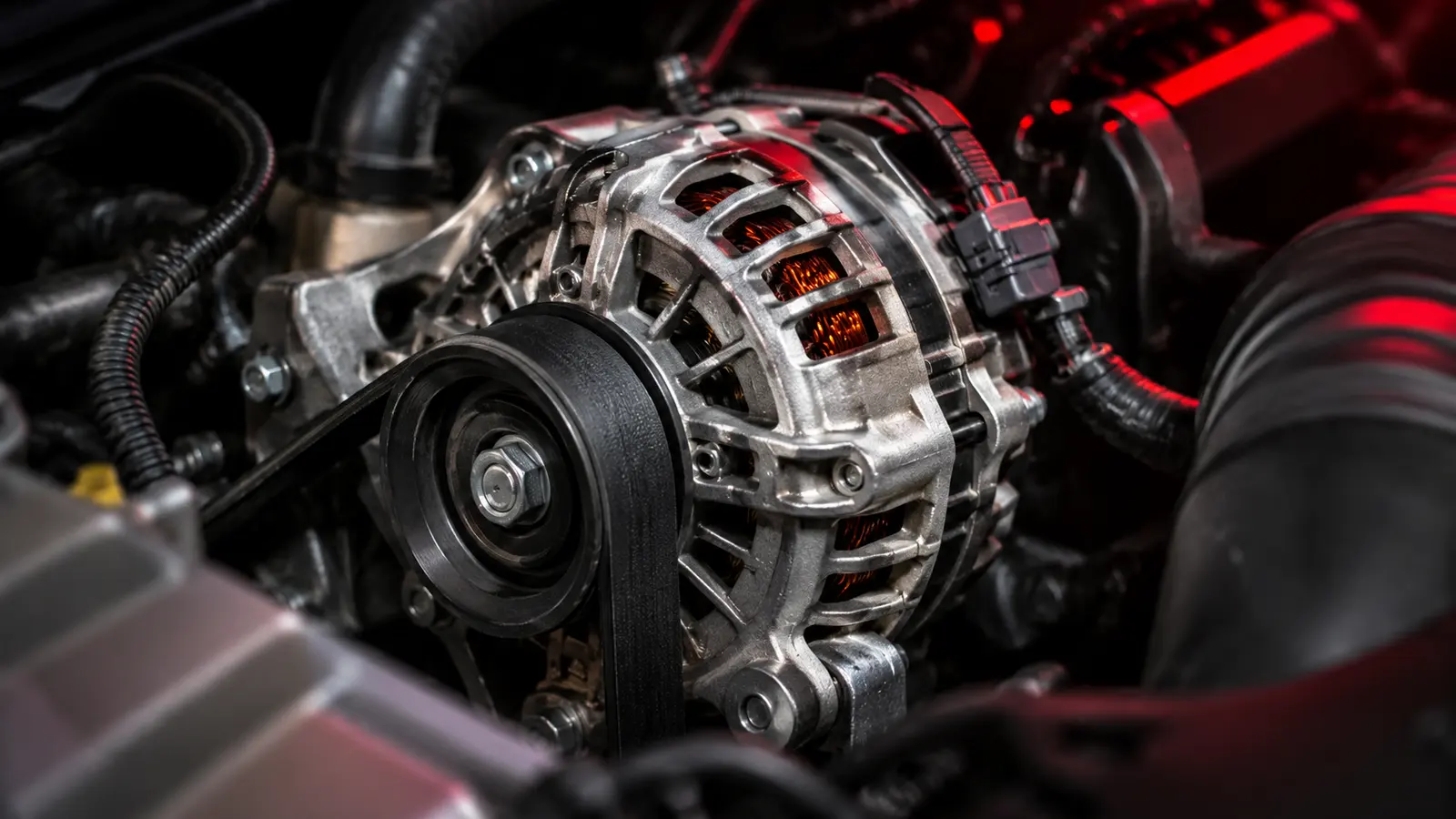 Starting & Battery
How Long Does an Alternator Last?
Many alternators last 100,000 miles (160,000 km) or more. Oil or coolant leaks onto the alternator, heat, worn belts and heavy electrical loads shorten their life.
Updated November 22, 2026Read