
Swollen Car Battery: Causes and What to Do
Quick answer
A bulging battery case usually means overcharging, excessive heat or a battery that froze while discharged. Treat it as a safety issue: don't charge or jump it, and have it replaced.
- Topic
- Starting & Battery
- Sections
- 6
- Reading time
- 1 min
- Applies to
- All regions
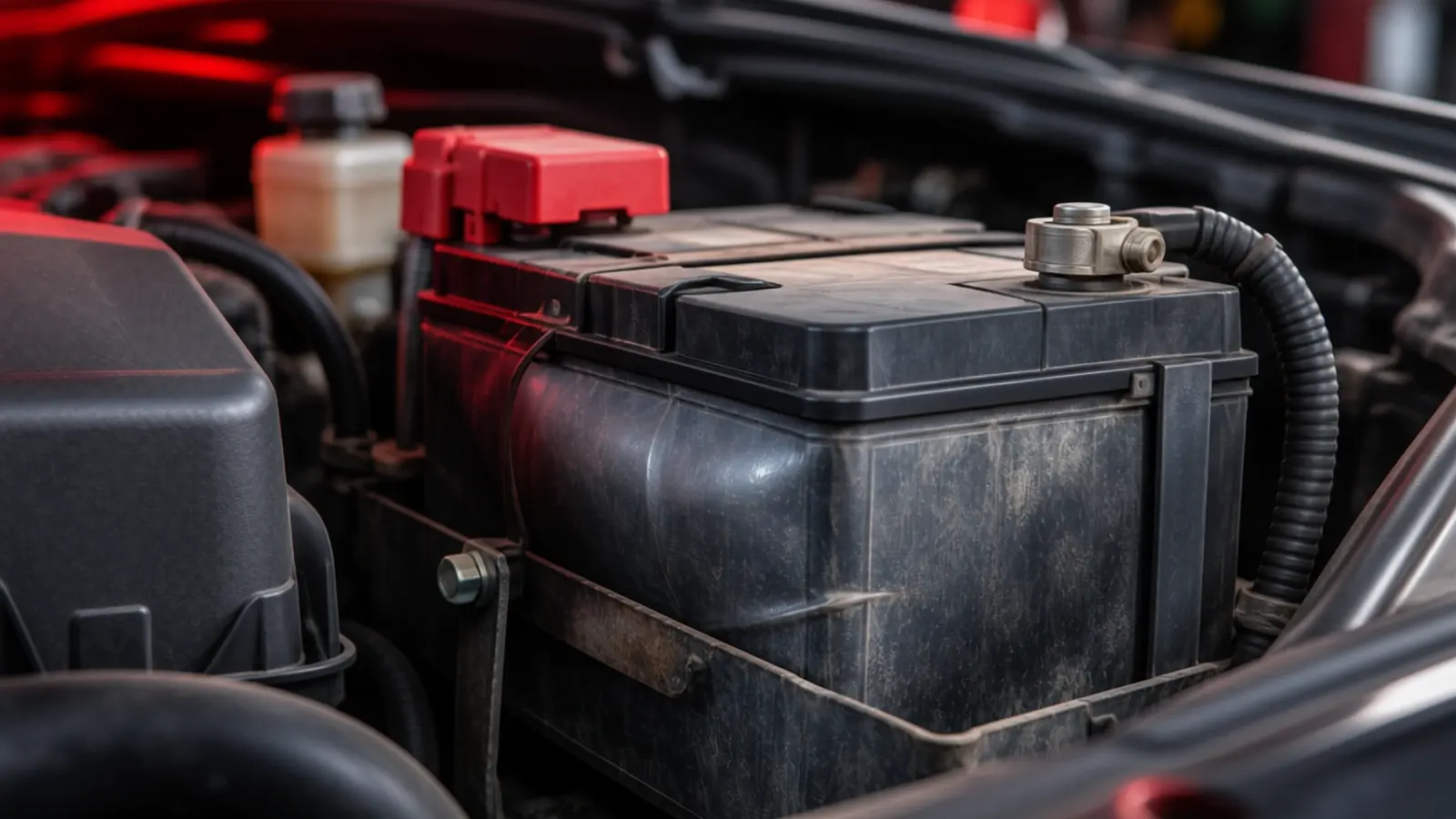
A swollen car battery has a case that bulges at the sides or top. It usually means the battery has been overcharged, exposed to excessive heat, or frozen while it was flat. Internal pressure and damaged plates push the case outwards. Treat it as a safety issue.
Is it safe?
No. Don't charge, jump start or keep driving with a visibly swollen battery if you can avoid it. It may leak acid or vent flammable hydrogen. Have it replaced and the charging system tested.
Causes at a glance
| Cause | Clue |
|---|---|
| Overcharging (regulator fault) | Battery hot, voltage over about 15 V while running |
| Engine-bay heat | Hot climates, battery near the exhaust |
| Freezing while discharged | Happened after a cold snap with a flat battery |
| Wrong charger setting | Swelling after home charging |
| End of life | Old battery, internal short |
What to do
- Don't charge or jump it.
- Wear gloves and eye protection if you must handle it.
- Have it replaced, and recycled properly, at a garage or parts store.
- Test the charging voltage with the new battery fitted: roughly 13.8–14.7 V is normal.
Why the alternator matters
If the voltage regulator fails high, it keeps pushing charge into a full battery, boiling the electrolyte and building pressure. Replacing only the battery would let the same thing happen again.
Preventing it
- Use a smart charger set for your battery type.
- Keep batteries charged in winter: a flat battery can freeze.
- Have charging voltage checked if bulbs blow often or the battery runs hot.
Related guides
Frequently asked questions
Is a swollen battery dangerous?
It can be. It may leak acid or release flammable gas. Don't charge, jump or keep using it.
Will the alternator cause it?
A faulty voltage regulator that overcharges the battery is a common cause.
Tools that can help
Need a mechanic?
Find rated garages near you by city, ZIP code or postcode, with directions.
About this guide
Written by Editorial Team using manufacturer documentation, government road-safety guidance and motoring-organisation advice. It explains likely causes and safe checks. It is not a diagnosis. How we write and check guides.
More starting & battery guides
 Starting & Battery
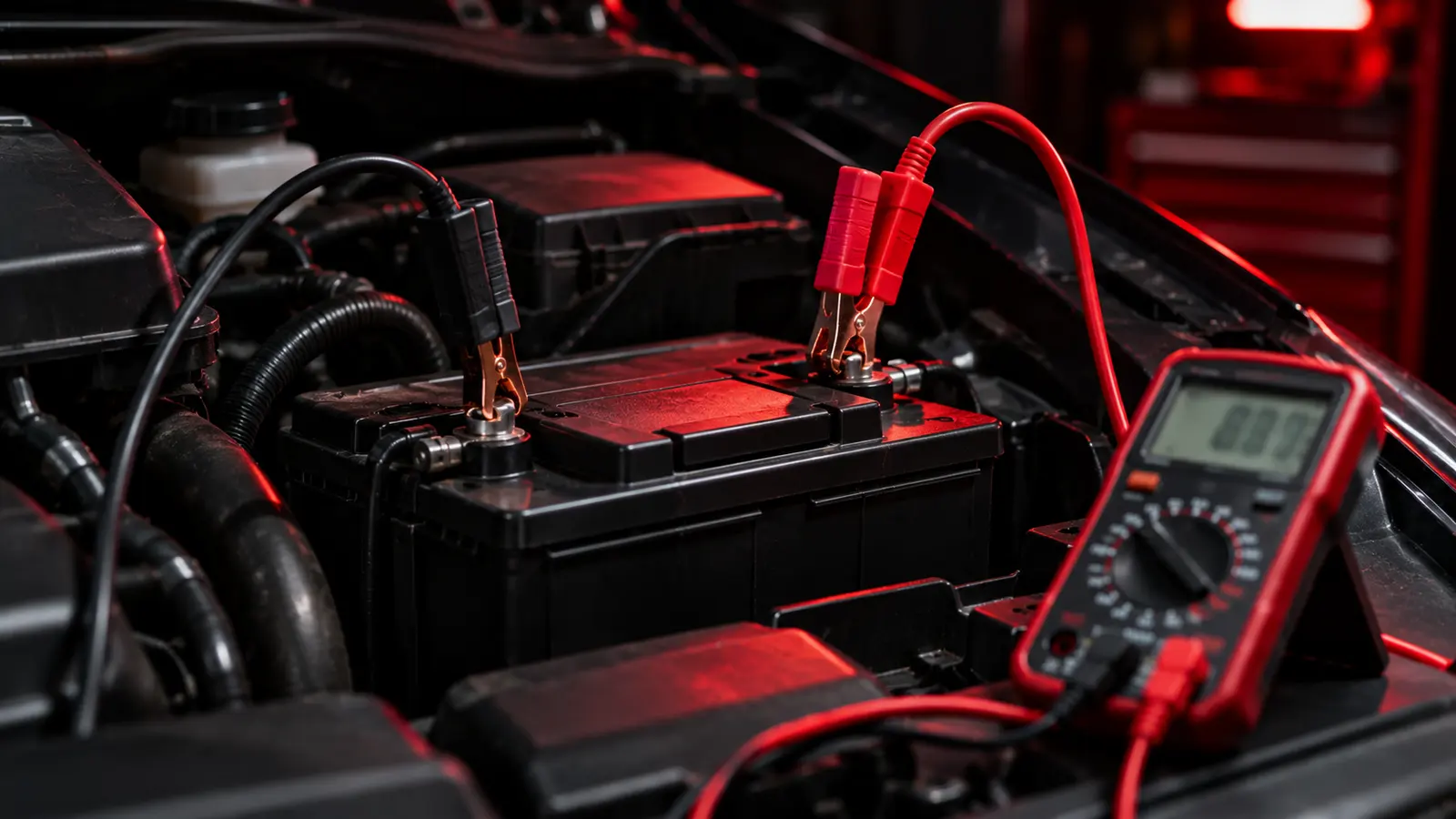
Car Batteries: The Complete Guide to Types, Testing, Care and Replacement
A 12-volt car battery starts the engine and steadies the electrics; the alternator then keeps it charged. This guide covers how batteries work, the main types, what the ratings mean, how to test and charge one, why they fail and how to replace one safely.
Updated November 22, 2026Read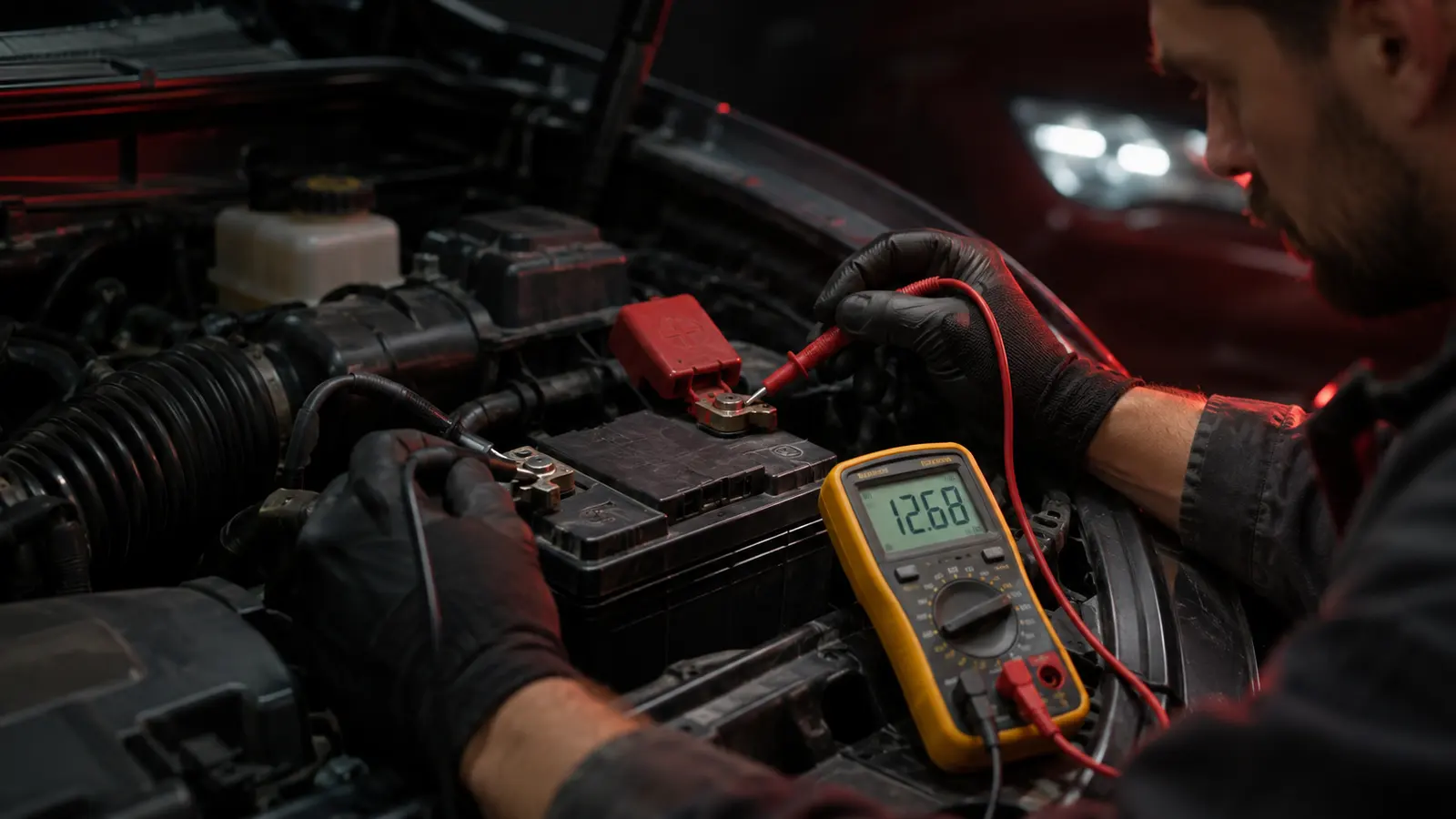 Starting & Battery
Car Battery Voltage Chart: What Your Reading Means
A fully charged 12-volt car battery rests at about 12.6 volts. With the engine running, the alternator should hold the system between about 13.5 and 14.5 volts. Readings well below those point to a flat battery or a charging fault.
Updated November 22, 2026Read Starting & Battery
Car Won't Start but the Lights Come On: What It Means
Working lights mean the battery has some charge — not that it can crank the engine. The sound the car makes points to the cause.
Updated November 22, 2026Read