
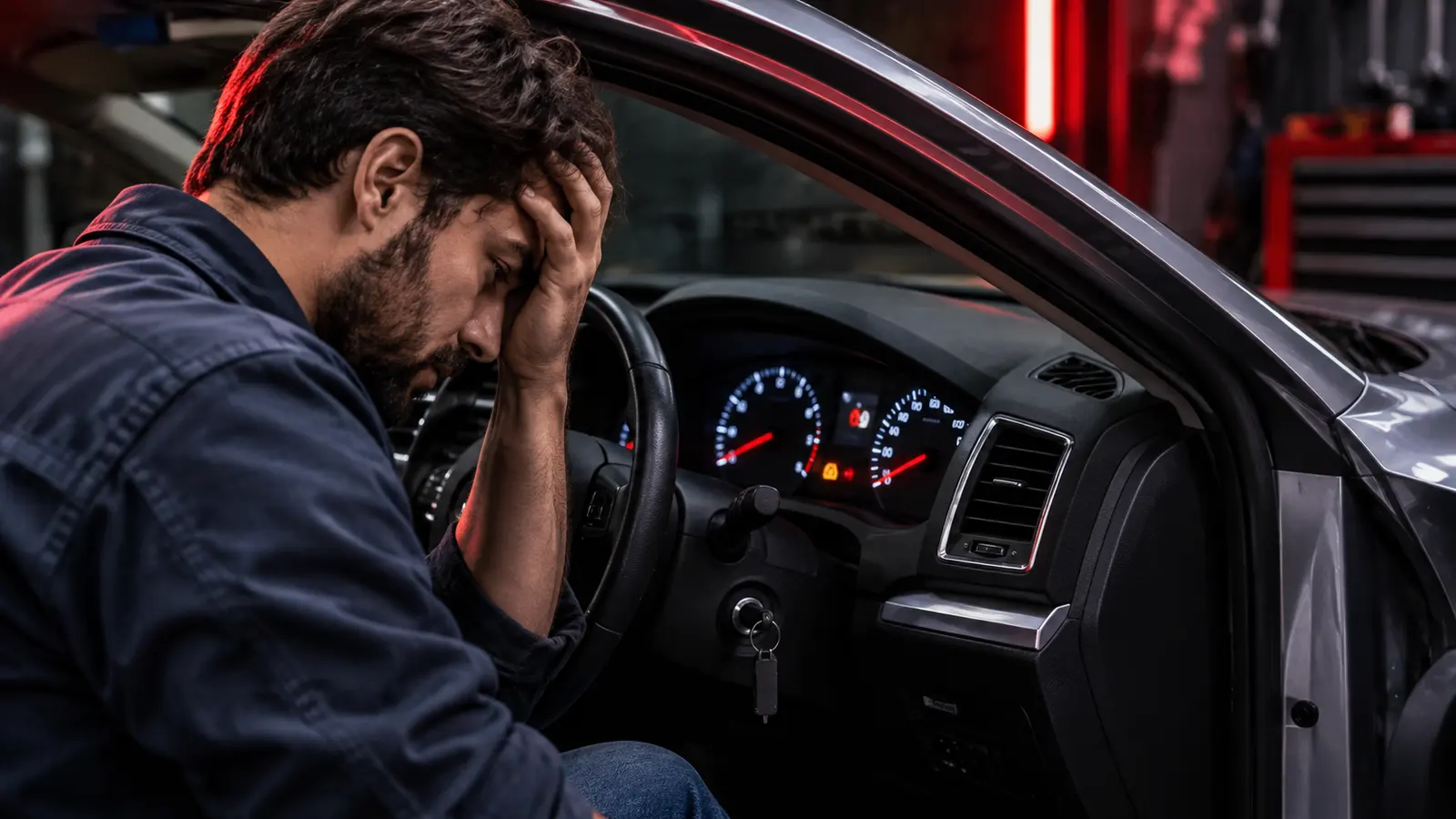
Car Won't Start but the Lights Come On: What It Means
Part of: Car Won't Start: Find the Cause
Quick answer
Working lights mean the battery has some charge — not that it can crank the engine. The sound the car makes points to the cause.
- Topic
- Starting & Battery
- Sections
- 7
- Reading time
- 3 min
- Applies to
- All regions
When the dashboard lights come on but the car won't start, the battery has some charge, but that doesn't prove it can turn the engine over. Listen to what happens when you turn the key: rapid clicking points to a weak battery or bad terminal, a single click points to the starter, and normal cranking without starting points to fuel, spark or the immobiliser.
Step 1: What do you hear?
| What happens | Most likely area |
|---|---|
| Rapid clicking, lights dim | Weak battery or loose/corroded terminals |
| One click, lights stay bright | Starter motor or solenoid |
| Nothing at all, lights stay bright | Ignition switch, starter relay, neutral/clutch safety switch |
| Engine cranks normally but won't fire | Fuel, ignition or immobiliser |
| Engine cranks slowly | Weak battery, cold weather, poor ground |
Common causes
Weak battery
Headlights draw a few amps; a starter can draw over 100. A battery near the end of its life passes the "lights test" but fails under load. Batteries more than four or five years old, or cars that do lots of short trips, are prime suspects.
Corroded or loose terminals
White or green crust on the battery posts, or a clamp you can twist by hand, can stop starting current while still feeding the lights.
Failing starter motor or solenoid
A single click with no cranking, especially if it sometimes works after a few tries, is a classic sign of a worn starter.
Safety switches
Automatics only crank in Park or Neutral; manuals need the clutch fully pressed. A faulty switch gives silence with all lights on.
Immobiliser or key fob
If a security light flashes on the dash, the car may not be recognising the key. Try the spare key, or replace the fob battery.
Fuel or spark
If it cranks at normal speed but never fires, the battery is fine. Check you haven't run low on fuel, listen for the fuel pump humming for two seconds at key-on, and get a diagnostic scan.
What you can try safely
- Shift firmly into Park (or press the clutch fully) and try again.
- Turn off all electrics and try once more.
- Check the terminals. If corroded, disconnect negative first, clean, refit positive first, then negative.
- Try a jump start. If it starts straight away, the battery or charging system is the problem.
- Try the spare key.
Safety: Keep sparks and flames away from the battery, wear eye protection, and connect jump leads in the order your handbook gives. Hybrids and EVs have their own 12V jump points — never touch orange high-voltage cables.
When to call a mechanic
If a jump start doesn't help, the car repeatedly needs jumping, or you hear a single click every time, have a mechanic test the battery under load, measure alternator output and check the starter circuit. These tests take minutes and stop you replacing parts that aren't faulty.
What affects the cost
Cleaning terminals or replacing a fob battery costs very little. A new battery depends on its type: AGM and EFB batteries for stop-start cars cost more. Starter motor and ignition switch repairs vary mostly with labour time on your car.
How to prevent it
- Have the battery load-tested yearly once it's three years old.
- Keep terminals clean and tight.
- Replace the key-fob battery every couple of years.
- Take a longer drive weekly if you mostly do short trips.
Related problems
Frequently asked questions
Can a battery be bad if the lights still work?
Yes. Lights draw a few amps; a starter motor draws well over a hundred. A weak battery can run the lights and radio but collapse when you try to crank.
What does one loud click mean?
A single click with the lights staying bright usually means the starter solenoid is getting power but the starter motor isn't turning — often a starter fault or poor connection.
Can tapping the starter make it work?
Sometimes, if the starter has a worn spot. It is a temporary trick that confirms a failing starter, not a fix.
Tools that can help
How the parts involved work
Need a mechanic?
Find rated garages near you by city, ZIP code or postcode, with directions.
About this guide
Written by Editorial Team using manufacturer documentation, government road-safety guidance and motoring-organisation advice. It explains likely causes and safe checks. It is not a diagnosis. How we write and check guides.
More starting & battery guides
 Starting & Battery
Car Batteries: The Complete Guide to Types, Testing, Care and Replacement
A 12-volt car battery starts the engine and steadies the electrics; the alternator then keeps it charged. This guide covers how batteries work, the main types, what the ratings mean, how to test and charge one, why they fail and how to replace one safely.
Updated November 22, 2026Read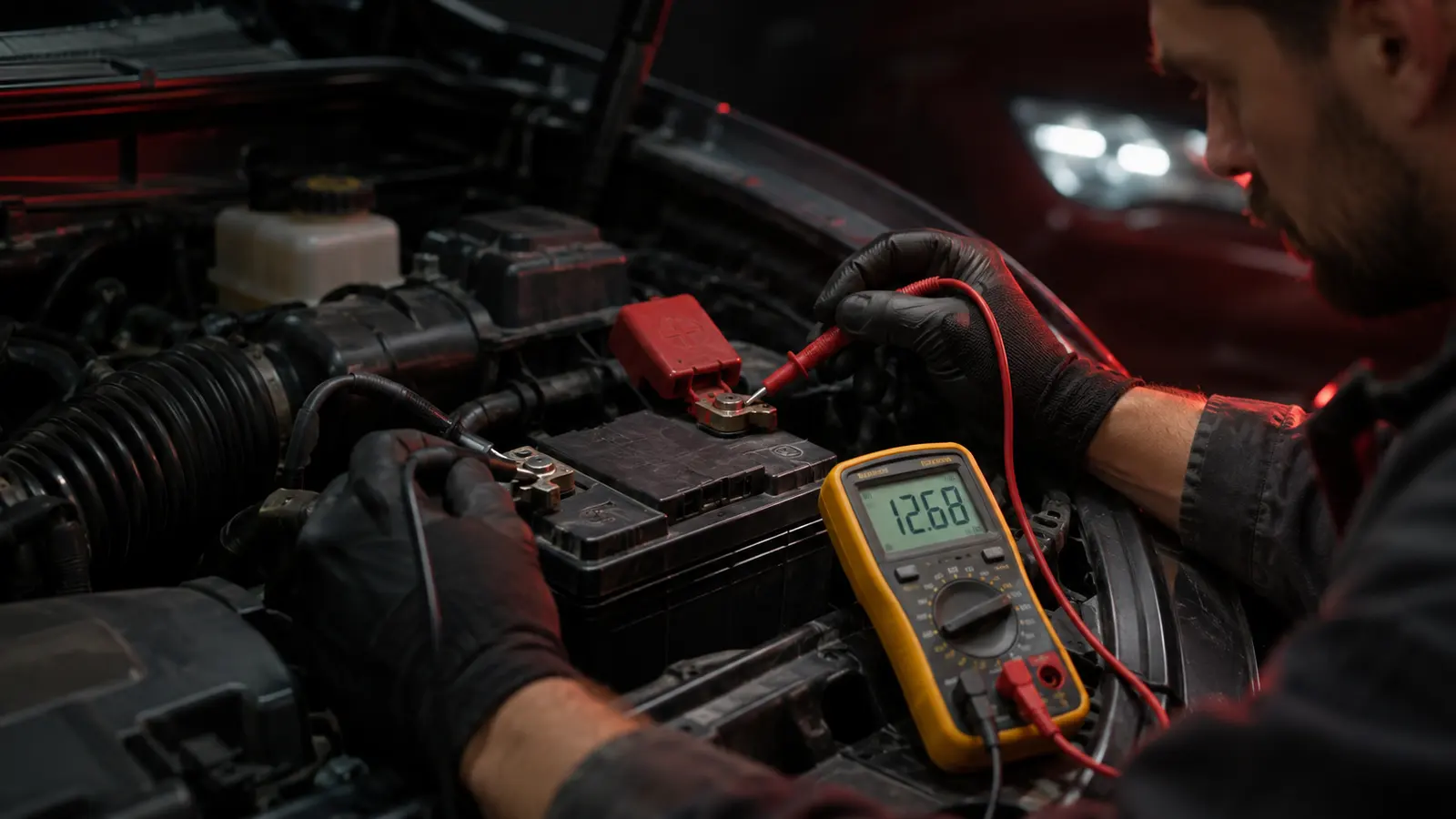 Starting & Battery
Car Battery Voltage Chart: What Your Reading Means
A fully charged 12-volt car battery rests at about 12.6 volts. With the engine running, the alternator should hold the system between about 13.5 and 14.5 volts. Readings well below those point to a flat battery or a charging fault.
Updated November 22, 2026Read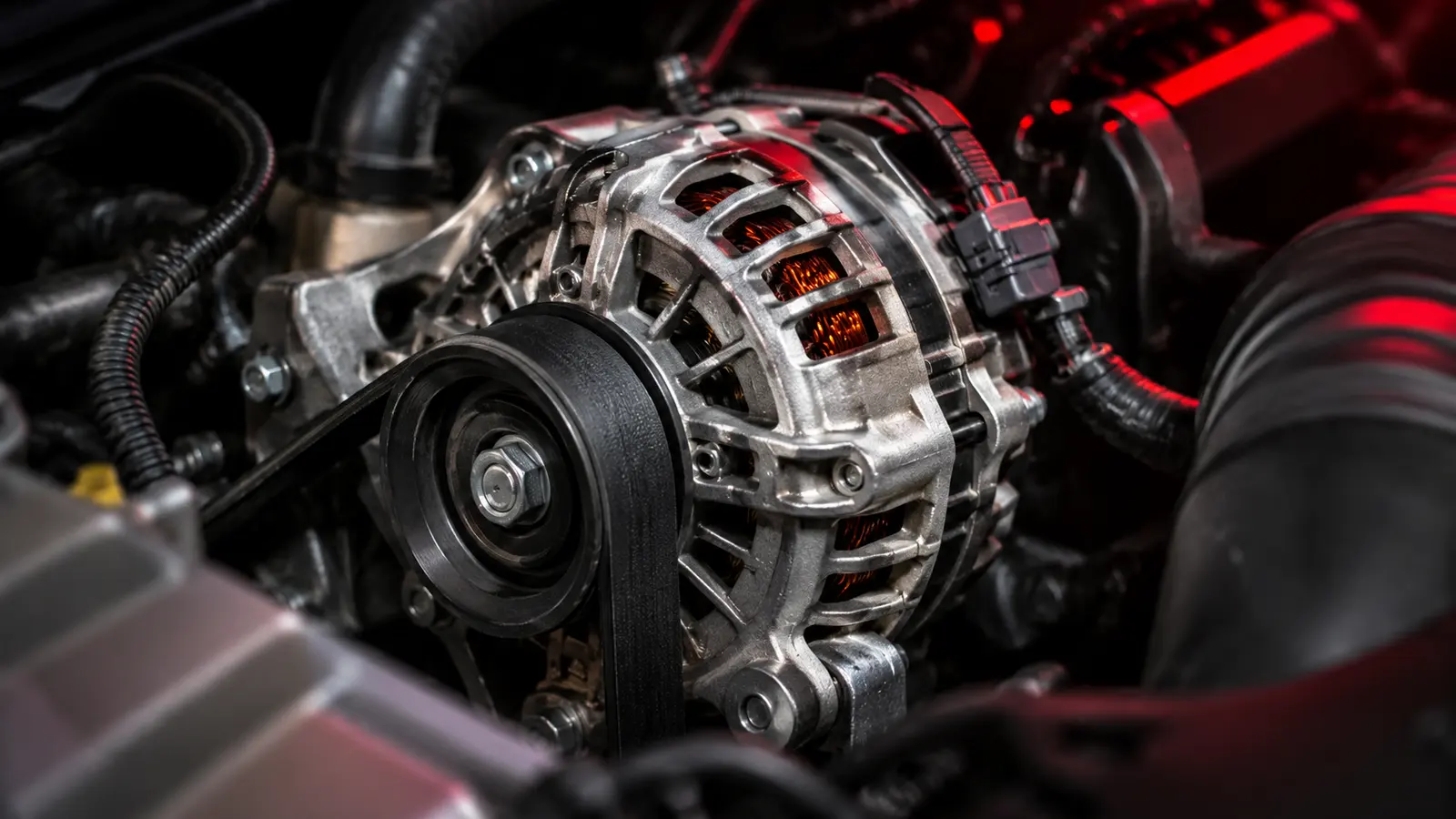 Starting & Battery
How Long Does an Alternator Last?
Many alternators last 100,000 miles (160,000 km) or more. Oil or coolant leaks onto the alternator, heat, worn belts and heavy electrical loads shorten their life.
Updated November 22, 2026Read