
Starting system
What Does a Starter Motor Do?
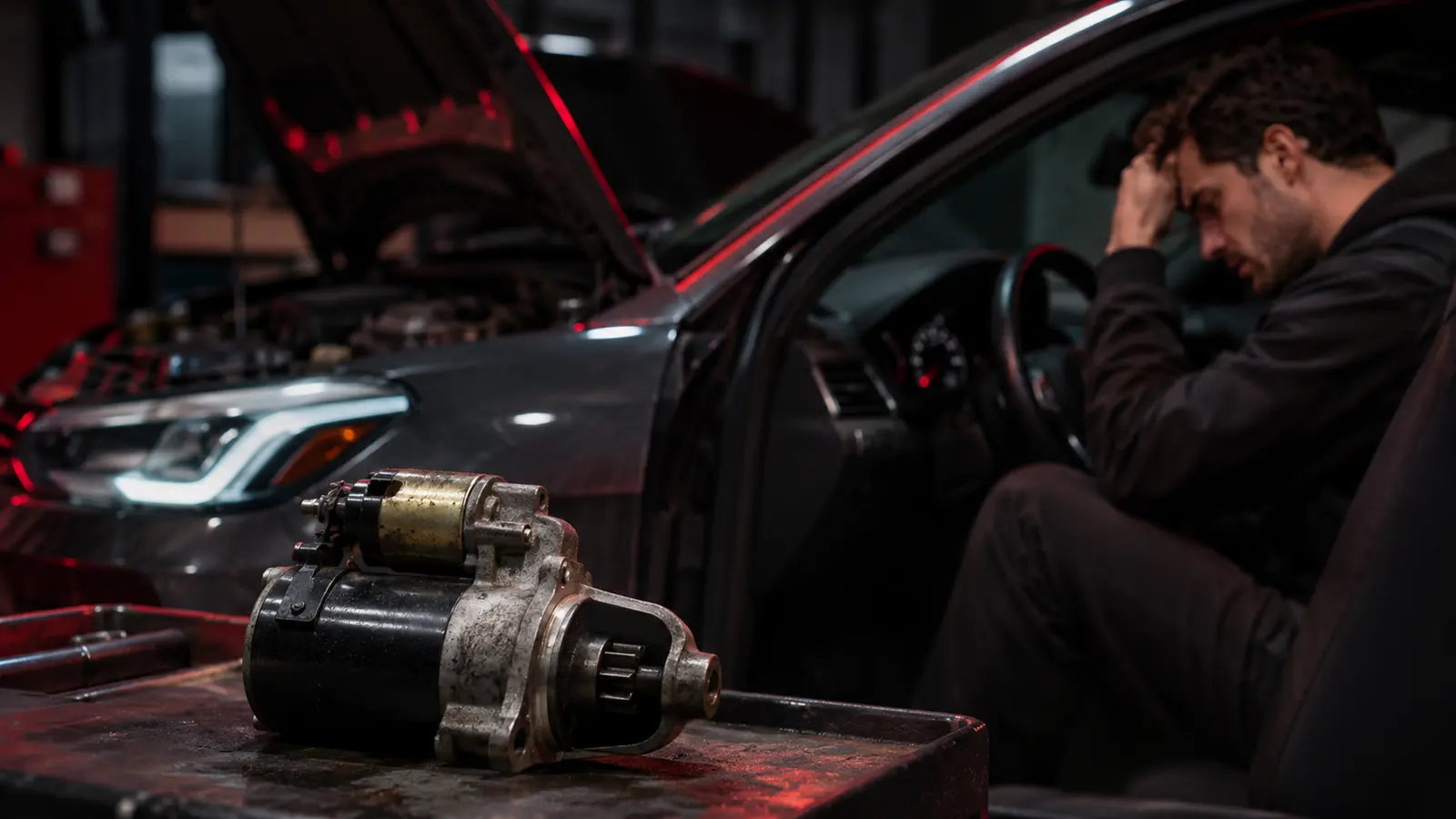
The starter motor is a powerful electric motor that turns the engine over when you turn the key or press start. A solenoid pushes its small gear into the flywheel, spins the engine until it fires, then pulls the gear back.
- System
- Starting
- Where it is
- Low on the engine where it meets the gearbox
- Typical life
- Often the life of the car; stop-start cars use heavy-duty units
How the starter motor works
- 01
Turning the key sends a signal to the starter solenoid
- 02
The solenoid closes heavy contacts and pushes the pinion gear forward
- 03
The motor spins the flywheel and the engine
- 04
Once the engine runs, the pinion disengages
Signs of a problem
How to make it last
- Don't crank for more than about 10 seconds
- Keep the battery healthy
- Never operate the starter with the engine running
Frequently asked questions
Is the solenoid part of the starter?
On most cars it's mounted on the starter and replaced with it.
Why do stop-start cars have special starters?
They start far more often and need tougher components.
Guides about this part
General information, not a diagnosis. If a warning light is red, the car drives abnormally or you're unsure, stop safely and have a qualified technician inspect the vehicle.