
Quick answer
A single click with bright dash lights, grinding while cranking, or starting that only works sometimes are the classic signs of a failing starter motor.
- Topic
- Starting & Battery
- Sections
- 9
- Reading time
- 2 min
- Applies to
- All regions
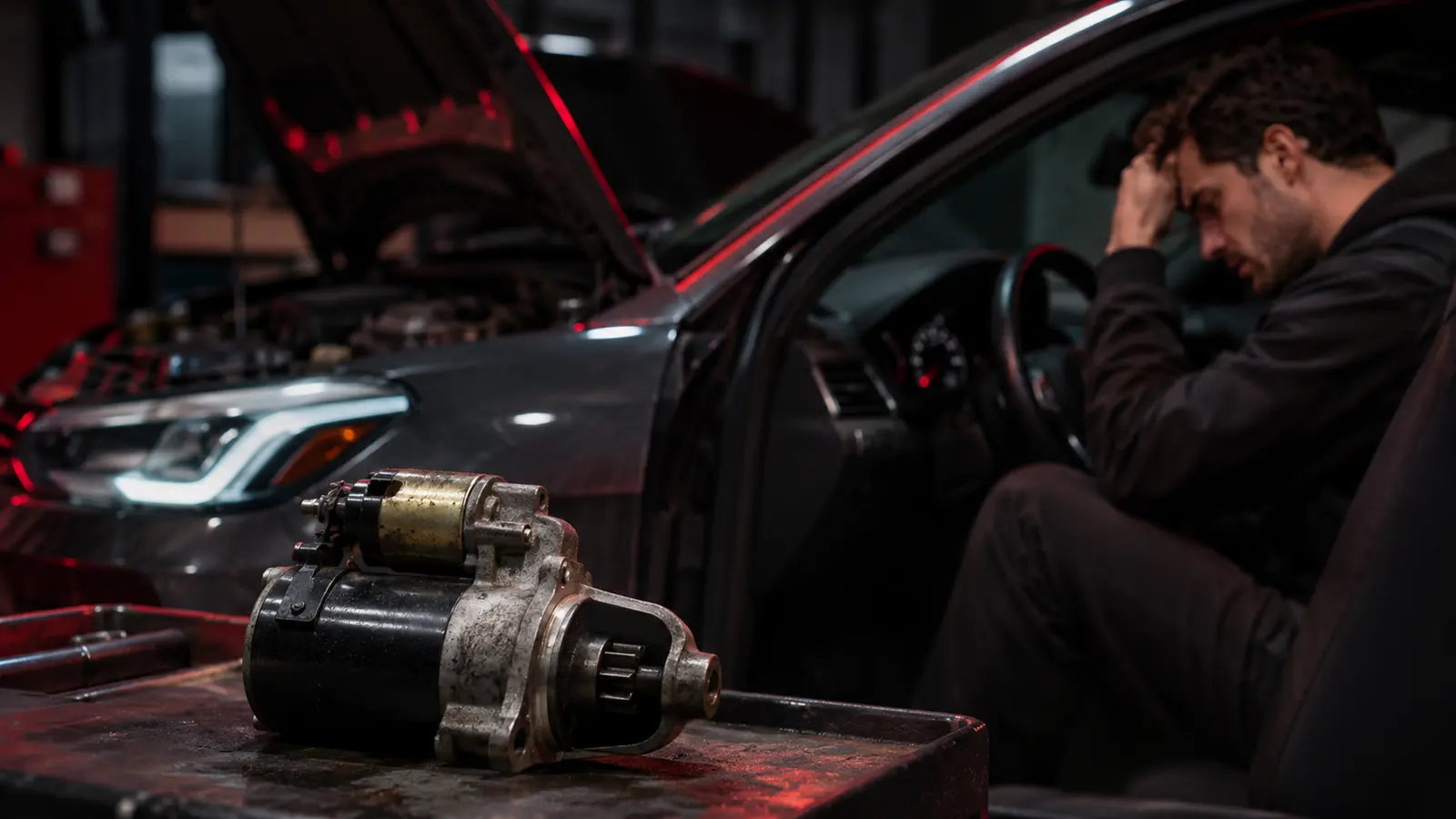
The starter motor spins the engine to get it running. Bad starter symptoms include one loud click with bright dashboard lights, grinding or whirring while cranking, starting that works only some of the time, and smoke or a burning smell after several attempts.
Is it safe to drive?
If it starts, the car drives normally, because the starter's job is done. The risk is being stranded next time. Avoid parking where a no-start would be a problem until it's fixed.
Signs at a glance
| Symptom | What it suggests |
|---|---|
| Single click, lights stay bright | Solenoid engages, motor doesn't turn |
| Works after several tries | Worn brushes or a dead spot on the armature |
| Grinding when starting | Starter gear not meshing cleanly with the flywheel |
| Whirring, engine doesn't turn | Starter drive (bendix) slipping |
| Starter keeps running after start | Stuck solenoid: stop and get help |
| Smoke or burning smell | Overheated starter or shorted cable |
Check these in order
- Rule out the battery: lights should stay bright when you turn the key.
- Check gear position: try in Neutral or with the clutch fully down.
- Inspect the cables to the starter for corrosion or damage, if you can safely reach them.
- Note the pattern: works when cold but not hot (or the reverse) is typical of a worn starter.
Causes explained
Worn brushes or armature
Over time, the brushes wear and dead spots form. The motor stops at a point where it can't turn.
Solenoid contacts
The solenoid switches the heavy current. Burnt contacts give a click but no power to the motor.
Drive gear and flywheel
If the starter gear or the flywheel's ring gear teeth are worn, you hear grinding. Ignoring it can damage the flywheel, which is much more expensive.
Heat soak
Starters close to the exhaust can struggle when hot, then work again once cooled.
What a mechanic will do
They'll measure voltage at the starter while cranking and do a voltage-drop test. If power arrives but the motor doesn't turn, the starter is at fault.
What affects the cost
Access is the biggest factor. Some starters are on top of the engine, others need other parts removed. Remanufactured starters are common and cost less.
How to prevent it
- Don't crank for more than about 10 seconds at a time.
- Fix slow cranking and battery issues promptly. They strain the starter.
- Never operate the starter while the engine is already running.
Regional notes
Stop-start cars use heavy-duty starters designed for many more starts. Replace with the correct type.
Related problems
Frequently asked questions
How do I tell a bad starter from a bad battery?
A weak battery usually gives rapid clicking and dim lights. A bad starter usually gives one click while the lights stay bright, or works only sometimes.
Does tapping the starter work?
Sometimes, if worn brushes or a dead spot are the cause. It confirms the starter is failing, but it isn't a repair.
Can a starter drain the battery?
A starter that stays engaged, or a shorted starter cable, can. You may hear the starter keep running after the engine starts. Switch off and get help.
Tools that can help
How the parts involved work
Need a mechanic?
Find rated garages near you by city, ZIP code or postcode, with directions.
About this guide
Written by Editorial Team using manufacturer documentation, government road-safety guidance and motoring-organisation advice. It explains likely causes and safe checks. It is not a diagnosis. How we write and check guides.
More starting & battery guides
 Starting & Battery
Car Batteries: The Complete Guide to Types, Testing, Care and Replacement
A 12-volt car battery starts the engine and steadies the electrics; the alternator then keeps it charged. This guide covers how batteries work, the main types, what the ratings mean, how to test and charge one, why they fail and how to replace one safely.
Updated November 22, 2026Read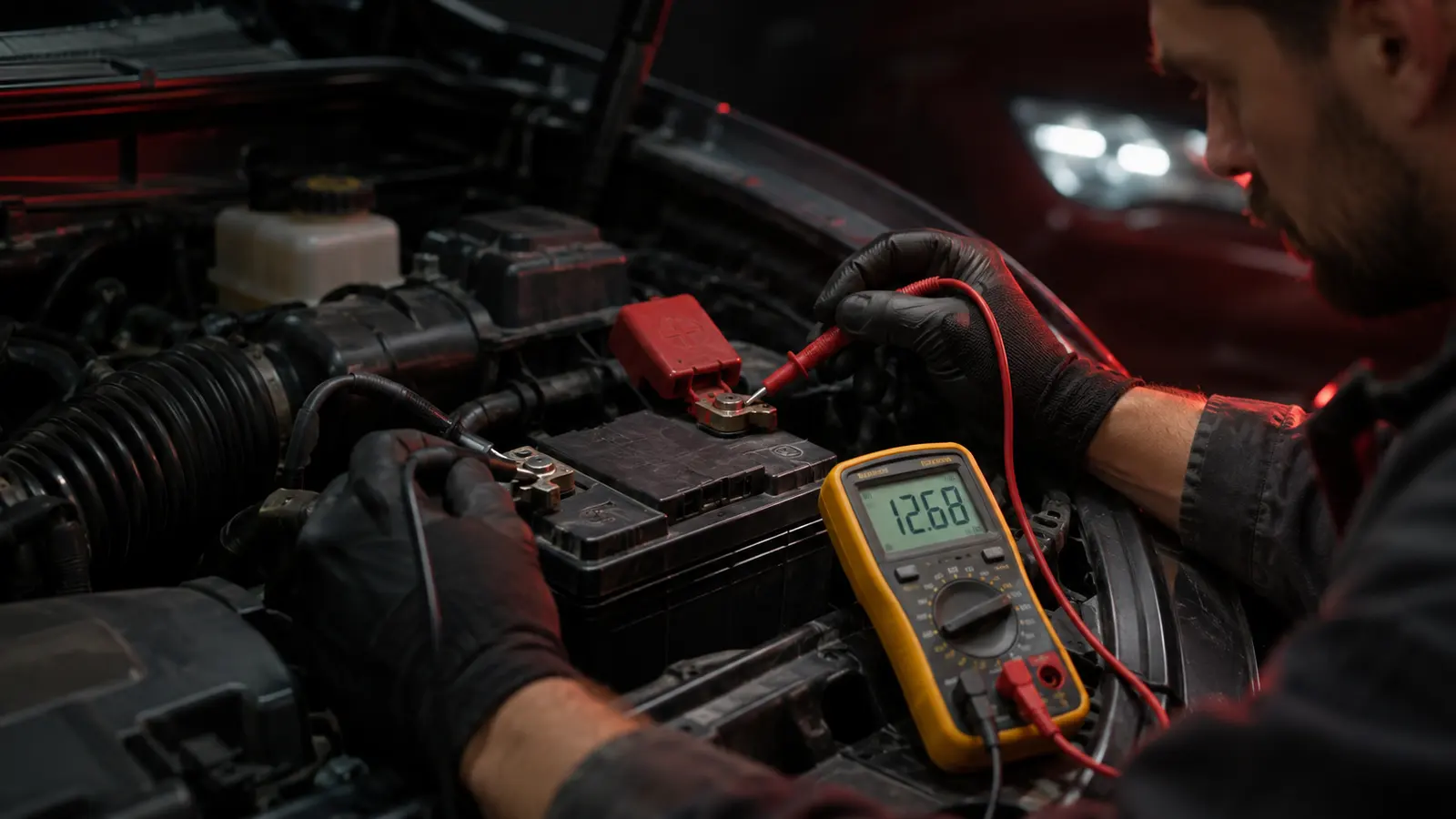 Starting & Battery
Car Battery Voltage Chart: What Your Reading Means
A fully charged 12-volt car battery rests at about 12.6 volts. With the engine running, the alternator should hold the system between about 13.5 and 14.5 volts. Readings well below those point to a flat battery or a charging fault.
Updated November 22, 2026Read Starting & Battery
Car Won't Start but the Lights Come On: What It Means
Working lights mean the battery has some charge — not that it can crank the engine. The sound the car makes points to the cause.
Updated November 22, 2026Read