
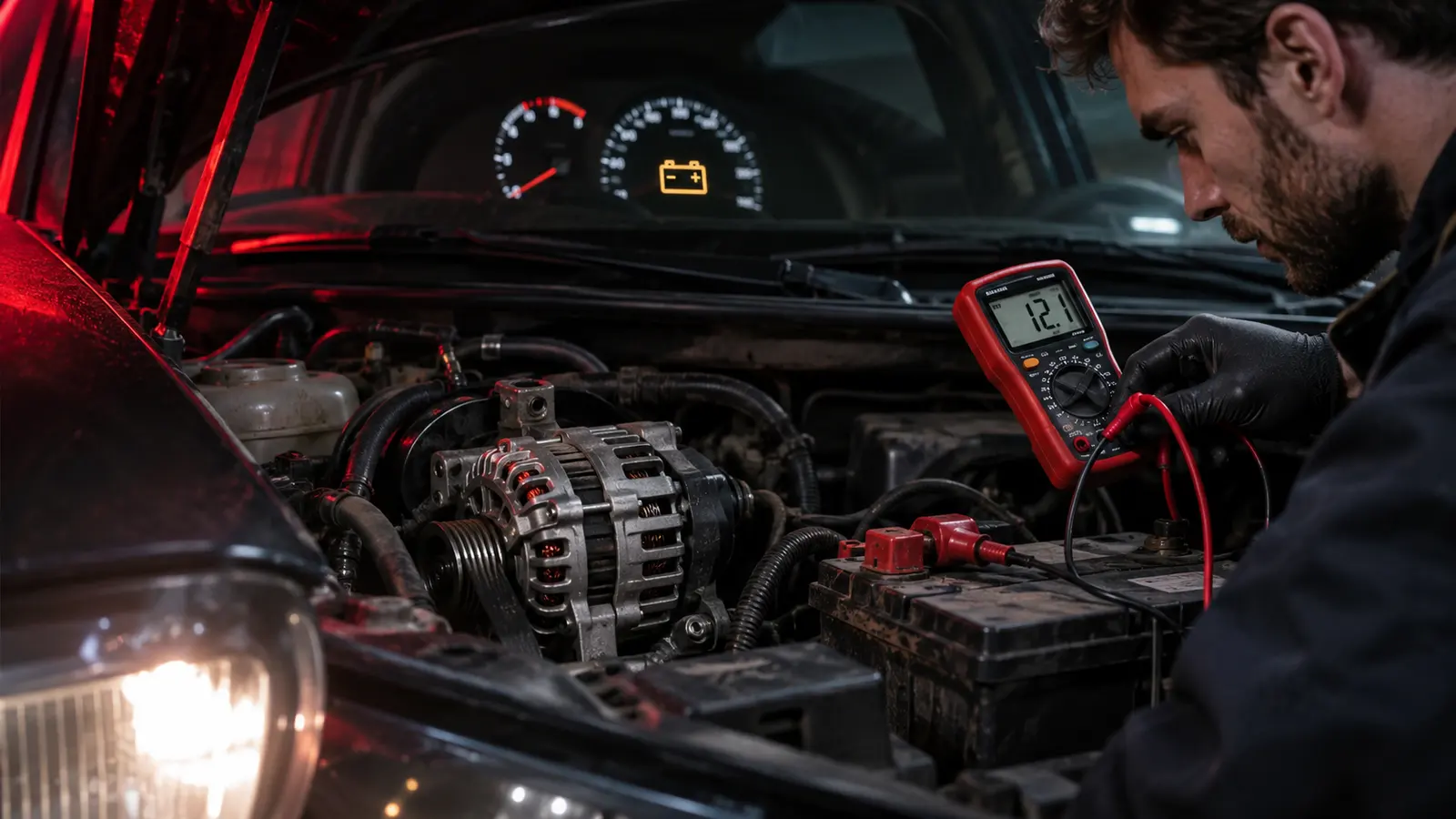
Symptoms of a Bad Alternator (and How to Test It)
Part of: Car Won't Start: Find the Cause · Car Battery Problems: Dead, Weak or Draining
Quick answer
A failing alternator usually shows up as the battery warning light, dimming lights, a whine or a battery that keeps going flat. A simple voltage test tells you a lot.
- Topic
- Starting & Battery
- Sections
- 9
- Reading time
- 2 min
- Applies to
- All regions
The alternator charges the battery and powers the electrics while the engine runs. The classic bad alternator symptoms are a battery warning light while driving, lights that dim or flicker, a whining or grinding noise from the front of the engine, and a battery that keeps going flat.
Is it safe to drive?
Not far. Once the alternator stops charging, the car runs on the battery alone. Switch off non-essential electrics and drive directly to a garage. If the battery light comes on with a squeal and the temperature rises, the drive belt may have broken. Stop: on many engines the same belt drives the water pump.
Signs at a glance
| Symptom | Why it happens |
|---|---|
| Battery/charging light on | System voltage too low or too high |
| Dim, flickering or pulsing lights | Unstable output |
| Whine that rises with engine speed | Worn bearing or diode fault |
| Repeated flat battery | Not recharging |
| Burning smell | Slipping belt or overheating alternator |
| Electrical glitches, warning lights at random | Low voltage confuses modules |
| Stalling | Ignition and fuel systems starved of voltage |
The simple voltage test
- Engine off: a healthy, charged battery reads about 12.6 V.
- Start the engine: voltage should rise to roughly 13.8–14.7 V.
- Turn on headlights, heater fan and rear demister: it should stay above about 13.5 V.
If it stays near 12 V or falls, the alternator isn't charging. If it goes well above 15 V, the regulator may be overcharging, which can damage the battery.
Causes explained
Worn brushes and regulator
Brushes wear down over time. The voltage regulator, usually built in, can fail and cause under- or over-charging.
Failed diodes
Diodes convert AC to DC. A failed diode can cause dim lights, a whine on the radio and a battery that drains overnight.
Bearing wear
A worn bearing whines or grinds. Left long enough, it can seize and shred the belt.
Belt and tensioner
A glazed belt or weak tensioner slips, so the alternator can't spin fast enough to charge properly.
What a mechanic will do
They'll test the battery, measure charging output under load, check for AC ripple (a sign of failed diodes), and inspect the belt and tensioner.
What affects the cost
Labour time to reach the alternator varies a lot between engines. Remanufactured units cost less than new. Replacing a worn belt at the same time is often sensible.
How to prevent it
- Fix oil and coolant leaks above the alternator.
- Replace the drive belt at the recommended interval.
- Don't run heavy aftermarket electrical loads without checking alternator capacity.
Regional notes
UK and Australian drivers will see this called the "battery charge warning light". In very hot climates alternators run hotter and may fail sooner.
Related problems
Frequently asked questions
Can I drive with a bad alternator?
Only briefly. The car runs on battery power alone and will stop when it's flat, often without much warning. Head straight to a garage.
Will a jump start fix a bad alternator?
No. It gets the car going, but the battery won't recharge and it will go flat again.
How long do alternators last?
Many last 100,000 miles (160,000 km) or more, but heat, leaks onto the alternator and heavy electrical loads shorten their life.
Tools that can help
How the parts involved work
Need a mechanic?
Find rated garages near you by city, ZIP code or postcode, with directions.
About this guide
Written by Editorial Team using manufacturer documentation, government road-safety guidance and motoring-organisation advice. It explains likely causes and safe checks. It is not a diagnosis. How we write and check guides.
More starting & battery guides
 Starting & Battery
Car Batteries: The Complete Guide to Types, Testing, Care and Replacement
A 12-volt car battery starts the engine and steadies the electrics; the alternator then keeps it charged. This guide covers how batteries work, the main types, what the ratings mean, how to test and charge one, why they fail and how to replace one safely.
Updated November 22, 2026Read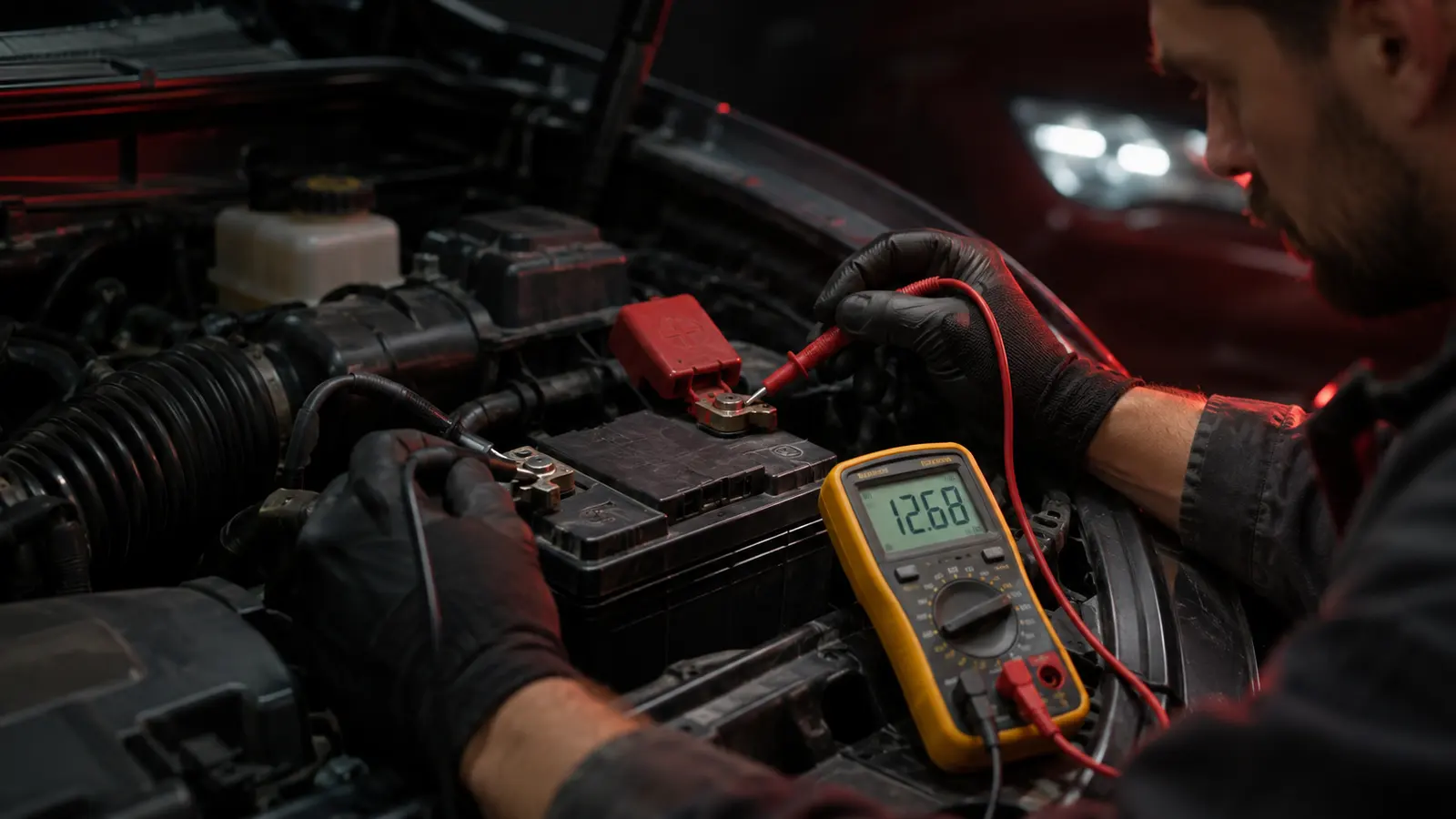 Starting & Battery
Car Battery Voltage Chart: What Your Reading Means
A fully charged 12-volt car battery rests at about 12.6 volts. With the engine running, the alternator should hold the system between about 13.5 and 14.5 volts. Readings well below those point to a flat battery or a charging fault.
Updated November 22, 2026Read Starting & Battery
Car Won't Start but the Lights Come On: What It Means
Working lights mean the battery has some charge — not that it can crank the engine. The sound the car makes points to the cause.
Updated November 22, 2026Read