
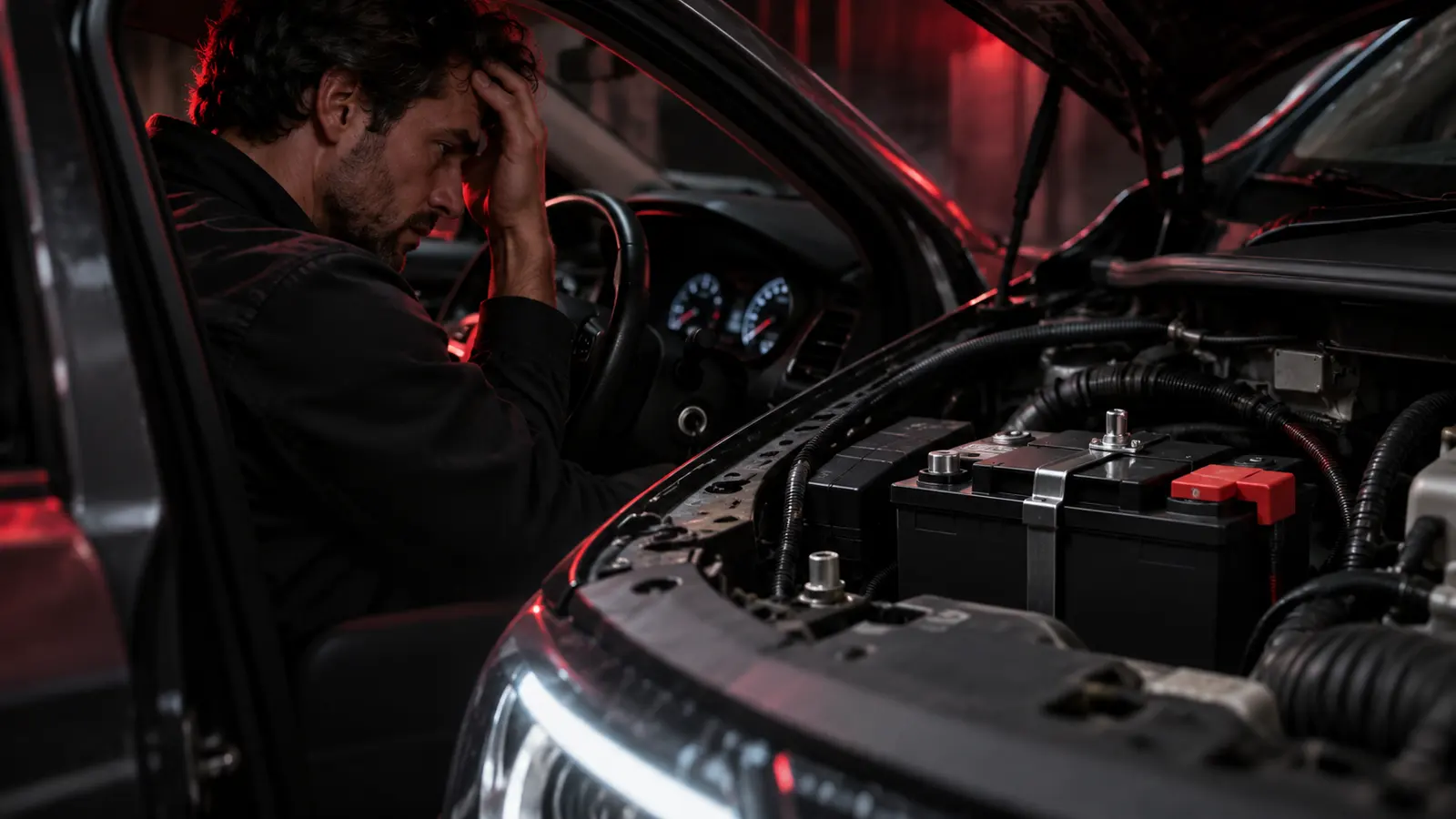
Car Won't Start With a New Battery: 7 Things to Check
Part of: Car Won't Start: Find the Cause · Car Battery Problems: Dead, Weak or Draining
Quick answer
A new battery doesn't fix the cables, starter or alternator. If the car still won't start, check the connections and whether the new battery is actually charged.
- Topic
- Starting & Battery
- Sections
- 9
- Reading time
- 3 min
- Applies to
- All regions
If the car still won't start after you fit a new battery, the battery was probably never the only problem. The usual culprits are loose or dirty clamps, a battery that isn't fully charged, a bad earth strap, a failing starter or an alternator that isn't charging.
Is it safe to keep trying?
A few attempts are fine. If the car cranks slowly or clicks, stop after three tries and check the connections before you drain the new battery.
Causes at a glance
| What happens | Likely cause |
|---|---|
| Rapid clicking | Clamps loose or corroded, battery not charged |
| Single click | Starter motor or solenoid |
| Cranks normally but no start | Fuel, spark or immobiliser |
| Started once, died again next day | Alternator not charging, or parasitic drain |
| Nothing at all | Main fuse, earth strap, reversed connection |
Check these in order
- Clamps: clean both posts and clamps, then tighten them until you can't twist them by hand.
- Charge: a healthy battery at rest reads about 12.6 V. Below about 12.2 V it needs charging.
- Earth strap: follow the negative cable to the body and engine. Clean any rusty contact points.
- Right battery? Check the group size, terminal layout and CCA rating match the handbook. Stop-start cars need AGM or EFB types.
- Starter test: if you hear a single click, see our bad starter guide.
- Alternator: with the engine running, voltage should be roughly 13.8–14.7 V.
- Security light: a flashing key symbol means the immobiliser isn't seeing the key.
Causes explained
Connections
Most "new battery, still won't start" cases are connection problems. Old clamps can be corroded inside where you can't see it.
Battery not charged
Batteries lose charge on the shelf. If the old battery died because the alternator stopped charging, the new one may now be flat too.
Starter motor
A starter that is wearing out draws more current and may only click. A new battery won't fix that.
Alternator or parasitic drain
If the car starts after fitting the battery but fails again within days, the alternator or a drain is emptying it. See why your car battery keeps dying.
What a mechanic will do
They will confirm the battery's state of charge and health with a tester, measure charging voltage, do voltage-drop tests on the cables, and if needed measure key-off current draw to find a drain.
What affects the cost
Clamps and earth straps are inexpensive. Starter and alternator costs vary by engine layout. Some modern cars need the new battery registered with a scan tool so the charging system treats it correctly.
How to prevent it
- Test the alternator whenever a battery dies unexpectedly.
- Buy a battery with a recent date code.
- Use the correct battery type for stop-start cars.
Regional notes
- US and Canada: cold-cranking amps (CCA) matter most in northern states and provinces. A battery that copes in Texas may struggle in Manitoba.
- UK and Ireland: many newer cars have stop-start systems that need an AGM or EFB battery. Fitting a standard battery shortens its life.
- Australia and New Zealand: heat, not cold, kills most batteries. Expect a shorter battery life in hot inland areas.
Related problems
Frequently asked questions
Do new batteries come fully charged?
Not always. A battery that sat on a shelf for months can be partly discharged. Check it reads about 12.6 volts at rest, and charge it if not.
Can fitting a new battery reset something that stops the car starting?
Disconnecting the battery can make some cars ask for a radio or security code, or relearn idle. A few need a dealer tool to register the new battery.
Could I have connected it wrongly?
Reversed polarity can blow main fuses or damage electronics. If you saw sparks and now have nothing, check the main fuses and get professional help.
Tools that can help
Need a mechanic?
Find rated garages near you by city, ZIP code or postcode, with directions.
About this guide
Written by Editorial Team using manufacturer documentation, government road-safety guidance and motoring-organisation advice. It explains likely causes and safe checks. It is not a diagnosis. How we write and check guides.
More starting & battery guides
 Starting & Battery
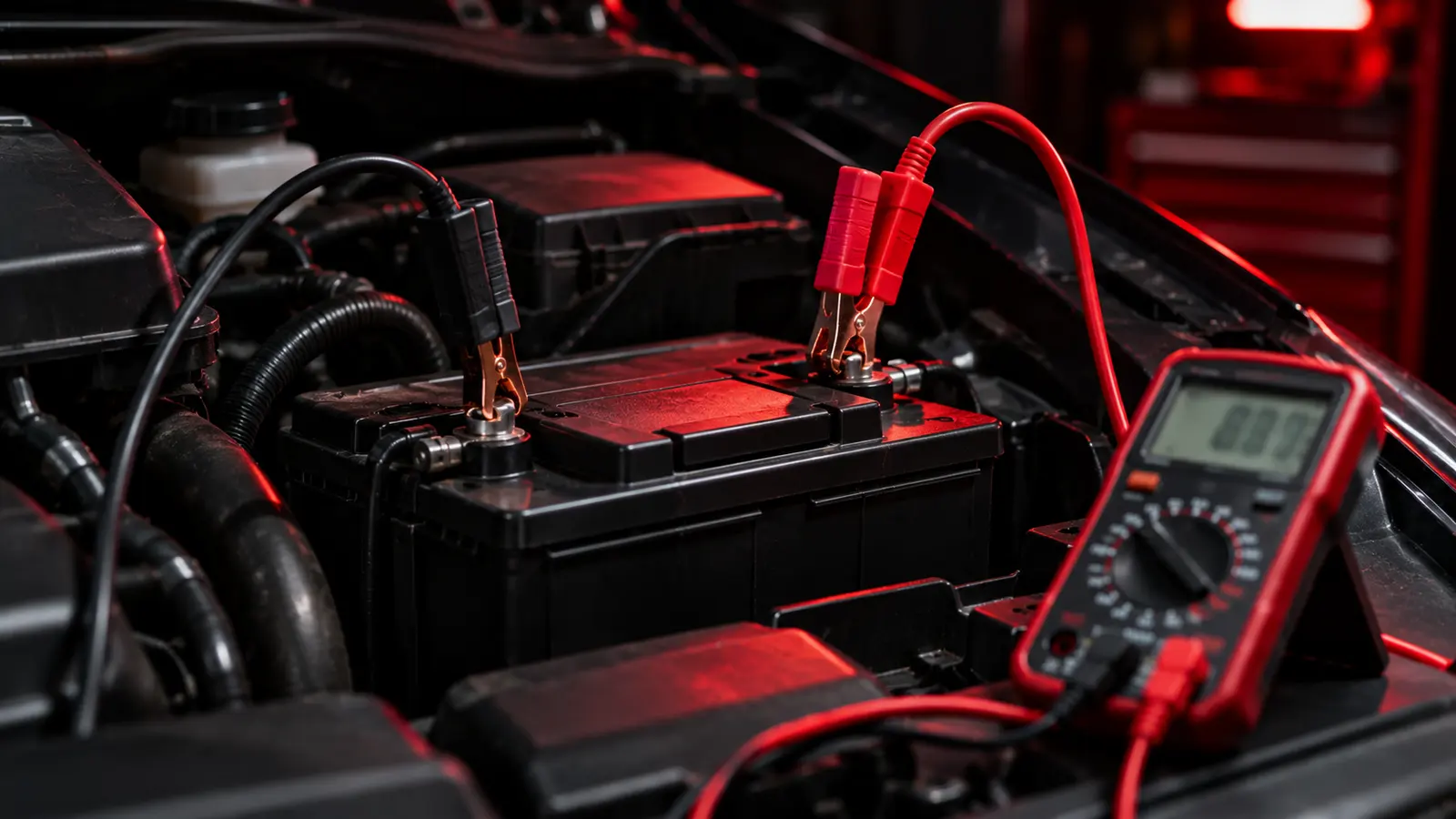
Car Batteries: The Complete Guide to Types, Testing, Care and Replacement
A 12-volt car battery starts the engine and steadies the electrics; the alternator then keeps it charged. This guide covers how batteries work, the main types, what the ratings mean, how to test and charge one, why they fail and how to replace one safely.
Updated November 22, 2026Read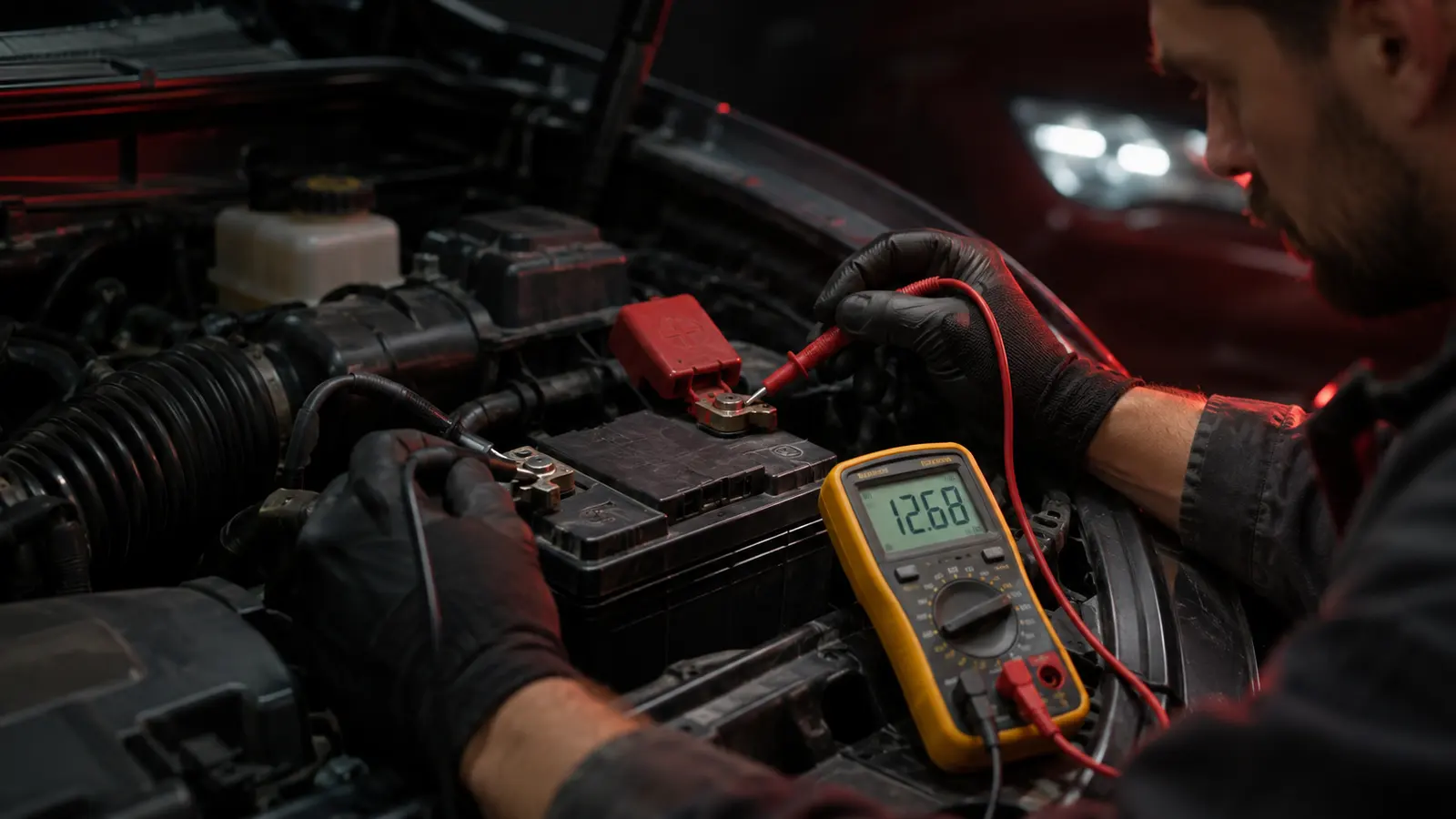 Starting & Battery
Car Battery Voltage Chart: What Your Reading Means
A fully charged 12-volt car battery rests at about 12.6 volts. With the engine running, the alternator should hold the system between about 13.5 and 14.5 volts. Readings well below those point to a flat battery or a charging fault.
Updated November 22, 2026Read Starting & Battery
Car Won't Start but the Lights Come On: What It Means
Working lights mean the battery has some charge — not that it can crank the engine. The sound the car makes points to the cause.
Updated November 22, 2026Read