
Starting system
How Does a Car Battery Work?
A 12-volt car battery stores chemical energy and releases it as electric current to crank the engine and power electrics when the engine is off. Once running, the alternator recharges it.
- System
- Starting
- Where it is
- Under the bonnet, or in the boot or under a seat on some cars
- Typical life
- Typically around 3–5 years; heat and short trips shorten it
How the car battery works
- 01
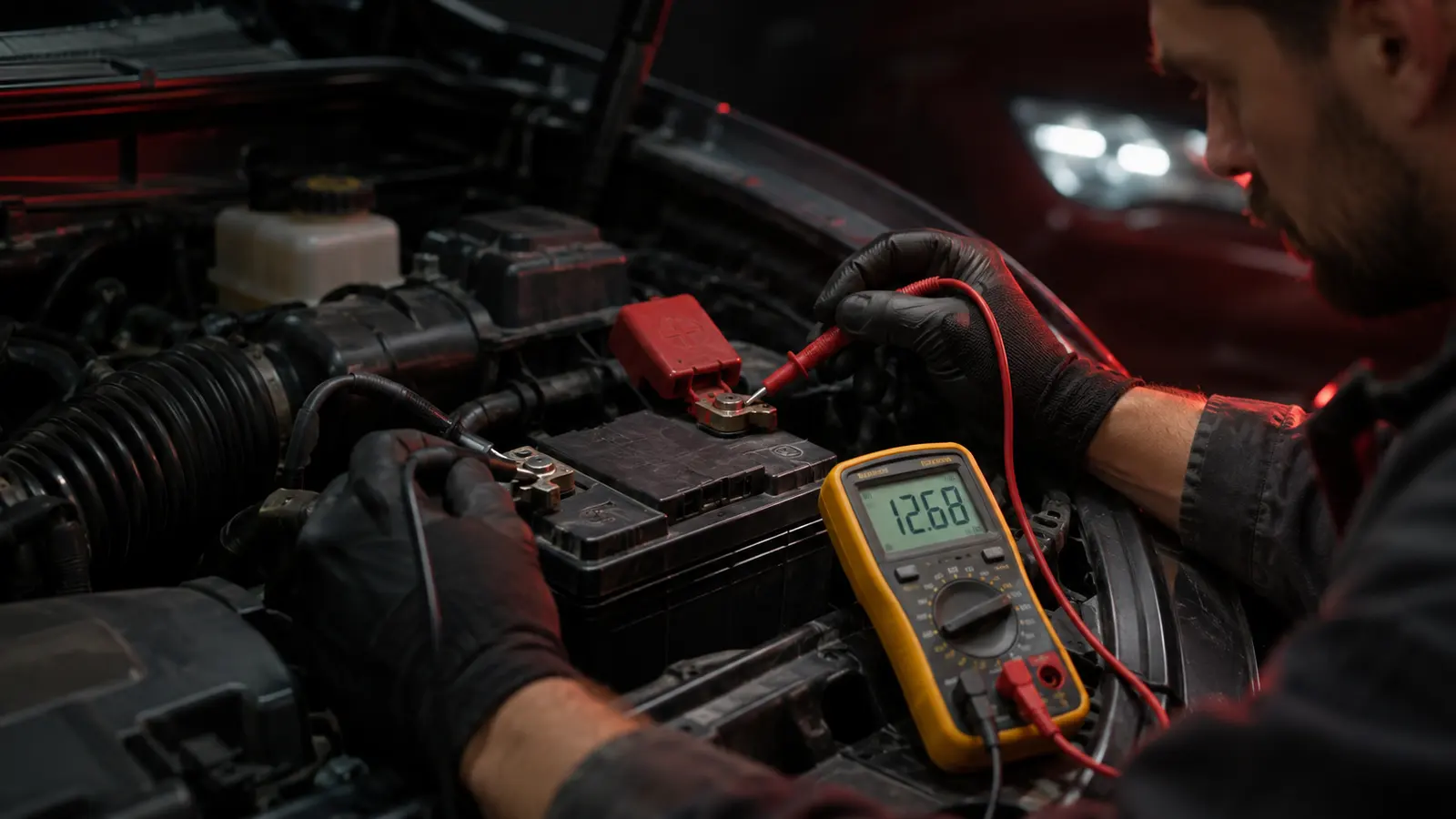
Six cells of about 2.1 V each make roughly 12.6 V
- 02
Chemical reactions between lead plates and acid release current
- 03
Cranking draws a very large current briefly
- 04
The alternator reverses the reaction to recharge it
Signs of a problem
How to make it last
- Test yearly after three years
- Keep terminals clean
- Use a smart charger if parked for long periods
- Fit the correct type (AGM/EFB for stop-start)
Connected parts
Frequently asked questions
What does CCA mean?
Cold cranking amps: current the battery can deliver at −18 °C (0 °F).
Why do batteries fail in winter?
Cold reduces available power while the engine needs more to turn over.
Guides about this part
General information, not a diagnosis. If a warning light is red, the car drives abnormally or you're unsure, stop safely and have a qualified technician inspect the vehicle.