
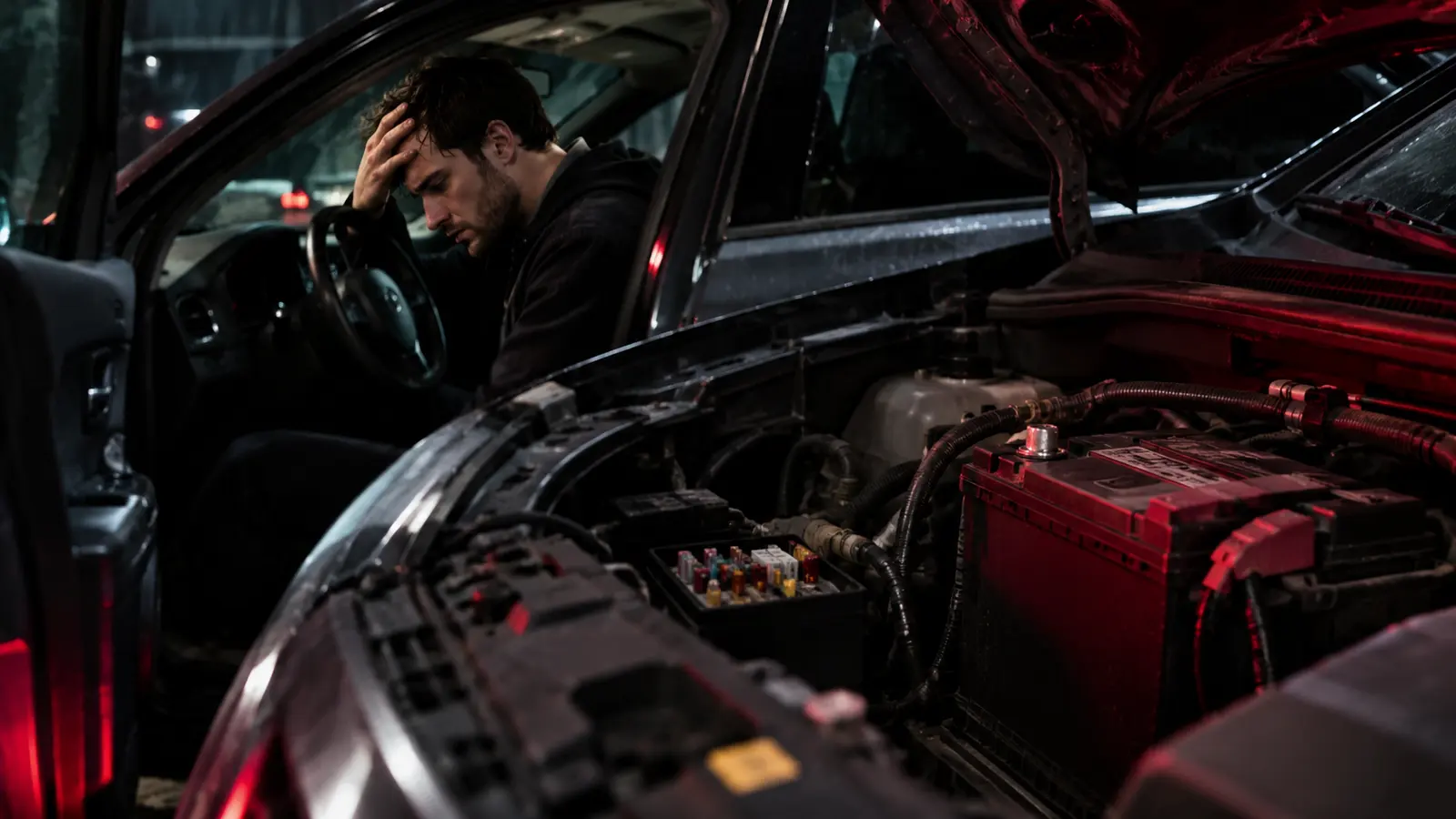
Car Won't Start and Makes No Clicking Noise: Causes
Part of: Car Won't Start: Find the Cause
Quick answer
Complete silence when you turn the key means the starter isn't being told to work. Start with the battery and the gear or clutch safety switch, then fuses and relays.
- Topic
- Starting & Battery
- Sections
- 8
- Reading time
- 3 min
- Applies to
- All regions
When you turn the key or press start and get no click and no crank at all, the starter isn't receiving its signal. The most common reasons are a completely flat battery, a gear or clutch safety switch that isn't closing, a blown fuse or failed starter relay, or a key the car doesn't recognise.
Is it safe to drive once it starts?
If it starts after you move the gear lever or press the clutch harder, it's usually safe to drive, but the switch is failing. Get it checked before it leaves you stranded.
Causes at a glance
| Clue | Likely cause |
|---|---|
| No dash lights at all | Dead battery or main connection |
| Dash lights on, nothing in Park, starts in Neutral | Neutral safety / range switch |
| Manual car, starts only with clutch pressed hard | Clutch pedal switch |
| Security light flashing | Immobiliser not reading the key |
| Starter relay doesn't click under the bonnet | Relay, fuse or ignition switch |
| Push-button car says "key not detected" | Flat fob battery |
Check these in order
- Dash lights on? If not, treat it as a flat battery or bad connection.
- Automatic: move the lever to Neutral and try. Manual: press the clutch to the floor.
- Watch the security light. Try the spare key or fob.
- Check the starter fuse and relay in the under-bonnet fuse box (the lid diagram shows which). Swap the starter relay with an identical one, such as the horn relay, to test it.
- Listen for a click under the bonnet while a helper turns the key. A relay click with no starter click suggests wiring or the starter solenoid.
Causes explained
Dead battery or loose terminal
A fully discharged battery won't even pull the solenoid in. A loose clamp can also cut the circuit completely.
Gear and clutch safety switches
These stop the car starting in gear. Worn contacts or a misadjusted switch give total silence. Wiggling the gear lever while turning the key is a classic sign.
Ignition switch
The electrical part behind the key barrel wears. If the dash lights flicker when you wiggle the key, suspect the ignition switch.
Fuse, relay or wiring
A blown starter fuse or failed relay stops the signal. A fuse that blows again quickly points to a short circuit that needs professional diagnosis.
Immobiliser and key fob
If the car's security system doesn't recognise the key, it blocks starting. A weak fob battery is a cheap and common cause on push-button cars.
What a mechanic will do
They will check battery voltage, then follow the starter control circuit with a test light or multimeter, from the ignition switch through the safety switch and relay to the solenoid. A scan tool can also show immobiliser faults.
What affects the cost
A fob battery or relay is inexpensive. Safety switches and ignition switches cost more, mostly in labour, and some cars need the immobiliser re-coded after a key or switch change.
How to prevent it
- Replace the key-fob battery every couple of years or when range drops.
- Don't hang heavy key rings from the ignition key. It wears the switch.
- Keep battery terminals clean.
Related problems
Frequently asked questions
If the dashboard lights work, can it still be the battery?
Yes. A badly corroded terminal can pass enough current for the dash lights but none for the starter circuit.
Can a bad key fob stop the car cranking?
On many push-button cars, yes. If the car can't detect the key, it won't crank. Hold the fob against the start button or the marked spot on the steering column.
What is a neutral safety switch?
A switch that only allows the starter to work in Park or Neutral (automatics) or with the clutch pressed (many manuals). If it fails, nothing happens when you turn the key.
Tools that can help
How the parts involved work
Need a mechanic?
Find rated garages near you by city, ZIP code or postcode, with directions.
About this guide
Written by Editorial Team using manufacturer documentation, government road-safety guidance and motoring-organisation advice. It explains likely causes and safe checks. It is not a diagnosis. How we write and check guides.
More starting & battery guides
 Starting & Battery
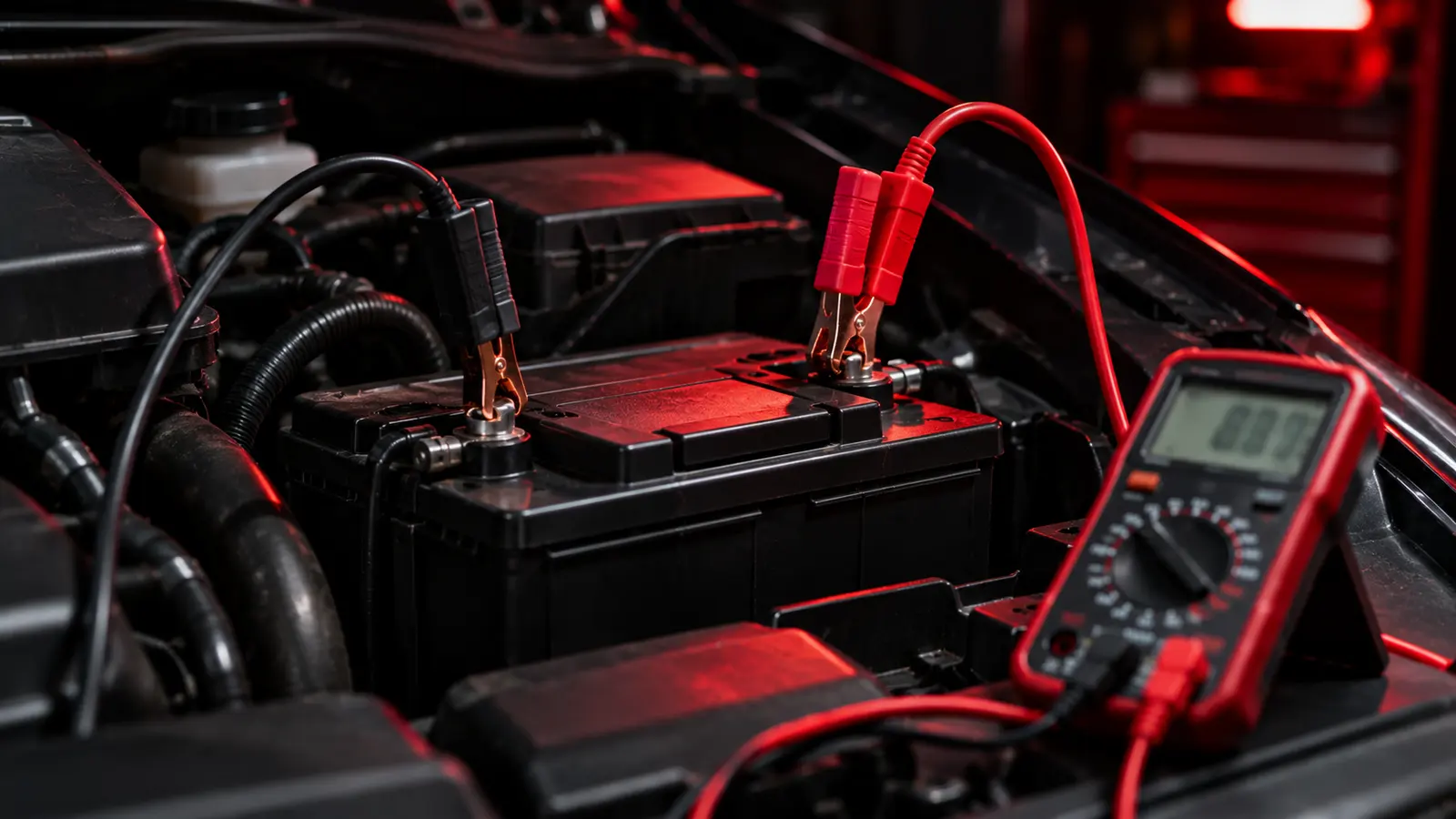
Car Batteries: The Complete Guide to Types, Testing, Care and Replacement
A 12-volt car battery starts the engine and steadies the electrics; the alternator then keeps it charged. This guide covers how batteries work, the main types, what the ratings mean, how to test and charge one, why they fail and how to replace one safely.
Updated November 22, 2026Read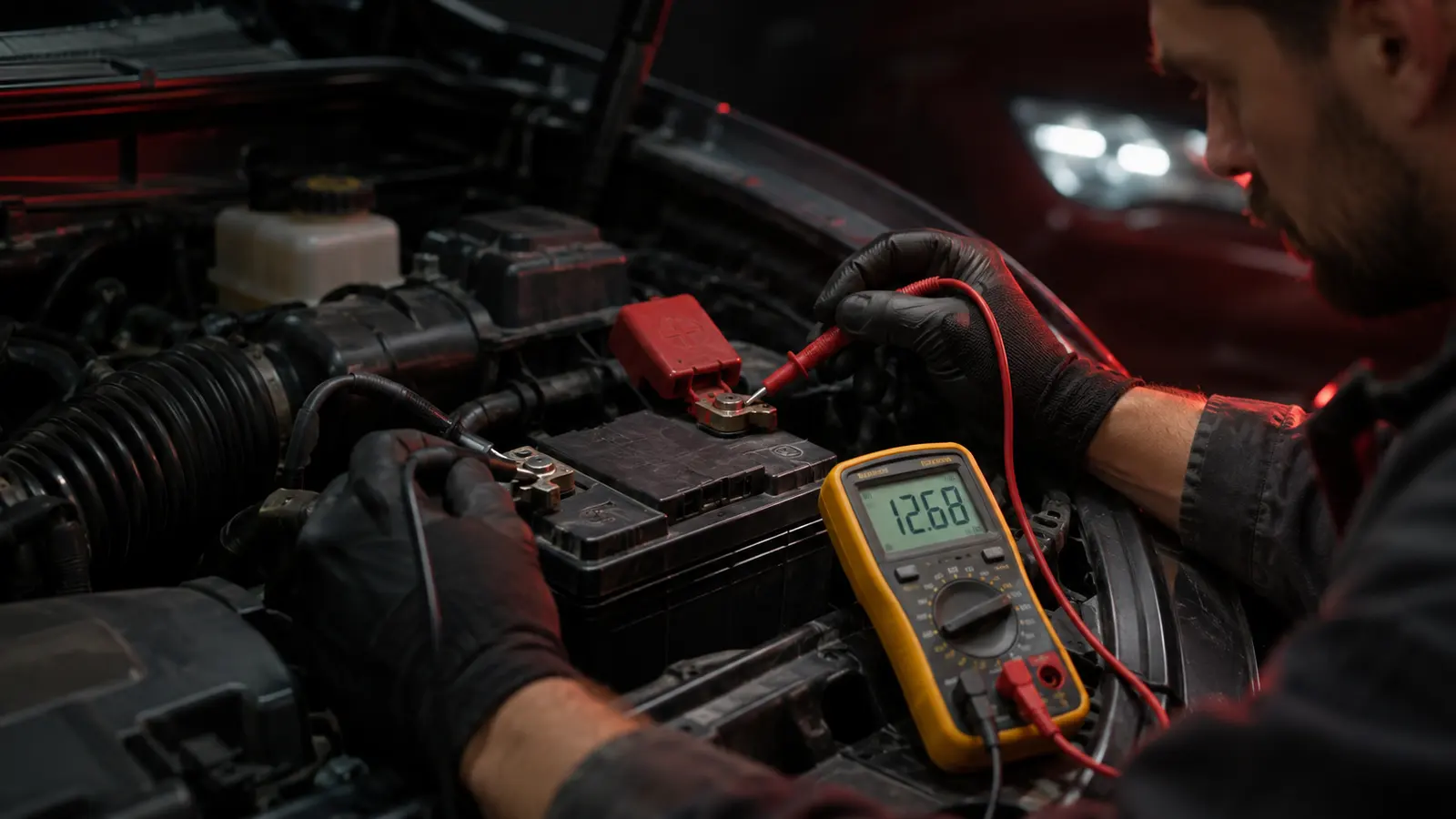 Starting & Battery
Car Battery Voltage Chart: What Your Reading Means
A fully charged 12-volt car battery rests at about 12.6 volts. With the engine running, the alternator should hold the system between about 13.5 and 14.5 volts. Readings well below those point to a flat battery or a charging fault.
Updated November 22, 2026Read Starting & Battery
Car Won't Start but the Lights Come On: What It Means
Working lights mean the battery has some charge — not that it can crank the engine. The sound the car makes points to the cause.
Updated November 22, 2026Read