
Quick answer
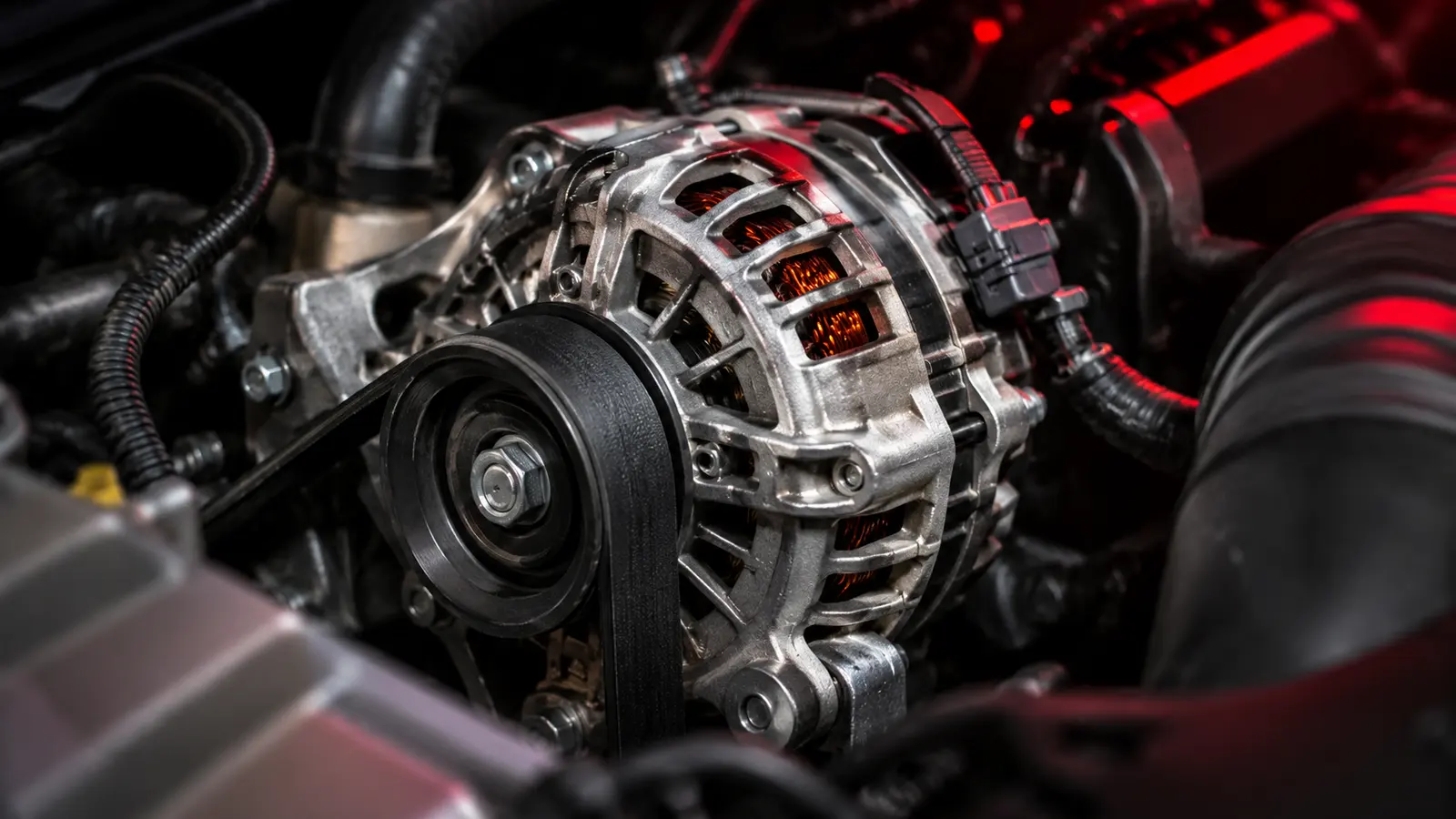
Many alternators last 100,000 miles (160,000 km) or more. Oil or coolant leaks onto the alternator, heat, worn belts and heavy electrical loads shorten their life.
- Topic
- Starting & Battery
- Sections
- 5
- Reading time
- 1 min
- Applies to
- All regions
Many alternators last 100,000 miles (about 160,000 km) or more. Their life depends on heat, contamination from oil or coolant leaks, the condition of the drive belt, and how hard the electrical system works it.
Warning signs of a worn alternator
- Battery warning light while driving
- Dim, flickering or pulsing lights
- Whining or grinding from the front of the engine
- Battery that keeps going flat
See our full guide to bad alternator symptoms.
What shortens alternator life
| Factor | Why |
|---|---|
| Oil or coolant leaks above it | Contaminates brushes and bearings |
| Worn belt or tensioner | Slipping and overheating |
| Heavy electrical loads | Constant high output, more heat |
| Repeated flat batteries | Long periods of maximum charging |
| Water ingress | Corrosion |
How to check it
With the engine running, battery voltage should be roughly 13.8–14.7 V. Test with headlights, fan and rear demister on: it should stay above about 13.5 V.
How to make it last
- Fix leaks above the alternator promptly.
- Replace the drive belt and tensioner on schedule.
- Charge a flat battery with a charger rather than relying on the alternator.
Related guides
Frequently asked questions
Can an alternator fail suddenly?
Yes, though there are often warning signs like dimming lights or a battery light first.
Should I replace the belt too?
If it's worn or due, replacing it at the same time saves labour.
Tools that can help
Need a mechanic?
Find rated garages near you by city, ZIP code or postcode, with directions.
About this guide
Written by Editorial Team using manufacturer documentation, government road-safety guidance and motoring-organisation advice. It explains likely causes and safe checks. It is not a diagnosis. How we write and check guides.
More starting & battery guides
 Starting & Battery
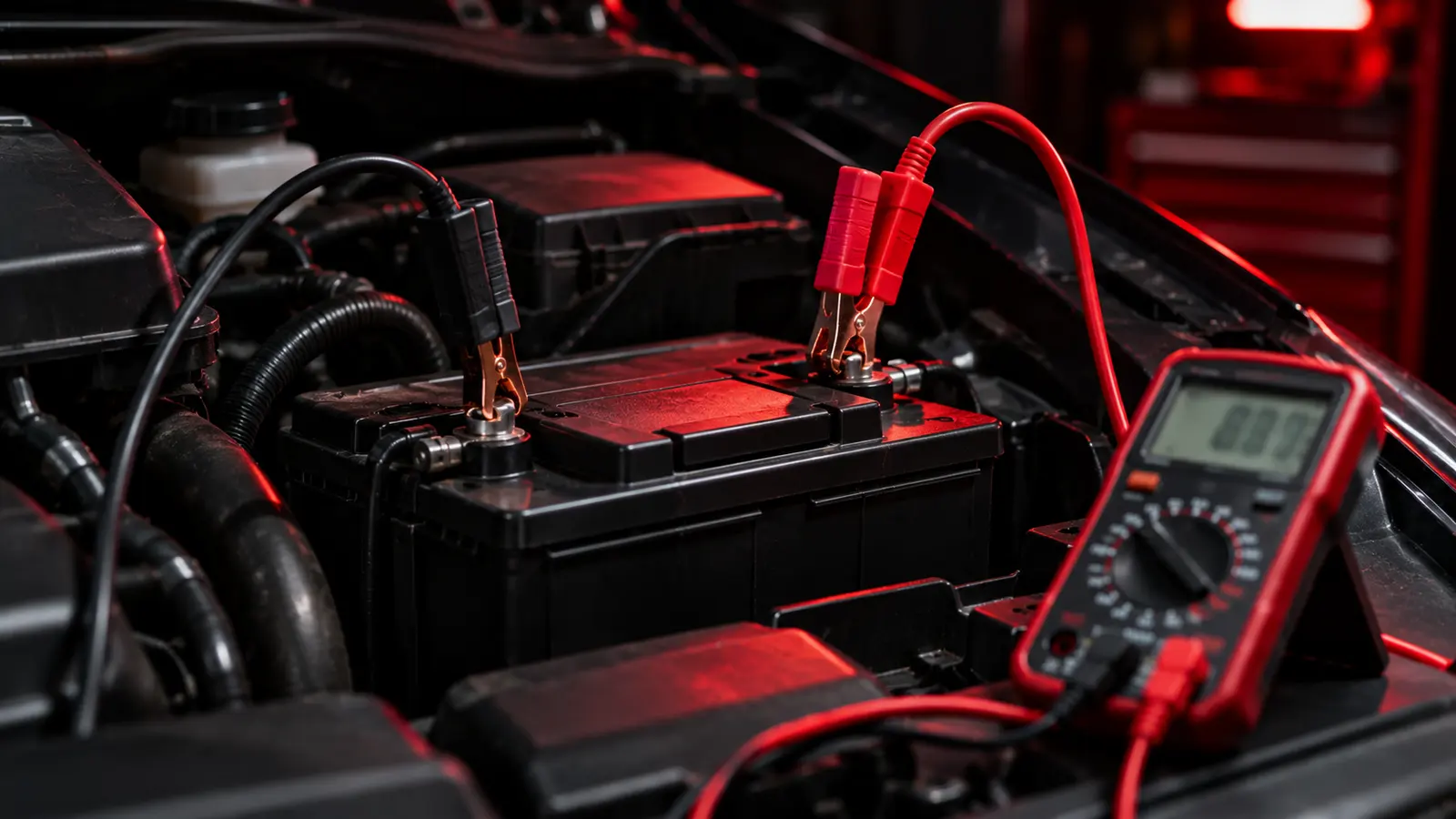
Car Batteries: The Complete Guide to Types, Testing, Care and Replacement
A 12-volt car battery starts the engine and steadies the electrics; the alternator then keeps it charged. This guide covers how batteries work, the main types, what the ratings mean, how to test and charge one, why they fail and how to replace one safely.
Updated November 22, 2026Read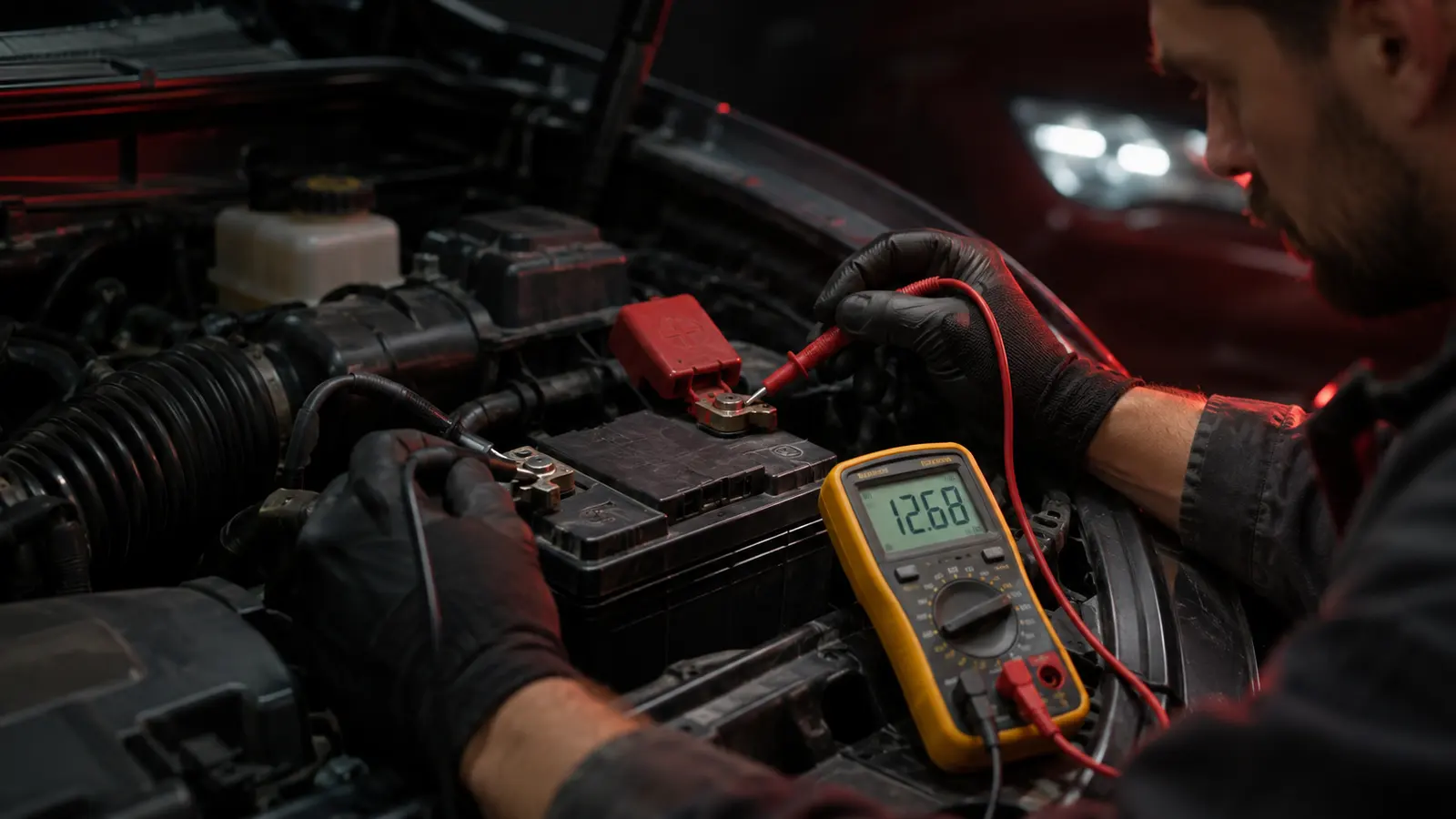 Starting & Battery
Car Battery Voltage Chart: What Your Reading Means
A fully charged 12-volt car battery rests at about 12.6 volts. With the engine running, the alternator should hold the system between about 13.5 and 14.5 volts. Readings well below those point to a flat battery or a charging fault.
Updated November 22, 2026Read Starting & Battery
Car Won't Start but the Lights Come On: What It Means
Working lights mean the battery has some charge — not that it can crank the engine. The sound the car makes points to the cause.
Updated November 22, 2026Read