
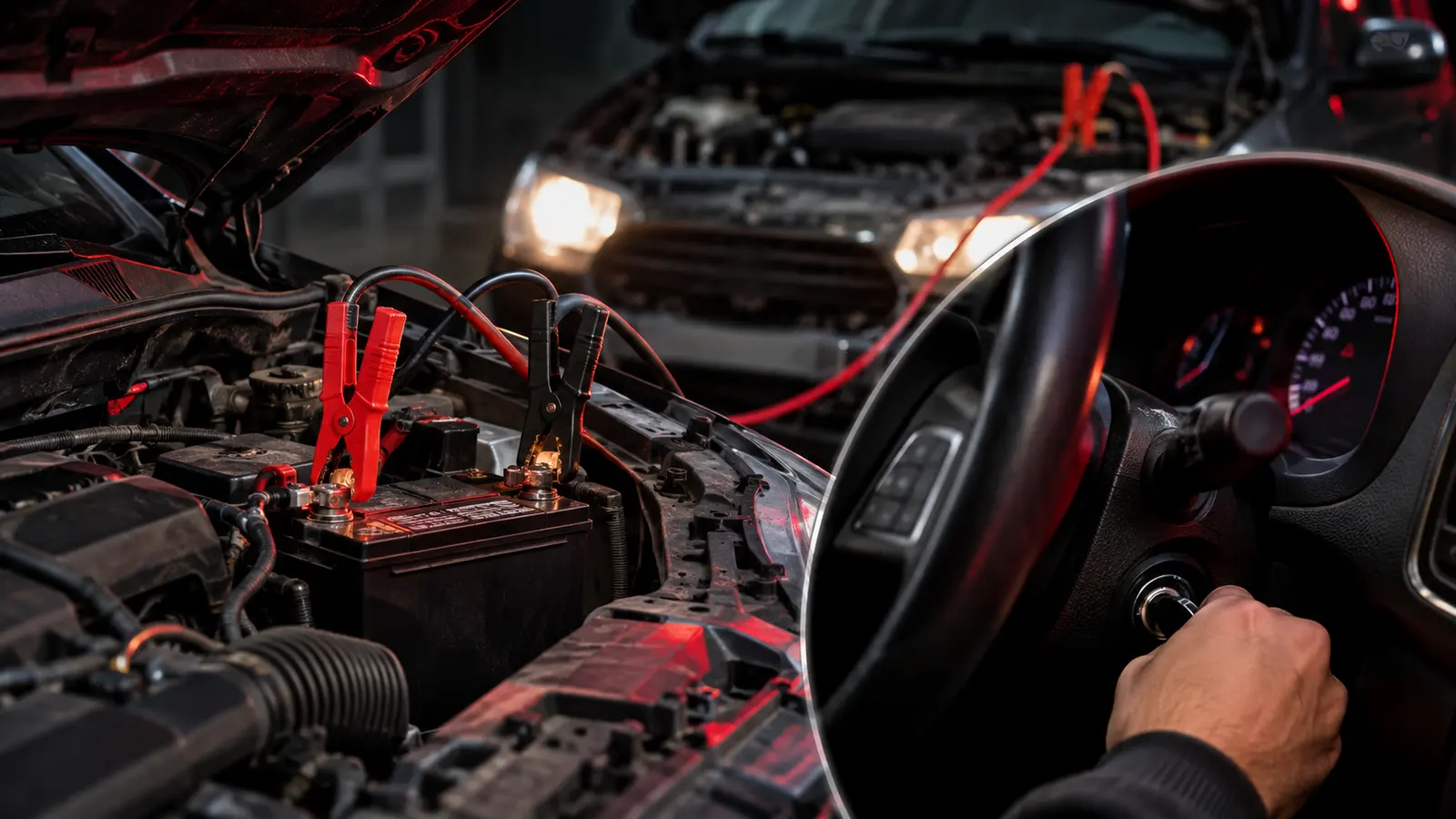
Car Won't Start Even With a Jump: What It Means
Part of: Car Won't Start: Find the Cause
Quick answer
If jumping doesn't help, check the leads' grip first. Then the cause is usually a damaged battery, a starter or cable fault, or a fuel, spark or immobiliser problem.
- Topic
- Starting & Battery
- Sections
- 9
- Reading time
- 2 min
- Applies to
- All regions
If your car won't start even with a jump, either the jump isn't delivering current or the problem isn't the battery. Check the jump lead connections first. Then listen: clicking still points to the battery, cables or starter, while normal cranking points to fuel, spark or the immobiliser.
Is it safe to keep trying?
Make three or four attempts with rests between them. Long continuous cranking can overheat the starter. Never jump a battery that is cracked, leaking or frozen.
Clues at a glance
| With jump leads connected | Likely cause |
|---|---|
| Same rapid clicking | Poor lead contact, thin leads, or battery internally shorted |
| Single click | Starter motor or solenoid |
| Cranks slowly | Very flat battery: wait longer with donor running |
| Cranks normally, won't fire | Fuel, spark or immobiliser |
| Nothing at all | Main fuse, ignition switch, safety switch |
Check these in order
- Re-seat the clamps on clean metal. Wiggle them until they bite.
- Let the donor run for five minutes, then try again.
- Connect to the battery posts directly, not to the cable clamps, to rule out corroded clamps.
- Listen to what happens and use the table above.
- Check the security light and try the spare key.
Safety: Connect positive to positive first, then the donor's negative to a bare metal earth point on the dead car, away from the battery. Keep sparks away from the battery. On hybrids and EVs use only the marked 12 V jump points.
Causes explained
Poor contact or thin leads
The starter needs a high current. Small clamps on dirty terminals or thin cables can't carry it.
Battery internally damaged
A battery with a shorted cell can drag the donor's voltage down. Replace it.
Starter motor or cable
If the jump lights the dashboard brightly but you get one click, the starter or its cable is the likely fault.
Fuel, spark or immobiliser
If the engine spins normally, the battery has done its job. Listen for the fuel pump hum at key-on and read the fault codes.
What a mechanic will do
They'll test the battery, measure voltage at the starter while cranking, and scan for fuel, crank-sensor and immobiliser codes.
What affects the cost
A battery is the cheapest fix. Starter, fuel pump and crankshaft sensor repairs vary with labour time on your car.
How to prevent it
- Carry heavy-gauge leads or a lithium jump pack.
- Replace a battery that needs repeated jumps.
- Fix slow cranking before it becomes a no-start.
Regional notes
Roadside assistance from CAA (Canada), AAA (US), the AA or RAC (UK), and NRMA, RACV or RACQ (Australia) will usually test the battery at the roadside and can fit a new one.
Related problems
Frequently asked questions
How long should I leave the donor car running?
Let the donor car run for a few minutes with the leads connected before trying. A deeply flat battery needs a little charge first.
Are cheap jump leads a problem?
Thin leads can't carry enough current. Use heavy-gauge leads and make sure the clamps bite onto clean metal.
Can jump starting damage my car?
Connected correctly, it's safe for most cars. Follow the handbook's jump points. Wrong polarity can damage electronics.
Tools that can help
Need a mechanic?
Find rated garages near you by city, ZIP code or postcode, with directions.
About this guide
Written by Editorial Team using manufacturer documentation, government road-safety guidance and motoring-organisation advice. It explains likely causes and safe checks. It is not a diagnosis. How we write and check guides.
More starting & battery guides
 Starting & Battery
Car Batteries: The Complete Guide to Types, Testing, Care and Replacement
A 12-volt car battery starts the engine and steadies the electrics; the alternator then keeps it charged. This guide covers how batteries work, the main types, what the ratings mean, how to test and charge one, why they fail and how to replace one safely.
Updated November 22, 2026Read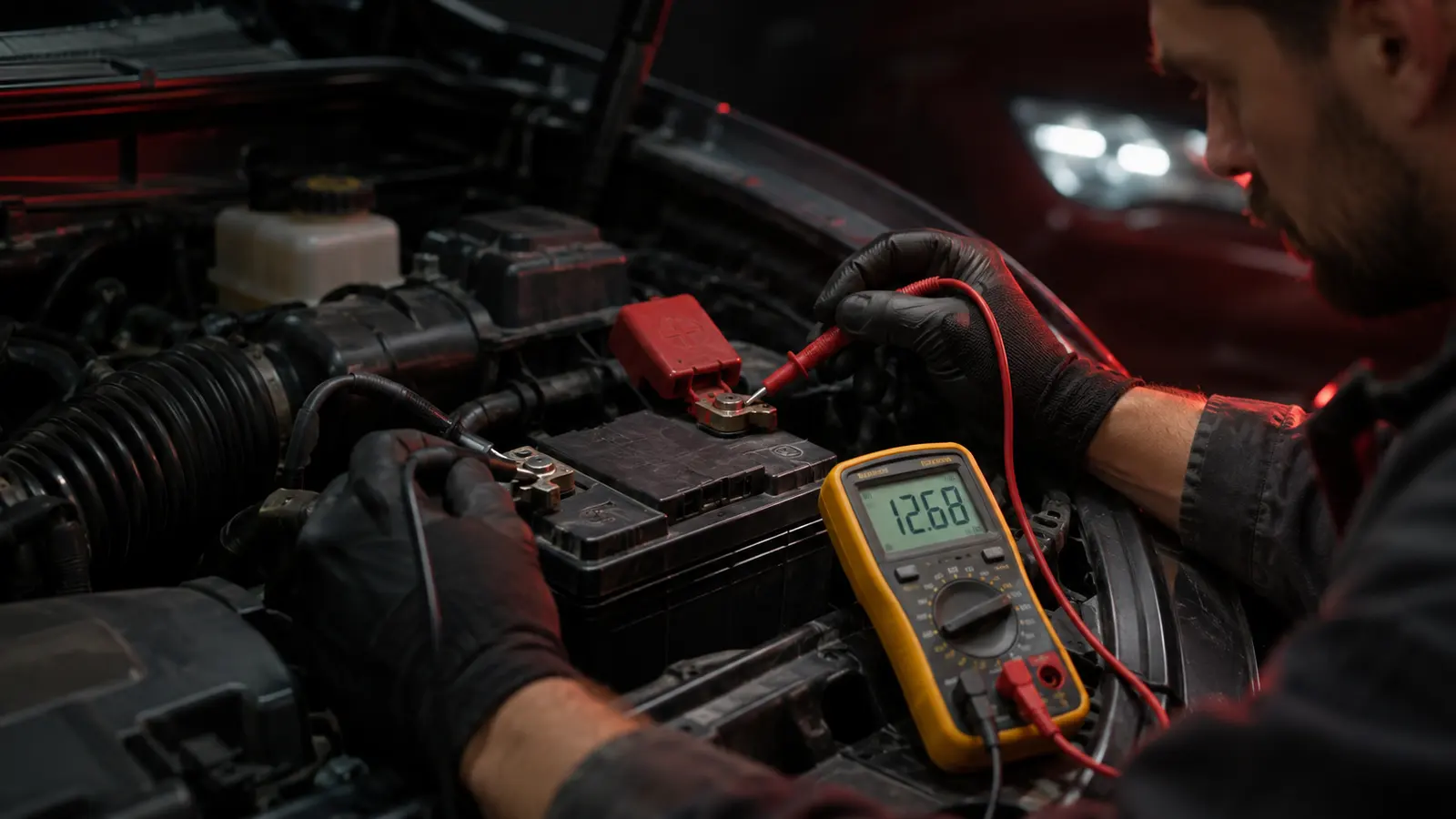 Starting & Battery
Car Battery Voltage Chart: What Your Reading Means
A fully charged 12-volt car battery rests at about 12.6 volts. With the engine running, the alternator should hold the system between about 13.5 and 14.5 volts. Readings well below those point to a flat battery or a charging fault.
Updated November 22, 2026Read Starting & Battery
Car Won't Start but the Lights Come On: What It Means
Working lights mean the battery has some charge — not that it can crank the engine. The sound the car makes points to the cause.
Updated November 22, 2026Read