
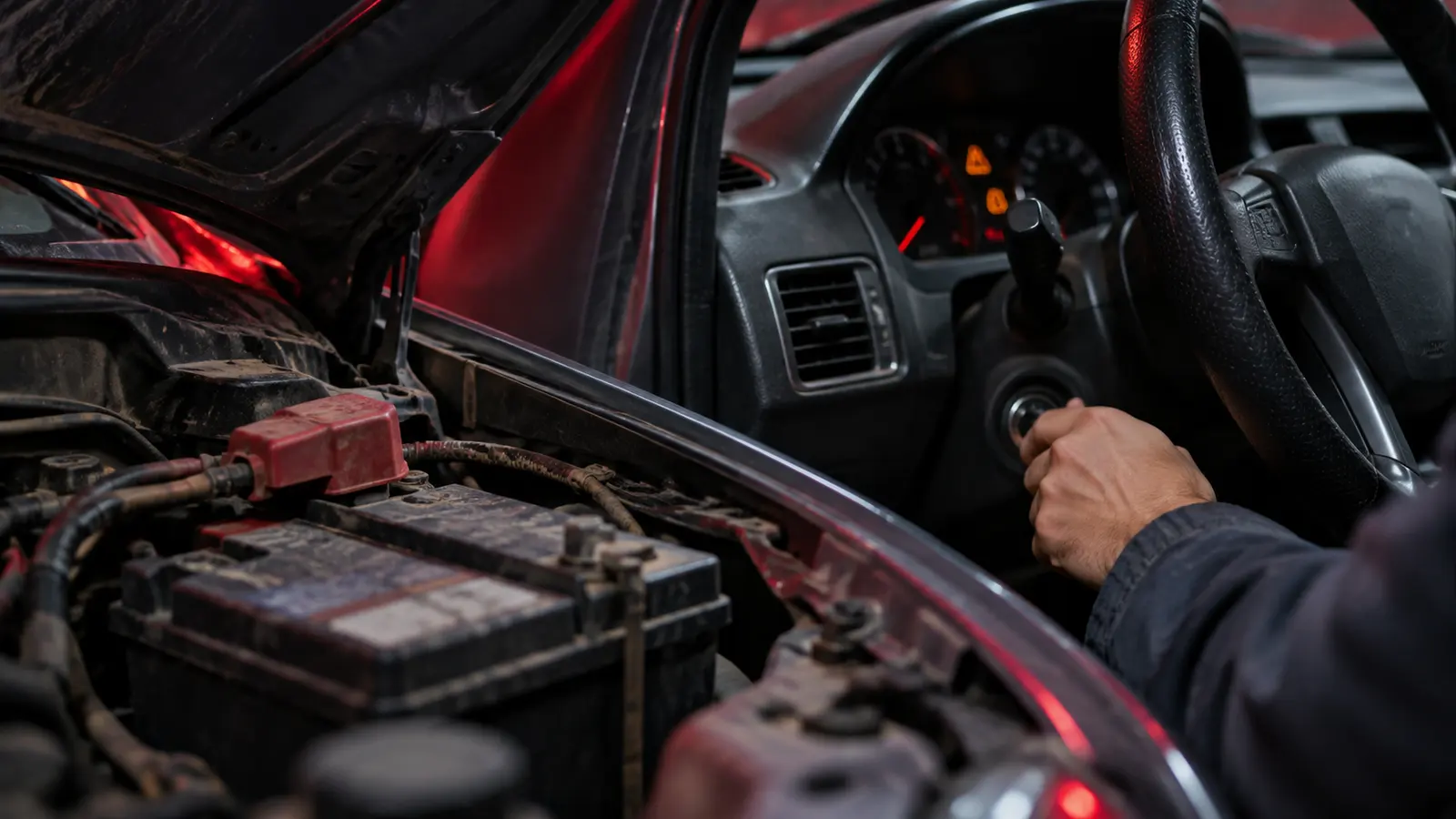
Car Won't Start After Sitting for a While: Causes
Quick answer
After a few weeks parked, the most common reason a car won't start is a flat battery: modern cars draw a little power even when off. Old fuel and rodent-chewed wiring are the next suspects.
- Topic
- Starting & Battery
- Sections
- 6
- Reading time
- 2 min
- Applies to
- All regions
If your car won't start after sitting for weeks or months, the battery is the first suspect. Even switched off, a modern car's alarm, keyless entry and control modules draw a small current, and a battery that isn't topped up by driving slowly goes flat. Other causes include stale fuel, seized brakes, rodent damage to wiring, and condensation in the fuel tank.
Is it safe to start?
Usually, yes. Before cranking, look under the bonnet for chewed wires or nests, check for fuel smells, and make sure the tyres aren't flat. A car that's been parked for many months benefits from an oil level check first.
Causes at a glance
| What happens | Likely cause |
|---|---|
| Clicking or nothing | Flat battery |
| Cranks but won't fire | Stale fuel, fuel pump, rodent-damaged wiring |
| Starts then stalls | Old fuel, idle control |
| Won't roll freely | Brakes seized to the discs |
| Warning lights everywhere | Low voltage confusing modules |
Check these in order
- Battery voltage: about 12.6 V is full. Below about 12.0 V it needs charging.
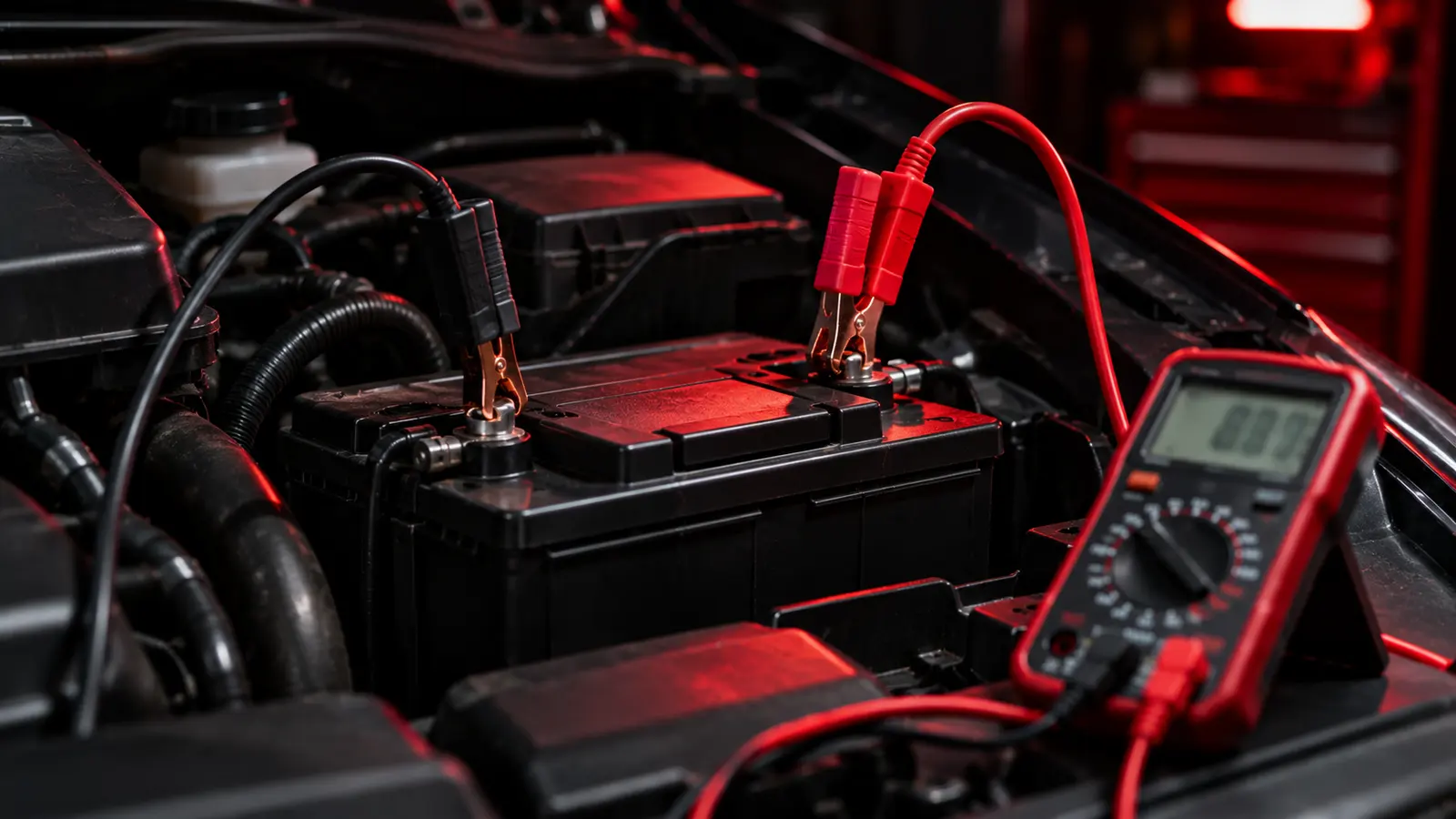
- Jump start or charge the battery.
- Look for rodent damage around wiring looms and the air filter box.
- Check the fuel level, as old fuel loses volatility, especially petrol.
- Roll the car gently after starting to free lightly seized brakes.
Why batteries go flat when parked
Lead-acid batteries self-discharge slowly, and parasitic drain from modules adds to it. A battery that drops very low can be permanently damaged (sulphated), so it may not recover fully.
Preventing problems when storing a car
- Use a smart battery maintainer if the car will sit for more than a couple of weeks.
- Fill the tank to reduce condensation; consider a fuel stabiliser for long storage.
- Park on firm, dry ground and release the parking brake only if it's safe (use chocks).
- Start and drive the car properly every couple of weeks if you can.
Related guides
Frequently asked questions
How long can a car sit before the battery dies?
It depends on the car and battery. Modern cars with many electronics can flatten a weak battery in a couple of weeks; a healthy battery may last much longer.
Should I just jump start it?
A jump often works, but then drive for at least 30 minutes or use a charger, and have the battery tested.
Tools that can help
Need a mechanic?
Find rated garages near you by city, ZIP code or postcode, with directions.
About this guide
Written by Editorial Team using manufacturer documentation, government road-safety guidance and motoring-organisation advice. It explains likely causes and safe checks. It is not a diagnosis. How we write and check guides.
More starting & battery guides
 Starting & Battery
Car Batteries: The Complete Guide to Types, Testing, Care and Replacement
A 12-volt car battery starts the engine and steadies the electrics; the alternator then keeps it charged. This guide covers how batteries work, the main types, what the ratings mean, how to test and charge one, why they fail and how to replace one safely.
Updated November 22, 2026Read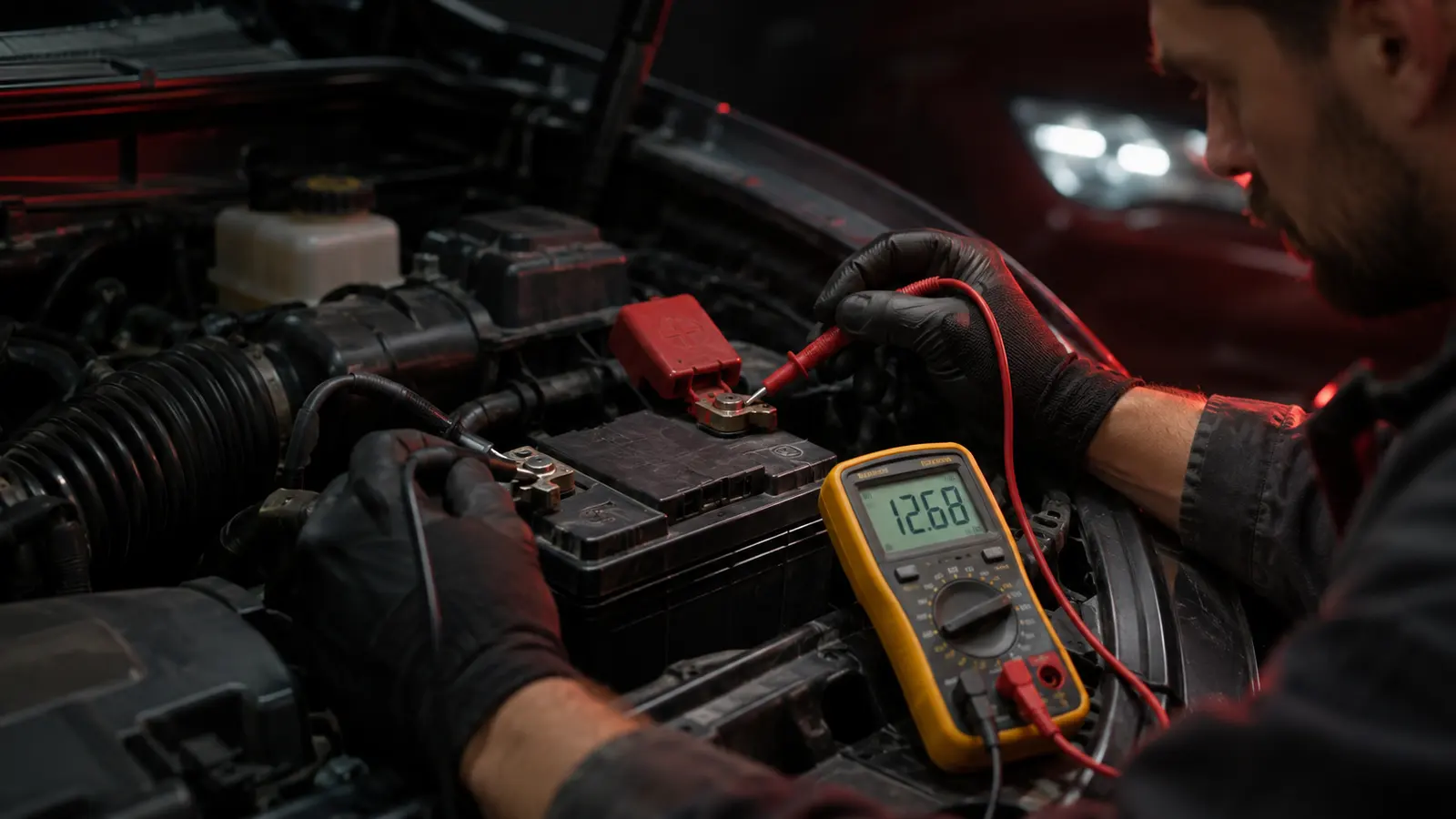 Starting & Battery
Car Battery Voltage Chart: What Your Reading Means
A fully charged 12-volt car battery rests at about 12.6 volts. With the engine running, the alternator should hold the system between about 13.5 and 14.5 volts. Readings well below those point to a flat battery or a charging fault.
Updated November 22, 2026Read Starting & Battery
Car Won't Start but the Lights Come On: What It Means
Working lights mean the battery has some charge — not that it can crank the engine. The sound the car makes points to the cause.
Updated November 22, 2026Read