
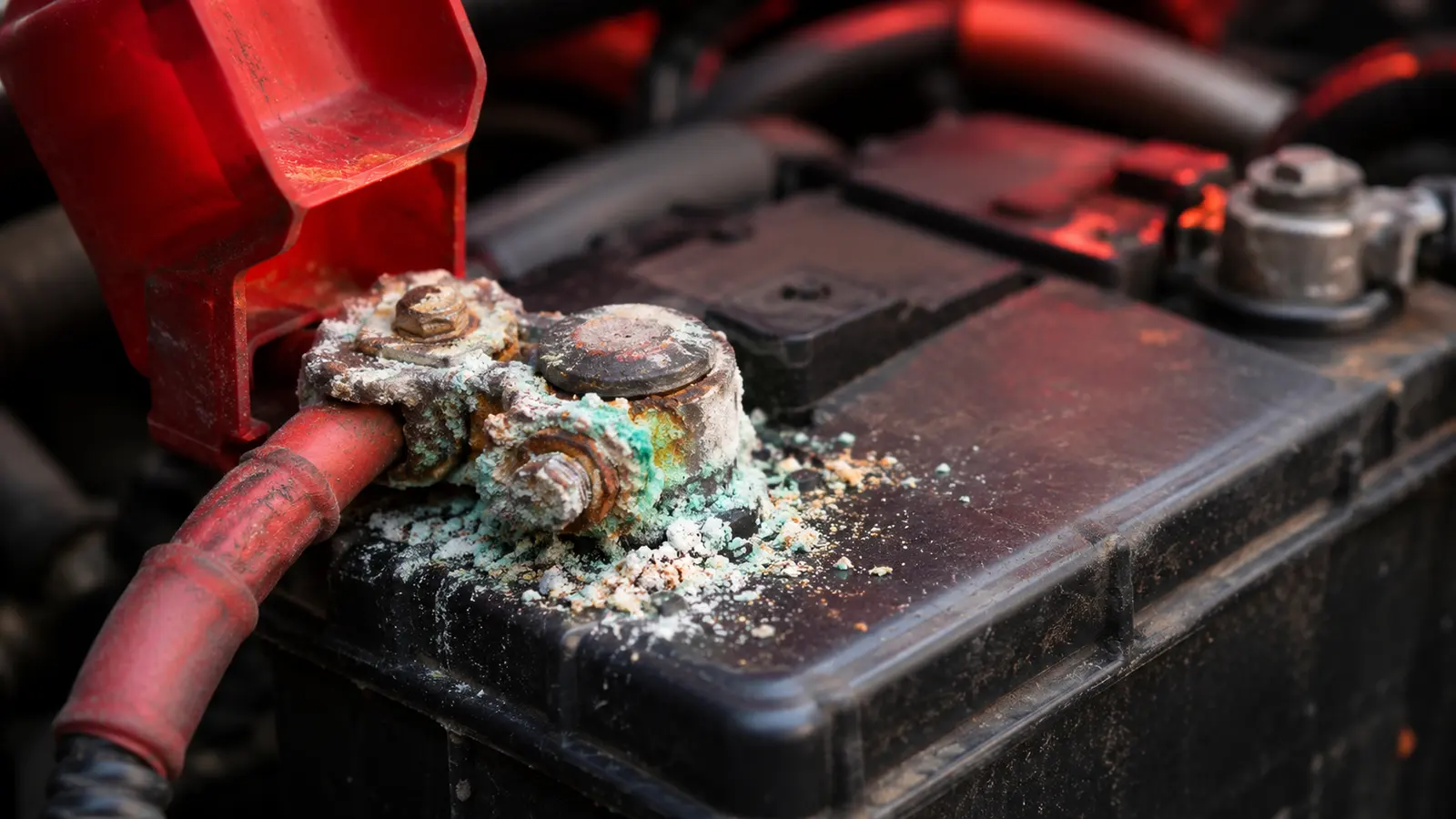
Why Do Car Battery Terminals Corrode?
Quick answer
The white or blue-green crust on battery terminals forms when gases and traces of acid from the battery react with the metal clamps. It adds resistance, which can stop the car starting.
- Topic
- Starting & Battery
- Sections
- 6
- Reading time
- 1 min
- Applies to
- All regions
Battery terminals corrode when gases and traces of acid escaping from the battery react with the metal posts and clamps, leaving a white, grey or blue-green crust. It's more likely with overcharging, old batteries, damaged seals around the posts and loose clamps.
Why it matters
Corrosion adds electrical resistance. Lights may still work, but the large current a starter motor needs can't get through, giving clicking or no crank.
Causes at a glance
| Cause | Clue |
|---|---|
| Normal venting | Light, slow build-up |
| Overcharging | Heavy, fast corrosion, battery hot |
| Leaking post seals | Corrosion keeps returning at one post |
| Loose clamps | Arcing and corrosion at the contact |
| Old battery | Swollen case, slow cranking |
Check these in order
- Look at both terminals for crust and loose clamps.
- Check the battery age and case for swelling or leaks.
- Measure charging voltage: roughly 13.8–14.7 V with the engine running.
- Clean the terminals following our cleaning guide.
How to prevent it
- Keep clamps tight and terminals clean.
- Apply a thin layer of terminal protector or petroleum jelly after cleaning.
- Replace batteries that leak or swell.
- Have overcharging investigated.
Safety
Battery acid burns skin and eyes. Wear gloves and eye protection, and never let a metal tool bridge the terminals.
Related guides
Frequently asked questions
Which terminal corrodes more?
Either can. Some technicians link heavy positive-side corrosion to overcharging, but the cause should be checked rather than assumed.
Does corrosion mean the battery is bad?
Not necessarily, but heavy, repeated corrosion can point to leaks, overcharging or an old battery.
Tools that can help
Need a mechanic?
Find rated garages near you by city, ZIP code or postcode, with directions.
About this guide
Written by Editorial Team using manufacturer documentation, government road-safety guidance and motoring-organisation advice. It explains likely causes and safe checks. It is not a diagnosis. How we write and check guides.
More starting & battery guides
 Starting & Battery
Car Batteries: The Complete Guide to Types, Testing, Care and Replacement
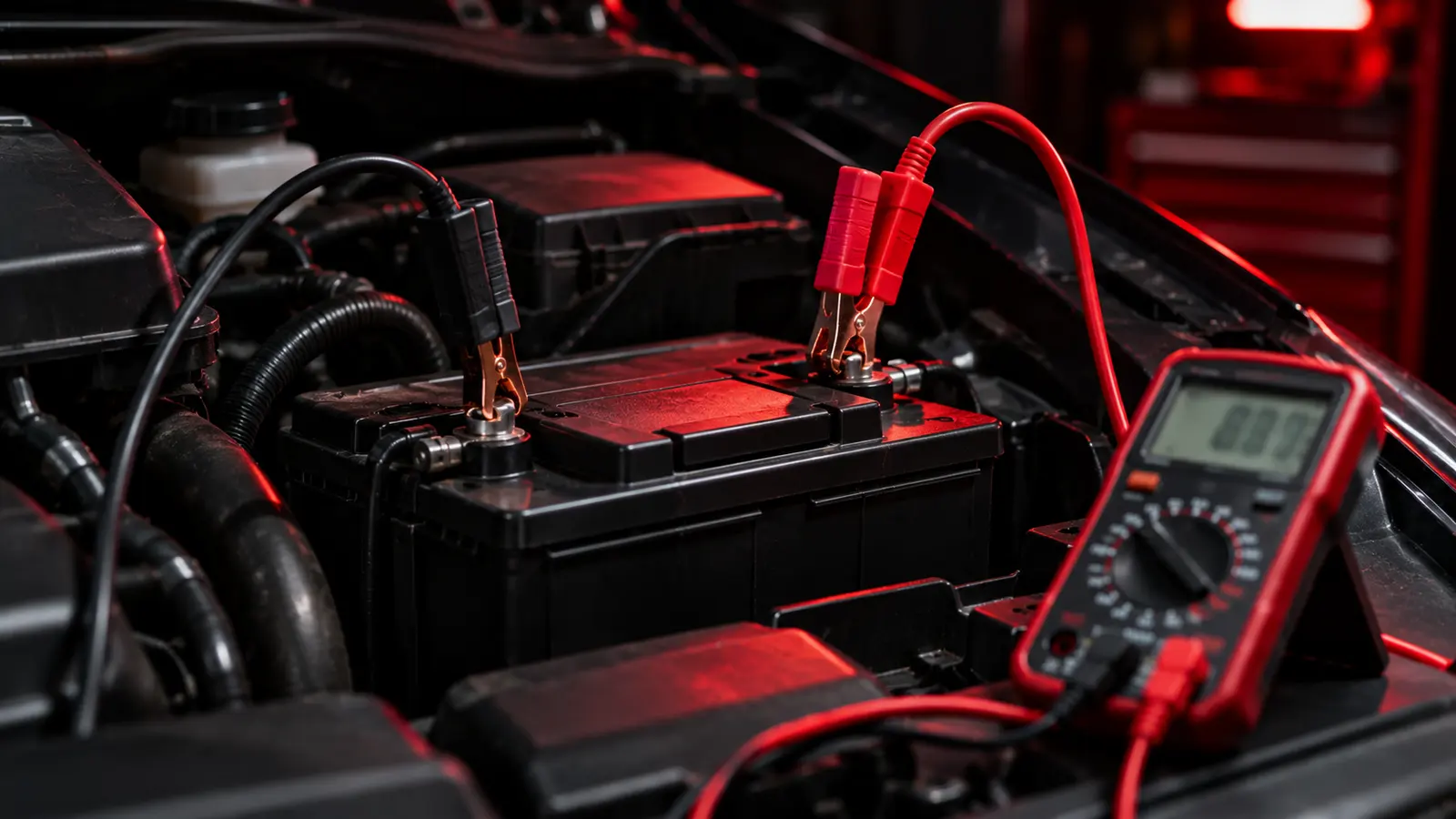
A 12-volt car battery starts the engine and steadies the electrics; the alternator then keeps it charged. This guide covers how batteries work, the main types, what the ratings mean, how to test and charge one, why they fail and how to replace one safely.
Updated November 22, 2026Read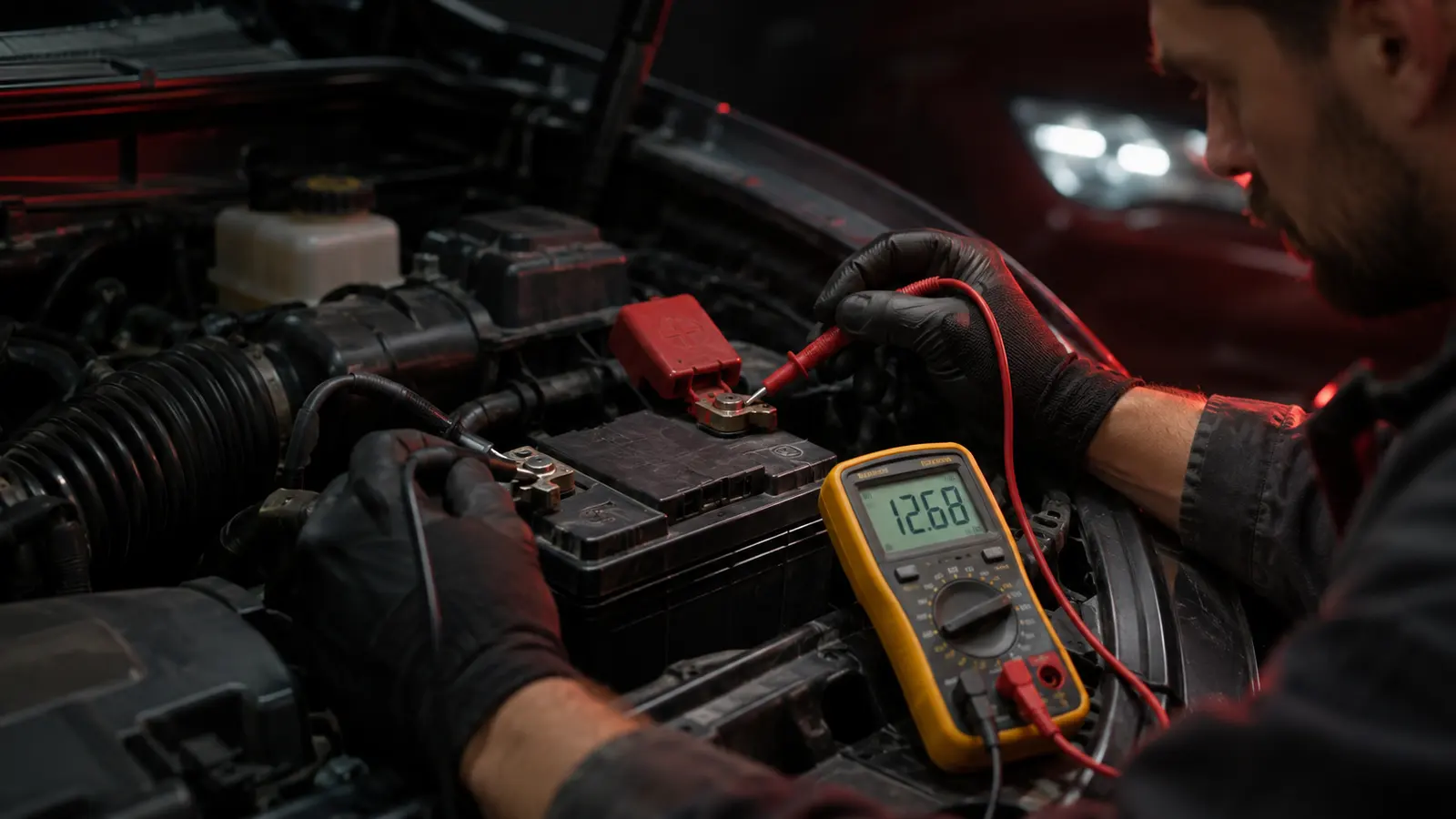 Starting & Battery
Car Battery Voltage Chart: What Your Reading Means
A fully charged 12-volt car battery rests at about 12.6 volts. With the engine running, the alternator should hold the system between about 13.5 and 14.5 volts. Readings well below those point to a flat battery or a charging fault.
Updated November 22, 2026Read Starting & Battery
Car Won't Start but the Lights Come On: What It Means
Working lights mean the battery has some charge — not that it can crank the engine. The sound the car makes points to the cause.
Updated November 22, 2026Read