
Car Overheating: Causes, What to Do and When to Stop
Quick answer
Low coolant from a leak is the most common reason a car overheats. Here's what to do immediately and what to check once it cools.
- Topic
- Engine Problems
- Sections
- 7
- Reading time
- 2 min
- Applies to
- All regions
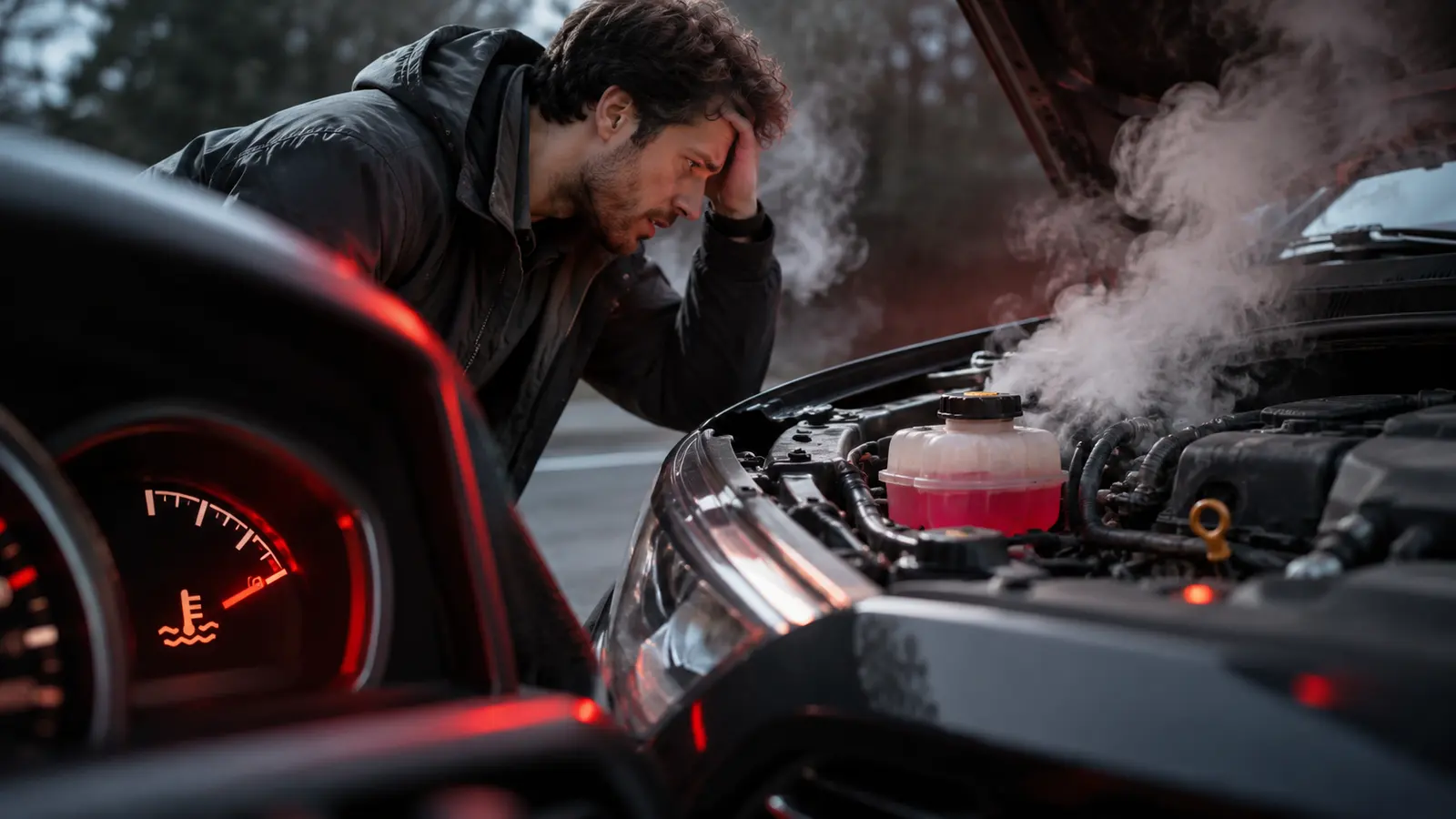
If your temperature gauge climbs into the red or you see steam, pull over safely and switch the engine off. The most common cause is low coolant from a leak, followed by a stuck thermostat, a cooling fan that isn't running, a failing water pump or, more seriously, a head gasket failure.
What to do right now
- Turn off the AC and turn the heater to full hot with the fan high — it pulls heat from the engine.
- Pull over when safe and switch off.
- Do not open the radiator or expansion tank cap while hot. Pressurised coolant can cause severe burns. Wait at least 30 minutes.
- Once cool, check the coolant level against the marks on the expansion tank.
Common causes
Low coolant
Look for puddles under the car, wet hoses, or a sweet smell.
Thermostat stuck closed
The engine heats up quickly, often with the top radiator hose hot and the bottom one cool.
Cooling fan not working
Overheating mainly in traffic or at idle, improving at speed, points to the fan, its relay or fuse.
Water pump failure
Leaks from the pump's weep hole or a whining noise are warning signs.
Head gasket failure
White exhaust smoke, bubbles in the expansion tank, or coolant loss with no visible leak.
When to see a mechanic
Any overheating episode deserves a professional pressure test of the cooling system. Driving an overheating engine can warp the cylinder head — far more costly than the original fault.
Clues at a glance
| Clue | Likely cause |
|---|---|
| Overheats in traffic, fine at speed | Cooling fan, relay or fuse |
| Overheats quickly, top hose hot, bottom cool | Thermostat stuck closed |
| Coolant level keeps dropping, sweet smell | Leak from hose, radiator or pump |
| White exhaust smoke, bubbles in tank | Head gasket |
| Only with AC on | Fans or blocked condenser |
What affects the cost
Topping up and replacing a hose are inexpensive. Thermostats and fans are moderate. Water pumps cost more on engines where the pump is driven by the timing belt, and head gasket repairs are a major job.
How to prevent it
- Check coolant level monthly with the engine cold.
- Use the coolant type in the handbook and change it on schedule.
- Keep the radiator and condenser free of leaves and insects.
- Watch the temperature gauge, especially in summer traffic or when towing.
Related problems
Frequently asked questions
Can I add water instead of coolant?
In an emergency, water gets you to a garage, but it dilutes freeze and corrosion protection. Have the system refilled with the correct coolant soon.
Tools that can help
How the parts involved work
Need a mechanic?
Find rated garages near you by city, ZIP code or postcode, with directions.
About this guide
Written by Editorial Team using manufacturer documentation, government road-safety guidance and motoring-organisation advice. It explains likely causes and safe checks. It is not a diagnosis. How we write and check guides.
More engine problems guides
 Engine Problems
Car Exhaust and Emissions: The Complete Guide to Catalytic Converters, Sensors and Smoke
The exhaust system carries burnt gases away, cleans them with a catalytic converter (and on diesels a DPF and SCR), and quietens the engine. This guide explains each part, what different smoke colours and noises mean, catalytic converter theft, and emissions tests.
Updated November 22, 2026ReadEngine ProblemsEngine Cooling System: The Complete Guide to Coolant, Overheating and Repairs
The cooling system carries heat away from the engine using coolant, a water pump, a thermostat, a radiator and fans, all under pressure so coolant can run above 100 °C. This guide explains each part, why engines overheat, how to spot leaks and how to check coolant safely.
Updated November 22, 2026Read Engine Problems
Diesel Engines: The Complete Guide to How They Work, DPF, AdBlue and Care
Diesel engines ignite fuel by compression rather than a spark. Modern diesels add glow plugs, a particulate filter, AdBlue and EGR to start reliably and cut emissions. This guide explains each system, the warning lights and how to keep a diesel healthy.
Updated November 22, 2026Read