
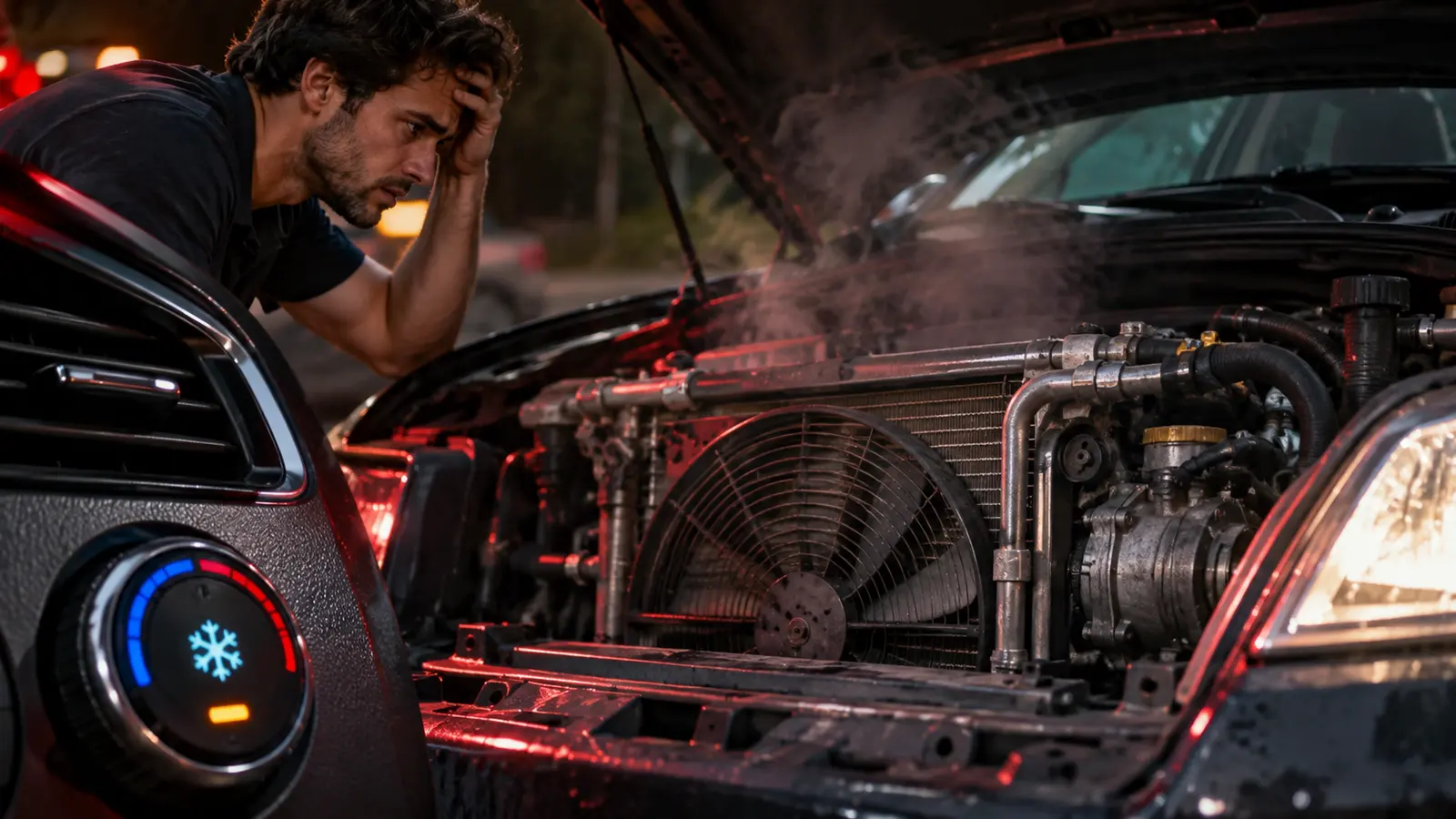
Car Overheating When the AC Is On: Why It Happens
Quick answer
The AC adds heat in front of the radiator and extra load on the engine. If the car only overheats with the AC on, suspect the cooling fans, a blocked condenser or radiator, or low coolant.
- Topic
- Engine Problems
- Sections
- 9
- Reading time
- 2 min
- Applies to
- All regions
If your car overheats when the AC is on, especially in traffic or on hot days, the cooling system is struggling with the extra heat. The AC condenser sits in front of the radiator and adds heat to the air flowing through it, and the compressor adds engine load. The usual causes are a cooling fan that isn't working properly, a blocked condenser or radiator, or low coolant.
Is it safe to drive?
If the gauge rises, turn off the AC, turn the heater to hot with the fan on max, and pull over safely if it keeps climbing. Don't drive if the gauge is at the top or you see steam.
Causes at a glance
| Clue | Likely cause |
|---|---|
| Overheats in traffic, fine at speed | Cooling fan or fan relay |
| Overheats at all speeds with AC | Blocked radiator or condenser, low coolant |
| Fan runs but slowly | Fan motor or resistor |
| Coolant level low | Leak |
| Started after a hot summer | Debris in condenser and radiator fins |
Check these in order
- Engine cold: check coolant level.
- Start the engine, turn on the AC and check the radiator fans run.
- Look through the grille for leaves, insects or debris on the condenser.
- Watch the gauge with AC on and off to confirm the link.
Causes explained
Cooling fans
Many cars run the fans as soon as the AC is on. A failed fan motor, relay or fuse means no airflow at low speed.
Blocked condenser or radiator
Bugs, leaves and road dirt clog the fins. Bent fins also reduce airflow.
Low coolant
Less coolant means less heat-carrying capacity.
Weak radiator or water pump
Internal radiator blockages and worn pump impellers reduce flow.
What a mechanic will do
They'll test the fans and their circuit, check coolant level and pressure, measure radiator temperature across its face, and clean or replace blocked parts.
What affects the cost
Fuses and relays are cheap. Fan motors are moderate. Radiators and water pumps cost more.
How to prevent it
- Gently rinse the condenser and radiator from the engine side (low pressure) when they're dirty.
- Keep coolant fresh and at the right level.
Regional notes
Common in summer in Australia, the southern US and during UK heatwaves. Towing or caravanning in heat makes it worse.
Related problems
Frequently asked questions
Why does turning on the heater help an overheating car?
The heater core acts as an extra radiator. Turning heat to full and the fan to max pulls some heat from the engine in an emergency.
Is it safe to keep driving with the AC off?
As a short-term measure, if the gauge then stays normal. Get the cooling system checked soon.
Why does it only happen in traffic?
At low speed the radiator and condenser rely on the electric fans. A weak fan shows up in traffic first.
Tools that can help
How the parts involved work
Need a mechanic?
Find rated garages near you by city, ZIP code or postcode, with directions.
About this guide
Written by Editorial Team using manufacturer documentation, government road-safety guidance and motoring-organisation advice. It explains likely causes and safe checks. It is not a diagnosis. How we write and check guides.
More engine problems guides
 Engine Problems
Car Exhaust and Emissions: The Complete Guide to Catalytic Converters, Sensors and Smoke
The exhaust system carries burnt gases away, cleans them with a catalytic converter (and on diesels a DPF and SCR), and quietens the engine. This guide explains each part, what different smoke colours and noises mean, catalytic converter theft, and emissions tests.
Updated November 22, 2026Read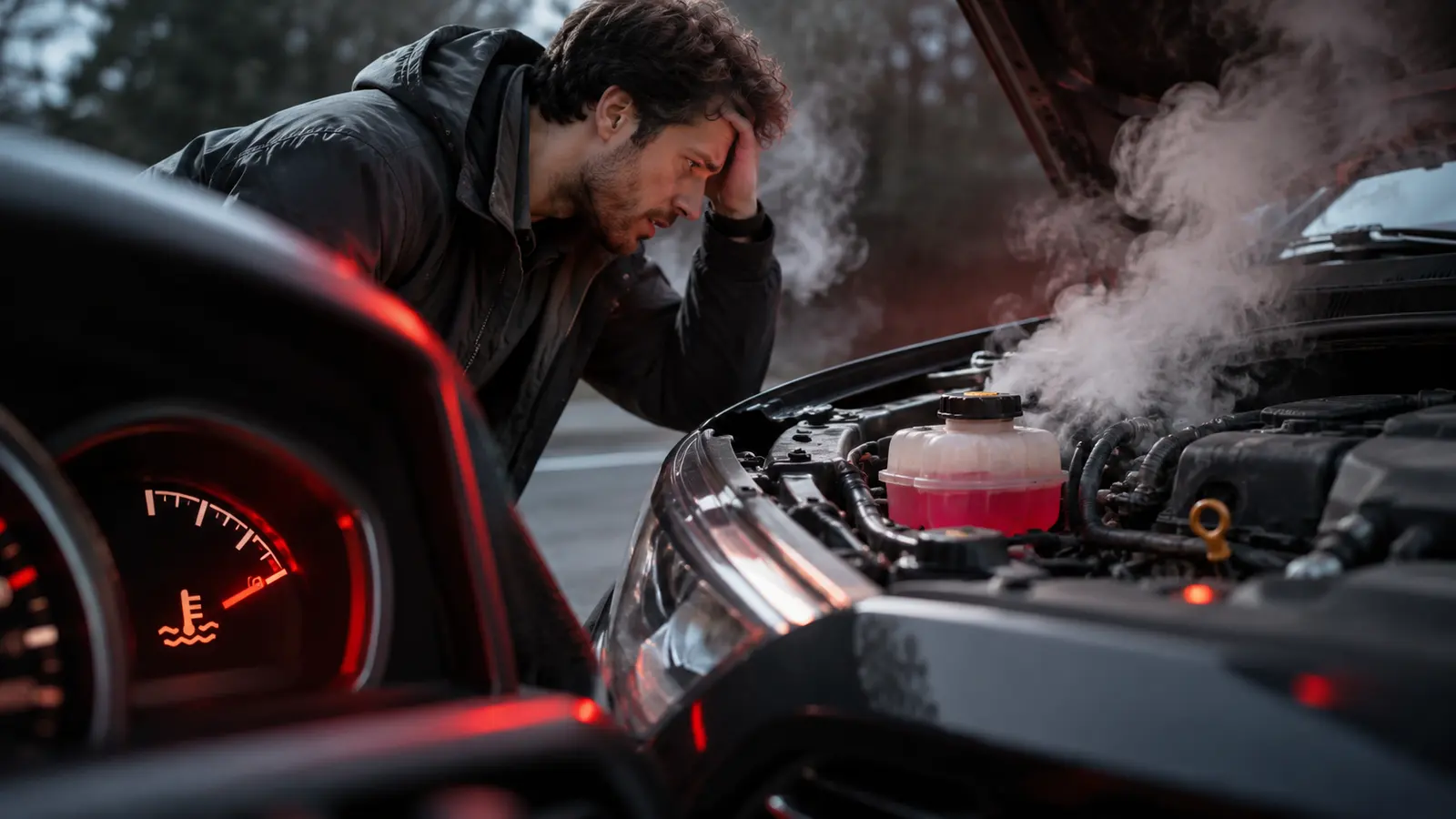 Engine Problems
Engine Cooling System: The Complete Guide to Coolant, Overheating and Repairs
The cooling system carries heat away from the engine using coolant, a water pump, a thermostat, a radiator and fans, all under pressure so coolant can run above 100 °C. This guide explains each part, why engines overheat, how to spot leaks and how to check coolant safely.
Updated November 22, 2026Read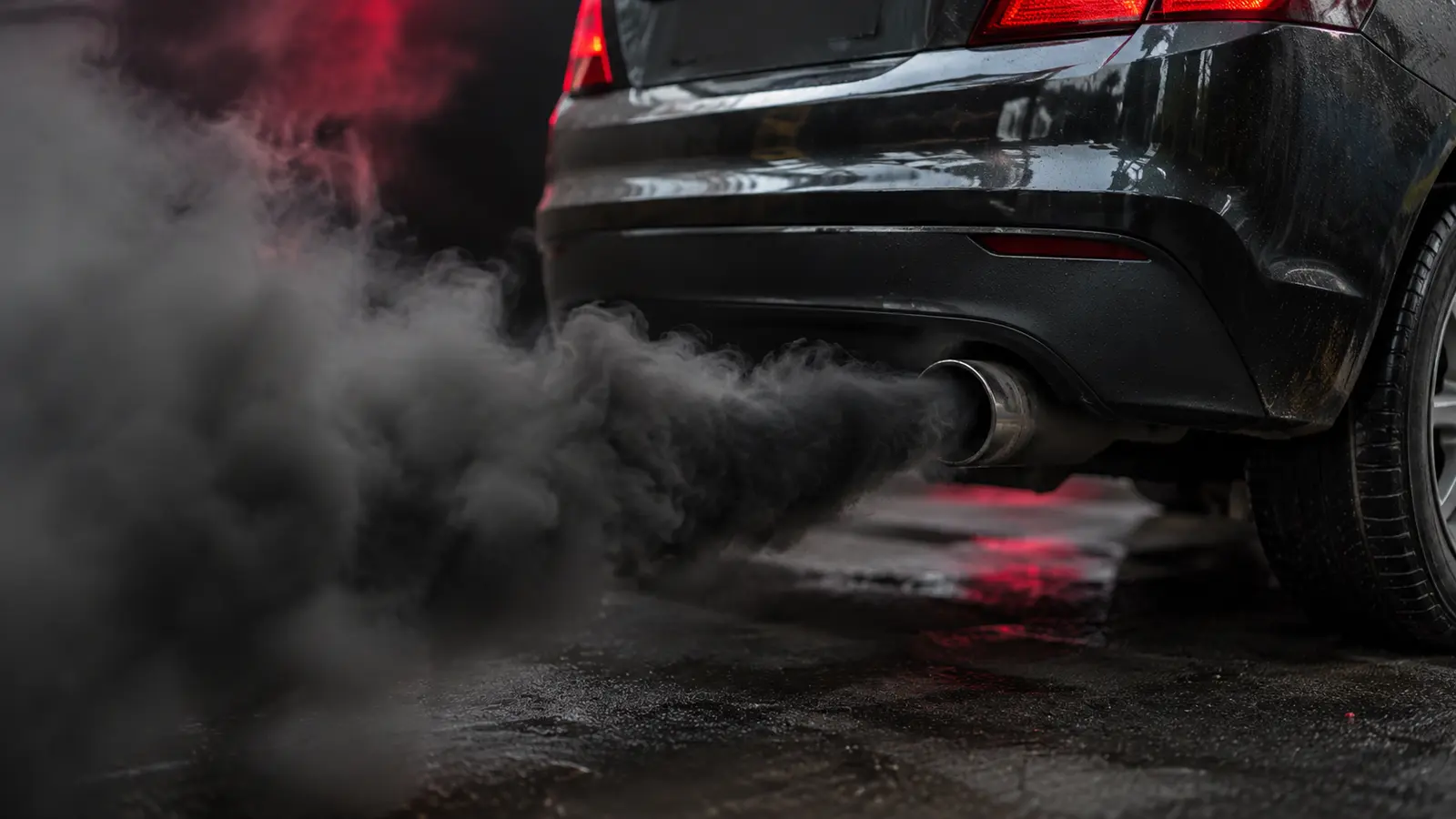 Engine Problems
Diesel Engines: The Complete Guide to How They Work, DPF, AdBlue and Care
Diesel engines ignite fuel by compression rather than a spark. Modern diesels add glow plugs, a particulate filter, AdBlue and EGR to start reliably and cut emissions. This guide explains each system, the warning lights and how to keep a diesel healthy.
Updated November 22, 2026Read