
Option A
Ceramic pads
Option B
Semi-metallic pads
Ceramic vs Semi-Metallic Brake Pads
Short answer
Ceramic pads are quieter, produce less visible dust and suit everyday commuting. Semi-metallic pads cope better with heat and heavy loads, such as towing, mountains or performance driving, but are noisier and dustier.
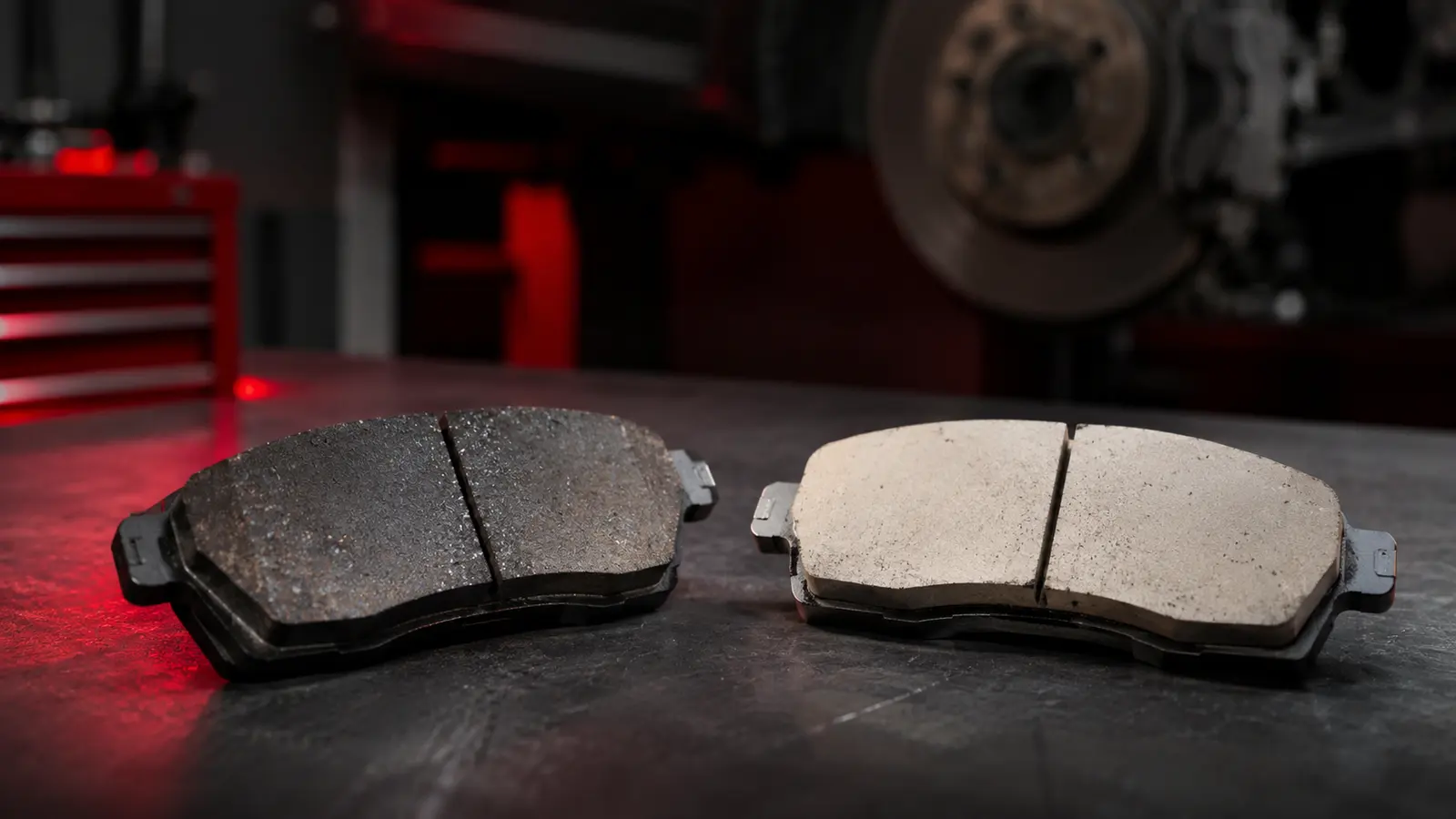
Side-by-side comparison
| Feature | Ceramic pads | Semi-metallic pads |
|---|---|---|
| Noise | Quieter | Can be noisier |
| Brake dust | Less, lighter colour | More, darker |
| Heat tolerance | Good for normal use | Better for heavy use |
| Disc wear | Gentler | Can wear discs faster |
| Cold bite | Good | Good |
| Price | Often higher | Often lower |
Why choose Ceramic pads
- Quiet, clean wheels
- Long life in normal driving
- Easy on discs
Why choose Semi-metallic pads
- Strong performance under heat
- Good for towing and hills
- Widely available
Which should you choose?
Choose Ceramic pads if…
Mostly commuting and highway driving, and you value quiet brakes and clean wheels.
Choose Semi-metallic pads if…
You tow, carry heavy loads, drive in mountains or drive hard.
Our verdict
The bottom line
Start with the pad type your maker fits as original equipment, then adjust for your driving. Always fit pads in axle pairs.
Frequently asked questions
Can I mix pad types front and rear?
It's common for manufacturers to use different compounds front and rear. Don't mix types on the same axle.
Do new pads need bedding in?
Yes. A series of moderate stops transfers an even layer of pad material to the disc.
What about organic pads?
Organic (NAO) pads are quiet and cheap but wear faster and handle less heat.
Related guides
More comparisons
General information, not a diagnosis. If a warning light is red, the car drives abnormally or you're unsure, stop safely and have a qualified technician inspect the vehicle.