
Option A
Timing belt
Option B
Timing chain
Timing Belt vs Timing Chain: Maintenance Differences
Short answer
A timing belt is a toothed rubber belt that must be replaced at the maker's interval. A timing chain is metal, runs in oil and usually isn't scheduled for replacement, but it can stretch and rattle if oil changes are neglected.
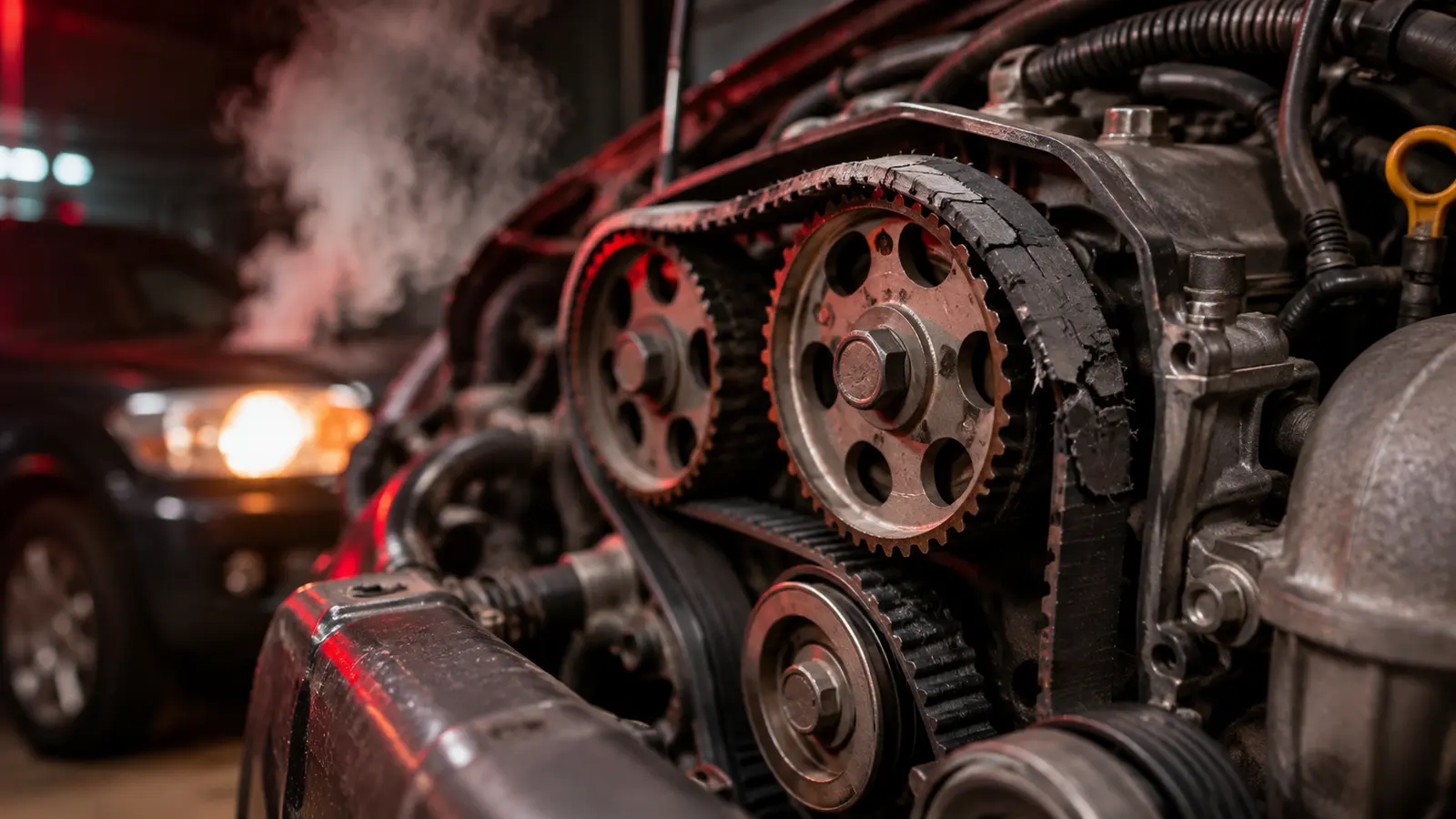
Side-by-side comparison
| Feature | Timing belt | Timing chain |
|---|---|---|
| Material | Reinforced rubber | Metal links |
| Scheduled replacement | Yes, by miles and years | Usually not |
| Noise | Quiet | Slightly louder; rattle when worn |
| Lubrication | Runs dry | Runs in engine oil |
| Failure warning | Often little or none | Rattle on start-up, timing codes |
| Replacement cost | Planned, moderate | Higher when needed |
Why choose Timing belt
- Quiet and light
- Cheaper to make
- Predictable replacement schedule
Why choose Timing chain
- Designed to last much longer
- No routine replacement interval on most engines
- Gives more warning before failure
Which should you choose?
Choose Timing belt if…
You can't choose. It's built into the engine. If yours has a belt, replace it on time, by miles **and** age.
Choose Timing chain if…
Same: it comes with the engine. Protect a chain with on-time oil changes using the correct oil.
Our verdict
The bottom line
Check which your engine has. Belt engines need the scheduled replacement, especially interference engines where failure can damage valves. Chain engines need good oil maintenance.
Frequently asked questions
How do I know which my car has?
Check the service schedule: a timing belt replacement line means a belt. A garage can also tell from the engine code.
What is an interference engine?
An engine where valves and pistons share space at different times. If the belt breaks, they can collide.
Should the water pump be changed with the belt?
Often yes on engines where the belt drives it, to avoid paying the labour twice.
Related guides
More comparisons
General information, not a diagnosis. If a warning light is red, the car drives abnormally or you're unsure, stop safely and have a qualified technician inspect the vehicle.