
Option A
Disc brakes
Option B
Drum brakes
Disc Brakes vs Drum Brakes: How They Differ
Short answer
Disc brakes squeeze pads onto a spinning disc and shed heat well, so they're used on the front of almost every car. Drum brakes press shoes outwards inside a drum. They're cheaper and still common on the rear of smaller cars.
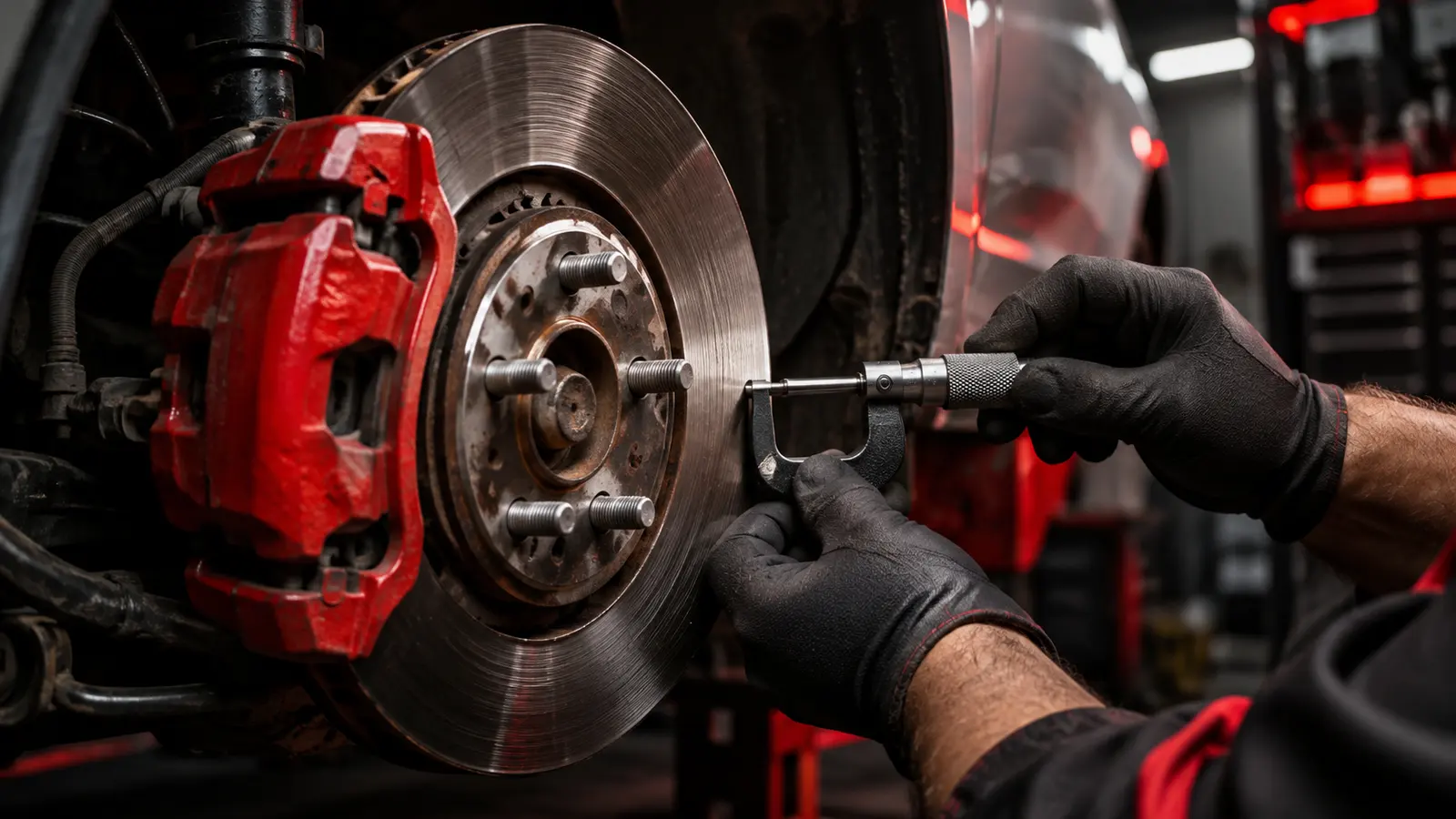
Side-by-side comparison
| Feature | Disc brakes | Drum brakes |
|---|---|---|
| Heat dissipation | Better | Weaker |
| Wet performance | Recovers quickly | Slower to recover |
| Fade under heavy use | More resistant | Fades sooner |
| Cost | Higher | Lower |
| Parking brake integration | Separate or electronic | Simple, built in |
| Service interval | Pads wear faster | Shoes last longer |
Why choose Disc brakes
- Better stopping under heavy use
- Easy to inspect
- Self-cleaning in the wet
Why choose Drum brakes
- Cheaper to make
- Long-lasting shoes
- Simple parking brake
Which should you choose?
Choose Disc brakes if…
You can't swap easily: brake type is part of the car's design and homologation.
Choose Drum brakes if…
Rear drums on small cars are perfectly adequate because the rear does less braking work.
Our verdict
The bottom line
Both are safe when maintained. Have rear drums inspected and adjusted at services, since they're out of sight.
Frequently asked questions
Why do some cars have discs front and drums rear?
The front does most of the braking. Rear drums save cost and work well for the lighter load.
Do drum brakes need adjusting?
Many self-adjust, but they should still be inspected and cleaned at services.
Do EVs use drum brakes?
Some do on the rear, because regenerative braking means the friction brakes are used less and drums resist corrosion.
Related guides
More comparisons
General information, not a diagnosis. If a warning light is red, the car drives abnormally or you're unsure, stop safely and have a qualified technician inspect the vehicle.