
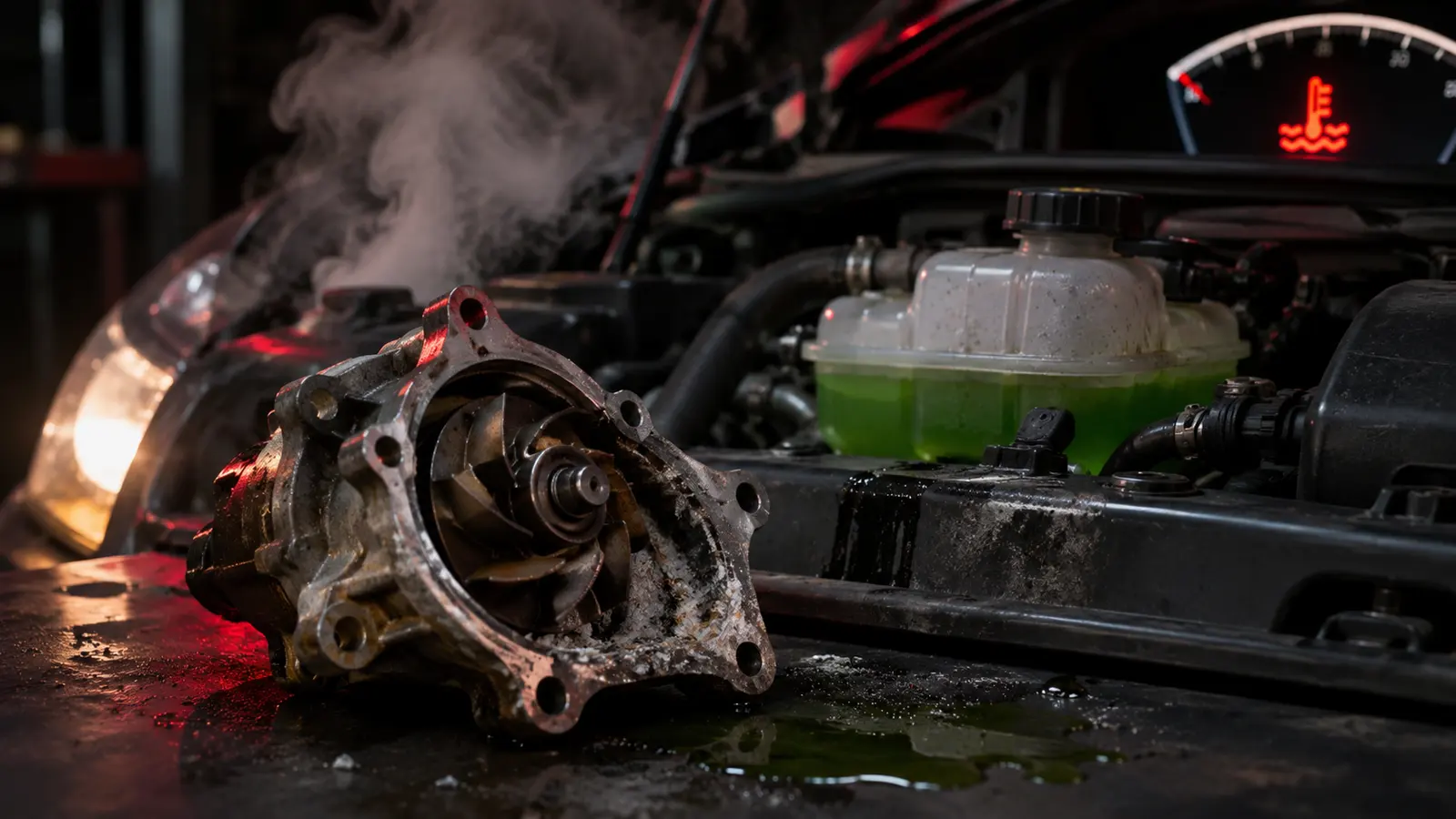
Symptoms of a Bad Water Pump
Quick answer
Coolant dripping from the front of the engine, a whining or grinding noise, steam and overheating are the classic signs of a failing water pump.
- Topic
- Engine Problems
- Sections
- 7
- Reading time
- 1 min
- Applies to
- All regions
The water pump circulates coolant through the engine and radiator. Bad water pump symptoms include coolant leaking from the front of the engine, a whining or grinding noise, steam from the engine bay and overheating.
Is it safe to drive?
A tiny weep isn't urgent, but monitor coolant level. If the engine overheats or the pump is noisy and wobbling, stop. On some engines a failed pump can damage the timing belt.
Symptoms at a glance
| Symptom | Why |
|---|---|
| Drip at front of engine | Seal failing (weep hole) |
| Whine or grind that rises with revs | Worn bearing |
| Overheating, no leak | Corroded impeller |
| Steam from engine bay | Major leak |
| Pulley wobbles | Bearing failing |
Check these in order
- Check coolant level when cold.
- Look for crusty deposits below the pump.
- Listen at the front of the engine.
- Watch the temperature gauge.
What a mechanic will do
They'll pressure-test the cooling system, check pump bearing play, and inspect the drive belt or timing belt.
What affects the cost
Pumps driven by the accessory belt are often quicker. Timing-belt-driven pumps take longer, so many shops replace the belt at the same time.
How to prevent problems
- Change coolant on schedule to prevent corrosion.
- Replace the pump with the timing belt where applicable.
Related problems
Frequently asked questions
Why is the water pump replaced with the timing belt?
On engines where the timing belt drives the pump, both are in the same place. Replacing them together saves repeating the labour.
What's the weep hole?
A small hole designed to drip coolant when the pump's internal seal starts to fail, as an early warning.
Can a water pump fail without leaking?
Yes. The impeller can corrode or break, reducing flow and causing overheating without a visible leak.
Tools that can help
How the parts involved work
Need a mechanic?
Find rated garages near you by city, ZIP code or postcode, with directions.
About this guide
Written by Editorial Team using manufacturer documentation, government road-safety guidance and motoring-organisation advice. It explains likely causes and safe checks. It is not a diagnosis. How we write and check guides.
More engine problems guides
 Engine Problems
Car Exhaust and Emissions: The Complete Guide to Catalytic Converters, Sensors and Smoke
The exhaust system carries burnt gases away, cleans them with a catalytic converter (and on diesels a DPF and SCR), and quietens the engine. This guide explains each part, what different smoke colours and noises mean, catalytic converter theft, and emissions tests.
Updated November 22, 2026Read Engine Problems
Engine Cooling System: The Complete Guide to Coolant, Overheating and Repairs
The cooling system carries heat away from the engine using coolant, a water pump, a thermostat, a radiator and fans, all under pressure so coolant can run above 100 °C. This guide explains each part, why engines overheat, how to spot leaks and how to check coolant safely.
Updated November 22, 2026Read Engine Problems
Diesel Engines: The Complete Guide to How They Work, DPF, AdBlue and Care
Diesel engines ignite fuel by compression rather than a spark. Modern diesels add glow plugs, a particulate filter, AdBlue and EGR to start reliably and cut emissions. This guide explains each system, the warning lights and how to keep a diesel healthy.
Updated November 22, 2026Read