
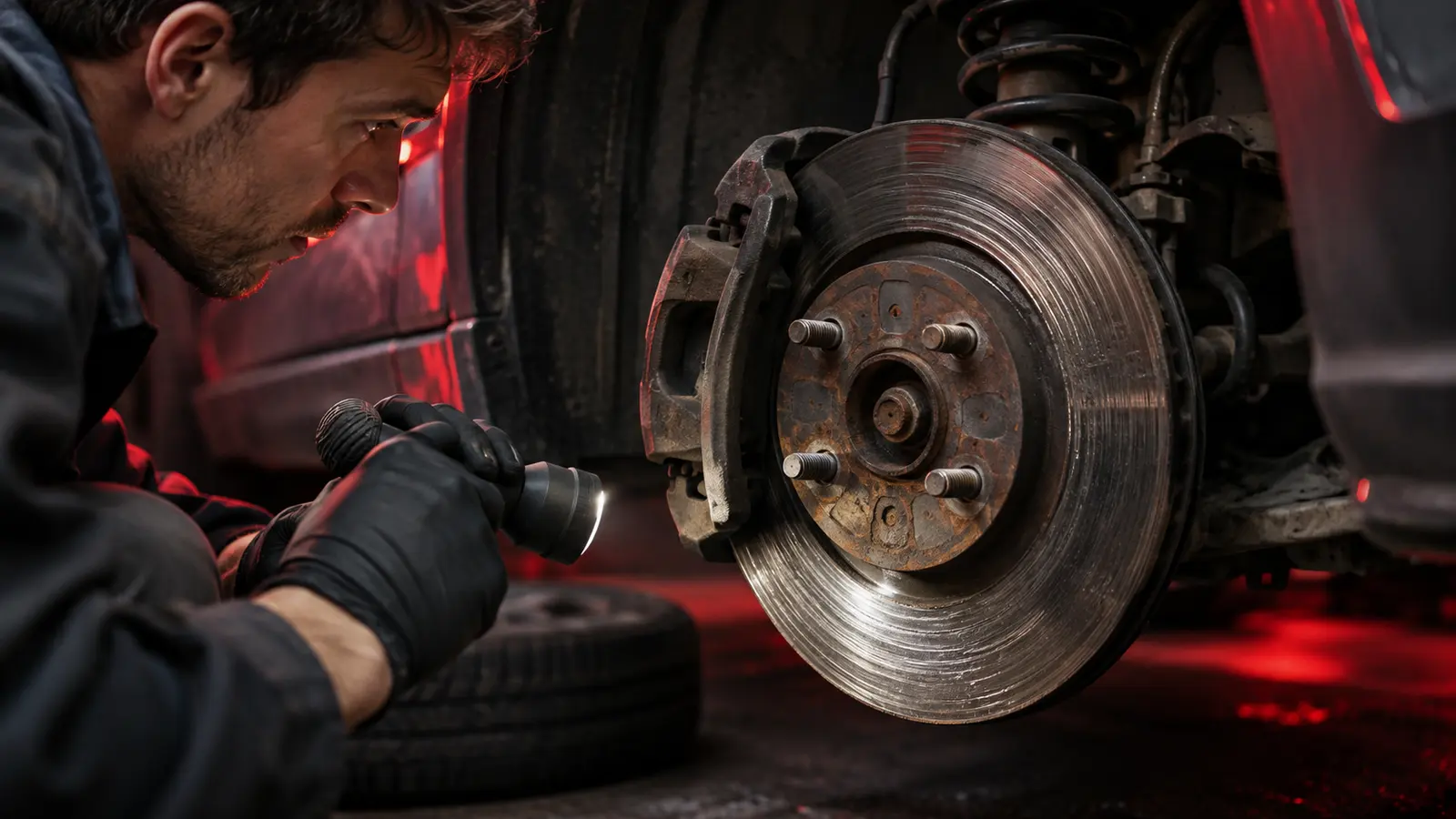
Brakes Grinding: What It Means and What to Do
Part of: Car Noises: What That Sound Means · Brake Problems: Noises, Vibration and Warning Signs
Quick answer
Grinding when you brake usually means the pads are worn to the metal backing plate, or a stone is trapped between the disc and shield. Have it checked straight away.
- Topic
- Brakes
- Sections
- 8
- Reading time
- 1 min
- Applies to
- All regions
Brakes grinding usually means the brake pads are worn down to their metal backing plate, so metal is scraping the disc. A stone trapped between the disc and dust shield, or heavy surface rust, can also grind. Treat a constant grinding noise as urgent.
Is it safe to drive?
If the grinding is constant on every stop, don't drive further than needed. Stopping distances increase and discs are being damaged. Grinding for a few stops after rain that then disappears is usually rust.
Causes at a glance
| Pattern | Likely cause |
|---|---|
| Constant grind on every stop | Pads worn to metal |
| Started after a squeal for weeks | Wear indicator ignored, now metal |
| Scraping even when not braking | Stone or bent dust shield |
| First few stops after rain, then gone | Surface rust |
| Grind plus pull to one side | Seized caliper or pad failure |
Check these in order
- Look through the wheel at pad thickness.
- Note whether it grinds without braking.
- Check for the brake warning light.
Why it happens
Pads wear gradually. Many have a squeal indicator, and some have electronic sensors. If they're ignored, the friction material runs out.
What a mechanic will do
They'll replace pads, measure the discs and usually replace them if scored, and check calipers.
What affects the cost
Pads alone are cheaper. Damaged discs add to the cost, which is why acting at the first squeal saves money.
How to prevent it
- Replace pads when the squeal starts or at inspection.
- Have brakes checked at every service.
Related guides
Frequently asked questions
Can surface rust cause grinding?
A light grinding for the first few stops after rain or a long park is often rust on the discs. It should disappear quickly.
How long can I drive with grinding brakes?
As little as possible. Metal-on-metal braking reduces stopping power and damages discs quickly.
Do grinding brakes always need new discs?
Often, if the pads have worn to metal. A mechanic will measure disc thickness.
Tools that can help
How the parts involved work
Need a mechanic?
Find rated garages near you by city, ZIP code or postcode, with directions.
About this guide
Written by Editorial Team using manufacturer documentation, government road-safety guidance and motoring-organisation advice. It explains likely causes and safe checks. It is not a diagnosis. How we write and check guides.
More brakes guides
 Brakes
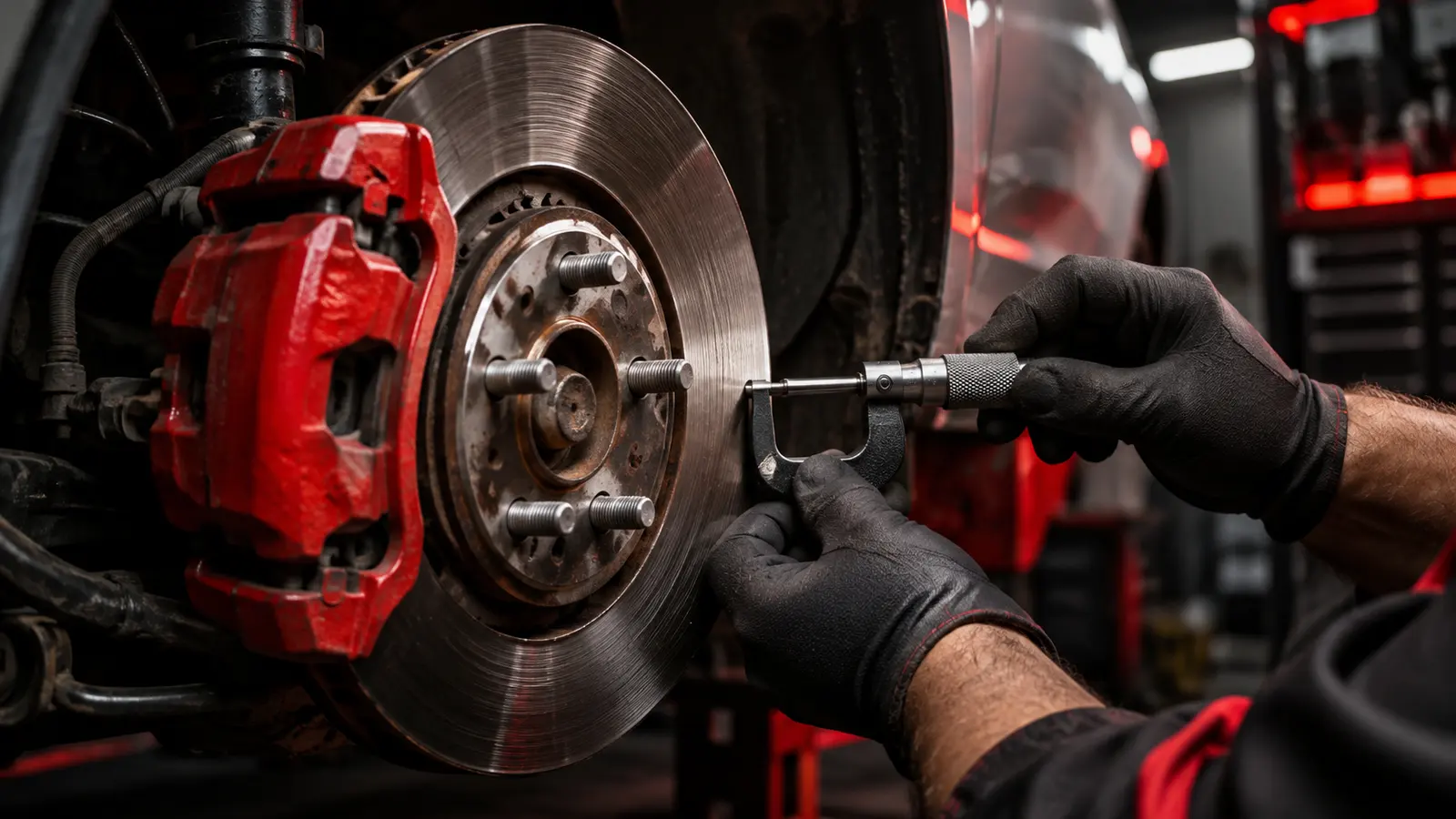
Car Brakes: The Complete Guide to How They Work, Warning Signs and Maintenance
Car brakes turn the car's movement into heat. Pressing the pedal pushes brake fluid to the wheels, where pads or shoes squeeze discs or drums. This guide explains each part, what different noises and pedal feels mean, and how to keep the system safe.
Updated November 22, 2026Read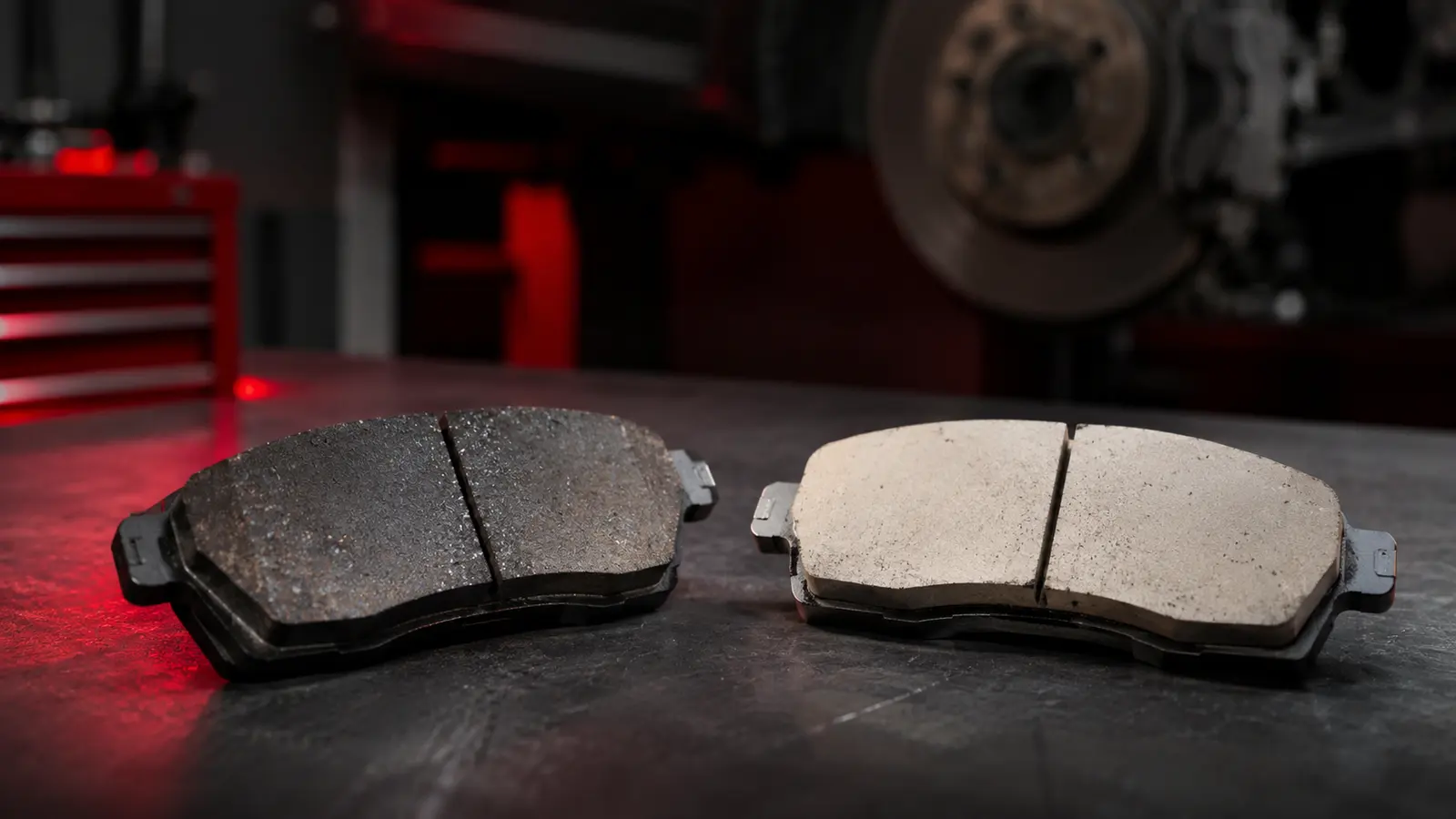 Brakes
Handbrake (Parking Brake) Not Holding: Causes
A parking brake that doesn't hold on a slope usually has stretched or seized cables, worn rear pads or drum shoes, or needs adjusting. On electronic parking brakes, a motor or software fault is possible.
Updated November 22, 2026ReadBrakesBrake Pedal Hard While Driving: Causes
If the brake pedal becomes very hard to press while the engine is running, the brake booster has lost its assistance, usually from a vacuum leak, a failed booster or a faulty vacuum pump on diesels.
Updated November 22, 2026Read