
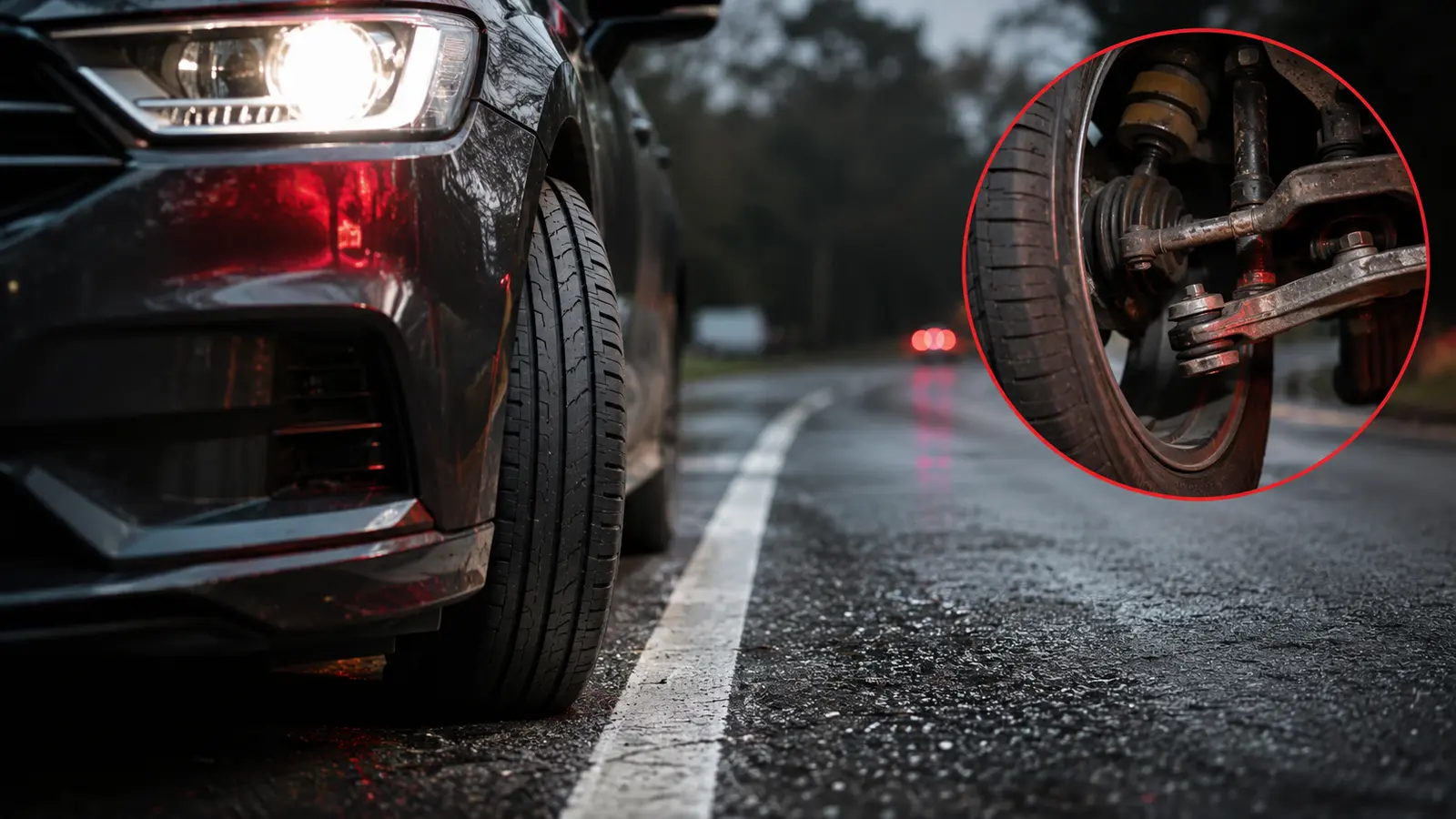
Car Pulling to One Side: Causes and Fixes
Quick answer
Uneven tyre pressures are the easiest cause to check. Misalignment, a tyre fault, a sticking brake caliper or worn suspension parts are the others.
- Topic
- Suspension & Steering
- Sections
- 8
- Reading time
- 2 min
- Applies to
- All regions
If your car pulls to one side, start with the free check: tyre pressures. After that, the usual causes are wheel misalignment, a faulty tyre, a sticking brake caliper and worn steering or suspension parts. Whether it pulls all the time or only when braking is the biggest clue.
Is it safe to drive?
A gentle drift is safe to drive to a garage. A strong pull, a pull under braking, or one that started suddenly after an impact should be checked before more driving.
Causes at a glance
| When it pulls | Likely cause |
|---|---|
| All the time, gently | Tyre pressure, alignment, road camber |
| All the time, after pothole | Alignment or bent suspension part |
| Only when braking | Sticking caliper or uneven braking |
| After new tyres | Tyre fault (conicity) |
| Worse when accelerating (front-wheel drive) | Torque steer, worn mounts |
| Wanders both ways | Worn steering joints |
Check these in order
- Check all four pressures when cold against the door placard.
- Test on a flat, empty road to rule out camber.
- Feel each wheel carefully after a drive: one much hotter suggests a dragging brake.
- Swap the front tyres side to side. If the pull changes direction, a tyre is the cause.
- Book an alignment check.
Causes explained
Tyre pressure
A softer tyre has more rolling resistance and pulls the car towards it.
Alignment
Wheel angles (toe, camber, caster) drift with wear or knocks. Uneven tyre wear is a common sign.
Sticking caliper
A caliper that doesn't release keeps braking on that side, causing pull, heat and sometimes a burning smell.
Worn steering and suspension
Worn bushes and joints let the geometry change on the move.
What a mechanic will do
They'll check tyres, inspect suspension and steering, and measure alignment on a machine. If the pull is under braking, they'll check calipers and hoses.
What affects the cost
Alignment is a standard job. Calipers and suspension arms cost more.
How to prevent it
- Check tyre pressures monthly.
- Have alignment checked after hitting a big pothole or kerb.
- Have caliper slides serviced with brake work.
Related problems
Frequently asked questions
Why does my car pull only when braking?
Usually a sticking caliper or a brake that isn't working as well on one side. It's a safety issue, so get the brakes checked.
Is a slight pull normal?
Roads are cambered so water drains, so a gentle drift towards the kerb can be normal. Test on a flat, empty road.
Can new tyres cause pulling?
Yes. A tyre with an internal fault can pull. Swapping the front tyres side to side shows whether the pull moves with the tyre.
Tools that can help
How the parts involved work
Need a mechanic?
Find rated garages near you by city, ZIP code or postcode, with directions.
About this guide
Written by Editorial Team using manufacturer documentation, government road-safety guidance and motoring-organisation advice. It explains likely causes and safe checks. It is not a diagnosis. How we write and check guides.
More suspension & steering guides
 Suspension & Steering
Car Suspension and Steering: The Complete Guide to Parts, Problems and Checks
Suspension keeps the tyres pressed to the road and the ride controlled; steering points the wheels where you want to go. This guide explains every main part, the noises and handling changes that signal wear, the checks you can do, and when to see a professional.
Updated November 22, 2026ReadSuspension & SteeringCar Pulls When Accelerating: Causes
Some pull under hard acceleration is normal in powerful front-wheel-drive cars (torque steer). Worn engine mounts, control-arm bushes, uneven tyres or alignment problems make it worse.
Updated November 22, 2026Read Suspension & Steering
Grinding Noise When Turning: Causes
Grinding while turning often means a failing wheel bearing, worn brake pads, a bent brake dust shield rubbing the disc, or a CV joint that has lost its grease.
Updated November 22, 2026Read