
Grinding Noise When Turning: Causes
Quick answer
Grinding while turning often means a failing wheel bearing, worn brake pads, a bent brake dust shield rubbing the disc, or a CV joint that has lost its grease.
- Topic
- Suspension & Steering
- Sections
- 5
- Reading time
- 1 min
- Applies to
- All regions
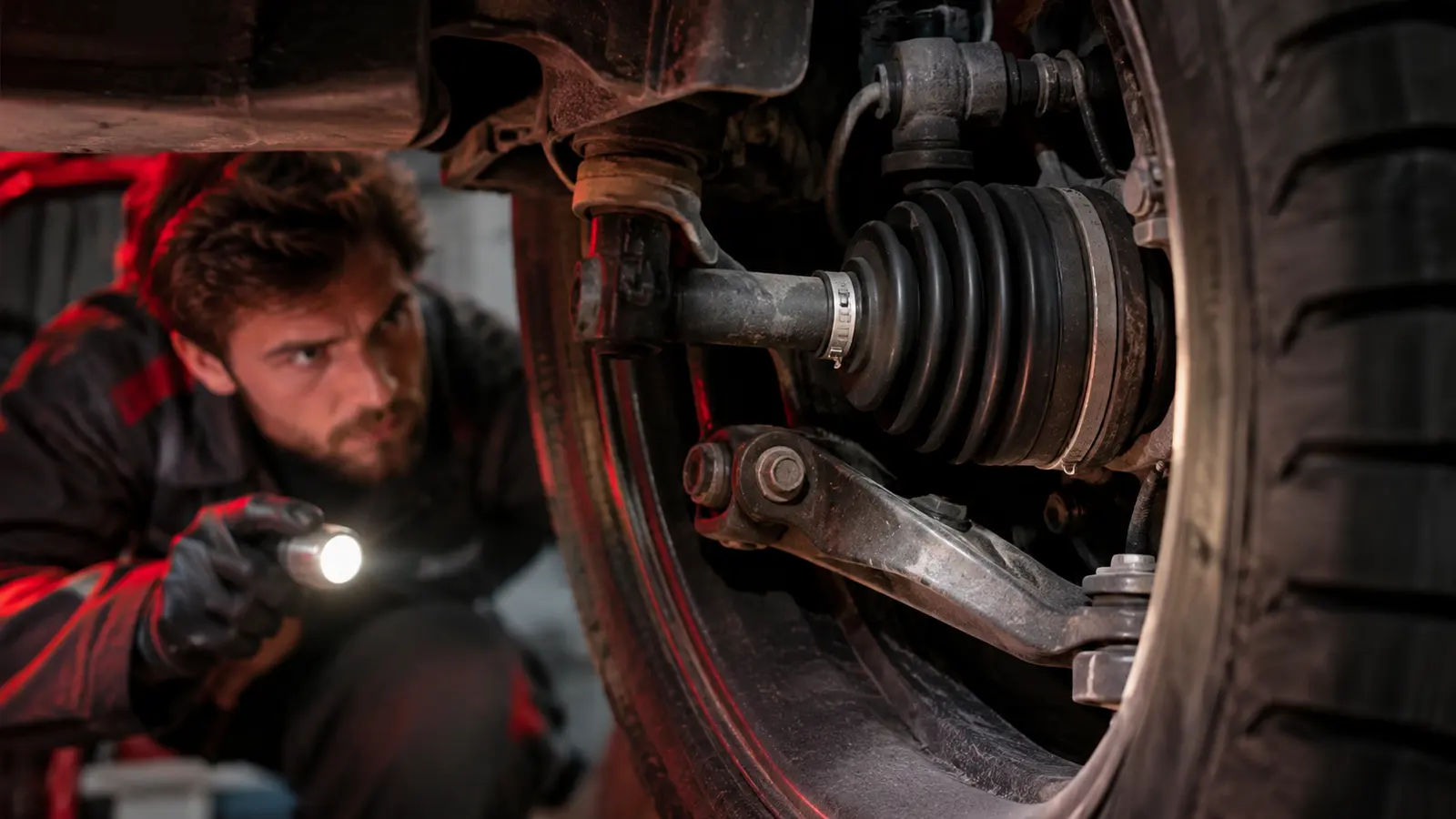
A grinding noise when turning usually means metal is rubbing on metal. Common causes are a failing wheel bearing, worn brake pads, a bent brake dust shield or a stone touching the disc, and a CV joint that has lost its grease.
Is it safe to drive?
Drive as little as possible until it's checked. Grinding can mean worn-out brakes or a bearing close to failure.
Causes at a glance
| Clue | Likely cause |
|---|---|
| Grinds when turning and braking | Worn pads, damaged disc |
| Constant light scrape, worse turning | Bent dust shield or stone |
| Growl that changes with steering at speed | Wheel bearing |
| Grind or click on full lock | CV joint |
| Grinding from power steering at full lock | Pump or low fluid |
Check these in order
- Look at pad thickness through the wheel.
- Check for a stone between the disc and shield.
- Note speed and direction: which way does it get louder?
- Check CV boots for splits.
What a mechanic will do
They'll inspect brakes, check bearings for play and roughness, and examine CV joints on a lift.
Related guides
Frequently asked questions
Is grinding worse than clicking?
Grinding usually means metal-on-metal contact and should be checked quickly.
Can a stone cause it?
Yes, a stone trapped between the disc and dust shield can grind until removed.
Tools that can help
Need a mechanic?
Find rated garages near you by city, ZIP code or postcode, with directions.
About this guide
Written by Editorial Team using manufacturer documentation, government road-safety guidance and motoring-organisation advice. It explains likely causes and safe checks. It is not a diagnosis. How we write and check guides.
More suspension & steering guides
 Suspension & Steering
Car Suspension and Steering: The Complete Guide to Parts, Problems and Checks
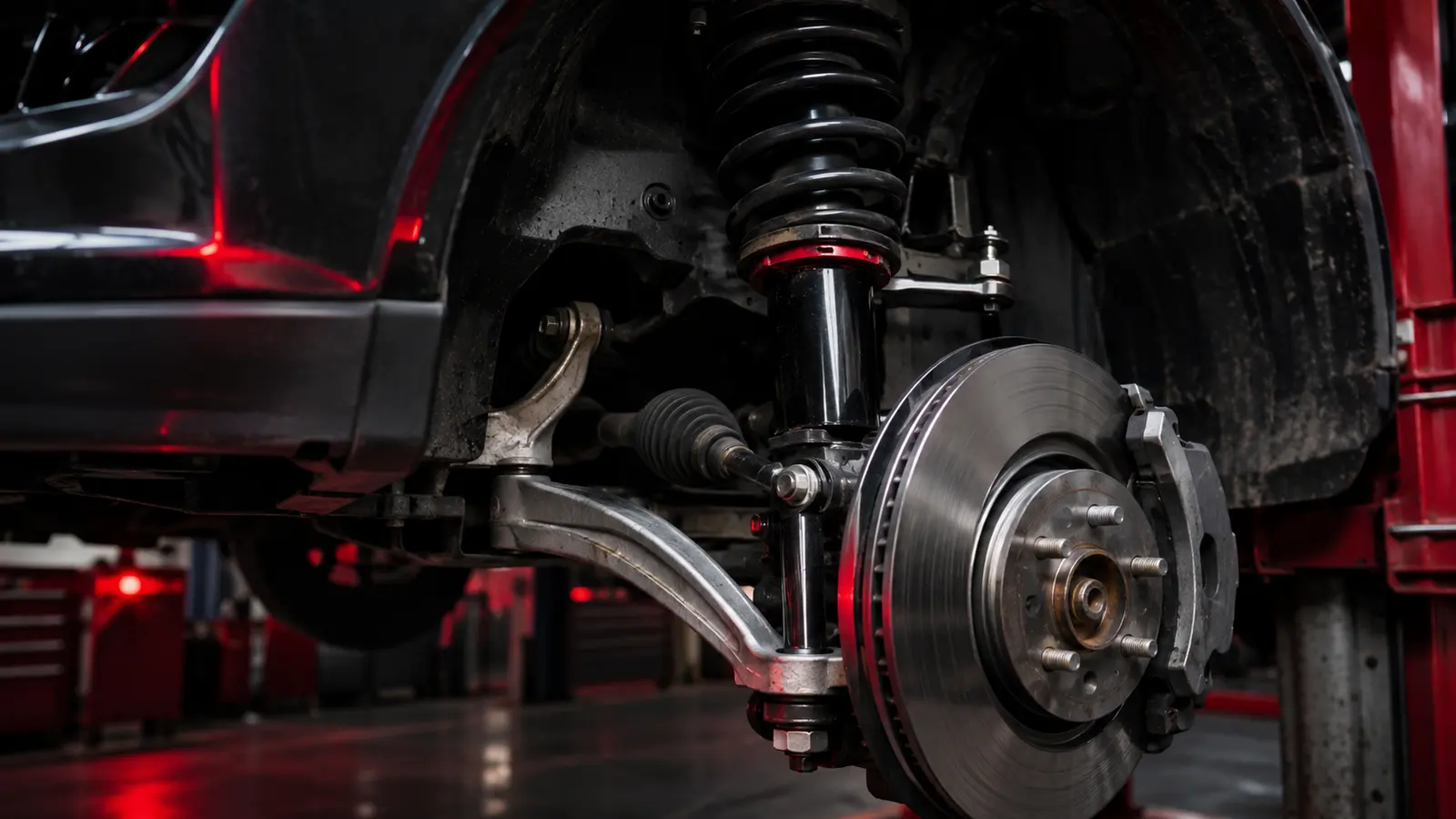
Suspension keeps the tyres pressed to the road and the ride controlled; steering points the wheels where you want to go. This guide explains every main part, the noises and handling changes that signal wear, the checks you can do, and when to see a professional.
Updated November 22, 2026Read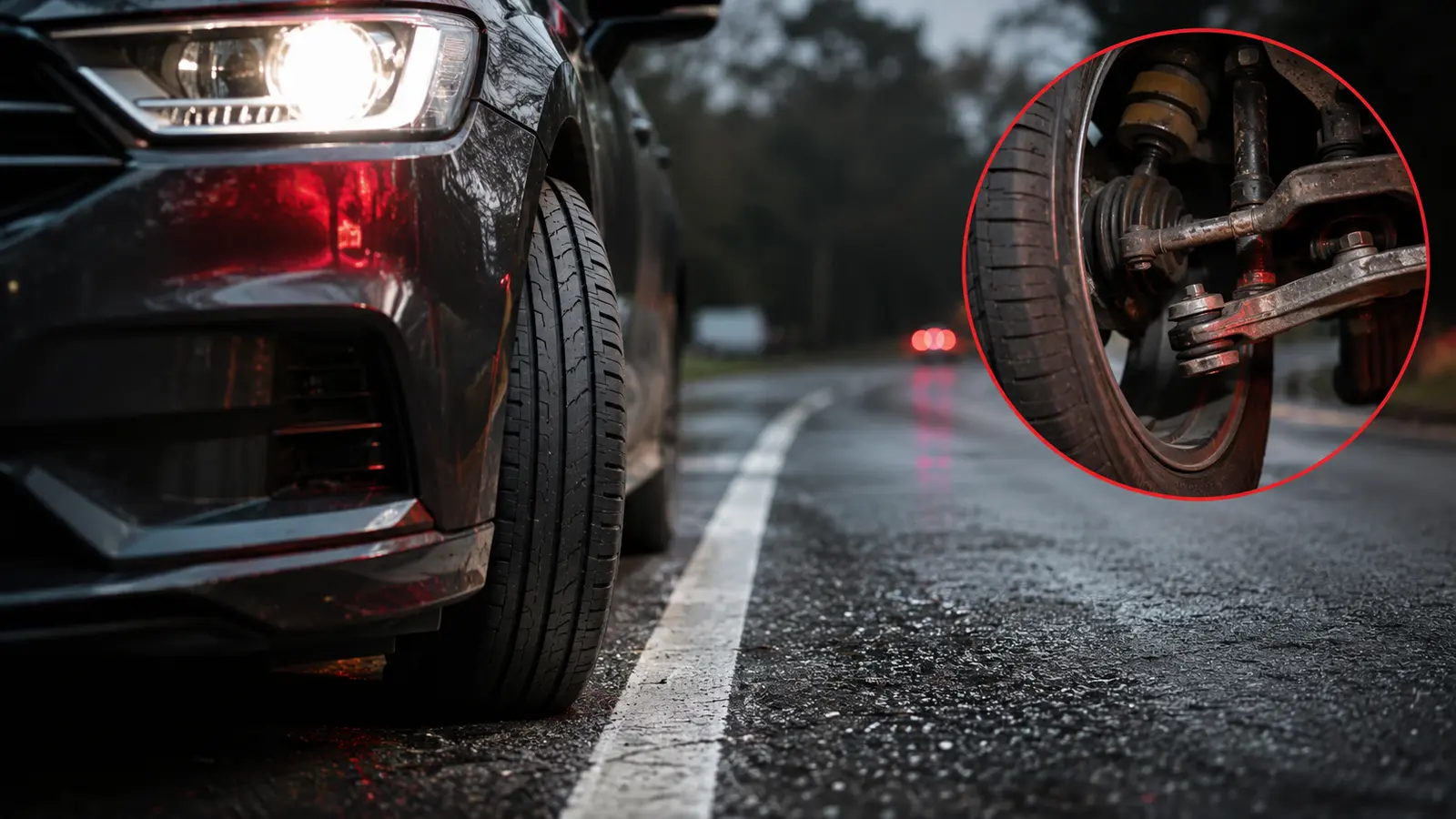 Suspension & Steering
Car Pulls When Accelerating: Causes
Some pull under hard acceleration is normal in powerful front-wheel-drive cars (torque steer). Worn engine mounts, control-arm bushes, uneven tyres or alignment problems make it worse.
Updated November 22, 2026Read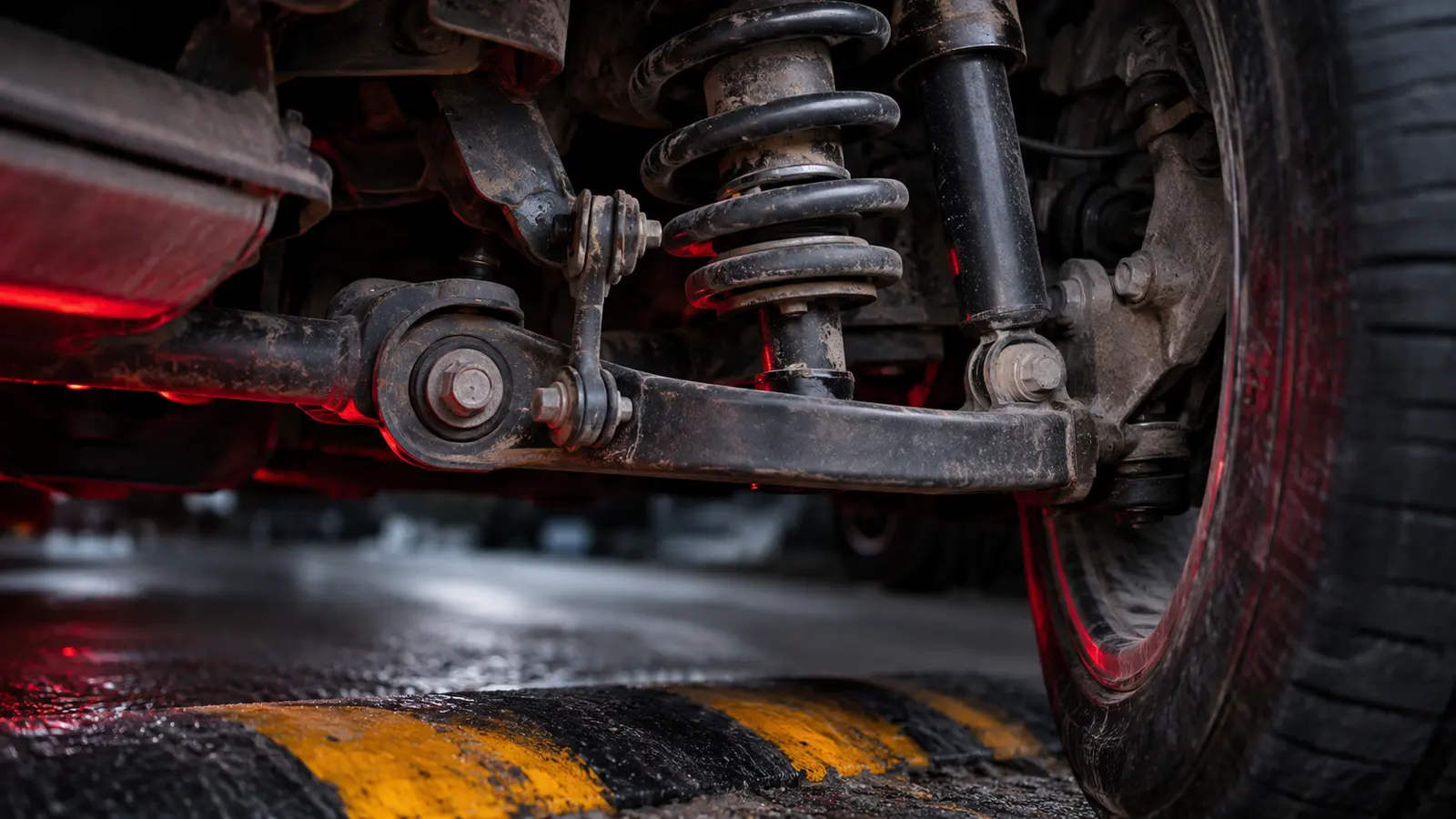 Suspension & Steering
Squeaking Noise Over Bumps: Causes
Squeaks over bumps usually come from rubber suspension bushes drying out, worn ball joints, strut top mounts or anti-roll bar bushes. Cold weather makes them worse.
Updated November 22, 2026Read