
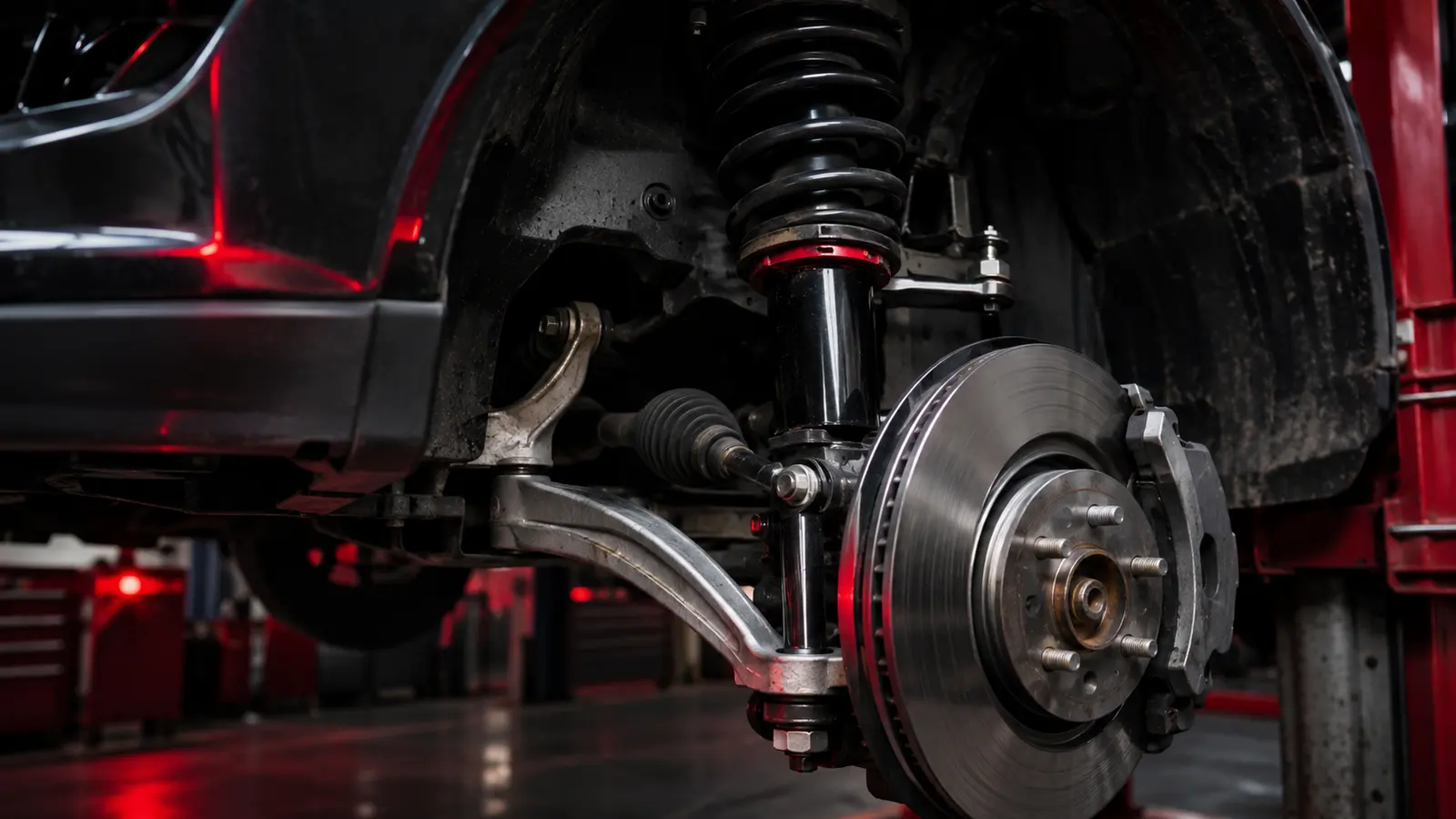
Car Suspension and Steering: The Complete Guide to Parts, Problems and Checks
Quick answer
Suspension keeps the tyres pressed to the road and the ride controlled; steering points the wheels where you want to go. This guide explains every main part, the noises and handling changes that signal wear, the checks you can do, and when to see a professional.
- Topic
- Suspension & Steering
- Sections
- 12
- Reading time
- 4 min
- Applies to
- All regions
Your car's suspension is the system of tyres, springs, shock absorbers and linkages that connects the body to the wheels. It keeps the tyres pressed to the road for grip and braking, and smooths out bumps. The steering system turns the front wheels where you point them. Because both share many parts, problems in one often show up as symptoms in the other. This AllInformations Automotive guide explains the parts, the warning signs and the checks.
Symptoms first? See clunking noise over bumps, car pulling to one side or heavy steering.
What the suspension does
Grip and control
The suspension keeps each tyre in contact with the road over bumps, which matters for steering, braking and stability.
Comfort
Springs absorb impacts; dampers stop the car bouncing afterwards.
Handling
Linkage geometry and anti-roll bars control how the body leans and how the wheels stay aligned in corners.
Springs
Coil springs
The most common type on cars. They hold the car's weight and absorb bumps. A broken coil can make the car sit low on one corner. See coil springs.
Leaf springs
Stacked steel leaves, common on pickups and vans because they carry heavy loads well. See leaf springs and coil vs leaf springs.
Shock absorbers and struts
What dampers do
Shock absorbers (dampers) control the spring's movement so the car settles quickly after a bump instead of bouncing. See shock absorbers.
Struts
A strut combines the damper with the spring and forms part of the suspension's structure, so it also affects steering geometry. See shocks vs struts.
Signs they're worn
- Bouncy, floaty ride
- Nose-diving under braking or squatting under acceleration
- Oily, leaking shock bodies
- Cupped tyre wear
See bad shock absorber symptoms and how to do a bounce test.
Arms, joints and bushes
Control arms
Control arms connect the wheel hub to the body and let the wheel move up and down. Their rubber bushes absorb vibration.
Ball joints
Ball joints let the hub pivot for steering and suspension movement. Worn joints clunk and can make steering vague.
Anti-roll bars
The anti-roll bar links both sides to reduce body lean. Worn drop links commonly knock over bumps.
The steering system
Rack and pinion
Most cars use rack-and-pinion steering: turning the wheel rotates a pinion gear that moves a toothed rack side to side. See steering rack.
Tie-rod ends
Tie-rod ends connect the rack to each wheel hub. Wear causes play, wandering and uneven tyre wear. See ball joint vs tie-rod end and how to check tie-rod ends.
Power steering
Hydraulic and electric
Older systems use a belt-driven pump and fluid; many modern cars use electric power steering, with an electric motor assisting the rack or column. See power steering and hydraulic vs electric power steering.
Common faults
Low fluid, a failing pump or an electrical fault can make steering heavy. A power steering warning light may appear on electric systems. See how to check power steering fluid.
Wheel alignment
What it is
Alignment sets the angles of the wheels (toe, camber, caster) relative to the car and road.
Signs it's out
- Car pulls to one side
- Steering wheel off centre when driving straight
- Uneven tyre wear, especially on one edge
See steering wheel off centre, tyre wear on the inside edge and how to check wheel alignment.
Alignment vs balancing
They solve different problems. See wheel balancing vs alignment.
Noises and what they mean
Sound guide
| Sound | Likely cause |
|---|---|
| Clunk over bumps | Drop links, bushes, ball joints, strut mounts |
| Creak or squeak over bumps | Dry bushes, ball joints |
| Clicking when turning | CV joint |
| Groan when turning at low speed | Power steering, strut top mounts |
| Hum that rises with speed | Wheel bearing |
See squeaking over bumps, car making noise when turning and symptoms of a bad wheel bearing.
Vibrations and handling
Vibration at speed
Often wheel balance, tyre damage or worn joints. See car shaking at high speed.
Wandering and play
Excess play in the steering points to worn tie-rod ends, rack or joints. See how to check steering play.
Checks you can do
At home
- Look at the car on level ground: does it sit level?
- Push down on each corner and watch it settle.
- Look for oily shocks and broken springs.
- Listen on a quiet road for clunks and creaks.
See how to check your car's suspension.
On a lift
A technician checks joints and bushes for play, inspects mounts and measures alignment.
Safety
Don't ignore steering problems
Loose or heavy steering, or a sudden clunk with a change in handling, needs checking before further driving. Never work under a car supported only by a jack.
Related guides
Frequently asked questions
How do I know if my shocks are worn?
Signs include a bouncy or floaty ride, nose-diving under braking, oily shock bodies and cupped tyre wear. A bounce test and inspection confirm it.
Does suspension affect braking?
Yes. Worn dampers let the tyres lose contact on bumpy roads, which can lengthen stopping distances.
Do I need an alignment after suspension work?
Often, yes, especially after replacing steering or suspension joints, struts or arms.
Tools that can help
Need a mechanic?
Find rated garages near you by city, ZIP code or postcode, with directions.
About this guide
Written by Editorial Team using manufacturer documentation, government road-safety guidance and motoring-organisation advice. It explains likely causes and safe checks. It is not a diagnosis. How we write and check guides.
More suspension & steering guides
 Suspension & Steering
Car Pulls When Accelerating: Causes
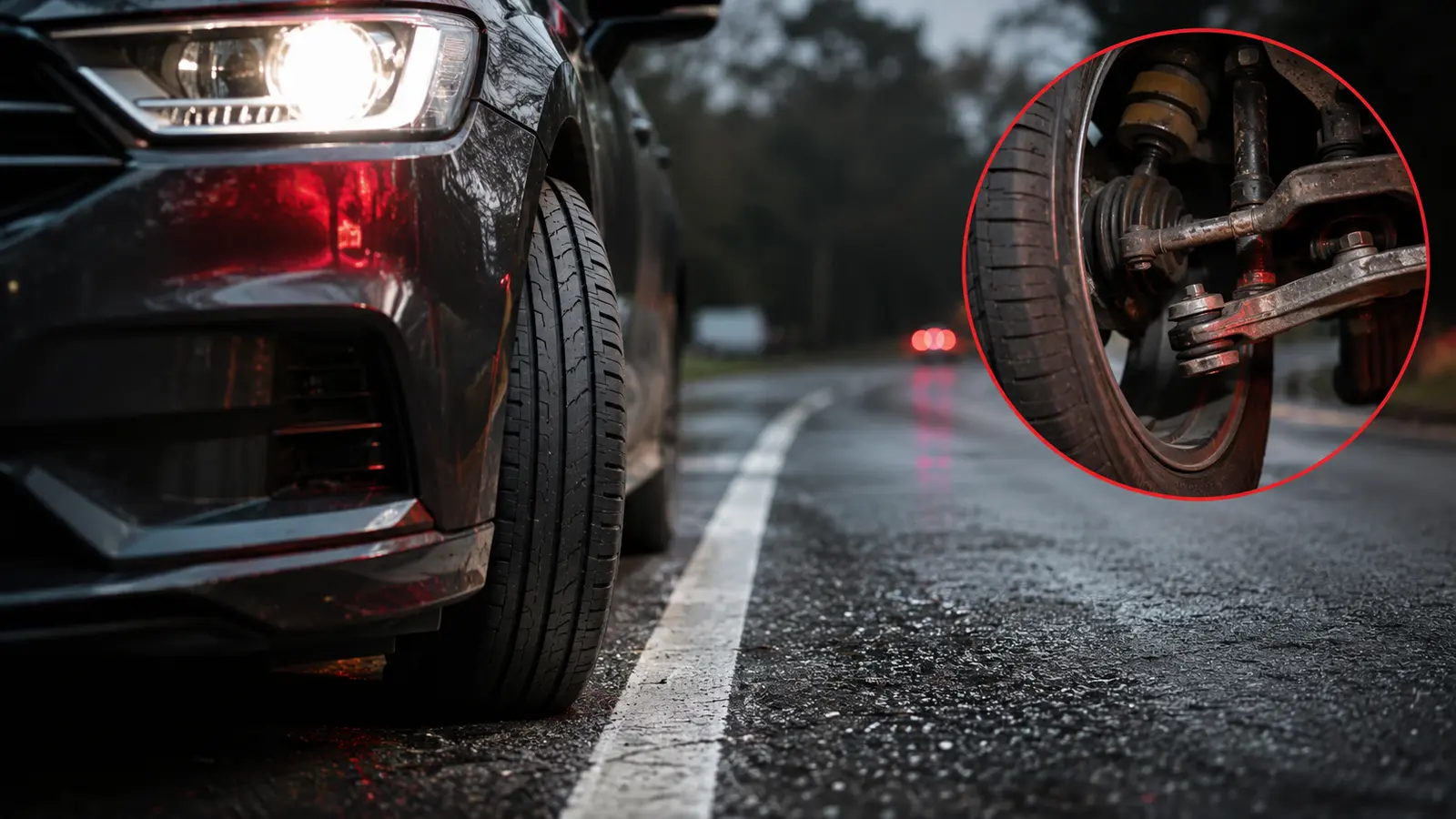
Some pull under hard acceleration is normal in powerful front-wheel-drive cars (torque steer). Worn engine mounts, control-arm bushes, uneven tyres or alignment problems make it worse.
Updated November 22, 2026Read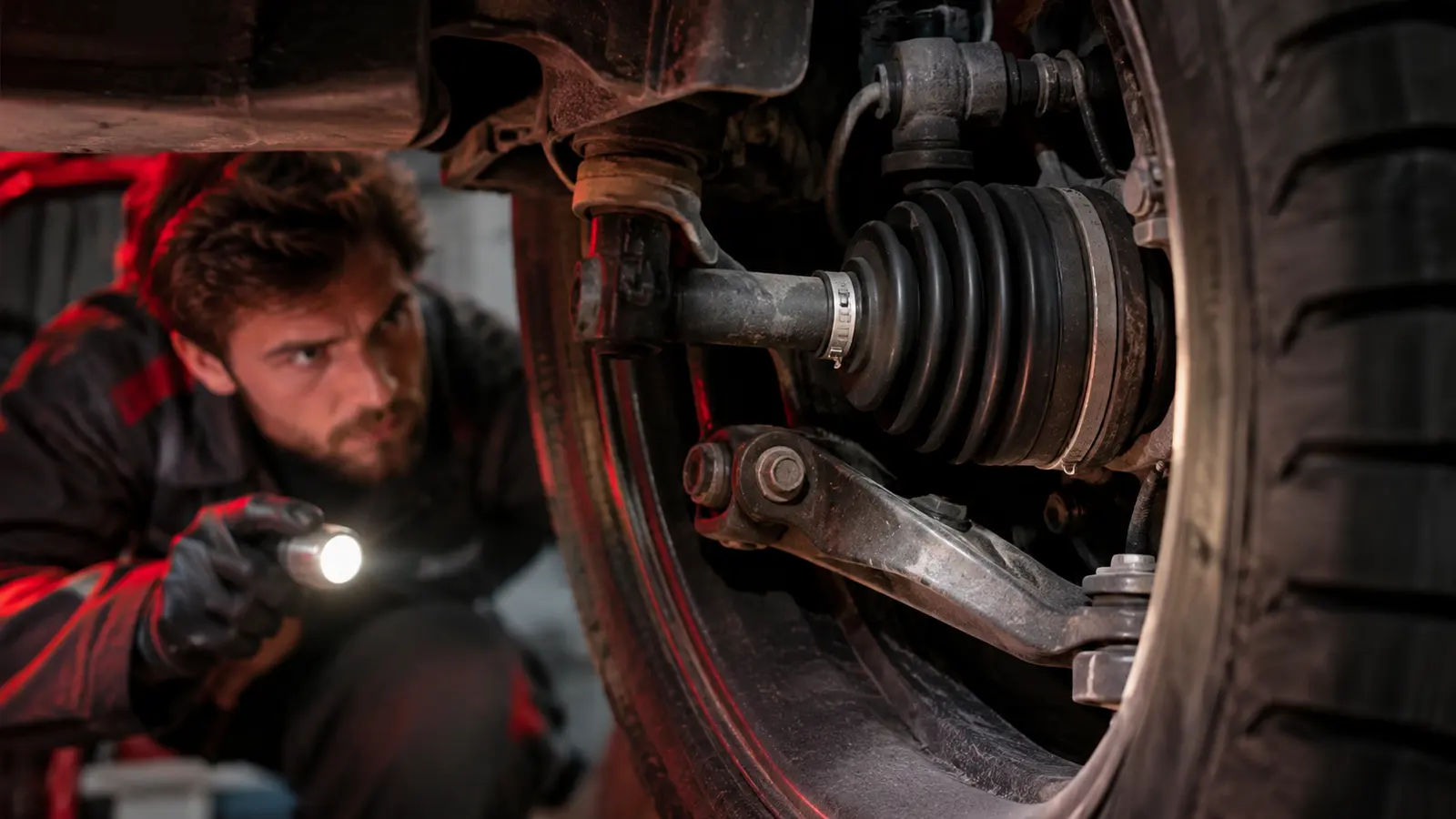 Suspension & Steering
Grinding Noise When Turning: Causes
Grinding while turning often means a failing wheel bearing, worn brake pads, a bent brake dust shield rubbing the disc, or a CV joint that has lost its grease.
Updated November 22, 2026Read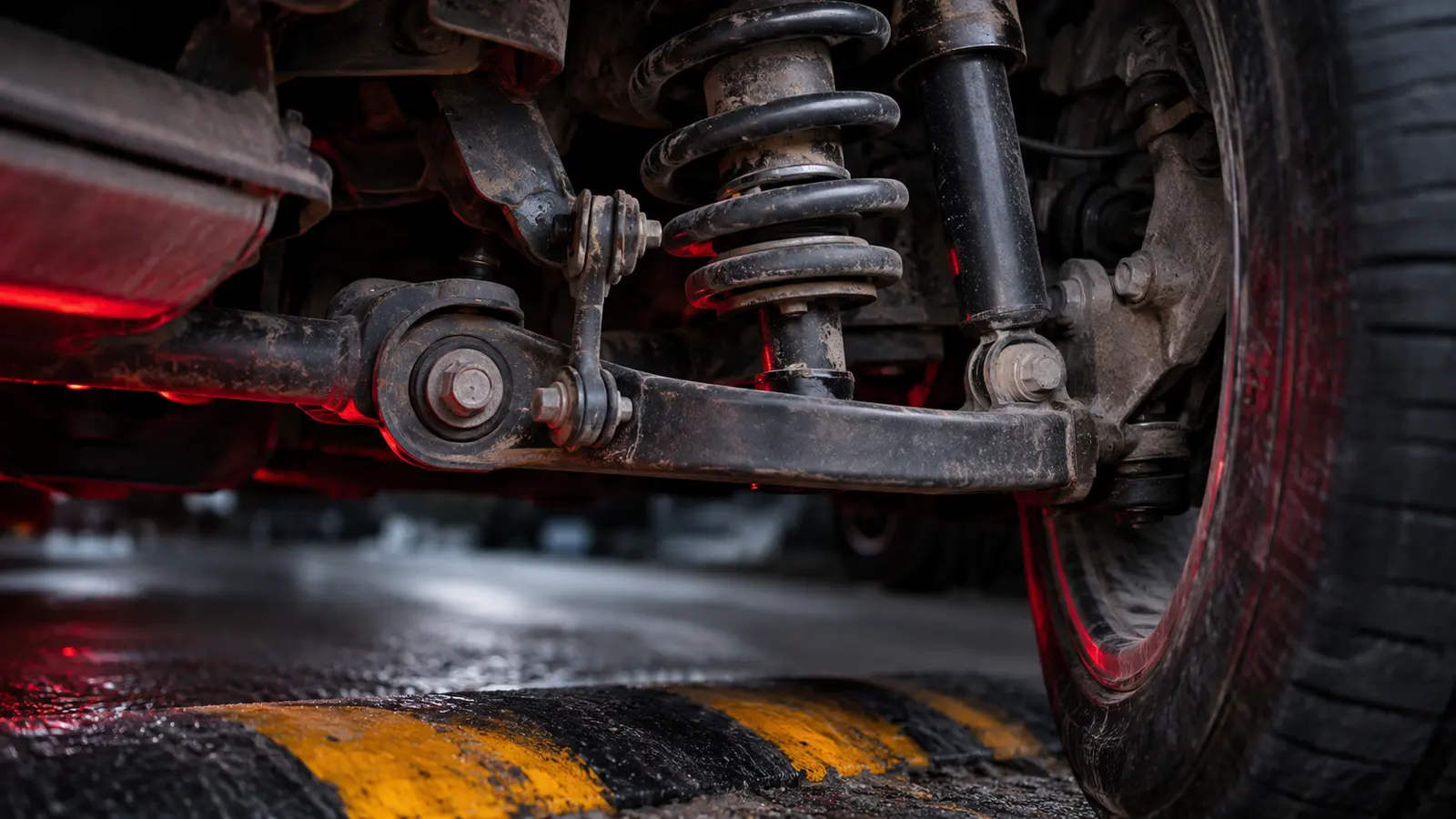 Suspension & Steering
Squeaking Noise Over Bumps: Causes
Squeaks over bumps usually come from rubber suspension bushes drying out, worn ball joints, strut top mounts or anti-roll bar bushes. Cold weather makes them worse.
Updated November 22, 2026Read