
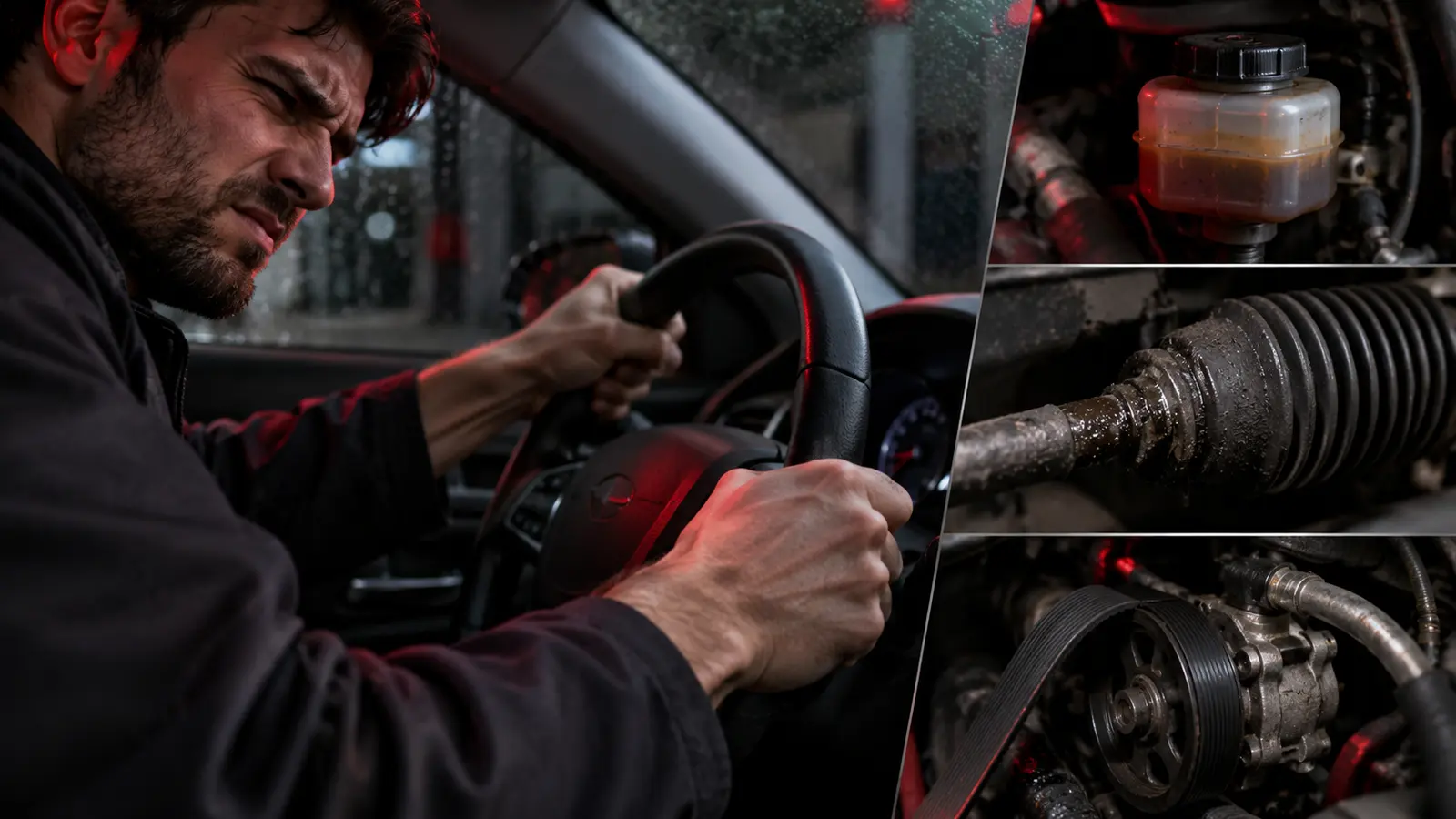
Steering Heavy or Hard to Turn: Causes
Quick answer
Heavy steering usually points to the power steering: low fluid, a failing pump or slipping belt on hydraulic systems, or a fault in electric power steering. Check tyre pressures too.
- Topic
- Suspension & Steering
- Sections
- 5
- Reading time
- 1 min
- Applies to
- All regions
Heavy steering usually means the power steering isn't helping as it should. On hydraulic systems, causes are low fluid, a failing pump or a slipping drive belt. On electric power steering (EPS), a motor or sensor fault or low battery voltage can switch assistance off. Low tyre pressure also makes steering heavier.
Is it safe to drive?
Drive carefully if you can steer safely. If assistance cut out suddenly with a warning light, stop when safe and restart. If it doesn't return, get help.
Causes at a glance
| Clue | Likely cause |
|---|---|
| Whine when turning, low fluid | Hydraulic leak, pump wear |
| Squeal at full lock | Slipping belt |
| Warning light, sudden heavy steering | Electric power steering fault |
| Heavy after battery problems | Low voltage to EPS |
| Heavy and pulling | Low tyre pressure |
| Stiff, notchy steering | Worn joints or rack |
Check these in order
- Check tyre pressures.
- Hydraulic: check fluid level and look for leaks.
- Look for warning lights.
- Listen for whining or squealing.
What a mechanic will do
They'll check fluid and pressure, inspect the belt and pump, or scan the EPS system for faults.
Related guides
Frequently asked questions
Is heavy steering dangerous?
You can still steer, but much more effort is needed, especially at low speed. Drive carefully to a garage.
Does my car have power steering fluid?
Only if it has hydraulic steering. Many modern cars use electric power steering with no fluid.
Why is steering heavy when cold?
Cold fluid is thicker. If it improves quickly, it may be minor; if not, check fluid and the pump.
Tools that can help
How the parts involved work
Need a mechanic?
Find rated garages near you by city, ZIP code or postcode, with directions.
About this guide
Written by Editorial Team using manufacturer documentation, government road-safety guidance and motoring-organisation advice. It explains likely causes and safe checks. It is not a diagnosis. How we write and check guides.
More suspension & steering guides
 Suspension & Steering
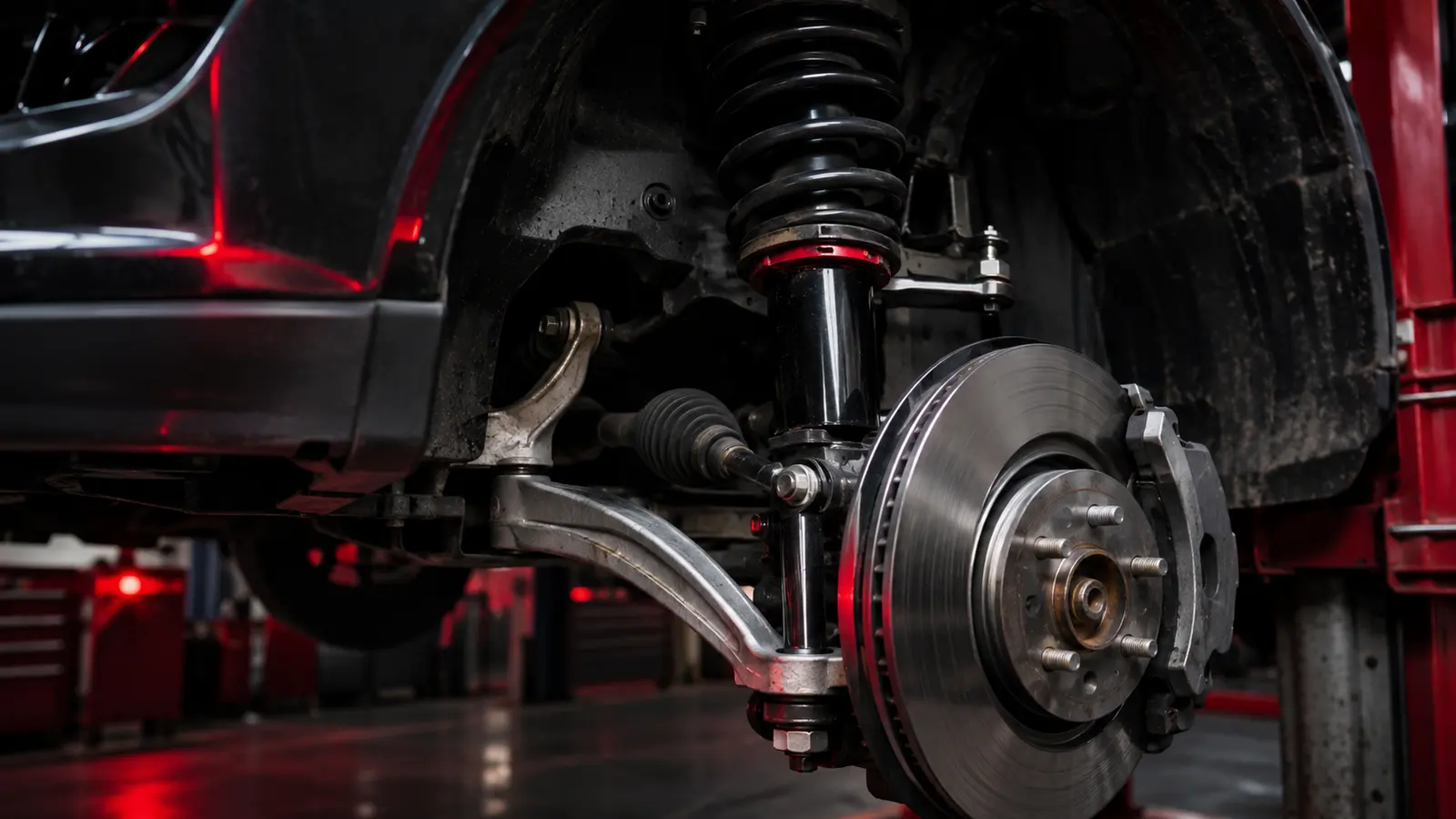
Car Suspension and Steering: The Complete Guide to Parts, Problems and Checks
Suspension keeps the tyres pressed to the road and the ride controlled; steering points the wheels where you want to go. This guide explains every main part, the noises and handling changes that signal wear, the checks you can do, and when to see a professional.
Updated November 22, 2026Read Suspension & Steering
Car Pulls When Accelerating: Causes
Some pull under hard acceleration is normal in powerful front-wheel-drive cars (torque steer). Worn engine mounts, control-arm bushes, uneven tyres or alignment problems make it worse.
Updated November 22, 2026Read Suspension & Steering
Grinding Noise When Turning: Causes
Grinding while turning often means a failing wheel bearing, worn brake pads, a bent brake dust shield rubbing the disc, or a CV joint that has lost its grease.
Updated November 22, 2026Read