
Quick answer
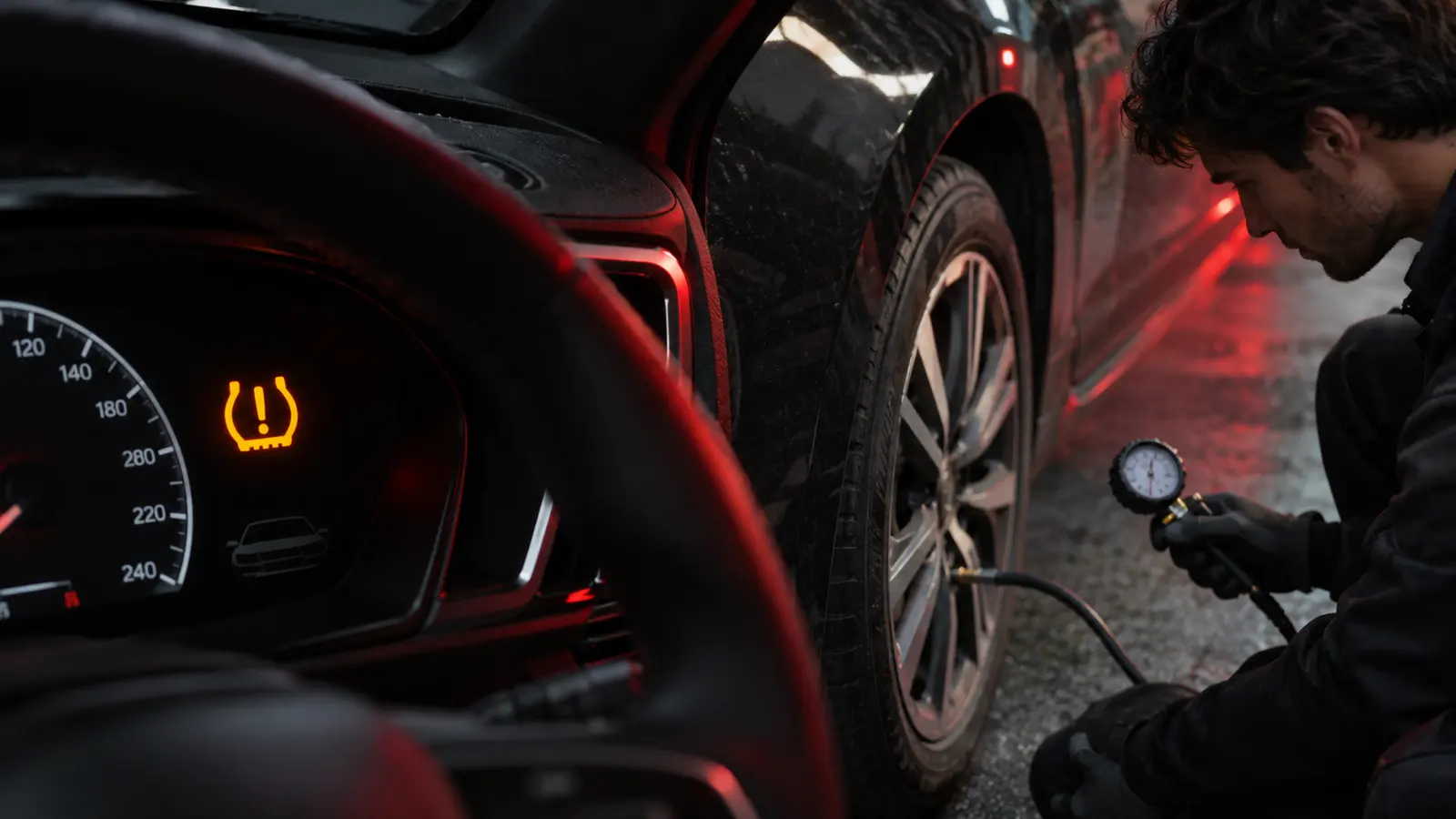
A steady tyre pressure (TPMS) light means at least one tyre is low. If it flashes for about a minute and then stays on, the system itself usually has a fault.
- Topic
- Tyres & Wheels
- Sections
- 10
- Reading time
- 2 min
- Applies to
- All regions
A steady tyre pressure light (TPMS) means at least one tyre is significantly under-inflated. Check all tyres with a gauge and inflate them to the pressure on the door-jamb placard. If the light flashes for about a minute and then stays on, the monitoring system itself has a fault, often a sensor battery.
Is it safe to drive?
Drive slowly to the nearest air pump. If a tyre is visibly flat, or the car pulls or feels unstable, stop and change the wheel or call for help. Driving on a very low tyre can destroy it.
Light patterns at a glance
| What you see | Meaning |
|---|---|
| Steady light | Low pressure in one or more tyres |
| Flashes ~60–90 s, then steady | TPMS fault (sensor, battery, receiver) |
| Light after cold night, gone later | Borderline pressure; top up |
| Light after tyre change | Sensor not recognised or not reset |
Check these in order
- Check all four tyres cold with a gauge (and the spare if monitored).
- Inflate to the placard pressure, not the maximum on the tyre wall.
- Inspect for nails or damage.
- Reset the system if your car needs it (see handbook).
- If it flashes, have the sensors checked.
How TPMS works
Direct systems have a sensor in each wheel. Indirect systems use the ABS wheel-speed sensors to spot a tyre turning faster because it's lower.
Causes explained
Low pressure
Slow punctures, valve leaks, temperature drops and natural seepage.
Sensor faults
Direct-system sensors have batteries that last several years. Damage during a tyre change is common.
Not reset
Indirect systems need recalibrating after inflating or rotating tyres.
What a mechanic will do
They'll check pressures, find leaks, scan the TPMS sensors and program new ones if needed.
What affects the cost
Puncture repairs are cheap if the damage is in the tread area. Sensors cost more per wheel.
How to prevent it
- Check pressures monthly and before long trips.
- Check more often when temperatures drop.
Regional notes
TPMS has been required on new cars in the US since the late 2000s and in the EU and UK since the mid-2010s. US drivers say "tire"; UK and Australian drivers say "tyre".
Related problems
Frequently asked questions
Why does the tyre light come on when it's cold?
Air pressure drops as temperature falls. A cold morning can push a borderline tyre below the warning threshold.
How do I reset the tyre pressure light?
Inflate all tyres to the placard pressure. Some cars reset after a short drive; others need a reset button or menu option.
Is the spare tyre monitored?
On some cars, yes. Check the spare if the light stays on after inflating the four road tyres.
Tools that can help
How the parts involved work
Need a mechanic?
Find rated garages near you by city, ZIP code or postcode, with directions.
About this guide
Written by Editorial Team using manufacturer documentation, government road-safety guidance and motoring-organisation advice. It explains likely causes and safe checks. It is not a diagnosis. How we write and check guides.
More tyres & wheels guides
 Tyres & Wheels
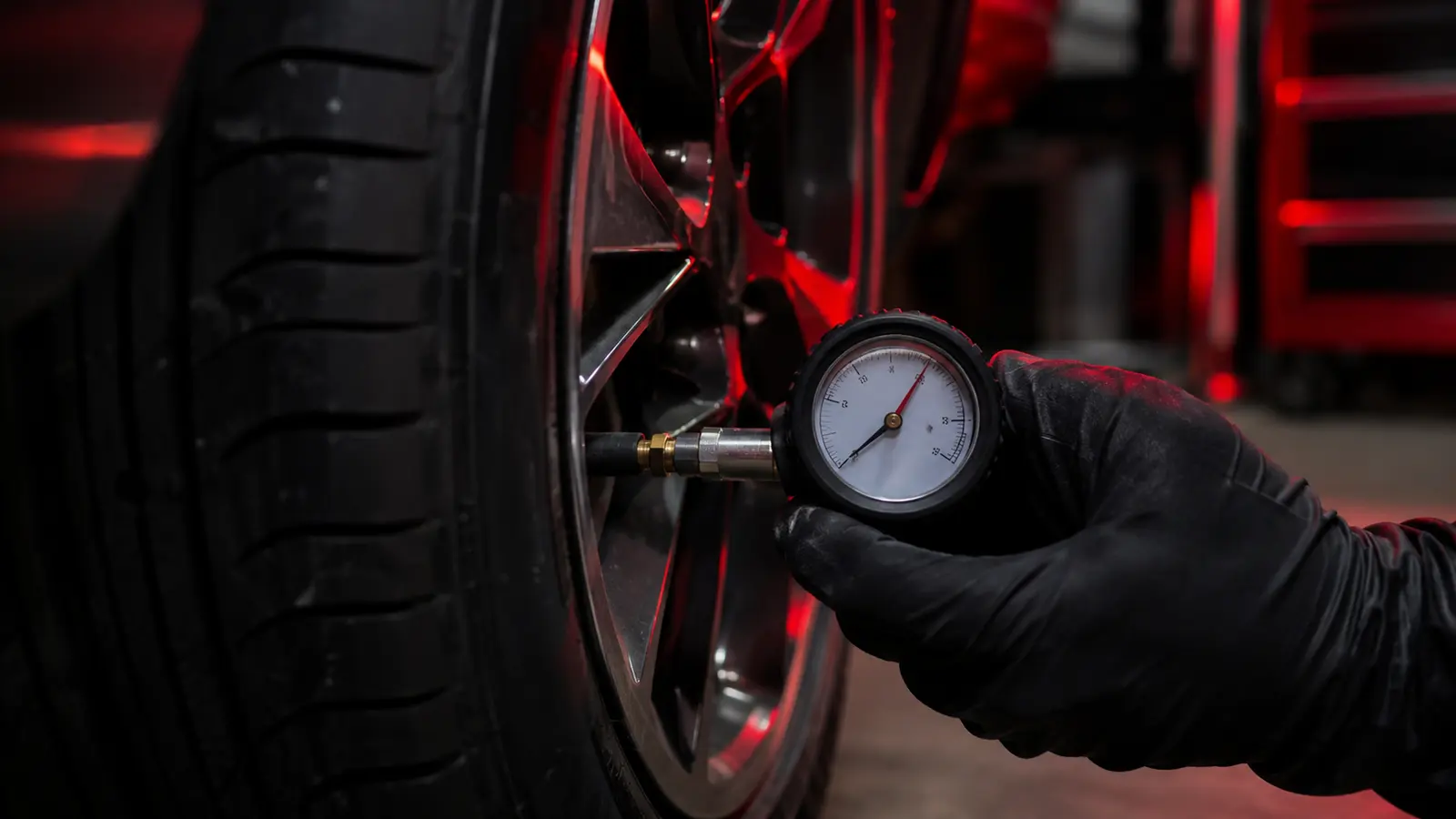
Car Tyres (Tires): The Complete Guide to Sizes, Pressure, Tread and Safety
Tyres are the only part of the car touching the road. This guide explains how to read the sidewall, set the right pressure, check tread depth against the legal limit, choose between seasonal tyres, recognise damage and make tyres last.
Updated November 22, 2026ReadTyres & WheelsIs It Safe to Drive With a Nail in Your Tyre (Tire)?
If you find a nail in your tyre, leave it in (it partly plugs the hole), check the pressure, and drive gently and directly to a tyre shop. Many punctures in the central tread can be repaired; damage near or in the sidewall usually means a new tyre.
Updated November 22, 2026Read Tyres & Wheels
How Long Do Tyres Last?
Tyres wear out by tread or by age. Tread life varies hugely with driving, car and tyre type. Many makers also advise inspecting older tyres and replacing them after a number of years regardless of tread.
Updated November 22, 2026Read