
Car Tyres (Tires): The Complete Guide to Sizes, Pressure, Tread and Safety
Quick answer
Tyres are the only part of the car touching the road. This guide explains how to read the sidewall, set the right pressure, check tread depth against the legal limit, choose between seasonal tyres, recognise damage and make tyres last.
- Topic
- Tyres & Wheels
- Sections
- 10
- Reading time
- 5 min
- Applies to
- All regions
Car tyres (tires) are the only part of your car touching the road, so their size, pressure, tread and condition directly affect braking, grip and handling. This AllInformations Automotive guide brings it all together: reading the sidewall, setting pressures, checking tread depth, choosing seasonal tyres, spotting damage and making tyres last.
Reading the tyre sidewall
The size code
A typical size reads like 205/55 R16 91V:
| Part | Meaning |
|---|---|
| 205 | Section width in millimetres |
| 55 | Aspect ratio: sidewall height as a percentage of width |
| R | Radial construction |
| 16 | Wheel (rim) diameter in inches |
| 91 | Load index |
| V | Speed rating |
Step-by-step help is in how to read tyre size.
Load index
The load index is a two- or three-digit code that cross-references a table giving the maximum load each tyre can carry at a given pressure. Replacements should meet or exceed the original.
Speed rating
The letter after the load index is the speed rating. Fit at least the rating your car's maker specifies.
The date code
At the end of the DOT number is a four-digit code: the first two digits are the week, the last two the year of manufacture. See how long do tyres last.
Winter markings
M+S describes a mud-and-snow tread pattern. The three-peak mountain snowflake shows the tyre passed a snow traction test. See the three-peak mountain snowflake symbol.
Tyre pressure
Why it matters
Correct pressure gives the designed contact patch for grip, braking and even wear. Under-inflation also increases rolling resistance and fuel use.
Where to find the right figure
NHTSA advises using the vehicle maker's recommended pressure, found in the owner's manual and on a label on the driver's door frame, not the maximum printed on the tyre.
How to check
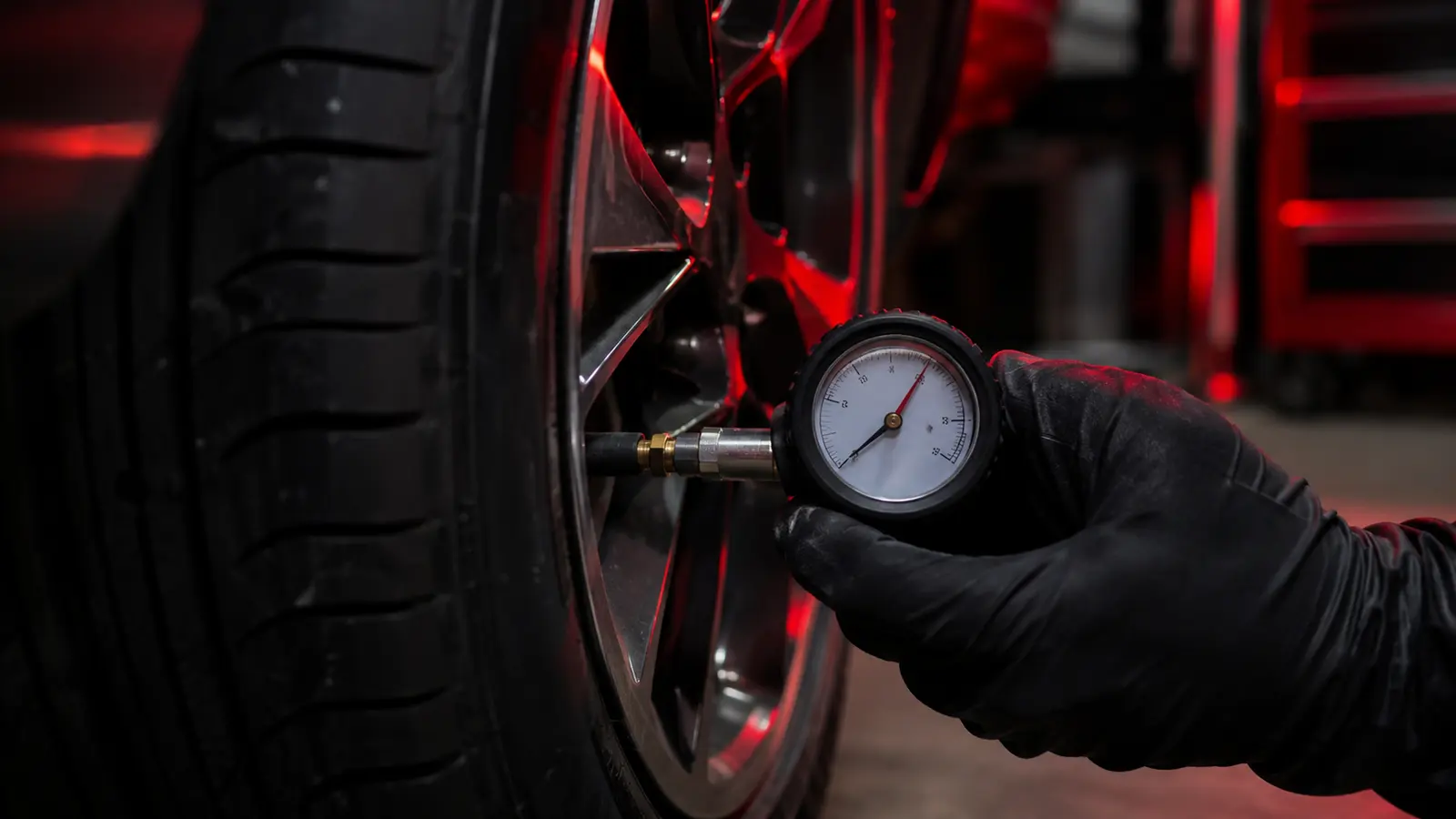
Check when cold (NHTSA suggests not having driven for at least three hours) with a reliable gauge. See how to check tyre pressure and how to choose a tyre pressure gauge.
Cold weather
Pressure drops as temperatures fall, which is why warning lights often appear on the first cold morning. See tyre pressure in cold weather.
TPMS warnings
The tyre pressure monitoring system warns when a tyre is significantly low. See the tyre pressure light, tyre pressure light on and how TPMS sensors work.
Tread depth
The legal minimum
In the UK, the Highway Code states that cars must have a tread depth of at least 1.6 mm across the central three-quarters of the tread and around the entire circumference. Other countries set their own limits.
Recommended depth
NHTSA recommends at least 2/32 inch and describes the penny test: place a penny in the tread with Lincoln's head upside down, and if you can see the top of his head, it's time for new tyres. Many safety organisations advise replacing tyres before they reach the legal minimum, especially for wet and winter grip.
How to measure
Use a tread depth gauge or the wear bars moulded into the grooves. See how to check tyre tread depth.
Uneven wear and what it means
Wear patterns
| Pattern | Likely cause |
|---|---|
| Both edges worn | Under-inflation |
| Centre worn | Over-inflation |
| One edge worn | Alignment (camber or toe) |
| Cupping or scalloping | Worn suspension or imbalance |
| Flat spots | Heavy braking lock-up |
Full detail: uneven tyre wear causes and tyre wear on the inside edge.
Alignment and balancing
Alignment sets the wheel angles; balancing evens out weight around the wheel. They fix different problems. See wheel balancing vs wheel alignment and how to check wheel alignment.
Seasonal tyres
Summer, all-season, all-weather and winter
Winter tyres use softer compounds and more siping for cold, snow and ice; all-weather tyres are a year-round compromise that often carries the snowflake mark; all-season tyres often carry only M+S. See winter vs all-season tyres and all-weather vs all-season.
Fit a full set
Mixing winter and non-winter tyres front to rear can make the car's handling unpredictable. Fit four of the same type.
Damage and punctures
Punctures
Many punctures in the central tread can be repaired; damage in or near the sidewall usually can't. See driving with a nail in your tyre and slow puncture signs.
Sidewall bulges
A bulge means the internal structure is damaged and the tyre can fail. Replace it. See tyre sidewall bulge.
Run-flat tyres
Run-flats can be driven a limited distance after losing pressure. See run-flat vs regular tyres.
Making tyres last
Rotation
Swapping tyres between positions evens out wear. See how often to rotate tyres and how to rotate tyres.
Driving style
Harsh acceleration, braking and cornering all speed up wear.
Checks
Check pressures monthly, inspect for damage, and have alignment checked after hitting a kerb or pothole hard.
Wheels
Steel vs alloy
Steel wheels are tough and cheap; alloys are lighter and more stylish but can crack or bend. See steel vs alloy wheels.
Wheel bearings and hubs
A humming that changes with speed may be a wheel bearing rather than a tyre. See symptoms of a bad wheel bearing.
Changing a flat
Do it safely
Get well off the road, use hazards and a warning triangle where allowed, and follow the handbook's jacking points. See how to change a flat tyre.
Related guides
Frequently asked questions
What's the legal minimum tread depth?
In the UK, at least 1.6 mm across the central three-quarters of the tread, around the whole circumference. Other countries set their own limits; NHTSA recommends at least 2/32 inch in the US.
Which pressure should I use?
The vehicle maker's figure, on the placard in the driver's door frame or in the handbook, not the maximum printed on the tyre.
How do I tell a tyre's age?
Look for the four-digit date code at the end of the DOT number: the first two digits are the week, the last two the year.
Tools that can help
Need a mechanic?
Find rated garages near you by city, ZIP code or postcode, with directions.
About this guide
Written by Editorial Team using manufacturer documentation, government road-safety guidance and motoring-organisation advice. It explains likely causes and safe checks. It is not a diagnosis. How we write and check guides.
More tyres & wheels guides
Tyres & WheelsIs It Safe to Drive With a Nail in Your Tyre (Tire)?
If you find a nail in your tyre, leave it in (it partly plugs the hole), check the pressure, and drive gently and directly to a tyre shop. Many punctures in the central tread can be repaired; damage near or in the sidewall usually means a new tyre.
Updated November 22, 2026Read Tyres & Wheels
How Long Do Tyres Last?
Tyres wear out by tread or by age. Tread life varies hugely with driving, car and tyre type. Many makers also advise inspecting older tyres and replacing them after a number of years regardless of tread.
Updated November 22, 2026ReadTyres & WheelsTyre Pressure in Cold Weather: What Changes
Air contracts as it cools, so tyre pressures drop on cold mornings, often enough to trigger the tyre pressure light. Check and set pressures cold, to the placard figure.
Updated November 22, 2026Read