
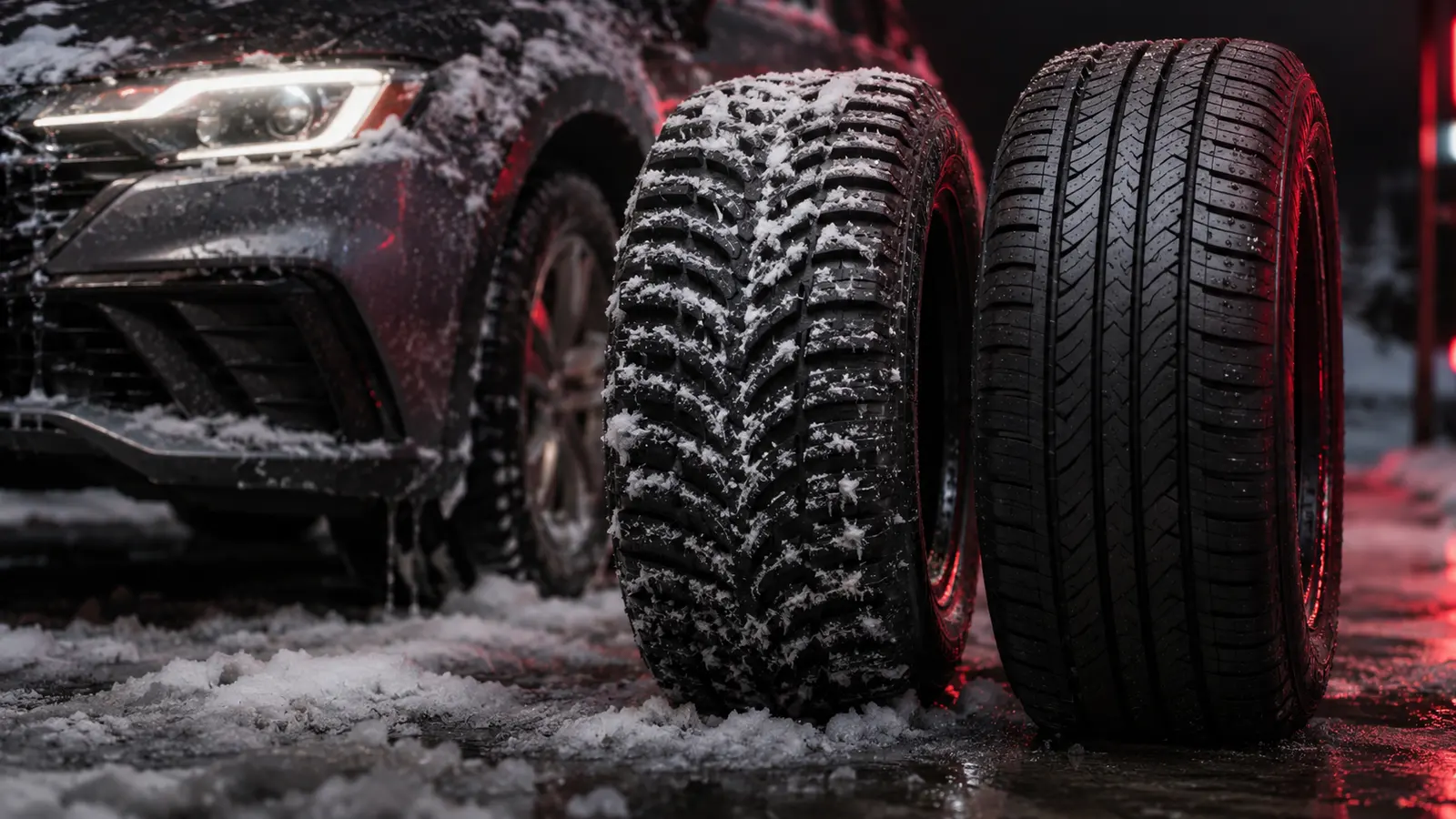
Winter Tyres vs All-Season Tyres: Which Do You Need?
Quick answer
Winter tyres stay softer in the cold and grip better on snow and ice. All-season tyres are a compromise. Where winters are cold and snowy, winter tyres are the safer choice, and some provinces require them.
- Topic
- Tyres & Wheels
- Sections
- 6
- Reading time
- 1 min
- Applies to
- Canada
Winter tyres use softer rubber that stays flexible in the cold and tread with many sipes that bites into snow and ice. All-season tyres are a compromise that work across conditions but lose grip in real winter. Where winters are cold and snowy, winter tyres are the safer choice, and Quebec requires them from 1 December to 15 March. British Columbia requires them on many highways from 1 October.
Comparison at a glance
| Feature | Winter | All-season | All-weather |
|---|---|---|---|
| Rubber in cold | Soft, flexible | Hardens | In between |
| Snow and ice grip | Best | Limited | Good |
| Mountain snowflake symbol | Yes | Usually no | Yes |
| Summer use | Not recommended | Yes | Yes |
When to fit them
Many drivers use about 7 °C as the switch-over point: below that, winter rubber grips better. Fit before the first snow.
What to look for
- The three-peak mountain snowflake (3PMSF) symbol.
- Good tread depth: winter grip drops as tread wears.
- A full set of four. Never mix winter and non-winter tyres on different axles.
Cost and storage
A second set of wheels makes seasonal changes quicker and cheaper over time.
Regional notes
Rules vary by province and state. Check your local requirements. In the UK and much of Australia, all-season or all-weather tyres are usually enough.
Related guides
Frequently asked questions
When should I fit winter tyres?
A common rule of thumb is when temperatures stay below about 7 °C, when winter tyre rubber starts to outperform all-season rubber.
What is the three-peak mountain snowflake symbol?
A symbol on the sidewall showing the tyre meets a standard for snow traction. It's the mark to look for on winter tyres.
Are all-weather tyres the same as all-season?
No. All-weather tyres usually carry the mountain snowflake symbol and suit year-round use in moderate winters.
Tools that can help
How the parts involved work
Need a mechanic?
Find rated garages near you by city, ZIP code or postcode, with directions.
About this guide
Written by Editorial Team using manufacturer documentation, government road-safety guidance and motoring-organisation advice. It explains likely causes and safe checks. It is not a diagnosis. How we write and check guides.
More tyres & wheels guides
 Tyres & Wheels
Car Tyres (Tires): The Complete Guide to Sizes, Pressure, Tread and Safety
Tyres are the only part of the car touching the road. This guide explains how to read the sidewall, set the right pressure, check tread depth against the legal limit, choose between seasonal tyres, recognise damage and make tyres last.
Updated November 22, 2026ReadTyres & WheelsIs It Safe to Drive With a Nail in Your Tyre (Tire)?
If you find a nail in your tyre, leave it in (it partly plugs the hole), check the pressure, and drive gently and directly to a tyre shop. Many punctures in the central tread can be repaired; damage near or in the sidewall usually means a new tyre.
Updated November 22, 2026Read Tyres & Wheels
How Long Do Tyres Last?
Tyres wear out by tread or by age. Tread life varies hugely with driving, car and tyre type. Many makers also advise inspecting older tyres and replacing them after a number of years regardless of tread.
Updated November 22, 2026Read