
Is It Safe to Drive With a Nail in Your Tyre (Tire)?
Quick answer
If you find a nail in your tyre, leave it in (it partly plugs the hole), check the pressure, and drive gently and directly to a tyre shop. Many punctures in the central tread can be repaired; damage near or in the sidewall usually means a new tyre.
- Topic
- Tyres & Wheels
- Sections
- 5
- Reading time
- 1 min
- Applies to
- All regions
If you spot a nail in your tyre (tire), don't panic and don't pull it out. The nail often partly plugs the hole. Check the pressure, and if it's holding, drive gently and directly to a tyre shop. Many punctures in the central tread can be repaired; damage in or near the sidewall usually can't.
Is it safe to drive?
| Situation | What to do |
|---|---|
| Pressure normal, nail in tread | Drive gently to a tyre shop soon |
| Slowly losing pressure | Top up and go straight to a tyre shop |
| Pressure dropping fast or flat | Don't drive; fit the spare or call for help |
| Nail in sidewall or shoulder | Don't rely on it; replace the tyre |
Driving on a very under-inflated tyre damages it internally, which can rule out a repair and risk a blowout.
Check the pressure
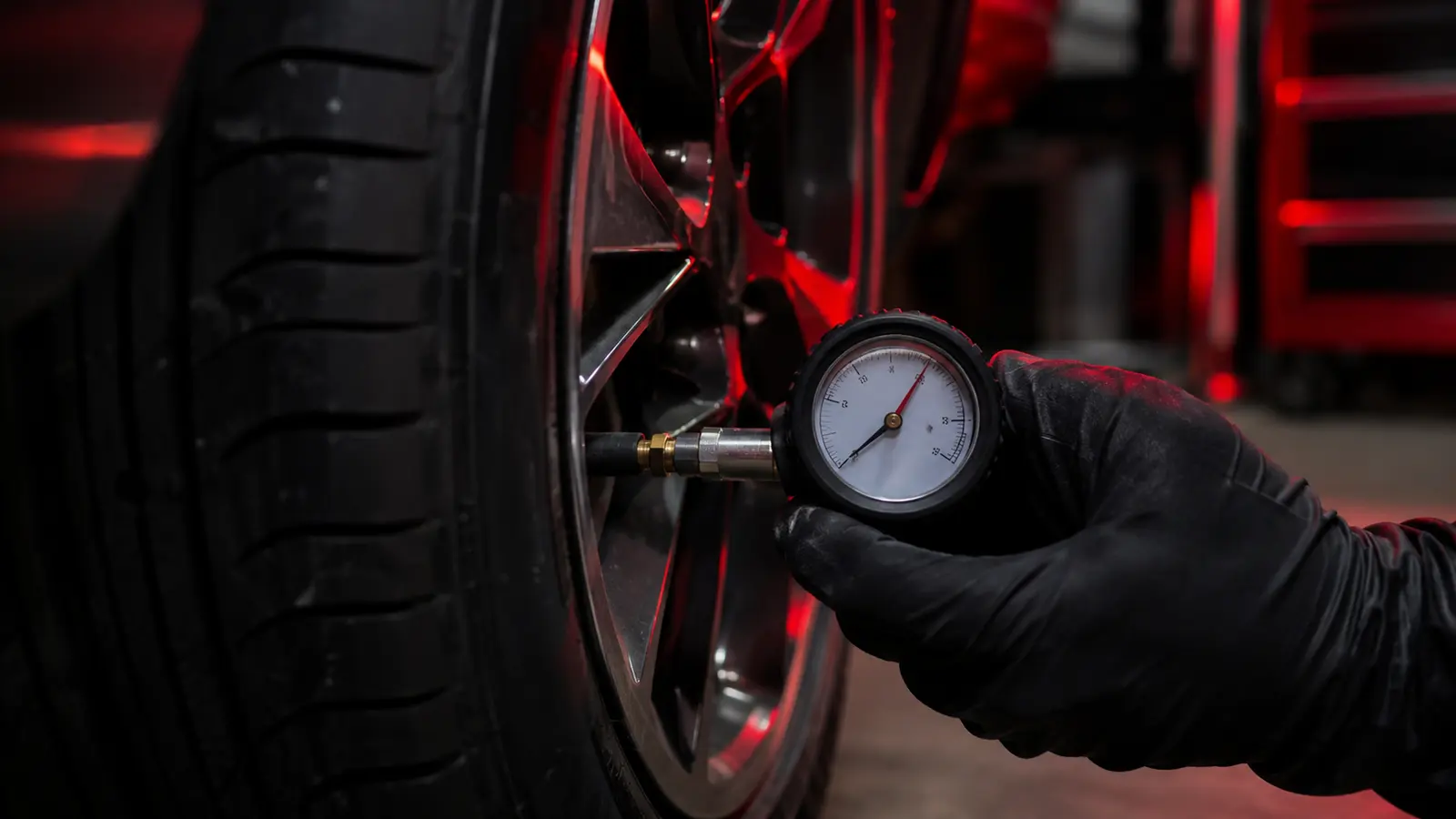
Use a gauge when the tyre is cold and compare it with the placard in the door frame. See how to check tyre pressure. If your TPMS light comes on, see tyre pressure light on.
Can it be repaired?
Tyre shops generally repair only punctures in the central tread area, below a maximum size, using a plug-patch from inside the tyre. They'll refuse repairs in the sidewall or shoulder, near existing repairs, or where the tyre was run flat. Run-flat tyres have their own rules: see run-flat vs regular tyres.
If it goes flat
Get safely off the road, switch on hazards, and fit the spare or use the inflation kit as your handbook describes. See how to change a flat tyre.
Related guides
Frequently asked questions
Should I pull the nail out?
No. It's partly sealing the hole. Pulling it out can turn a slow leak into a flat.
Can every puncture be repaired?
No. Repairs are generally only done in the central tread area. Sidewall or shoulder damage usually needs a new tyre.
Tools that can help
Need a mechanic?
Find rated garages near you by city, ZIP code or postcode, with directions.
About this guide
Written by Editorial Team using manufacturer documentation, government road-safety guidance and motoring-organisation advice. It explains likely causes and safe checks. It is not a diagnosis. How we write and check guides.
More tyres & wheels guides
Tyres & WheelsCar Tyres (Tires): The Complete Guide to Sizes, Pressure, Tread and Safety
Tyres are the only part of the car touching the road. This guide explains how to read the sidewall, set the right pressure, check tread depth against the legal limit, choose between seasonal tyres, recognise damage and make tyres last.
Updated November 22, 2026Read Tyres & Wheels
How Long Do Tyres Last?
Tyres wear out by tread or by age. Tread life varies hugely with driving, car and tyre type. Many makers also advise inspecting older tyres and replacing them after a number of years regardless of tread.
Updated November 22, 2026ReadTyres & WheelsTyre Pressure in Cold Weather: What Changes
Air contracts as it cools, so tyre pressures drop on cold mornings, often enough to trigger the tyre pressure light. Check and set pressures cold, to the placard figure.
Updated November 22, 2026Read