
Quick answer
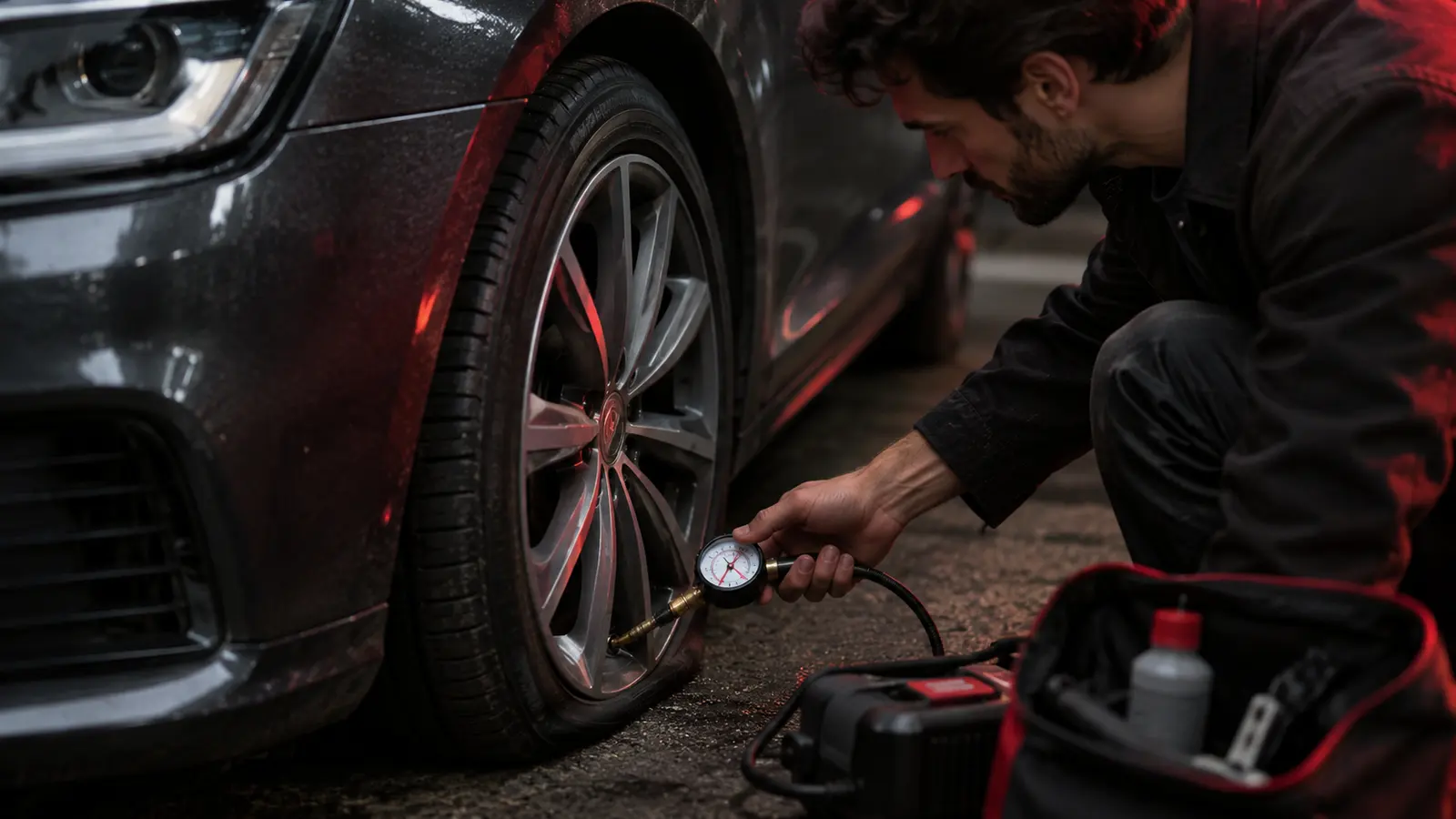
A tyre that needs air every few days, a TPMS light that keeps coming back, or a slight pull to one side are classic signs of a slow puncture. Many tread punctures can be repaired.
- Topic
- Tyres & Wheels
- Sections
- 6
- Reading time
- 1 min
- Applies to
- All regions
A slow puncture is a small leak that lets a tyre lose pressure over days. Signs include needing to add air every few days, the tyre pressure light coming back, a slight pull to one side and a tyre that looks lower than the others.
Is it safe to drive?
Yes, if you keep it inflated and drive to a tyre shop soon. Driving on a very under-inflated tyre damages it internally and can cause failure.
Causes at a glance
| Clue | Likely cause |
|---|---|
| Nail or screw in tread | Puncture |
| Bubbles at the rim | Bead seal or corroded rim |
| Bubbles at the valve | Valve core or seal |
| Damage after kerb strike | Sidewall or rim damage |
| Loses pressure only when cold | Normal temperature drop, not a puncture |
Check these in order
- Check pressure daily for a few days.
- Look for objects in the tread.
- Spray soapy water on suspect areas.
Can it be repaired?
Many punctures in the central tread area can be repaired by a tyre shop with a plug-patch from the inside. Damage in the shoulder or sidewall, or very large holes, mean a new tyre.
How to prevent problems
- Check pressures monthly.
- Avoid kerbs and debris.
Related guides
Frequently asked questions
Can a puncture in the sidewall be repaired?
No. Sidewall and shoulder damage generally can't be safely repaired. The tyre needs replacing.
How do I find a slow leak?
Spray soapy water on the tread, valve and rim edge and look for bubbles.
Can a leaking valve cause a slow puncture?
Yes. Valve cores and TPMS valve seals can leak and are cheap to fix.
Tools that can help
Need a mechanic?
Find rated garages near you by city, ZIP code or postcode, with directions.
About this guide
Written by Editorial Team using manufacturer documentation, government road-safety guidance and motoring-organisation advice. It explains likely causes and safe checks. It is not a diagnosis. How we write and check guides.
More tyres & wheels guides
 Tyres & Wheels
Car Tyres (Tires): The Complete Guide to Sizes, Pressure, Tread and Safety
Tyres are the only part of the car touching the road. This guide explains how to read the sidewall, set the right pressure, check tread depth against the legal limit, choose between seasonal tyres, recognise damage and make tyres last.
Updated November 22, 2026ReadTyres & WheelsIs It Safe to Drive With a Nail in Your Tyre (Tire)?
If you find a nail in your tyre, leave it in (it partly plugs the hole), check the pressure, and drive gently and directly to a tyre shop. Many punctures in the central tread can be repaired; damage near or in the sidewall usually means a new tyre.
Updated November 22, 2026Read Tyres & Wheels
How Long Do Tyres Last?
Tyres wear out by tread or by age. Tread life varies hugely with driving, car and tyre type. Many makers also advise inspecting older tyres and replacing them after a number of years regardless of tread.
Updated November 22, 2026Read