
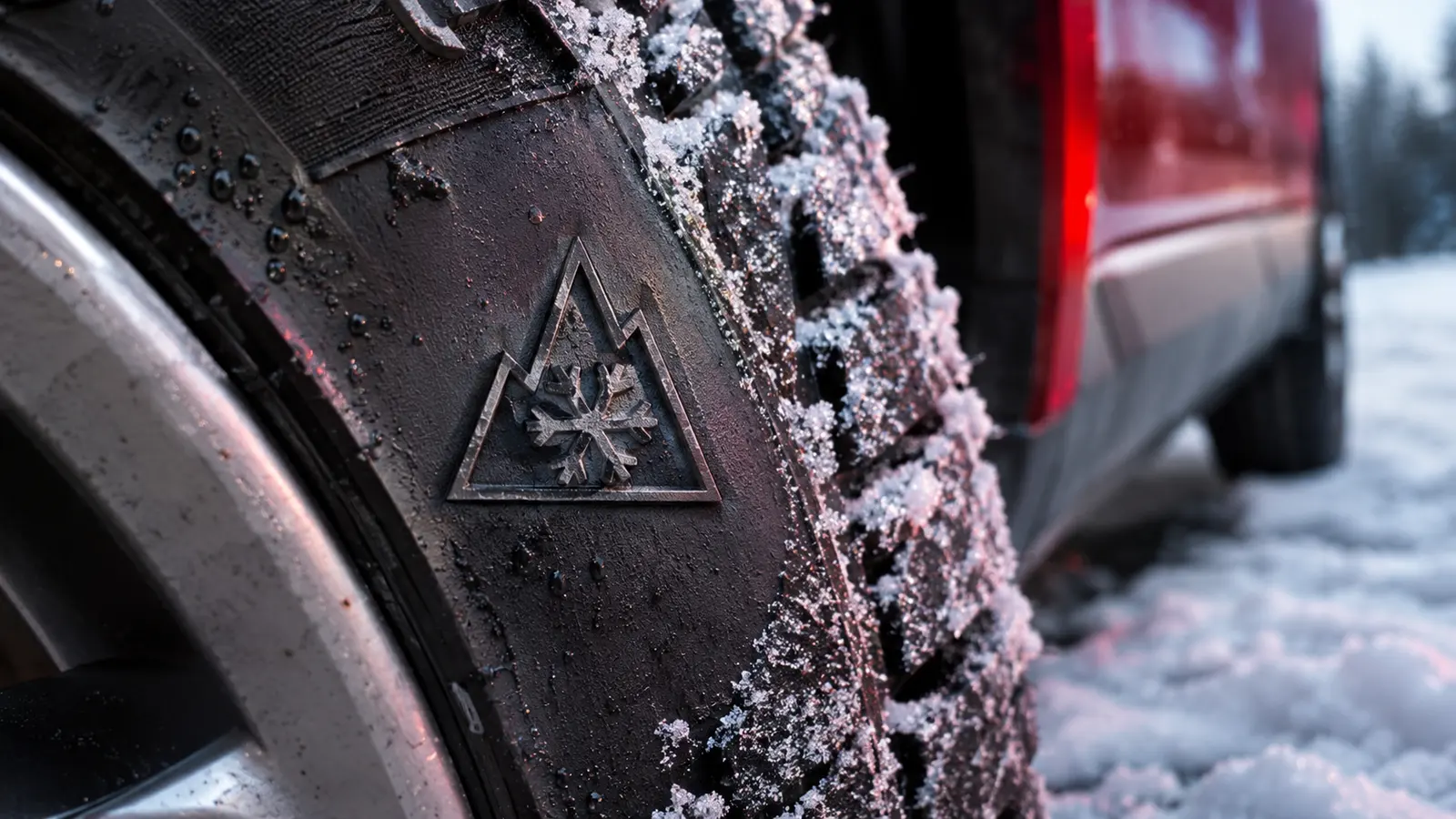
The Three-Peak Mountain Snowflake Symbol: What It Means
Quick answer
The three-peak mountain snowflake (3PMSF) marking shows a tyre has passed a standardised snow traction test. M+S is only a tread-pattern description. For ice, look for the separate Ice Grip symbol.
- Topic
- Tyres & Wheels
- Sections
- 7
- Reading time
- 3 min
- Applies to
- All regions
Winter tyre shopping is in full swing. Specific winter tyre models are among the fastest-rising "winter tires" searches on Google Trends right now. Whatever brand you're considering, the most useful thing to look for on the sidewall is a small symbol: a mountain with three peaks and a snowflake. Here's what it means and how it compares with the other markings you'll see.
The three symbols you'll find on sidewalls
| Marking | What it tells you | Tested? |
|---|---|---|
| M+S (or M&S, M/S) | Tread pattern designed for mud and snow | Not a snow performance test |
| 3PMSF (three-peak mountain snowflake) | Passed a standardised snow traction test | Yes, snow traction |
| Ice Grip Symbol (IGS) | Passed an ice braking test | Yes, ice |
Wikipedia's summary of snow tyres explains that tyres meeting specific standards or tests may carry M+S, 3PMSF and/or the Ice Grip symbol on their sidewalls.
What 3PMSF actually certifies
To carry the three-peak mountain snowflake, a tyre has to show better traction on packed snow than a reference tyre in a standard test. In plain terms, it's independent evidence the tyre grips on snow, not just a tread pattern that looks wintry.
That's why some regions and roads with winter tyre rules require 3PMSF rather than accepting M+S alone. Rules vary by country, province and state, so check what applies where you drive.
Why M+S isn't enough on its own
M+S has been around much longer and simply describes a tread with enough grooves and edges for mud and snow. Many all-season tyres carry it. It doesn't mean the tyre stays soft in freezing temperatures or brakes well on snow. If you regularly drive in snow, look for 3PMSF.
Winter, all-weather or all-season?
- Winter (snow) tyres: soft compound and dense siping for cold, snow and slush. They usually carry 3PMSF, and some also carry the Ice Grip symbol. Best where winters are properly cold. Wikipedia notes they're often optimised for temperatures below about 7 °C (45 °F).
- All-weather tyres: a year-round compromise that often carries 3PMSF. Good for milder climates with occasional snow.
- All-season tyres: often M+S only. Fine for cool, wet winters, weaker on real snow and ice.
For a deeper comparison see winter tyres vs all-season.
Ice is a different problem
Snow and ice behave very differently. A tyre that's excellent in snow can still struggle on glare ice. If you face lots of ice, look for the Ice Grip symbol, or consider studded tyres where they're legal. Whatever you fit, ice demands gentler driving. See our post on how to drive on black ice.
Buying tips
- Fit four, not two. Mixing winter and non-winter tyres can make the car unpredictable.
- Check the date code. Older stock may have hardened. Our guide how long do tyres last shows how to read it.
- Check tread depth. Snow performance falls as tread wears. NHTSA recommends at least 2/32 inch as an absolute minimum and suggests the penny test. See how to check tyre tread depth.
- Keep pressures right. Cold weather lowers pressures. See tyre pressure in cold weather.
- Read the size correctly before ordering: how to read tyre size.
The bottom line
When you compare winter tyres, look past the brand names and check the sidewall. 3PMSF means proven snow traction. M+S alone doesn't. For ice, look for the Ice Grip symbol. Then fit a full set and keep them properly inflated.
Frequently asked questions
Is an M+S tyre a winter tyre?
Not necessarily. M+S describes the tread pattern. The 3PMSF symbol is the marking that shows snow performance has been tested.
Do all-weather tyres have the snowflake?
Many all-weather tyres carry 3PMSF, while many all-season tyres only carry M+S. Check the sidewall.
Does 3PMSF mean the tyre is good on ice?
No. The test is for snow. Ice performance has a separate Ice Grip Symbol.
Tools that can help
Need a mechanic?
Find rated garages near you by city, ZIP code or postcode, with directions.
About this guide
Written by Editorial Team using manufacturer documentation, government road-safety guidance and motoring-organisation advice. It explains likely causes and safe checks. It is not a diagnosis. How we write and check guides.
More from the blog
 Seasonal Driving
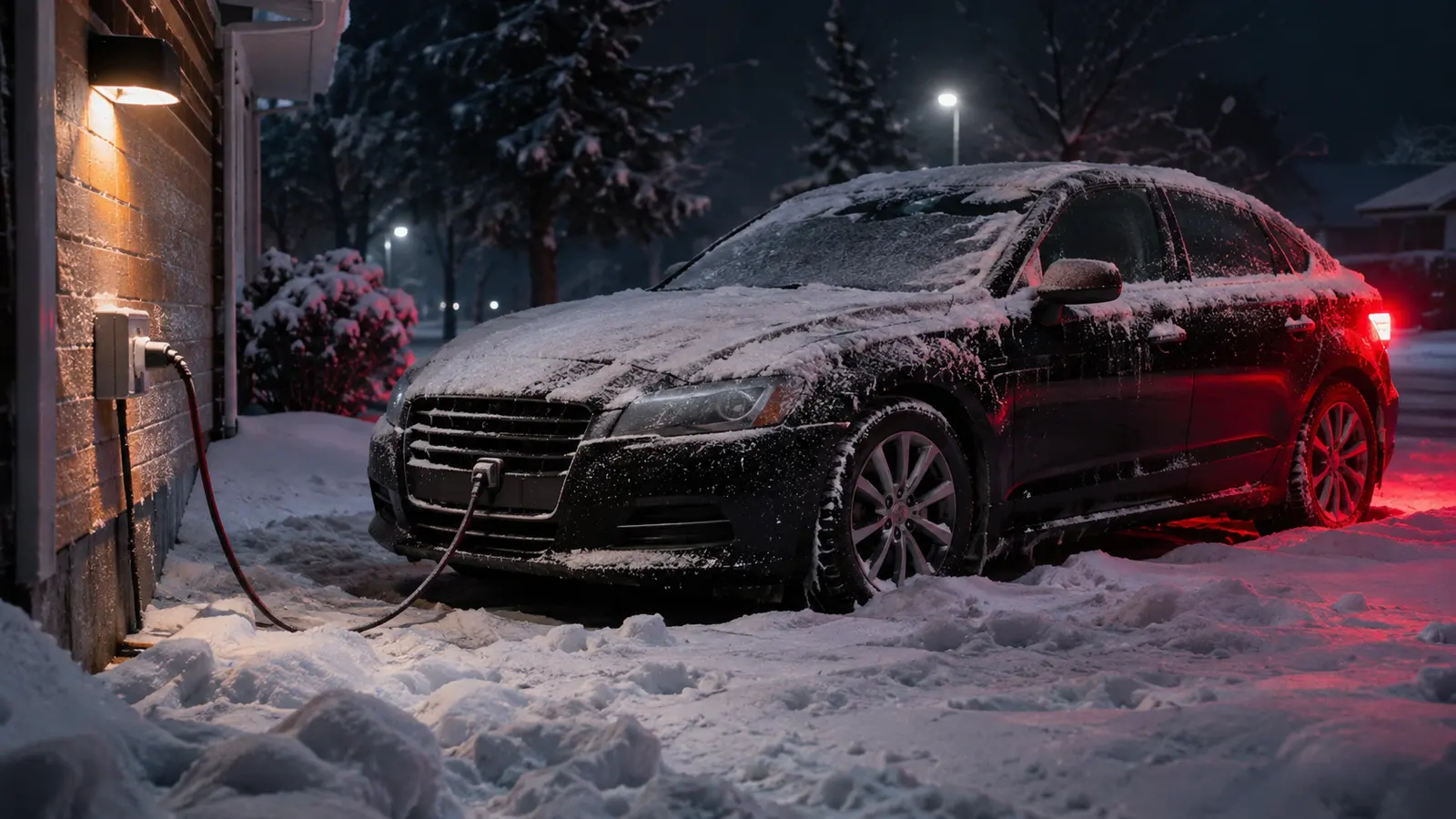
Winter Car Emergency Kit: What to Keep in Your Car
A winter car kit should keep you able to see, get moving, call for help and stay warm while you wait. Both NHTSA and the UK Highway Code publish lists: scraper and de-icer, shovel, traction aid, jump leads, torch, first aid kit, blankets, water and food.
Updated November 22, 2026Read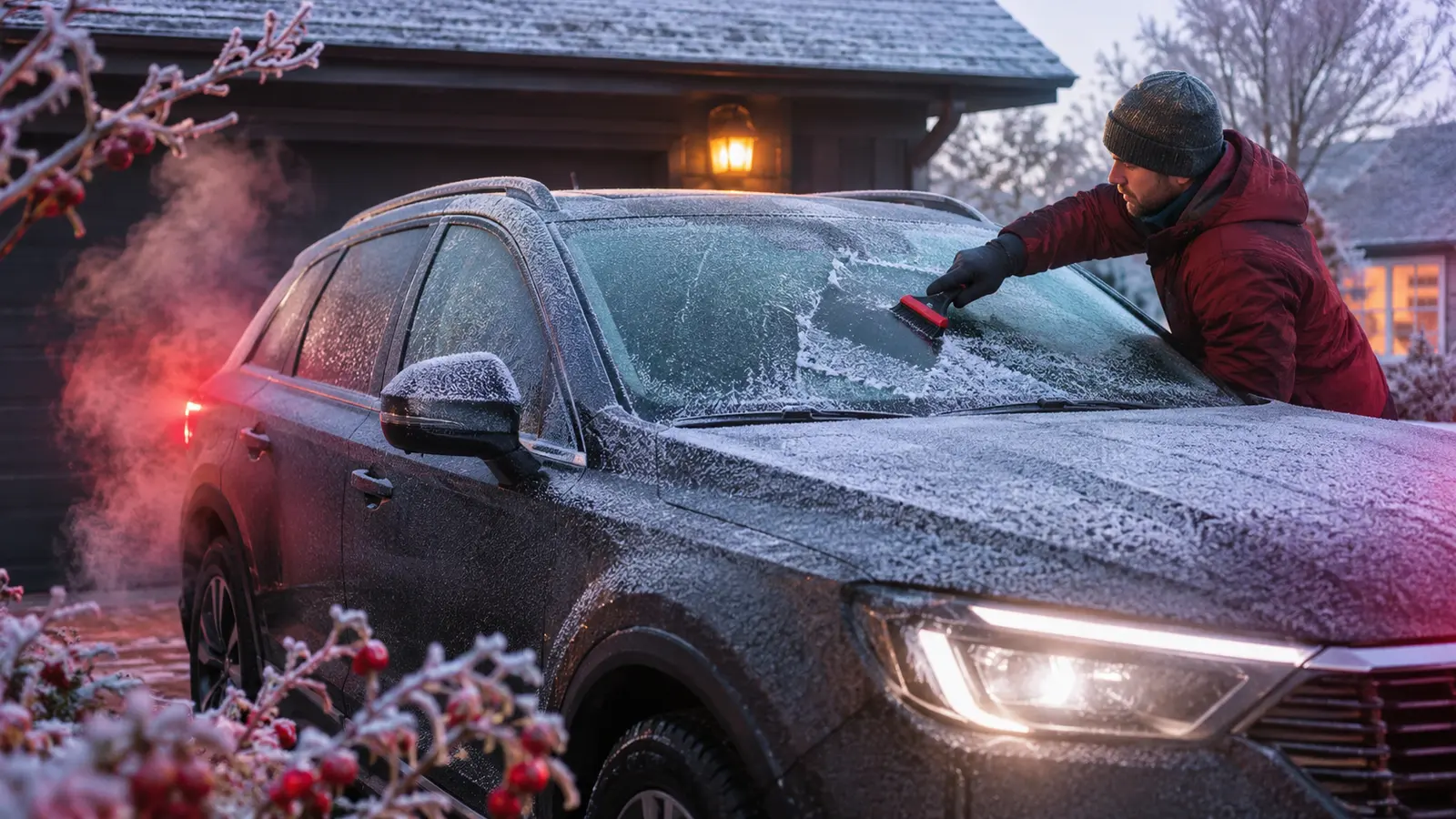 Seasonal Driving
Should You Warm Up Your Car in Winter? What the Evidence Says
For most modern cars the answer is no: FuelEconomy.gov says most manufacturers recommend driving off gently after about 30 seconds, because the engine warms faster while driving. Clear all the glass first, though.
Updated November 22, 2026ReadSeasonal DrivingHow to Drive on Black Ice (and How to Spot It)
Black ice is a thin, clear glaze you can barely see. Slow down early, leave far more space (the Highway Code says stopping distances can be ten times longer on ice), and make every input gentle. If you skid, look and steer where you want to go.
Updated November 22, 2026Read