
Should You Warm Up Your Car in Winter? What the Evidence Says
Quick answer
For most modern cars the answer is no: FuelEconomy.gov says most manufacturers recommend driving off gently after about 30 seconds, because the engine warms faster while driving. Clear all the glass first, though.
- Topic
- Seasonal Driving
- Sections
- 8
- Reading time
- 3 min
- Applies to
- All regions
On a frosty morning, the instinct is to start the engine and let it run for ten minutes. But should you warm up your car in winter? For most modern cars the evidence says no, not for long. FuelEconomy.gov, run by the US Department of Energy and the EPA, says most manufacturers recommend driving off gently after about 30 seconds.
Why the old advice existed
Older carburetted engines needed a warm-up to run smoothly, because the carburettor couldn't adjust the fuel mixture well when cold. Modern fuel-injected engines use sensors to adjust fuelling instantly, so they run properly within seconds.
Why driving warms the engine faster
An idling engine makes very little power, so it produces very little heat. Driving gently puts a light load on it, which warms the engine, transmission and other driveline fluids much faster. FuelEconomy.gov's cold-weather advice puts it simply: the engine warms up faster when driven, so the heater works sooner, and you cut fuel costs and emissions. It also notes that idling gets 0 miles per gallon.
The right way to start on a cold morning
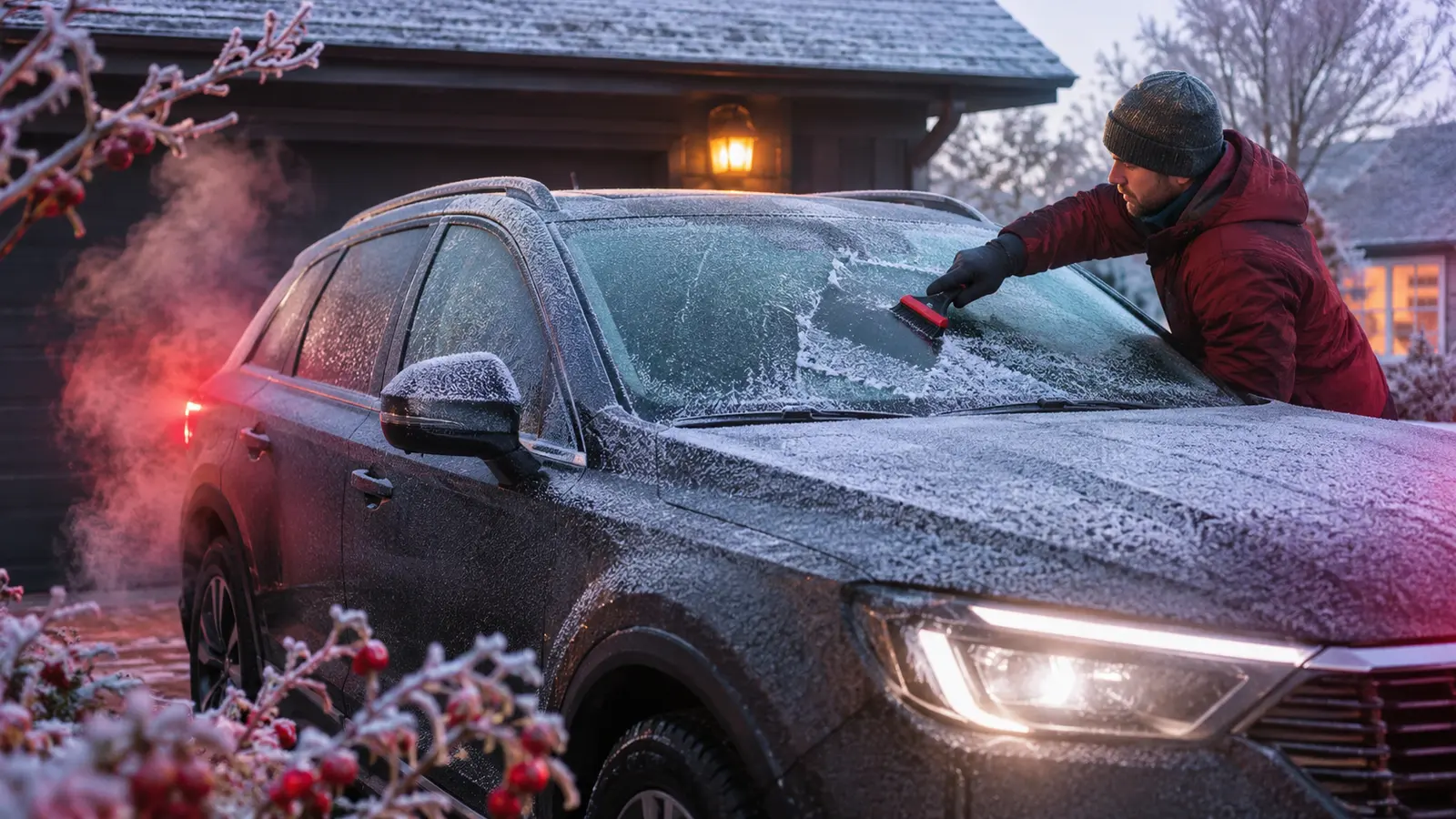
- Clear all snow and ice from the windows, mirrors, lights, roof and number plates. This is the part that really needs time.
- Start the engine and let it settle for around 30 seconds.
- Set the heater to the windscreen with fresh air, and use the AC to dry the air if your car allows.
- Drive off gently for the first few miles: moderate throttle, no high revs.
- Watch the temperature gauge reach normal. If it never does, the thermostat may be stuck open; see car heater takes too long to warm up.
Exceptions
- You can't see. Visibility comes first. If the screen won't clear, wait until it does. Our how to defrost a windscreen fast guide speeds this up.
- Extreme cold. In very low temperatures, a block heater is far more effective than idling. See the block heater guide.
- Older or specialist vehicles. Follow the owner's manual.
- Diesels use glow plugs for cold starting. See how to start a diesel in cold weather.
Remote start: convenient, but use it sensibly
Remote start is comfortable, but it's still idling. Use it to clear the windows and take the chill off, not as a long warm-up. Never use remote start or idle a car in a closed garage, and if snow could block the exhaust, NHTSA advises clearing it to avoid carbon monoxide build-up.
Idling rules
Many places restrict unnecessary idling. In the UK, Highway Code rule 123 says you must not leave a parked vehicle unattended with the engine running, or leave the engine running unnecessarily while stationary on a public road. A running, unattended car is also an easy target for theft and may not be covered by insurance.
What about electric cars?
EVs don't need a mechanical warm-up, but preconditioning while plugged in warms the cabin and battery using mains power rather than range. See EV range in cold weather.
The bottom line
Clear the glass, give the engine about 30 seconds, and drive away gently. It's quicker, cheaper and better for the engine than a long idle. If your car takes ages to warm up even when driven, have the thermostat and coolant checked. Our winter car maintenance checklist covers what else to check before the cold sets in.
Frequently asked questions
Does idling damage the engine?
Long idling wastes fuel and warms the engine slowly. Gentle driving warms it faster, which is better for efficiency and emissions.
What about diesels and very old cars?
Follow your owner's manual. Some older carburetted cars need a brief warm-up. Diesels still benefit from gentle driving, and glow plugs handle cold starting.
Is it legal to leave my car idling unattended?
In many places it isn't, and it's an easy theft target. In the UK, Highway Code rule 123 says you must not leave a parked vehicle unattended with the engine running, or leave the engine running unnecessarily while stationary on a public road.
Tools that can help
Need a mechanic?
Find rated garages near you by city, ZIP code or postcode, with directions.
About this guide
Written by Editorial Team using manufacturer documentation, government road-safety guidance and motoring-organisation advice. It explains likely causes and safe checks. It is not a diagnosis. How we write and check guides.
More from the blog
 Seasonal Driving
Winter Car Emergency Kit: What to Keep in Your Car
A winter car kit should keep you able to see, get moving, call for help and stay warm while you wait. Both NHTSA and the UK Highway Code publish lists: scraper and de-icer, shovel, traction aid, jump leads, torch, first aid kit, blankets, water and food.
Updated November 22, 2026ReadSeasonal DrivingHow to Drive on Black Ice (and How to Spot It)
Black ice is a thin, clear glaze you can barely see. Slow down early, leave far more space (the Highway Code says stopping distances can be ten times longer on ice), and make every input gentle. If you skid, look and steer where you want to go.
Updated November 22, 2026Read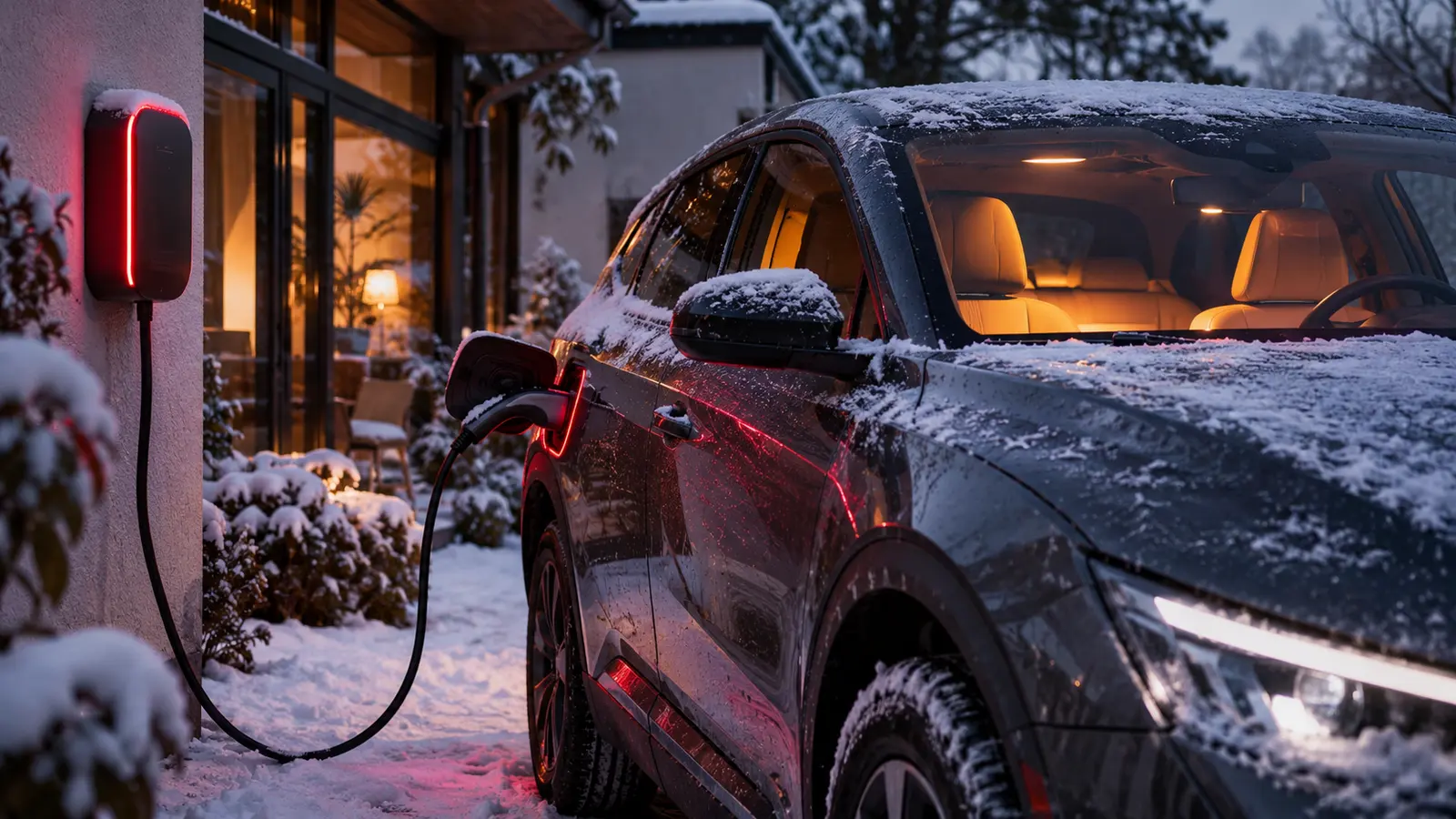 Seasonal Driving
EV Range in Cold Weather: Why It Drops and How to Get More Miles
Electric cars lose noticeable range in the cold, mostly because heating the cabin takes energy. FuelEconomy.gov reports range drops of about 41% in its cold tests. Preheating while plugged in and using seat heaters claw a lot of it back.
Updated November 22, 2026Read