
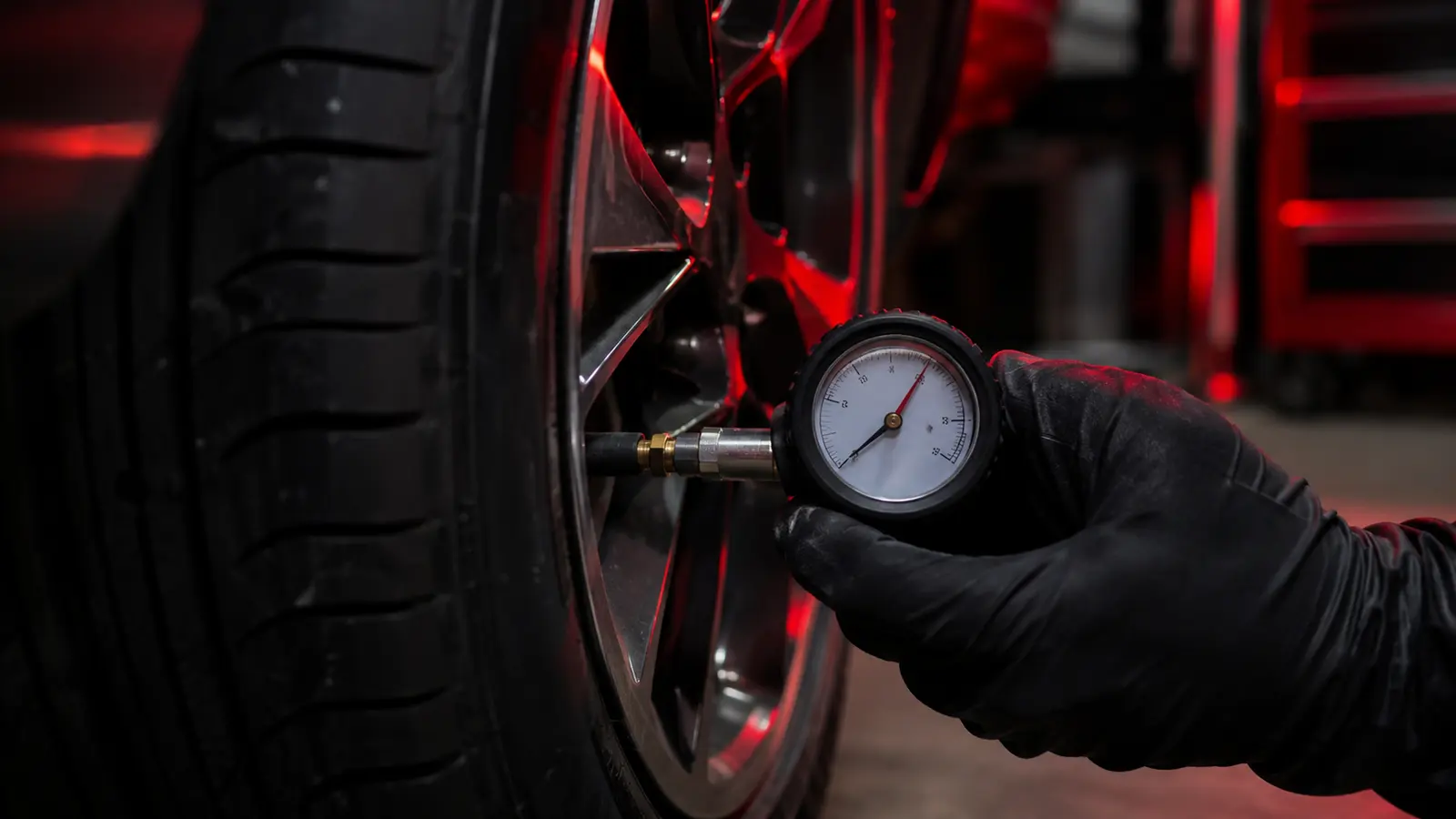
How to Choose a Tire Pressure Gauge: Pencil, Dial or Digital?
Quick answer
Any gauge is better than guessing. Pencil gauges are cheap and robust, dial gauges are easy to read, and digital gauges are precise if you keep the battery fresh. Consistency matters more than price.
- Topic
- Tyres & Wheels
- Sections
- 8
- Reading time
- 3 min
- Applies to
- All regions
"Tool for checking tire pressure" became a breakout search this autumn, alongside a huge rise in "low tire pressure in cold weather what to do". That makes sense. As temperatures drop, tyre pressure falls and warning lights come on. A tyre pressure gauge is the simplest tool to deal with it. Here's how to choose one and use it properly.
Why you need your own gauge
Your car's tyre pressure monitoring system (TPMS) warns you when a tyre is significantly low. It isn't designed to tell you whether pressures are exactly right. Petrol station gauges get dropped and abused, and many are inaccurate. Your own gauge, used consistently, is the only way to know.
Correct pressure matters for grip, braking and tyre life. Low pressure also costs fuel: FuelEconomy.gov lists falling tyre pressure among the reasons economy drops in cold weather.
The three main types
| Type | Pros | Cons | Good for |
|---|---|---|---|
| Pencil (stick) | Cheap, small, no battery | Harder to read precisely, can stick | Glovebox backup |
| Dial (analog) | Easy to read, often has a bleed valve and hose | Bulkier, can be damaged if dropped | Regular home checks |
| Digital | Precise, clear display, often backlit | Needs batteries, cheap ones vary | People who want exact numbers |
Wikipedia's overview notes that gauges come in analog, digital and dial types with different features and accuracy. In practice, build quality matters more than type.
Features worth paying for
- A readable scale in your units (psi, bar or kPa). Many gauges show two.
- A bleed valve, so you can let air out precisely if you overfill.
- A flexible hose, which makes awkward valves easier to reach.
- A backlight on digital models for dark winter mornings.
- A sturdy case, because gauges live in gloveboxes and get knocked about.
Inflators with a built-in gauge are convenient, but check their reading against a separate gauge.
How to get an accurate reading
- Check when cold. NHTSA suggests the car shouldn't have been driven for at least three hours.
- Find the right figure on the placard in the driver's door frame or in the handbook. Don't use the maximum printed on the tyre sidewall. NHTSA specifically warns against this.
- Remove the valve cap and press the gauge on firmly and squarely. A hiss means a poor seal.
- Read and repeat. Take two readings; they should match.
- Adjust with air or the bleed valve, then recheck.
- Refit the valve cap. It keeps dirt and moisture out.
Our step-by-step how to check tyre pressure guide has photos of each step.
Winter: why the light comes on
Air contracts as it cools, so a cold snap can push a borderline tyre below the TPMS threshold overnight. The light often goes off after driving warms the tyres up, but the pressure is still low, so top up anyway. See tyre pressure in cold weather and tyre pressure light on.
How often to check
At least once a month, before long trips, and after big temperature swings. Include the spare if you have one. If one tyre keeps losing pressure, it may be a slow puncture.
Looking after your gauge
- Store it in its case, away from extreme heat.
- Replace batteries in digital gauges before they run low; weak batteries can give odd readings.
- Every so often, compare it with a second gauge or a trusted workshop gauge.
The bottom line
The best tyre pressure gauge is the one you'll actually use every month. Pick a sturdy dial or digital gauge for home and a pencil gauge as a backup, check when the tyres are cold, and inflate to the door-placard figure.
Frequently asked questions
Are petrol station air gauges accurate?
They can be off and are easily damaged. Use your own gauge to check the result.
Should I check pressure hot or cold?
Cold. NHTSA suggests the car shouldn't have been driven for at least three hours.
What pressure should I use?
The figure on the placard in the driver's door frame or in the owner's manual, not the maximum printed on the tyre.
Tools that can help
Need a mechanic?
Find rated garages near you by city, ZIP code or postcode, with directions.
About this guide
Written by Editorial Team using manufacturer documentation, government road-safety guidance and motoring-organisation advice. It explains likely causes and safe checks. It is not a diagnosis. How we write and check guides.
More from the blog
 Seasonal Driving
Winter Car Emergency Kit: What to Keep in Your Car
A winter car kit should keep you able to see, get moving, call for help and stay warm while you wait. Both NHTSA and the UK Highway Code publish lists: scraper and de-icer, shovel, traction aid, jump leads, torch, first aid kit, blankets, water and food.
Updated November 22, 2026Read Seasonal Driving
Should You Warm Up Your Car in Winter? What the Evidence Says
For most modern cars the answer is no: FuelEconomy.gov says most manufacturers recommend driving off gently after about 30 seconds, because the engine warms faster while driving. Clear all the glass first, though.
Updated November 22, 2026ReadSeasonal DrivingHow to Drive on Black Ice (and How to Spot It)
Black ice is a thin, clear glaze you can barely see. Slow down early, leave far more space (the Highway Code says stopping distances can be ten times longer on ice), and make every input gentle. If you skid, look and steer where you want to go.
Updated November 22, 2026Read