
Car Making Noise When Turning: Clicks, Groans and Whines
Part of: Car Noises: What That Sound Means
Quick answer
Clicking on full lock usually means a worn outer CV joint. Groaning points to strut mounts or ball joints, and whining to the power steering pump.
- Topic
- Suspension & Steering
- Sections
- 8
- Reading time
- 2 min
- Applies to
- All regions
When your car makes a noise when turning, the type of sound points to the cause. Clicking or popping on tight turns is the classic sign of a worn outer CV joint. Groaning or creaking usually comes from strut mounts, ball joints or bushes. Whining that rises as you turn the wheel suggests the power steering pump is low on fluid or wearing.
Is it safe to drive?
Most of these are safe to drive carefully to a garage. If the steering feels loose, heavy, or knocks badly, or a wheel looks out of line, don't drive.
Noises at a glance
| Noise when turning | Likely cause |
|---|---|
| Clicking or popping, worse on full lock | Outer CV joint |
| Creak or groan at low speed | Strut top mounts, ball joints, bushes |
| Whine as you turn the wheel | Power steering fluid low or pump wear |
| Squeal at full lock | Power steering belt slipping |
| Rubbing or scraping | Wheel-arch liner or brake dust shield |
| Hum that changes when cornering at speed | Wheel bearing |
Check these in order
- Turn on full lock in a car park and drive slowly in a circle each way. Clicking points to the CV joint on the outside of the turn.
- Check the power steering fluid level if your car has hydraulic steering.
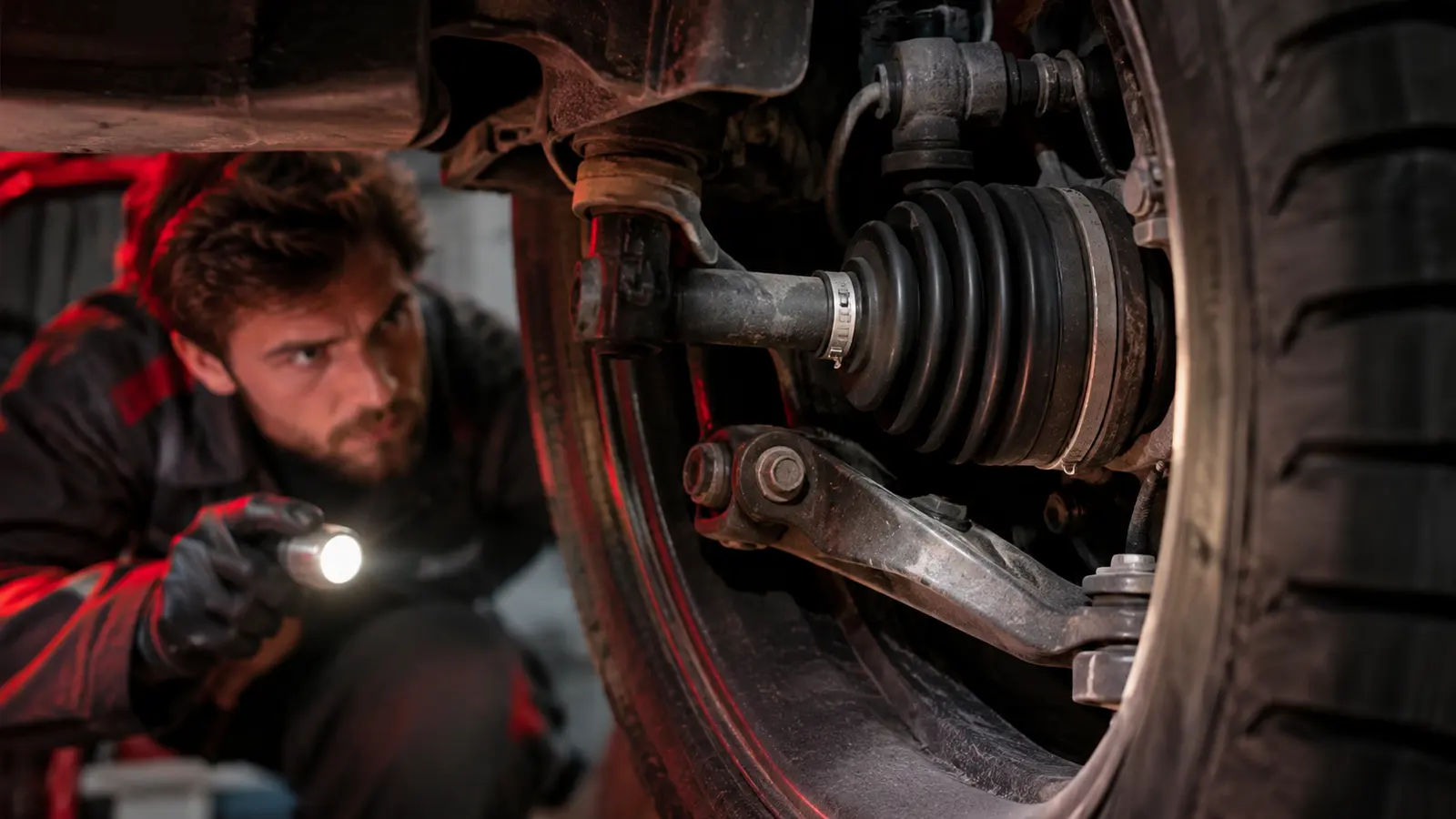
- Look behind the front wheels for split CV boots with grease thrown around.
- Bounce each front corner and listen for creaks.
Causes explained
Outer CV joint
A split boot lets grease out and dirt in. The joint wears and clicks under load on tight turns.
Strut mounts and bearings
The top of each front strut sits in a bearing so it can turn. Worn mounts creak and clunk when steering at low speed.
Ball joints and bushes
Dry or worn joints creak. Worn ball joints are a safety issue and an MOT failure in the UK.
Power steering
Hydraulic systems whine when fluid is low or the pump is wearing. Electric power steering doesn't use fluid but can have motor or sensor faults.
What a mechanic will do
They'll inspect CV boots and joints, check for play in ball joints and tie-rod ends, and test the power steering system.
What affects the cost
CV boot kits are cheaper than full driveshafts, if caught early. Strut mounts and ball joints are moderate jobs. Power steering pumps vary.
How to prevent it
- Ask for CV boots to be checked at every service.
- Fix power steering leaks early.
- Avoid holding the steering on full lock for long periods.
Related problems
Frequently asked questions
Is a clicking noise when turning dangerous?
It usually means a worn CV joint. It won't fail instantly, but it will get worse and can eventually break, so plan a repair soon.
Why does my steering groan in cold weather?
Rubber bushes and strut mount bearings stiffen in the cold. Persistent groaning still points to worn parts or low power-steering fluid.
Can low tyre pressure cause noise when turning?
Very low pressure can cause tyre squeal on turns. Check pressures first, as it's free.
Tools that can help
How the parts involved work
Need a mechanic?
Find rated garages near you by city, ZIP code or postcode, with directions.
About this guide
Written by Editorial Team using manufacturer documentation, government road-safety guidance and motoring-organisation advice. It explains likely causes and safe checks. It is not a diagnosis. How we write and check guides.
More suspension & steering guides
 Suspension & Steering
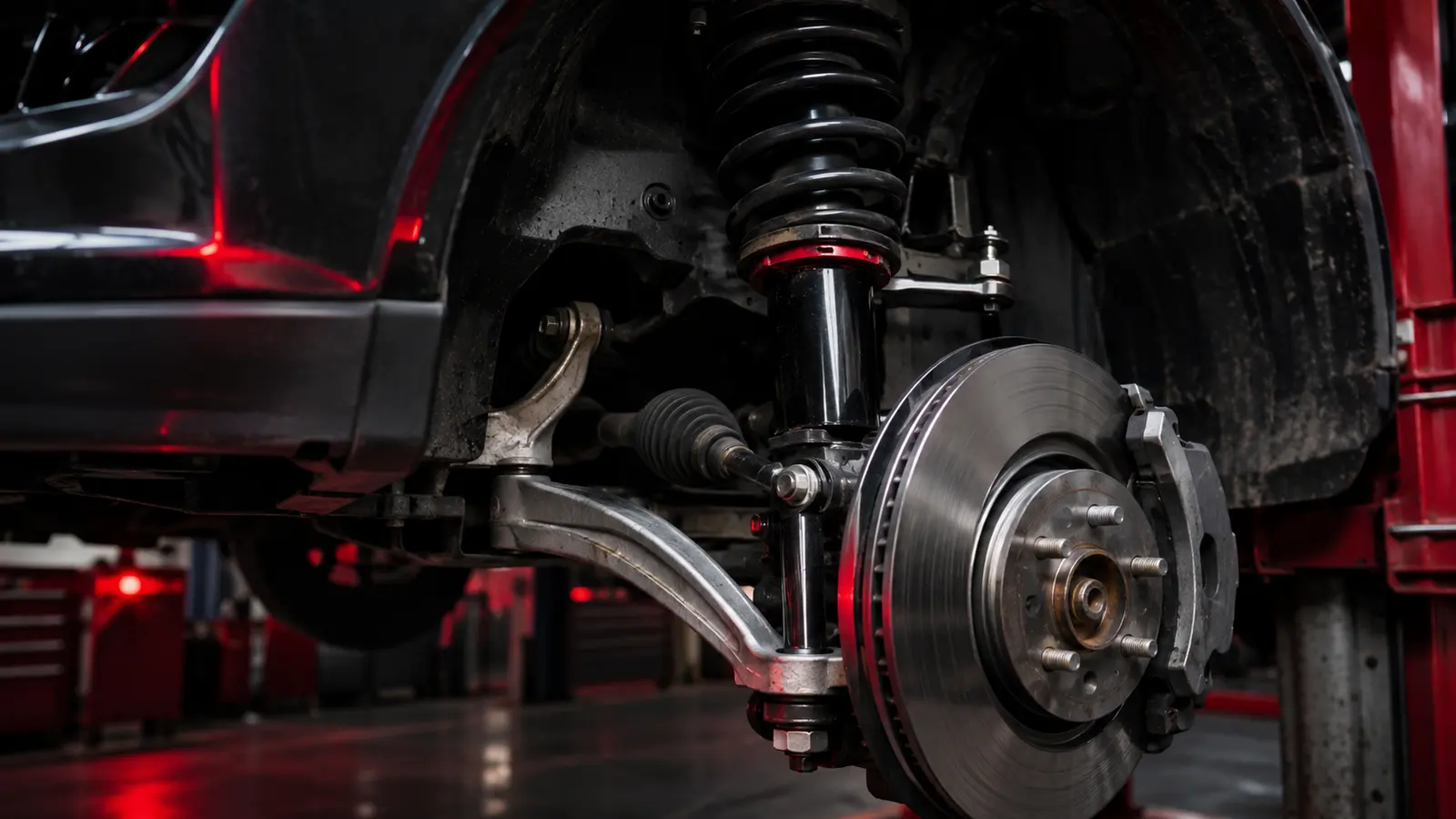
Car Suspension and Steering: The Complete Guide to Parts, Problems and Checks
Suspension keeps the tyres pressed to the road and the ride controlled; steering points the wheels where you want to go. This guide explains every main part, the noises and handling changes that signal wear, the checks you can do, and when to see a professional.
Updated November 22, 2026Read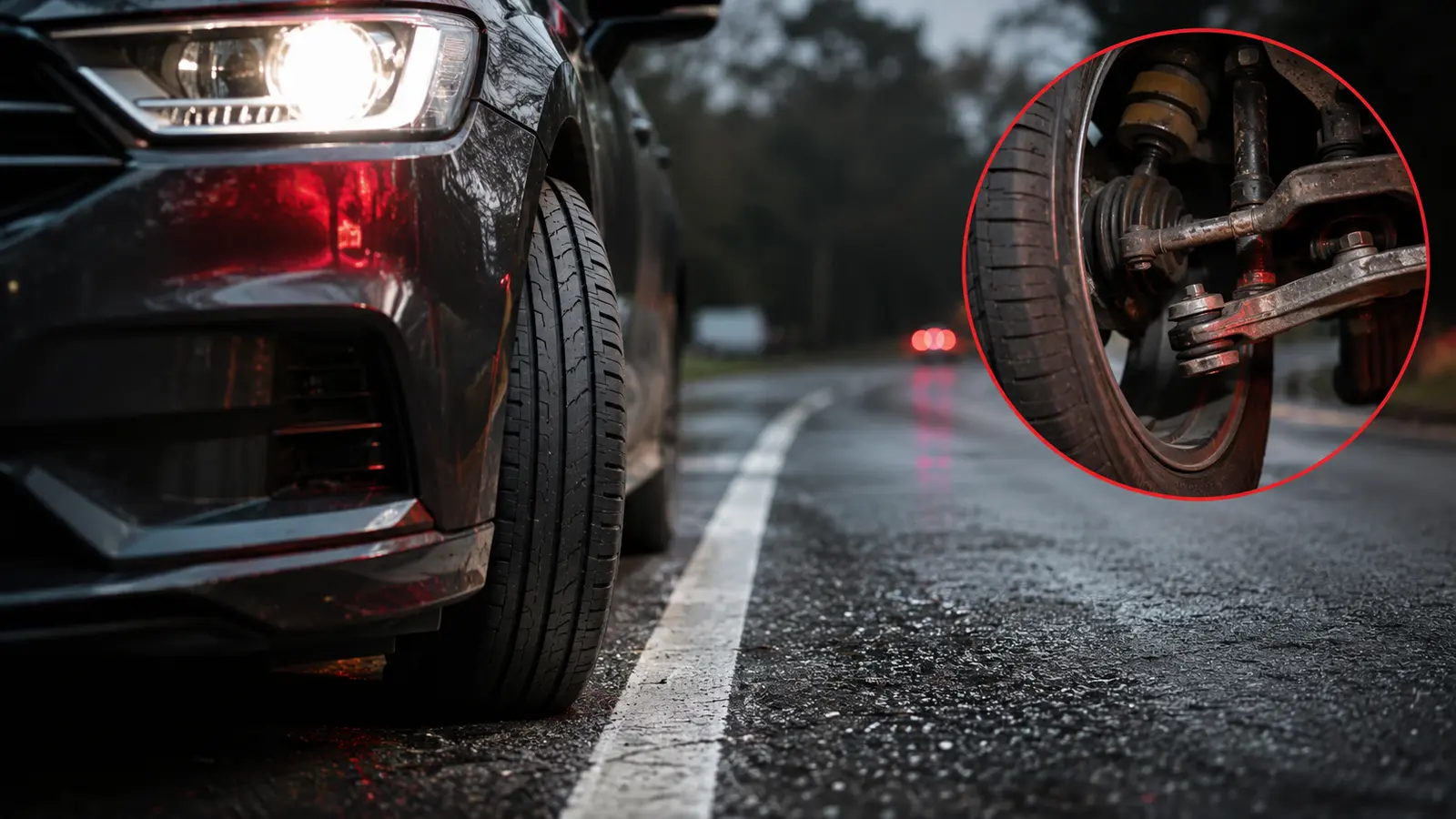 Suspension & Steering
Car Pulls When Accelerating: Causes
Some pull under hard acceleration is normal in powerful front-wheel-drive cars (torque steer). Worn engine mounts, control-arm bushes, uneven tyres or alignment problems make it worse.
Updated November 22, 2026ReadSuspension & SteeringGrinding Noise When Turning: Causes
Grinding while turning often means a failing wheel bearing, worn brake pads, a bent brake dust shield rubbing the disc, or a CV joint that has lost its grease.
Updated November 22, 2026Read