
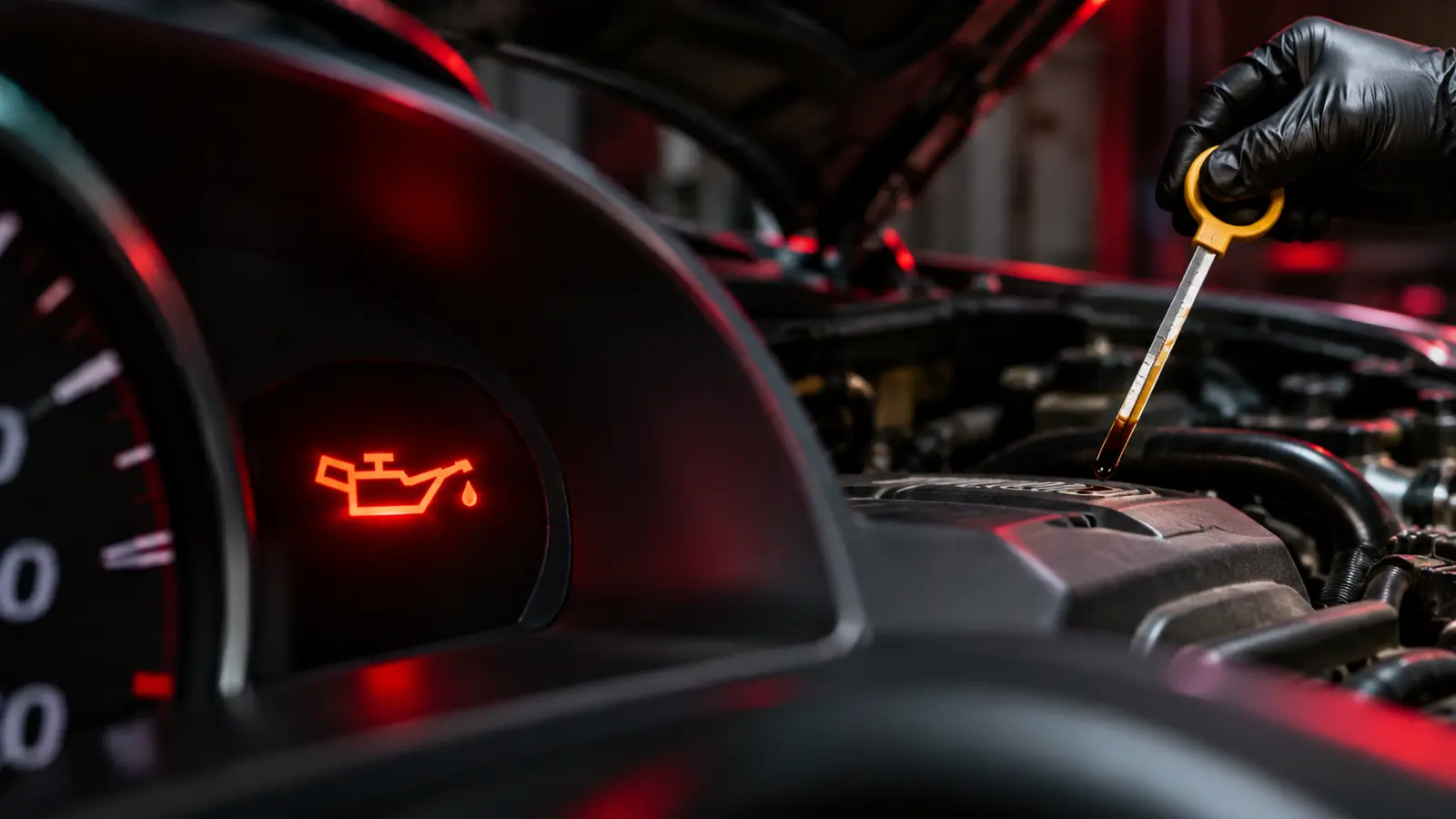
Oil Light Flickering at Idle: What It Means
Quick answer
An oil light that flickers at idle, especially when the engine is hot, usually means oil level or pressure is marginal. Check the oil straight away and don't ignore it.
- Topic
- Engine Problems
- Sections
- 6
- Reading time
- 1 min
- Applies to
- All regions
An oil light flickering at idle means oil pressure is dropping close to the warning threshold when the engine runs slowly. The most common cause is low oil level. Other causes include wrong or old oil, a failing oil pressure switch, a worn oil pump or worn engine bearings.
Is it safe to drive?
Check the oil level immediately. If it's low, top up before driving. If the level is correct and the light still flickers, get it checked before driving far. A steady red oil light while driving means stop and switch off.
Causes at a glance
| Clue | Likely cause |
|---|---|
| Dipstick low | Low oil level |
| Overdue service, thin dark oil | Degraded oil |
| Correct level, light still flickers when hot | Worn pump or bearings, or pressure switch |
| Light only on sharp turns or braking | Very low level, oil sloshing |
| New after an oil change | Wrong grade or underfilled |
Check these in order
- Check the dipstick on level ground.
- Top up with the correct grade.
- Check the service history for overdue changes.
- Have oil pressure measured with a mechanical gauge.
Why it matters
Oil pressure keeps a film between moving metal parts. Without it, bearings wear in minutes.
Prevention
- Check oil monthly.
- Change oil at the handbook interval with the correct grade.
Related guides
Frequently asked questions
Is it just a faulty sensor?
Sometimes, but assume it's real until oil pressure has been checked with a gauge.
Why only when hot?
Hot oil is thinner, so pressure drops at idle, revealing low level, worn bearings or a weak pump.
Tools that can help
Need a mechanic?
Find rated garages near you by city, ZIP code or postcode, with directions.
About this guide
Written by Editorial Team using manufacturer documentation, government road-safety guidance and motoring-organisation advice. It explains likely causes and safe checks. It is not a diagnosis. How we write and check guides.
More engine problems guides
 Engine Problems
Car Exhaust and Emissions: The Complete Guide to Catalytic Converters, Sensors and Smoke
The exhaust system carries burnt gases away, cleans them with a catalytic converter (and on diesels a DPF and SCR), and quietens the engine. This guide explains each part, what different smoke colours and noises mean, catalytic converter theft, and emissions tests.
Updated November 22, 2026Read Engine Problems
Engine Cooling System: The Complete Guide to Coolant, Overheating and Repairs
The cooling system carries heat away from the engine using coolant, a water pump, a thermostat, a radiator and fans, all under pressure so coolant can run above 100 °C. This guide explains each part, why engines overheat, how to spot leaks and how to check coolant safely.
Updated November 22, 2026Read Engine Problems
Diesel Engines: The Complete Guide to How They Work, DPF, AdBlue and Care
Diesel engines ignite fuel by compression rather than a spark. Modern diesels add glow plugs, a particulate filter, AdBlue and EGR to start reliably and cut emissions. This guide explains each system, the warning lights and how to keep a diesel healthy.
Updated November 22, 2026Read